


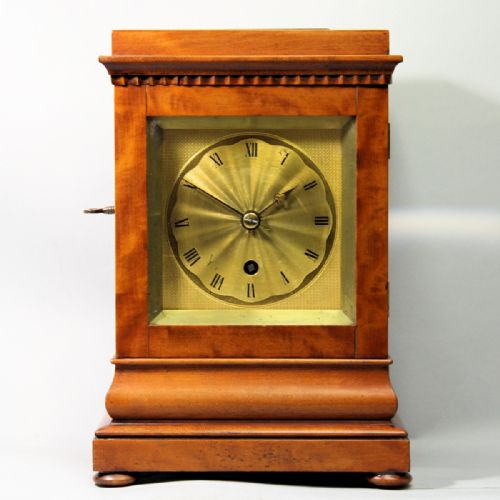


Fusee Library Clock
A fusee library clock brings precision timekeeping and rich cabinetwork into a room, offering a steady view of mechanical movement through glass and brass.
Fusee Library Clock
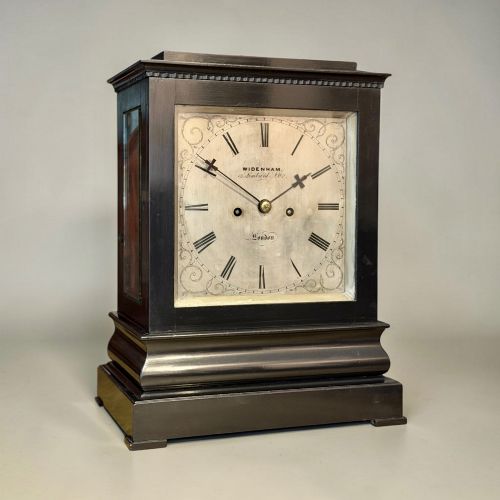
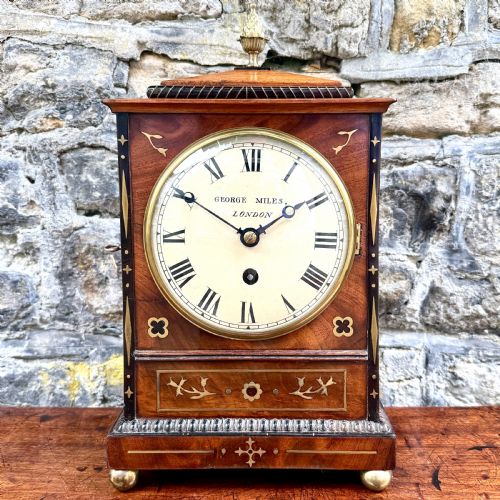
A fusee library clock is a precision timekeeper designed for desk, table, or mantel placement, housing a mechanical movement driven by a chain or cord wrapped around a conical pulley. When you search for a fusee library clock, you encounter pieces spanning the Georgian, Regency, and Victorian eras, with Victorian examples appearing most frequently.
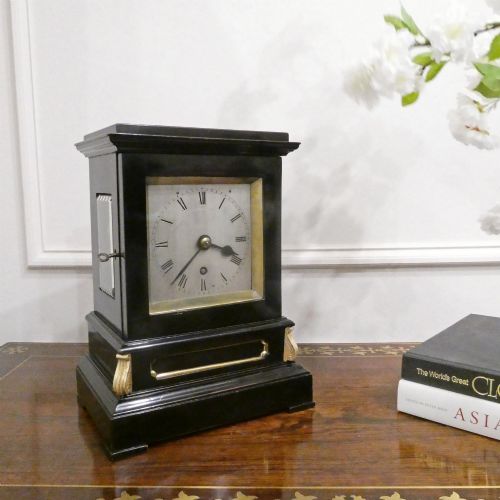
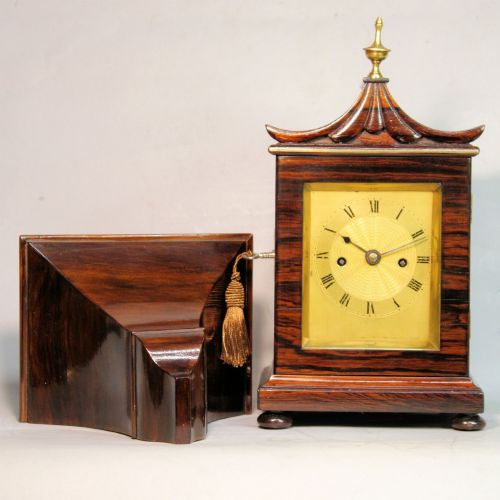
The casing forms a crucial part of the piece, often taking the shape of a table clock, mantel clock, or bracket clock. These objects originate predominantly from nineteenth-century workshops, ranging from compact miniature formats to larger architectural designs.
Makers housed these movements in robust timber housings or glazed enclosures, allowing light to reach the dial and internal workings. The layout typically emphasises clear legibility paired with refined cabinet carpentry.
Materials and construction
Cabinetmakers built the exterior enclosures using dense hardwoods such as mahogany, rosewood, satinwood, and ebonised wood, occasionally incorporating brass inlays or glass panels for transparency. These woods provided stability and a deep surface polish.
The internal mechanics rely on brass and steel, driven by a fusee movement that maintains even power delivery as the mainspring unwinds. Dials are constructed from silvered metal, enamel, or gilded brass, often enhanced with fine engine-turned details.
Determinants of quality
The refinement of the dial engraving and the integration of bevelled glass panels also indicate superior manufacturing standards. Better examples retain clear maker signatures on the dial or movement backplate, reflecting the original workshop pedigree.
Widenham of London·Webster Cornhill London·Walker·Dent·Phillips Brothers·McCabe London·Plumbly and Tupman London·Barraud and Lunds·John Massey London·Leith of London·Francis Correll·Archibald Haswell London·Rieder and Co·Johnson of London·Barwise London·John Walker London·T Boxell Brighton·Brockbanks and Atkins London·Purvis London·John Moore and Sons·Charles Frodsham
The Fusee Library Clock Glossary
- Fusee
- A conical pulley used in a clock movement to equalise the torque of the mainspring as it winds down. This mechanism ensures consistent force is delivered to the escapement for accurate timekeeping.
- Timepiece
- A clock that measures and indicates the time without possessing a striking mechanism. Many library clocks are built as timepieces rather than full striking clocks.
- Five glass clock
- A clock design featuring glass panels on the top and all four sides, allowing maximum light into the movement. This style gained popularity during the Victorian period.
- Engine-turned
- A decorative technique involving precise geometric patterns cut into metal surfaces using a specialised lathe. Gilded dials often display this intricate ornamentation.
- Bracket clock
- A portable clock originally designed to sit on a wall bracket or a furniture surface. The term persists for autonomous table clocks of substantial build.
Fusee Library Clock: Frequently Asked Questions
What is a fusee movement?
A fusee is a conical pulley connected to the mainspring via a chain or gut line. It compensates for the decreasing power of the spring as it unwinds.
This clever mechanical device ensures the clock receives even tension throughout its running cycle, resulting in superior timekeeping accuracy.
Where were library clocks placed?
These clocks were designed for placement on desks, tables, mantelpieces, or dedicated wall brackets in studies and libraries. Their portable nature allowed owners to move them between rooms easily.
Unlike large grandfather clocks, they provided immediate, close-range access to the time without dominating the floor space.
How do I wind a library clock?
Winding requires inserting a small key into the dial aperture and turning it gently until resistance is met. Care must be taken not to overwind the chain or spring.
Most fusee movements run for eight days on a single wind, requiring a weekly routine to maintain continuous operation.
How do I identify the period?
Dating relies on stylistic clues in the case timber, dial layout, and maker signatures recorded on the brass backplate. Georgian and Regency pieces tend to feature restrained classical proportions.
Victorian examples often introduce heavier ebonised finishes, satinwood veneers, or five-glass enclosures that showcase the internal mechanics.