



Full Length Lean Mirror
A full length lean mirror brings architectural scale and daylight deep into a room, offering the practical utility of a tall looking glass.
Full Length Lean Mirror
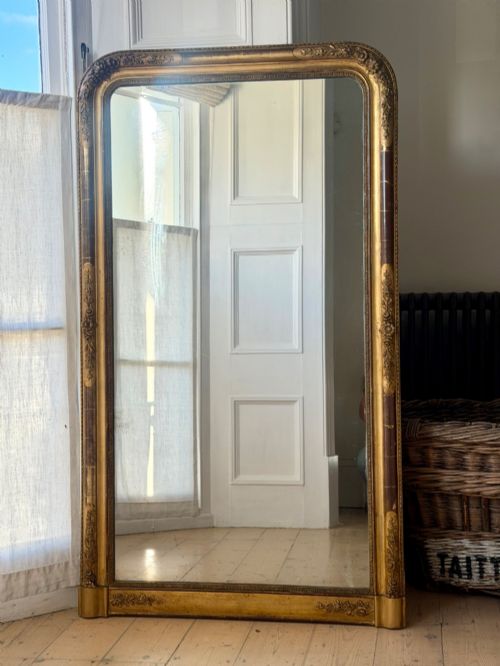
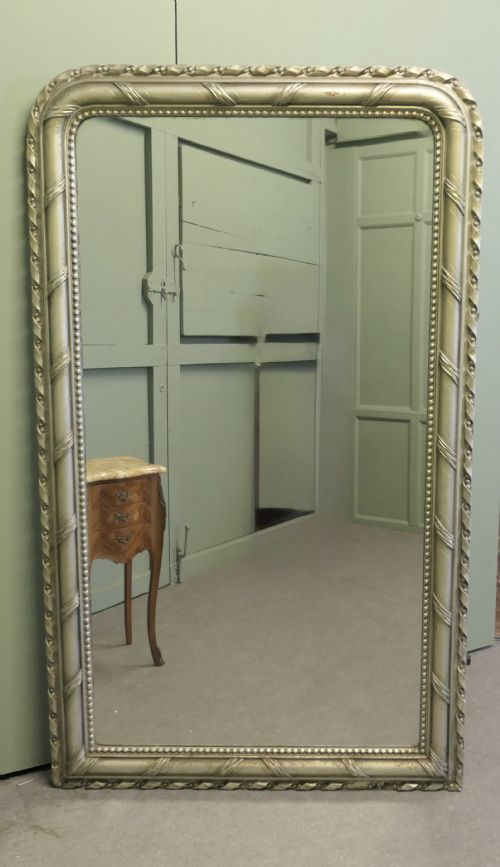
When you search for a full length lean mirror, you are looking at substantial tall looking glasses designed to stand upright against a wall without permanent fixings. The examples here span the nineteenth and early twentieth centuries, drawing heavily on French Louis Philippe, Victorian, and Neoclassical traditions.
The most common versions met on this page are large French giltwood or painted wooden frames, often featuring tall proportions suitable for dressing rooms or principal reception rooms. These pieces combine functional height with decorative framing such as Vitruvian scrolls or ornate carved crests.
How they were made
The construction of these tall looking glasses relies on timber frames built to support considerable glass weight, frequently utilising carved wood and gesso layers to build up intricate surface ornamentation. Gilding is applied using gold or silver leaf, which catches the light differently than modern metallic paints.
Painted finishes on wood also appear across nineteenth-century English and French workshops, providing a softer alternative to heavily gilt surfaces. Frame construction often incorporates traditional joinery to ensure the upright structure remains stable when leaning safely against a vertical surface.
Full Length Lean Mirror Retail Price Guide 2026
Typical asking prices for full length lean mirror among the pieces listed under this phrase on Sellingantiques today, from the lower quarter to the upper quarter. They describe what is for sale here now, not the wider market.
Many nineteenth-century mirrors retain their original mercury glass, which reflects the room with a gentle, undulating warmth entirely unique to period manufacture.
What varies in quality
The distinction between standard examples and the finest pieces lies in the depth and crispness of the hand-carved wood and gesso ornamentation. Superior frames show precise detailing along scrolls and moulded borders rather than soft, mass-produced cast decoration.
The integrity of the original mercury or early silvered glass plate and the original finish of the gilt or paint surface also dictate the standing of a piece. Depth of frame profile and balanced proportions further separate ordinary domestic looking glasses from exceptional architectural mirrors.
The Full Length Lean Mirror Glossary
- Giltwood
- Wood that has been coated with a thin layer of gold leaf or powder. This finish ages to a warm, muted tone over the centuries.
- Gesso
- A plaster-like mixture applied to wooden frames as a base for carving and gilding. It allows for crisp, intricate decorative moulding.
- Louis Philippe
- A nineteenth-century French style characterised by understated elegance, often featuring rounded upper corners and simple moulded frames. It bridges the gap between heavy baroque designs and later Victorian ornamentation.
- Vitruvian scroll
- A classical decorative band composed of wave-like scrolls. It appears frequently on neoclassical frames and architectural mouldings.
- Cheval mirror
- A freestanding looking glass mounted in a frame that allows the glass to swing. Some tall architectural mirrors incorporate similar full-height viewing principles.
Full Length Lean Mirror: Frequently Asked Questions
How do I safely lean a heavy mirror?
A heavy floor-standing mirror rests securely against a solid wall when the base is positioned a short distance out and the top is steadied. Professional wall anchors or discreet brackets at the upper frame provide essential security against accidental tipping.
Ensuring the floor surface is level prevents undue stress on the wooden frame joints over time. Placing protective pads beneath the lower corners also guards against dampness rising from timber or stone flooring.
What defines a Louis Philippe mirror?
Louis Philippe mirrors date from the mid nineteenth century and are instantly recognised by their softly rounded top corners. They offer a refined aesthetic that fits comfortably into both traditional and contemporary interiors.
These frames typically feature restrained decoration, focusing on clean lines and gentle beaded or scotia mouldings rather than heavy carving. Their balanced proportions make them exceptionally versatile for placement above mantelpieces or directly on the floor.
How can I tell original gilding from later paint?
Original period gilding shows subtle tonal variations and fine craquelure beneath the surface where the metal leaf meets the gesso base. Under close inspection, genuine gold or silver leaf exhibits a warm depth that modern metallic paints fail to replicate.
Later overpainting often feels flat and may obscure the sharp edges of the underlying gesso ornamentation. Natural wear patterns on antique frames reveal the reddish bole layer beneath thin areas of worn leaf.
Where should I place a tall floor mirror?
Positioning a tall floor mirror opposite a window maximises natural daylight and visually expands the dimensions of smaller rooms. Placing them in hallways or dressing spaces provides practical full-height reflection while adding architectural presence.
Avoid positioning these pieces in areas subject to heavy foot traffic where the frame might be bumped or dislodged. Ensuring adequate clearance around the base maintains the balanced look of a freestanding architectural feature.