
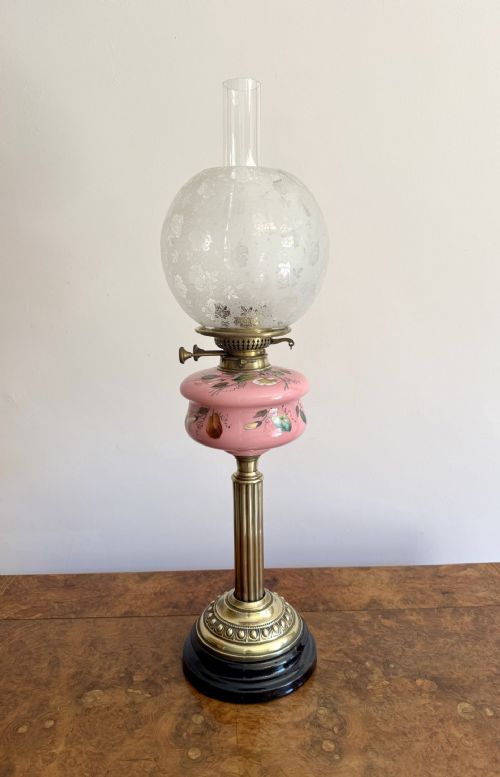
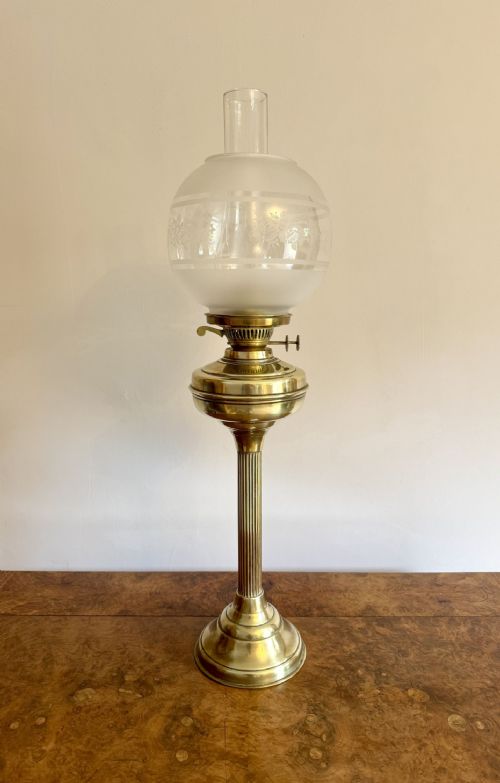


Frosted Shade Oil Lamp
A frosted shade oil lamp brings a warm, diffused glow to a room through its classic Victorian and Edwardian design.
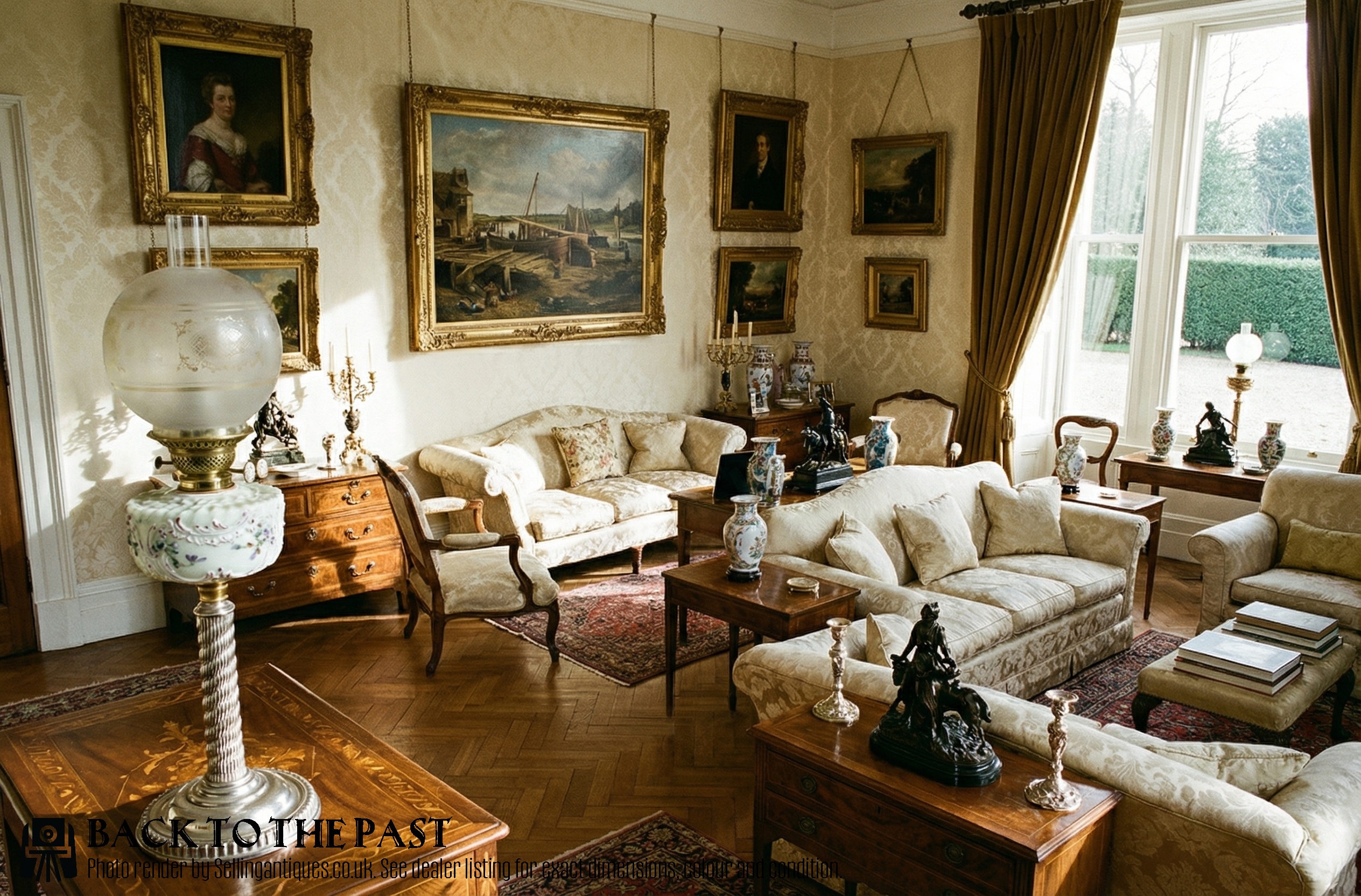
Frosted Shade Oil Lamp
A frosted shade oil lamp is a domestic lighting fixture designed to burn paraffin or oil, topped with a distinctive translucent glass globe. When searching for a frosted shade oil lamp, buyers encounter pieces spanning the nineteenth century, including Victorian and Edwardian examples.
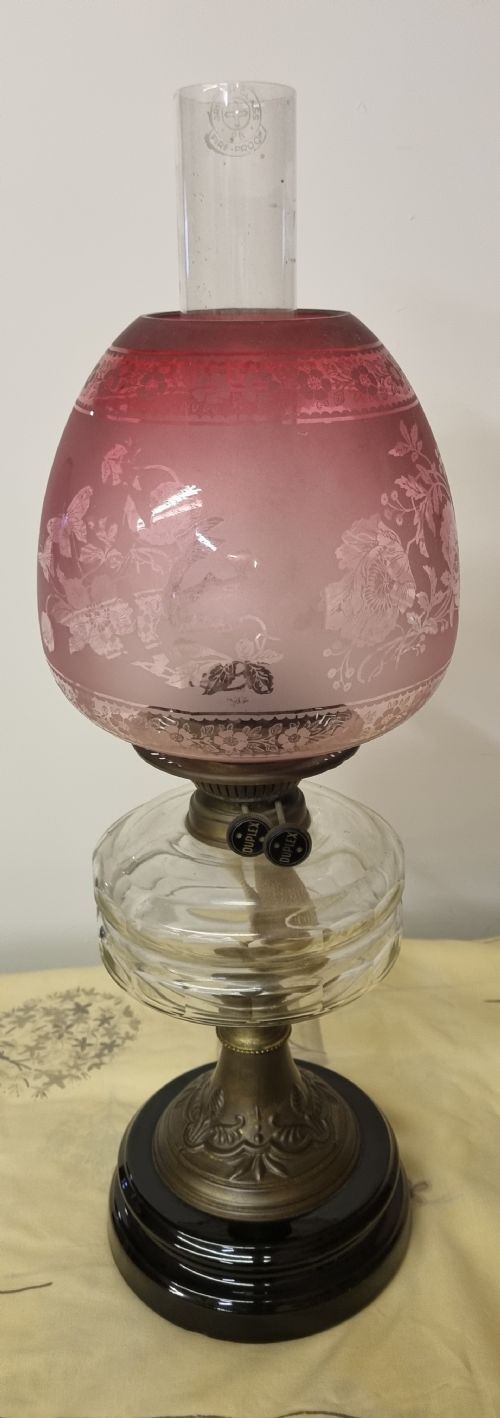
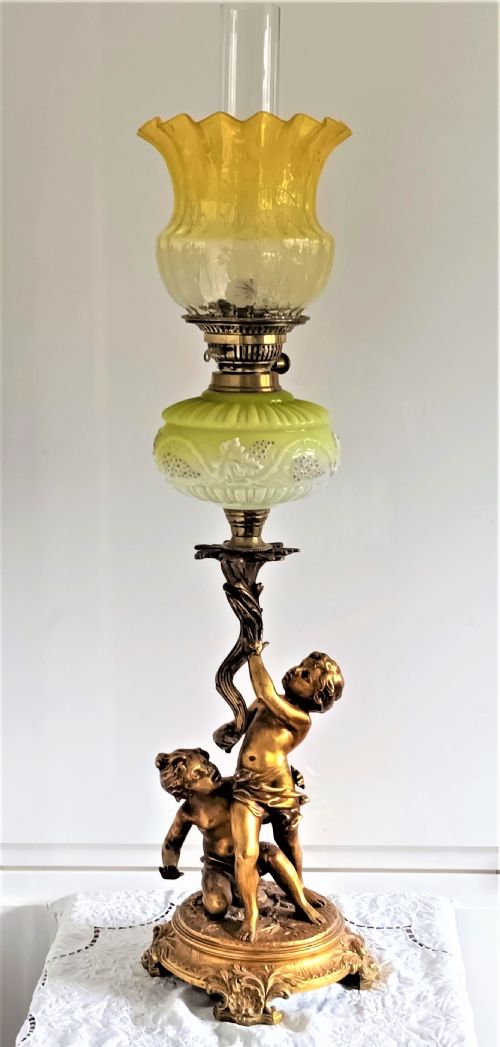
The objects listed on this page combine functional metal bases with decorative glass elements. Most feature brass or silver-plated stands paired with contrasting coloured glass fonts and shades.
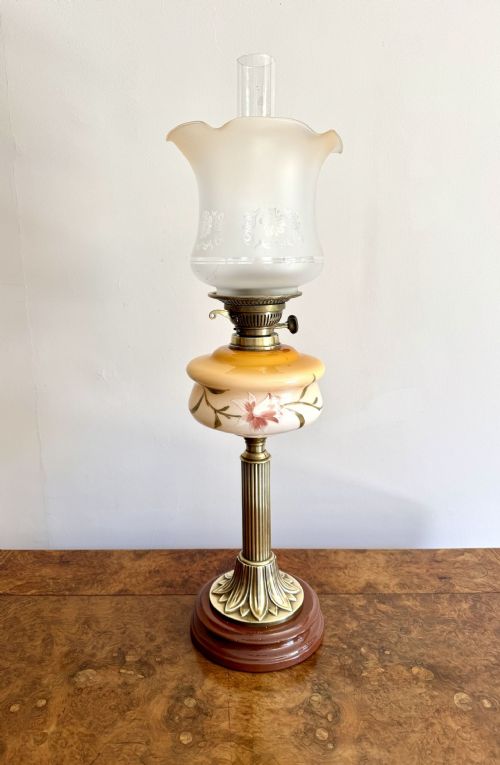
Common regional styles include British production and French chateau influences. Table lamps dominate the selection, often incorporating telescopic stands or reeded columns.
Materials and construction
Makers constructed the structural components from heavy cast brass, bronze, and silver-plated metal to ensure stability for the fuel reservoir. Many stands incorporate adjustable mechanisms and embossed detailing.
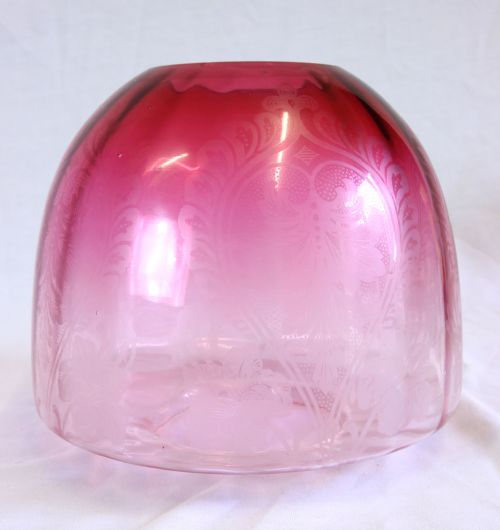
The upper portions utilise various types of glass, notably frosted glass, cranberry glass, and opaline, sometimes enhanced with cut or etched decoration. Fonts and shades are frequently paired in contrasting hues such as pink, blue, green, and clear crystal.
Current listings feature Victorian and Edwardian pieces, incorporating brass, cranberry glass, and silver plate.
Indicators of quality
Quality in these pieces rests upon the weight and casting finish of the metal stand, alongside the complexity of the glasswork. Heavier brass columns and crisp embossing distinguish superior examples from simpler production.
The artistry of the glass shade further defines the standard of the lamp. Finely etched or uniformly frosted glass in rich colours like cranberry or pale green commands attention.
Sitzendorf porcelain·Hinks·Messengers·Harrods
The Frosted Shade Oil Lamp Glossary
- Font
- The container holding the oil or paraffin fuel, typically made from glass or ceramic and set into the metal base.
- Duplex
- A double-wick burner system developed to provide a brighter flame than single-wick predecessors.
- Opaline glass
- An opaque or translucent glass, often pastel in tone, frequently used for nineteenth-century lamp shades.
- Reeded column
- A vertical pillar decorated with parallel convex mouldings, common in Victorian brass lamp stands.
Frosted Shade Oil Lamp: Frequently Asked Questions
How do I operate an antique oil lamp?
Operating these lamps involves filling the glass or metal font with clean paraffin oil and allowing the cotton wick to saturate thoroughly before lighting. Adjust the thumb screw on the burner to control the flame height once ignited.
Keep the wick trimmed straight to prevent smoke and ensure an even, steady glow from the frosted shade.
Were these lamps converted to electricity?
Many surviving examples retain their original duplex burners and interior workings, whilst others have been safely adapted for modern electrical use. Conversion methods vary, with some alterations remaining reversible for purists.
Inspect the collar and burner assembly to determine whether the original fuel mechanism is intact or if wiring has been threaded through the column.
How do I clean frosted glass shades?
Wash frosted glass gently in warm water using a mild, unscented soap and a soft cloth. Avoid abrasive sponges or harsh chemicals that can damage the delicate matte texture of the frost.
Dry the glass thoroughly with a lint-free towel before placing it back onto the brass gallery to prevent water spots.
How can I date a brass oil lamp?
Dating relies on stylistic markers such as the presence of a reeded column, heavy cast brass bases, or specific burner patents from the Victorian and Edwardian eras. Aesthetic details like Art Nouveau curves or Rococo revival scrolls provide further clues.
Look for maker stamps on the brass thumb wheels or burner galleries, which often record the manufacturing firm or patent year.