




Frosted Shade Desk Light
A frosted shade desk light combines functional illumination with period character, offering tactile glass and metal forms designed to anchor a workspace.
Frosted Shade Desk Light
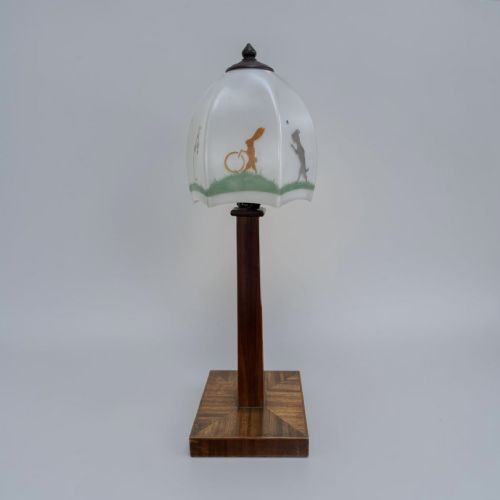
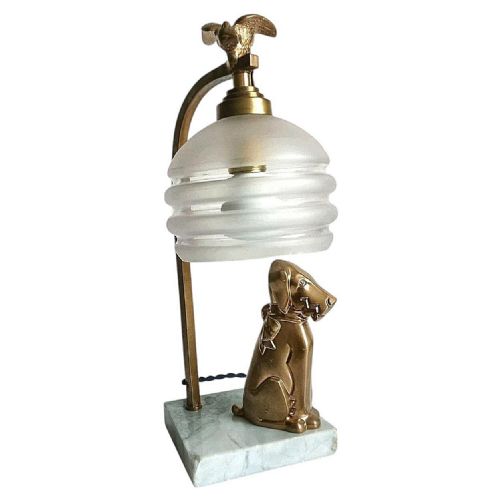
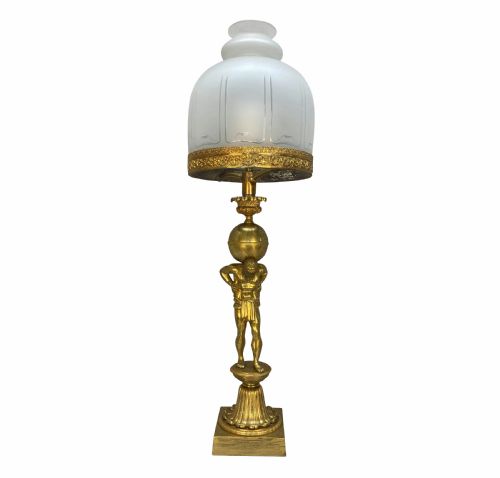
A frosted shade desk light encompasses task illumination and decorative lighting drawing on periods from the nineteenth century through the Art Deco era and the 1930s. Buyers seeking a frosted shade desk light will find examples spanning Victorian brass columns, Edwardian swan neck profiles, and French Art Deco figural compositions.
The dominant forms on this page include adjustable brass desk lamps, heavy cast bronze bases, and sculptural novelty pieces incorporating glass shades. These range from traditional English and German workshop pieces to ornate French designs featuring animals, figures, and geometric motifs.
The selection reflects both utilitarian workspace lighting and grander salon or library lamps adapted for modern desks. Materials span heavy metals paired with textured glass, capturing the transition from paraffin oil burners to electrified lighting.
Materials and construction
Makers constructed these lamps using durable metals including brass, chrome, gilt bronze, spelter, and wrought iron to form stable bases and adjustable stems. Metal components were cast, spun, or plated, providing structural integrity for heavy glass shades.
Shades and vessels utilise frosted glass, opaline, crystal, and peach glass, often moulded or acid-etched to diffuse light softly. Workshops such as Muller Bros and Degue specialised in artistic glass production, while Baccarat contributed fine crystal and figural glass elements.
Judging quality and execution
Quality reveals itself in the weight and purity of the metal casting, whether finely chased gilt bronze or heavier brass, contrasted with lighter plated metals and spelter. Superior pieces display crisp detailing in figural elements, from avian subjects to classical figures.
The integration of the frosted shade dictates the overall refinement, where heavy moulded or signed glass shades sit securely within purpose-built galleries. Finer examples maintain original surface patination, high-grade switches, and harmonious proportions between base and shade.
Muller Bros·Degue·Baccarat·Walther and Sohne
The Frosted Shade Desk Light Glossary
- Frosted glass
- Glass treated by acid-etching or sandblasting to create a textured, opaque surface that diffuses light. This treatment softens glare for task lighting.
- Art Deco
- A design style dominant in the 1920s and 1930s characterised by streamlined geometric forms, sleek metals, and stylised animal or human figures.
- Spelter
- An alloy of zinc and lead used as a cheaper alternative to bronze for casting decorative lamp bases. It is typically painted or bronzed to simulate heavier metal.
- Swan neck
- A curved metal arm allowing the lamp shade to be angled downward over a desk or workspace. This adjustable form is common in Edwardian designs.
- Opaline glass
- An opaque, milky-white glass popular in nineteenth-century lighting. It diffuses a soft, even glow similar to frosted varieties.
Frosted Shade Desk Light: Frequently Asked Questions
How do I date a brass desk lamp?
Dating relies on stylistic markers and manufacturing techniques visible in the base and switch mechanism. Victorian and Edwardian pieces often feature heavy cast brass or reeded columns, whereas 1930s examples lean towards streamlined chrome or geometric Art Deco lines.
Examining the wiring port, gallery fittings, and fastener types helps narrow the decade of production. Patent marks or maker signatures etched into the glass shade offer definitive chronological clues.
Were these lamps originally electric?
Many nineteenth-century and early twentieth-century examples began life as oil or paraffin burners before later conversion to electricity. Victorian crystal and brass standards frequently started as liquid-fuel lamps.
Later Edwardian and Art Deco designs were conceived specifically for electric bulbs, featuring integrated switches and internal wiring channels. Conversions are standard practice for antique lighting to ensure modern safety compliance.
How do I clean a frosted glass shade?
Cleaning requires warm water and mild dish soap applied with a soft cloth to protect the textured surface. Abrasive sponges or harsh chemical cleaners should be avoided to prevent stripping the frosted finish.
Shades must be completely dry before reattachment to metal galleries. Careful handling prevents chipping the delicate rims where the shade mounts to the lamp.
What is the difference between spelter and bronze?
Bronze is a robust alloy of copper and tin capable of holding sharp, intricate chisel work and deep patination. Spelter is a softer, zinc-based alloy that is lighter in weight and more brittle.
Figural lamps from the Art Deco period often used spelter to economise on production costs while maintaining sculptural detail. A magnet will not stick to either material, but bronze feels noticeably heavier and cooler to the touch.