

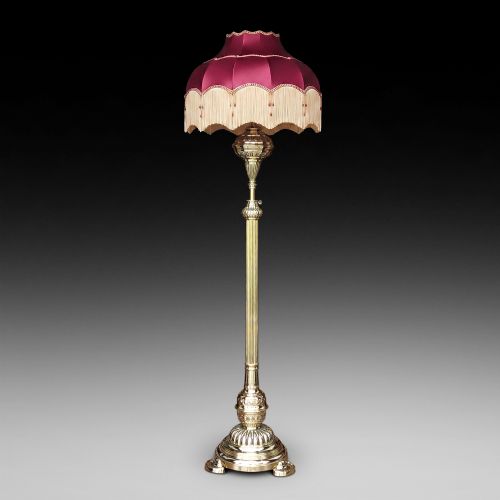
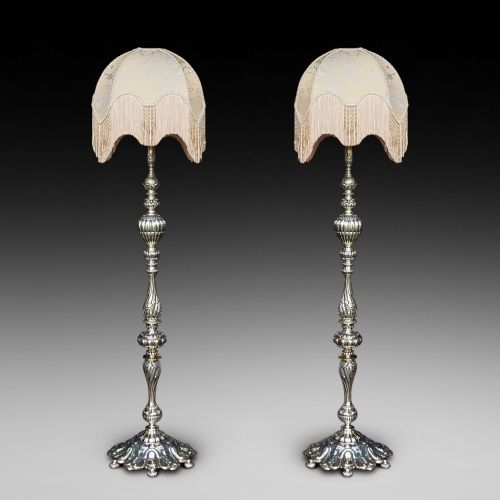


Fringed Shade Floor Lamp
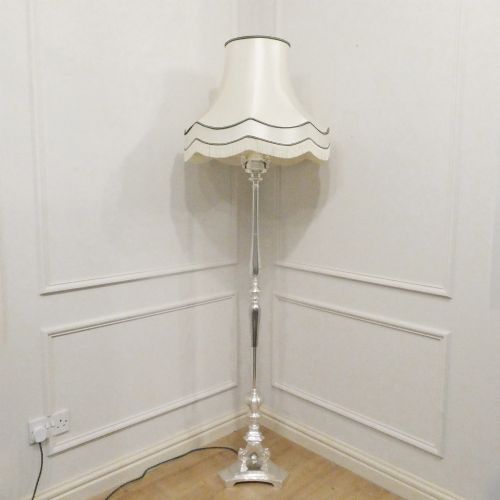
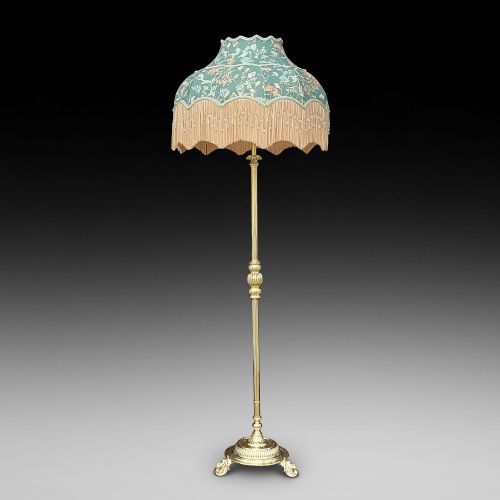
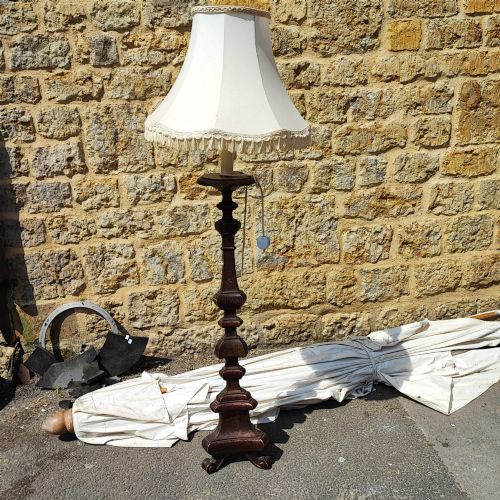
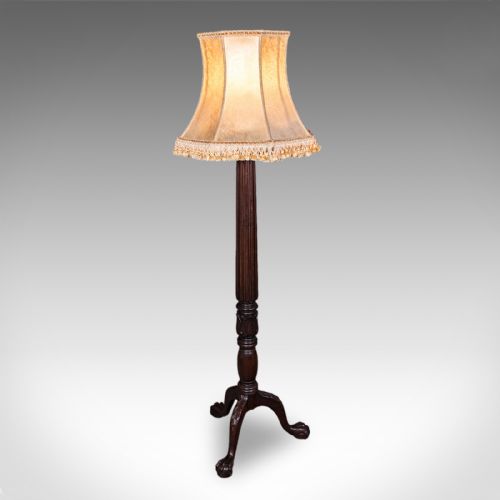
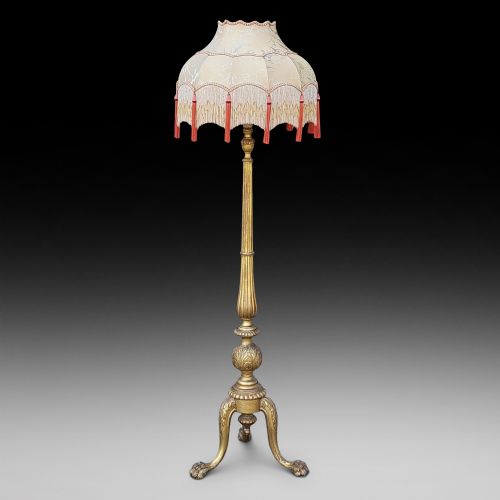
A fringed shade floor lamp brings warm illumination and period presence to a corner, combining sturdy upright standards with decorative fabric tops.
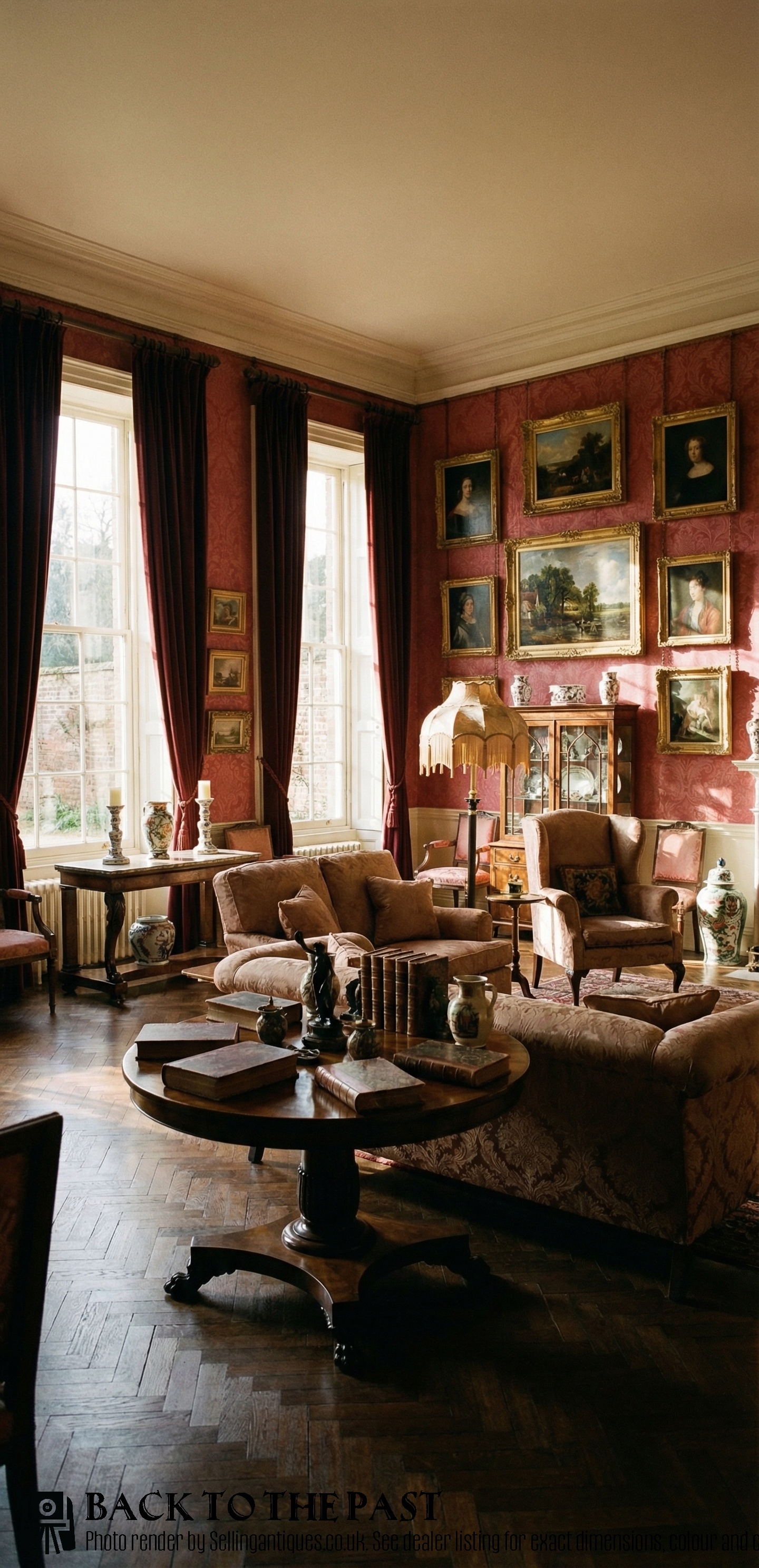
Fringed Shade Floor Lamp
A fringed shade floor lamp acts as a tall vertical lighting fixture designed to stand directly on the floor. These pieces frequently appear under various historical designations such as standard lamps or floor lights.
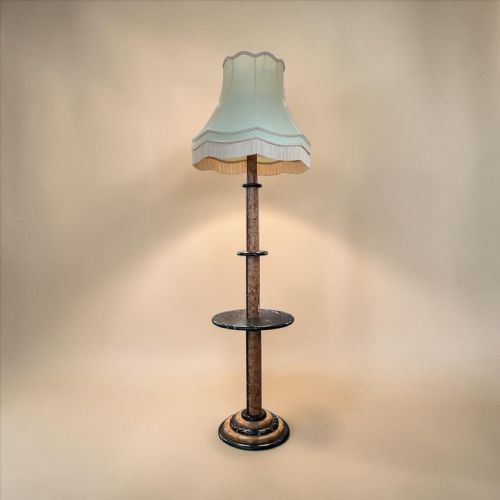
The selection ranges across several distinct eras, notably the Victorian, Edwardian, and Art Deco periods. Makers of these upright lights utilised diverse silhouettes, from slender fluted columns to telescopic mechanisms and combined table stands.
Materials span heavy metals like brass alongside carved mahogany, giltwood, beech, marble, and wrought iron. Many examples incorporate adjustable heights or oil conversion fittings derived from earlier domestic lighting.
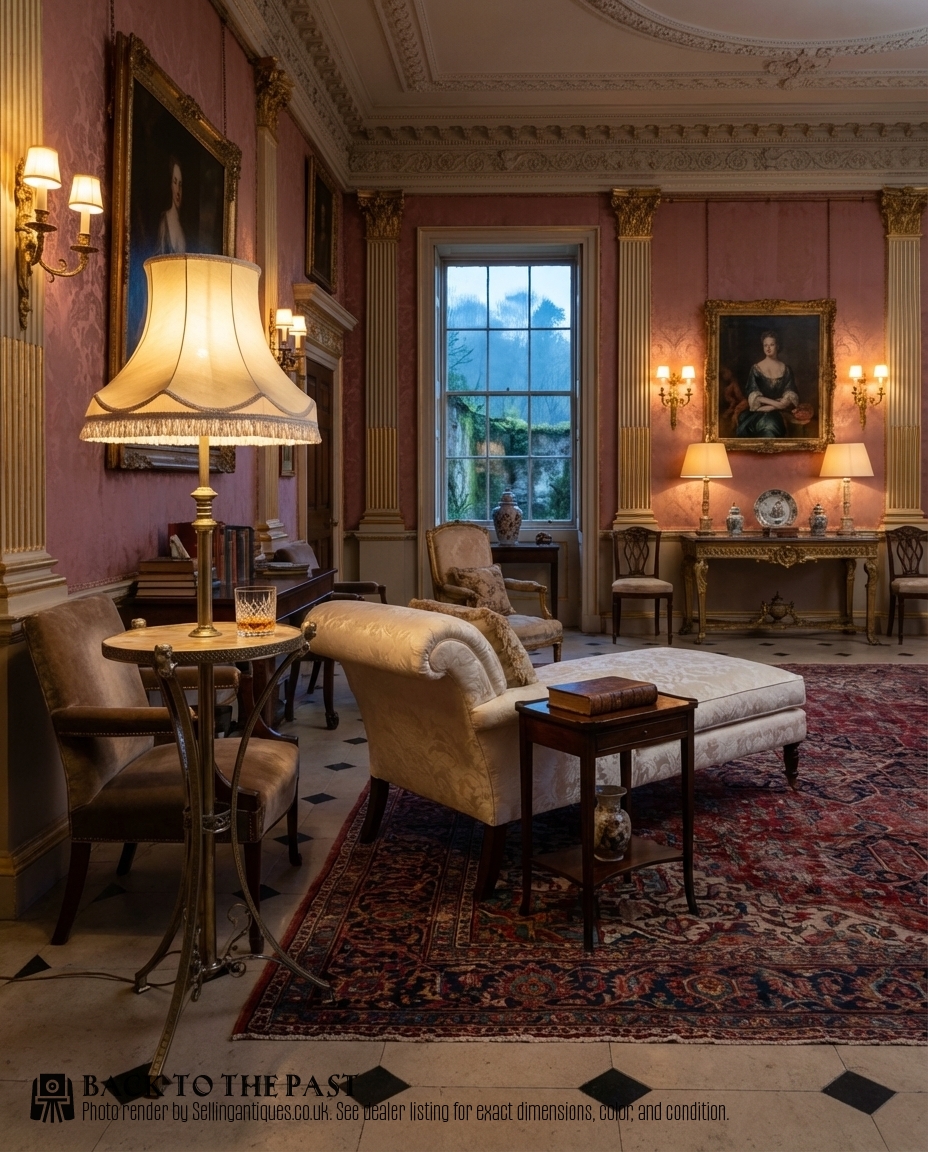
Materials and construction methods
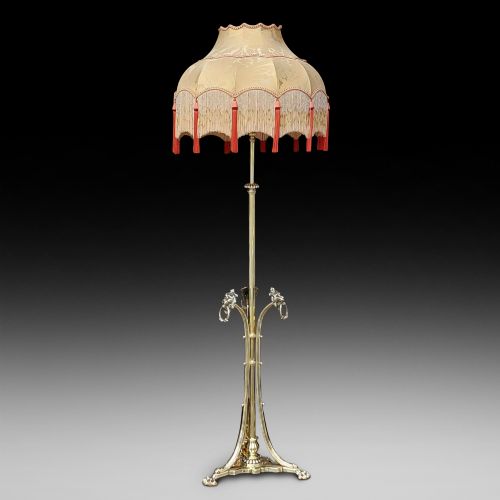
Metal standards rely heavily on cast and spun brass, often featuring ornate floral openwork bases, Corinthian capitals, or telescopic shaft assemblies. Iron and bronze also appear, providing the necessary weighted base for tall upright forms.
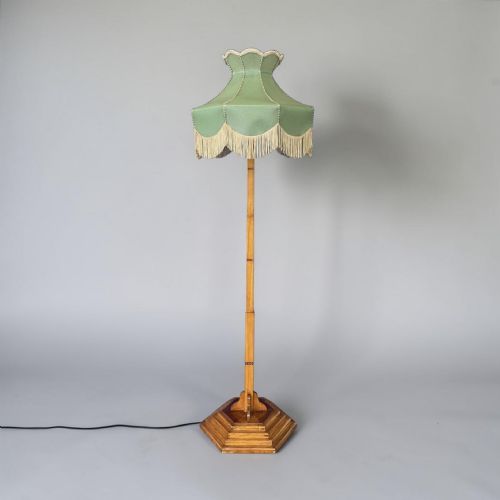
Timber examples employ turned or carved mahogany, beech, and giltwood. Workshops shaped these woods into substantial columns or incorporated specialised furniture attachments such as integrated table surfaces and book carriers.
Fabric elements and applied fringes complete the structural composition atop the stands. Metal frameworks support these textile shades, diffusing light across the room.
Fringed Shade Floor Lamp Retail Price Guide 2026
Typical asking prices for fringed shade floor lamp among the pieces listed under this phrase on Sellingantiques today, from the lower quarter to the upper quarter. They describe what is for sale here now, not the wider market.
Several Victorian brass standards began life as oil lamps before finding new purpose with electric bulbs and fabric fringes.
Assessing quality in construction and detail
Quality rests in the substance of the materials and the crispness of the carving or metal casting. Solid brass columns with intricate openwork bases and heavy gauge metals demonstrate superior workmanship compared to lighter, plain assemblies.
The integration of mechanical functions distinguishes finer pieces, particularly smoothly operating telescopic height adjustment mechanisms and solid brass screw keys. Robust weighted bases ensure stability for tall vertical standards.
Timber selection and joinery define the wooden variants, where deeply carved mahogany details or fire-gilt surfaces on giltwood show higher skill levels than simple turned beech poles.
Hinks of B'ham·Messenger
The Fringed Shade Floor Lamp Glossary
- Standard lamp
- A traditional British term for a floor lamp, describing an upright lighting standard designed to rest directly on the floor. These fixtures often support large fabric shades.
- Telescopic
- A construction method allowing the vertical shaft to extend or contract in height. This mechanism uses inner sliding tubes secured by a thumbscrew.
- Corinthian
- A classical architectural order featuring ornate capitals decorated with acanthus leaves. This style frequently tops brass and bronze floor columns.
- Giltwood
- Timber treated with gold leaf or gilt preparation to create a lustrous metallic finish. It appears on carved decorative floor standards.
- Steamer lamp
- A specialised marine or adjustable oil lamp design adapted for steady upright use on ships or in homes. These pieces often feature weighted bases for stability.
Fringed Shade Floor Lamp: Frequently Asked Questions
What is a standard lamp?
A standard lamp is simply the traditional British name for a floor lamp, denoting a tall upright fixture that stands on the floor to illuminate a room.
These pieces typically support a decorative shade at eye level and can be moved around a living space as needed.
How do I identify a Victorian floor lamp?
Victorian floor lamps often feature heavy brass construction, ornate openwork bases, or telescopic oil lamp mechanisms that were later converted for electricity.
Look for period details like Corinthian capitals, turned wooden columns in mahogany, and heavy weighted bases designed to support large fabric shades safely.
Where should I place a floor lamp?
These tall lighting pieces suit dark corners, beside reading armchairs, or next to low sofas where they can cast downward light.
Because they occupy vertical space efficiently, they work well in rooms where table space for smaller lamps is limited.
What styles are available?
The available styles span Victorian, Edwardian, Art Nouveau, Art Deco, Neoclassical, and Arts and Crafts designs.
Materials range from polished brass and wrought iron to carved mahogany, giltwood, and marble columns.