



Fringe Shade Floor Lamp
A fringe shade floor lamp brings soft, diffused light and period character to a room through fabric, brass and carved wood.

Fringe Shade Floor Lamp
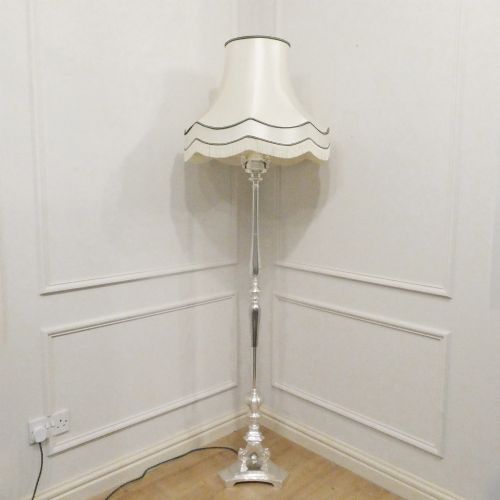
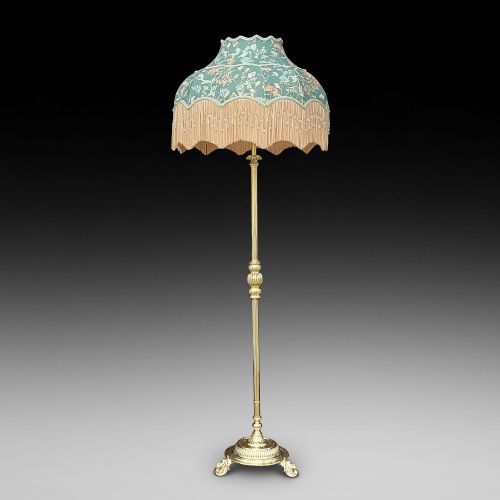
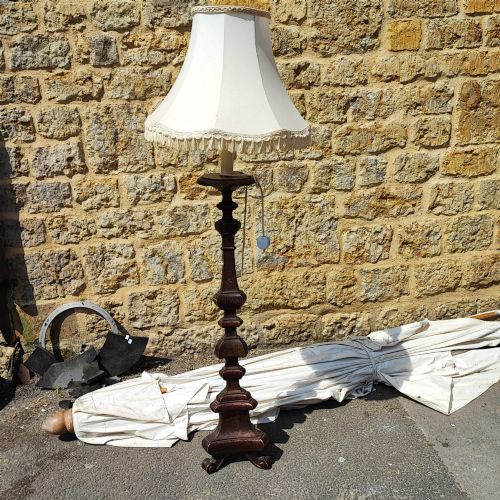
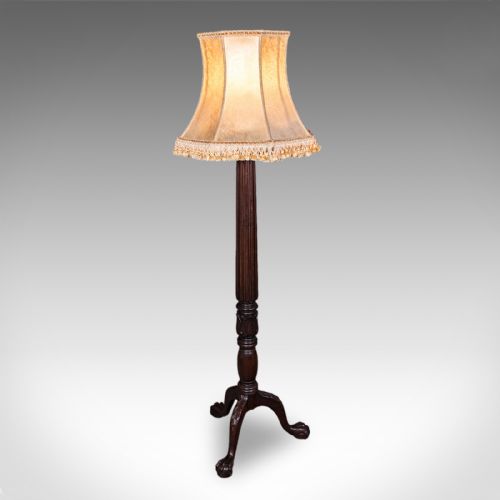
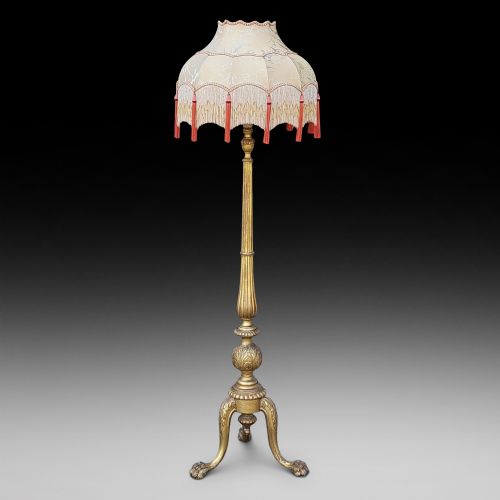
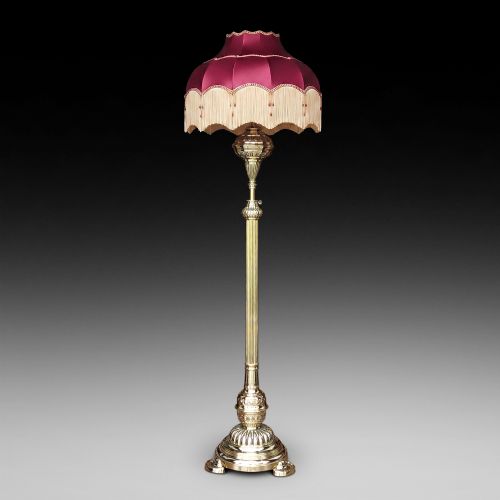
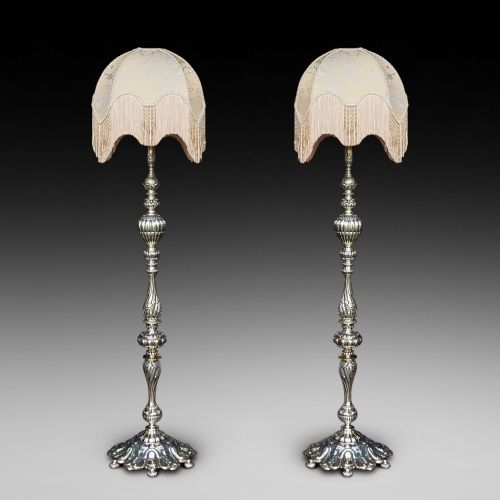
A fringe shade floor lamp combines a tall standard upright with a decorative fabric shade finished with hanging fringe trims. These pieces emerge across the Victorian, Edwardian and Art Deco periods, evolving from early oil burners and adjustable steamer lamps to electricity.
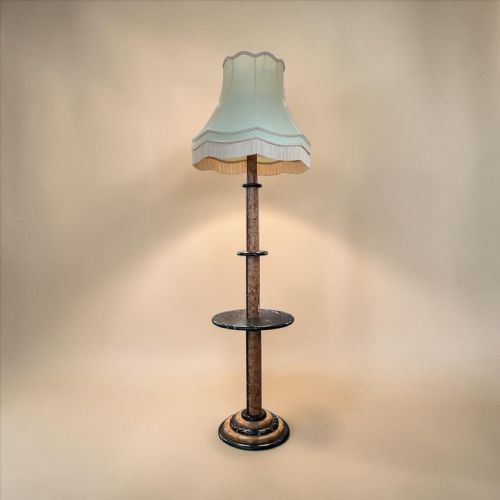
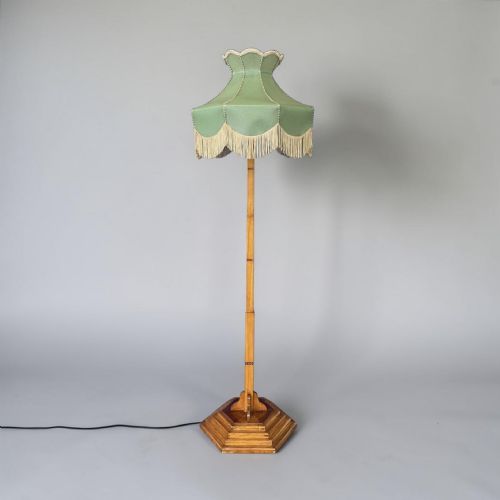
Buyers encounter solid marble tables, carved mahogany, giltwood and heavy brass constructions on this page. The forms range from simple turned beech columns to ornate Neoclassical and Art Nouveau designs with floral openwork bases.
Originating in domestic interiors from the late nineteenth century through to the 1930s, these standards provide both functional illumination and substantial decorative presence. The selection reflects diverse historical revivals alongside distinct period craftsmanship.
Materials and construction methods
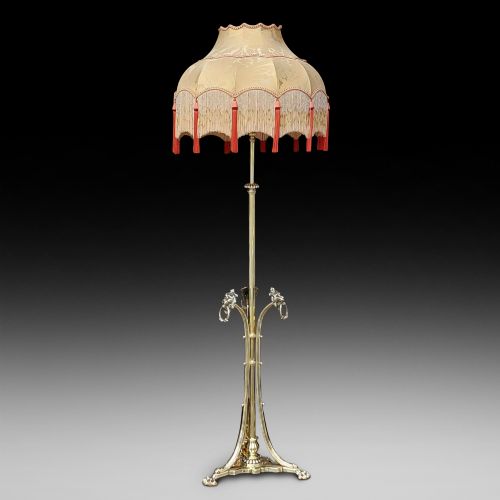
Makers utilised heavy metals like brass, iron and gilt bronze alongside carved timbers such as mahogany, beech and giltwood. Metal standards frequently incorporate telescopic mechanisms, adjustable stems and weighted bases for stability.
Fabric shades paired with fringe elements were hand-sewn onto wire frames, complementing polished stone elements like marble and onyx. Joinery, turned wood sections and cast metal detailing define the structural integrity of these pieces.
A steamer lamp allowed travellers to steady their reading light against the gentle sway of a ship.
Assessing quality and craftsmanship
Quality rests in the weight of the metalwork, the depth of hand-carving in the timber and the precision of mechanical adjustments. Superior examples feature robust telescopic mechanisms and substantial bases of solid brass, marble or carved giltwood.
Refinement shows in the crispness of floral openwork, the joinery of turned columns and the integrity of period surface finishes like black lacquer or gilding. Lesser pieces rely on lighter gauges of metal and simpler, unadorned turnings.
Hinks of B'ham·Messenger
The Fringe Shade Floor Lamp Glossary
- Standard lamp
- A traditional British term for a floor lamp, describing a tall upright light fixture designed to stand on the floor. These pieces often support large fabric shades and elaborate decorative columns.
- Telescopic
- A construction feature allowing the height of the lamp standard to be adjusted up and down. This mechanism is frequently found on brass and oil-converted standards from the Victorian and Edwardian eras.
- Giltwood
- Timber that has been coated with a thin layer of gold leaf or gold paint. This technique provides a decorative, reflective surface seen on Neoclassical and French-influenced floor lamps.
- Chinoiserie
- A decorative style reflecting European interpretations of Chinese artistic traditions. On these pieces, it appears as hand-painted black lacquer work.
- Corinthian
- An architectural order featuring ornate capitals decorated with acanthus leaves. Brass standard lamps frequently adopt this column style for their upper shafts.
Fringe Shade Floor Lamp: Frequently Asked Questions
What is a fringe shade floor lamp?
A fringe shade floor lamp is a tall lighting standard topped with a fabric shade edged in decorative hanging fringe. These pieces combine period uprights in brass, wood or marble with soft, diffused illumination.
They serve as prominent decorative objects in a room while providing functional ambient light. The designs span several decades of historic styles and manufacturing techniques.
How do I identify a Victorian standard lamp?
Victorian standards typically feature heavy brass construction, adjustable oil lamp mechanisms or telescopic stems. You will often find ornate details such as floral openwork bases or Corinthian capitals.
Many of these pieces were later converted from oil to electricity while retaining their original nineteenth-century metalwork and proportions.
Where were standard lamps placed historically?
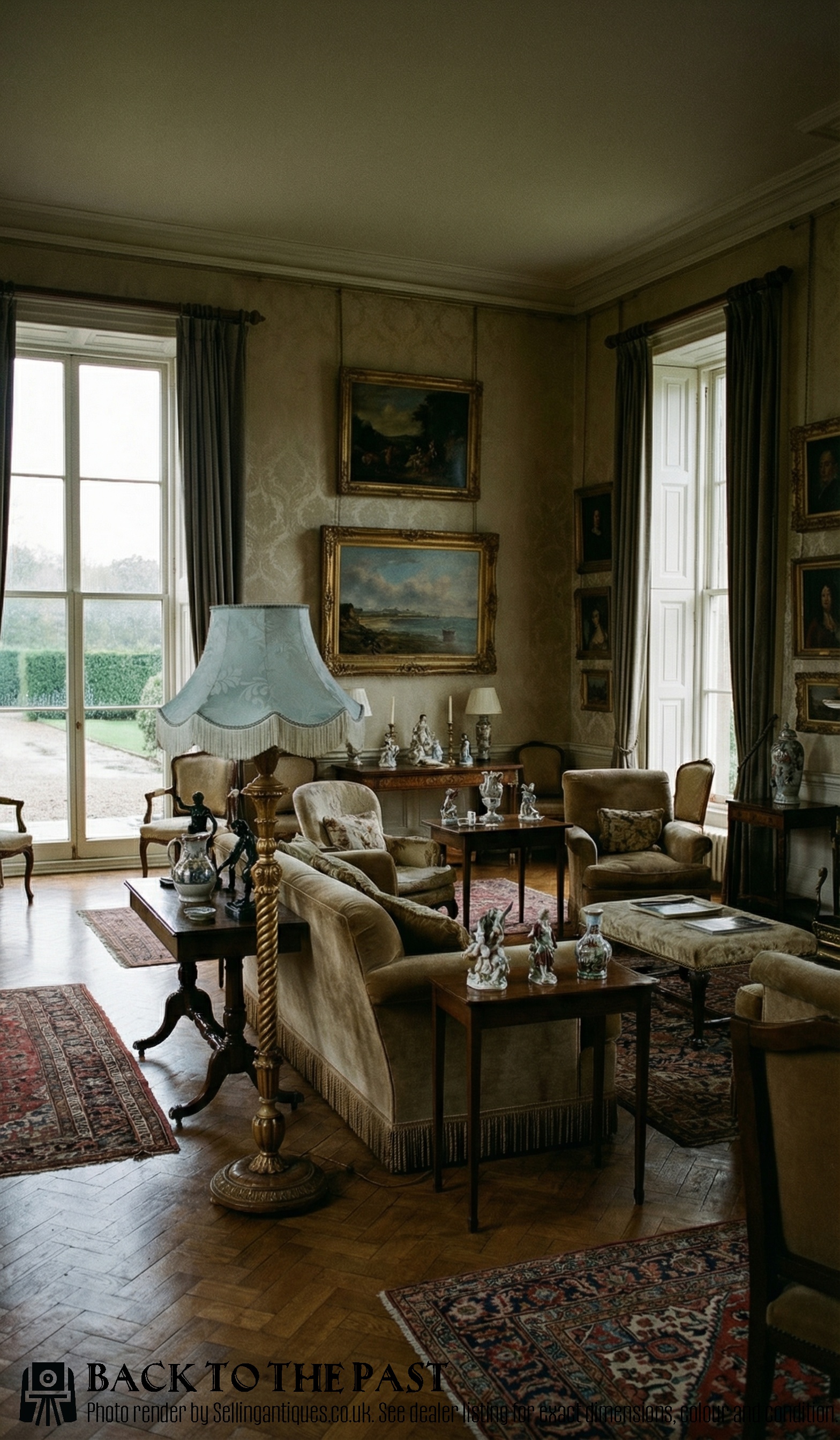
Historically, standard lamps were positioned in principal reception rooms, parlours and libraries to provide adjustable reading light. Their decorative bases and fabric shades complemented heavy period upholstery and drapery.
In contemporary spaces, they function effectively beside armchairs or in corners to create warm pools of indirect light.
What materials are used in these lamps?
The listings show a combination of metals, woods and stone, including brass, wrought iron, gilt bronze, mahogany, beech, giltwood, marble and onyx. Shades incorporate textiles finished with fringe trim.
Different periods favoured distinct materials, moving from heavy brass and carved timber in the Victorian era to lighter woods and marble in the 1930s.