


Frilled Glass Shade
A frilled glass shade transforms plain light into period warmth, bringing soft texture to period brass and iron light fittings.
Frilled Glass Shade
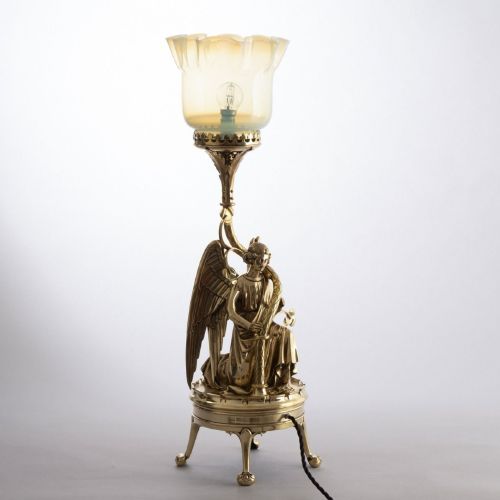
When you search for a frilled glass shade, you encounter blown and moulded glass diffusers created to crown gaseliers, oil lamps, pendants, and wall sconces. These decorative coverings soften glaring illumination while adding a distinct silhouette to domestic lighting fixtures.
The versions met most frequently on this page span the Victorian era, the Edwardian period, and the nineteen-thirties, reflecting domestic lighting revivals from the nineteenth century onward. They appear alongside complete table lamps, floor lamps, and ceiling pendants formed from brass, copper, and silver plate.
Surviving examples range from vibrant cranberry and vaseline glass to frosted, etched, and pink crimped variants. Each piece demonstrates the domestic taste for colourful, textured illumination that defined late nineteenth and early twentieth century interiors.
How they were made
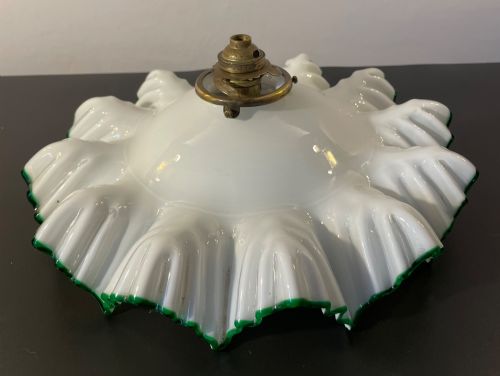
Glassmakers shaped these pieces by blowing molten metal into moulds or gathering it freehand before manipulating the rim with tongs or paddles while hot. This hot-forming technique created the characteristic crimped, ruffled, or frilled edges seen on period lampshades.
Makers incorporated metallic oxides into the glass batch to achieve distinct hues such as cranberry, vaseline, ruby, and green. Surface decoration was frequently completed through acid etching, frosting, or surface tinting before the glass went through an annealing process to relieve internal stress.
Listings feature items spanning the nineteenth century through the nineteen-thirties, incorporating brass, copper, and silver plate.
What varies in quality
Quality reveals itself in the weight and consistency of the glass, alongside the depth and regularity of the crimped frill. Superior examples display even colour saturation and careful hand-manipulation at the rim rather than rushed or heavy-handed moulding.
The sophistication of surface treatment separates standard production from finer work, particularly in etched patterns and the richness of coloured glass batches. Original fitment collars that remain smooth and undamaged at the base indicate careful handling over generations.
Farraday and Son·W A Benson·Meissen
The Frilled Glass Shade Glossary
- Cranberry glass
- Transparent red glass coloured with gold chloride during the melting process. It produces a distinctive pinkish-red tone popular in Victorian lighting.
- Vaseline glass
- Transparent yellow-green glass containing uranium dioxide, which glows under ultraviolet light. It appears frequently in Edwardian and late nineteenth-century shades.
- Crimped edge
- A ruffled or fluted rim shaped by hand or tool while the glass remains hot. This technique defines the silhouette of a frilled shade.
- Fittment collar
- The narrow base section of a lampshade designed to slide into a metal gallery and secure with screws. Its diameter determines compatibility with specific lamp bases.
Frilled Glass Shade: Frequently Asked Questions
How do I fit a frilled shade?
These shades mount into a metal gallery ring attached to an oil lamp, pendant, or wall sconce. Three thumbscrews tighten against the lower collar to hold the glass securely in place.
Ensure the screws are tightened gently to avoid cracking the collar while supporting the weight of the shade evenly.
Are these shades fragile?
Victorian and Edwardian glass relies on traditional blown and pressed techniques that produce relatively thin walls, particularly around decorative frills. Regular handling requires care, especially when cleaning or changing bulbs.
Support the body of the glass rather than the ruffled rim when lifting or installing the piece.
How do I clean antique glass shades?
Wash the glass in warm water using mild soap, avoiding harsh abrasives that can damage etched surfaces or thin tints. Rinse thoroughly and dry with a soft cloth to preserve the clarity of the material.
Remove the shade from the metal fitting before cleaning to prevent moisture damage to antique brass or silver-plated components.
How can I tell the period of a shade?
Dating relies on glass colour, manufacturing technique, and collar dimensions matching the period of the associated lighting fixtures. Victorian examples often feature intense cranberry or vaseline tones with hand-crimped rims, while nineteen-thirties pieces show simpler French pendant forms.
Matching the collar width to standard period gallery sizes helps confirm original compatibility with gas or oil lamp burners.