



Frilled Cranberry Glass
Frilled cranberry glass brings rich pink tones and ruffled rims to Victorian and Edwardian interiors, making these pieces sought after for their striking colour.
Frilled Cranberry Glass
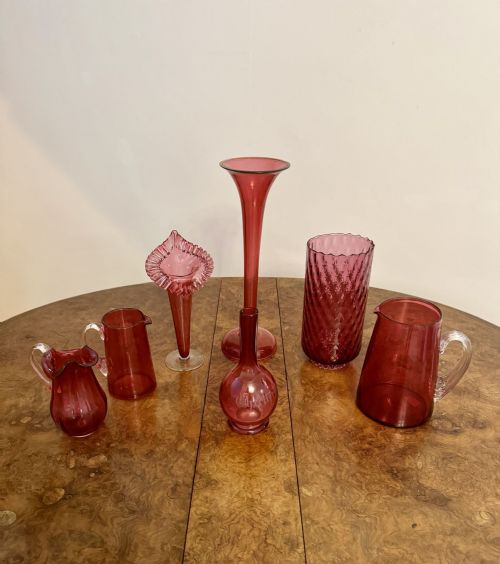
Frilled cranberry glass encompasses a variety of decorative and functional items, from oil lamps and ceiling shades to preserve dishes and vases, all sharing a distinct pink or ruby hue. When searching for frilled cranberry glass, buyers most frequently encounter Victorian oil lamps, baskets, and dishes featuring crimped or ruffled edges.
The objects span the nineteenth and early twentieth centuries, with a strong representation of Victorian and Edwardian examples. Forms range from dressing table display domes and biscuit barrels to large pendant lampshades and epergnes, reflecting the versatile application of this glasswork in period homes.
Materials and construction
These pieces are produced using glass incorporating a gold salt additive to achieve the characteristic cranberry colour, often paired with brass, silver plate, or clear glass elements. The distinctive frilled or crimped rims are shaped while the glass is hot and pliable.
Mountings and stands frequently utilise brass or silver plate, particularly in oil lamps, floor lamps, and preserve dish holders. Etched glass patterns and ebonised ceramic details also appear across the selection of lighting and tableware.
Listings feature 19th Century, Georgian, Edwardian, and 1920s periods, incorporating brass, silver plate, and gold salt additive materials.
Distinguishing quality in pieces
Quality in frilled cranberry glass is evident in the depth and evenness of the colour, the complexity of the glass forming, and the integration with metal mounts such as brass or silver plate. Heavier glass bodies and more intricate crimping separate finer examples from simpler production pieces.
The condition of the ruffled edges and the integrity of associated stands or shades dictate the standing of an item. Pieces retaining original matching components, such as burners on oil lamps or paired preserve bowls, represent the higher end of the range.
The Frilled Cranberry Glass Glossary
- Cranberry glass
- A type of transparent pink glass coloured by the addition of gold salts to the molten batch. It gained immense popularity during the Victorian era for tableware and decorative items.
- Frilled
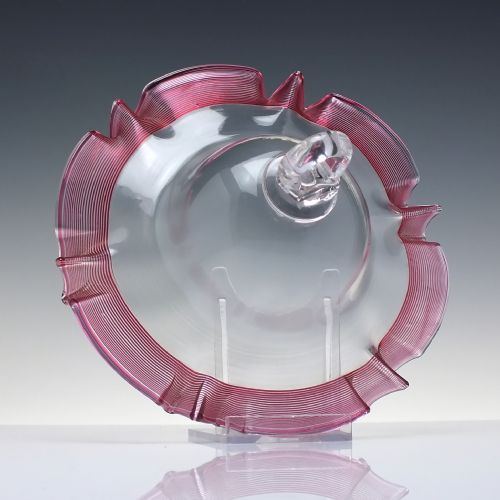
- A decorative edge shaped into ruffles or crimps while the glass is pliable. This technique creates a distinctive scalloped silhouette on bowls, shades, and vases.
- Epergne
- A tabletop centrepiece consisting of a central bowl with multiple branching trumpets or vases. In this material, they serve to display cut flowers or simply catch the light.
- Biscuit barrel
- A covered container designed for storing dry biscuits at the dining table. Victorian versions in this glass often feature plated metal rims and lids.
Frilled Cranberry Glass: Frequently Asked Questions
How do I date frilled cranberry glass?
Dating relies heavily on stylistic markers such as the mountings, brasswork, and associated hardware found on lamps and dishes. Victorian pieces often display heavier cast brass bases, while Edwardian examples show lighter framing.
Form also provides clues, as dressing table domes and oil lamps point to nineteenth-century domestic habits, whereas early twentieth-century items often reflect transitional lighting designs.
How were these glass items used originally?
Frilled cranberry glass served both decorative and utilitarian purposes in period households, appearing on dining tables as preserve dishes and biscuit barrels. They added visual warmth to parlours and bedrooms when utilised as oil lamp shades and dressing table display domes.
Lighting fixtures cast a warm pink glow through the tinted glass, which made them particularly favoured for oil lamps and ceiling pendant lights in sitting rooms.
What is the difference between ruby and cranberry glass?
Ruby glass and cranberry glass both derive their rich red or pink tones from gold salt additives, but differ primarily in the saturation of the colour. Cranberry glass typically presents a lighter, transparent pink hue.
Ruby glass tends to appear darker and denser, though historical cataloguing often uses the terms interchangeably for Victorian tableware and lighting.
How do I clean antique cranberry glass?
Maintenance requires gentle hand washing in lukewarm water with mild soap to preserve the glass and any attached metal components. Harsh chemicals and abrasive sponges must be avoided to protect the surface.
Items with brass mounts or silver-plated stands require careful handling to ensure moisture does not damage the historical metalwork during cleaning.