

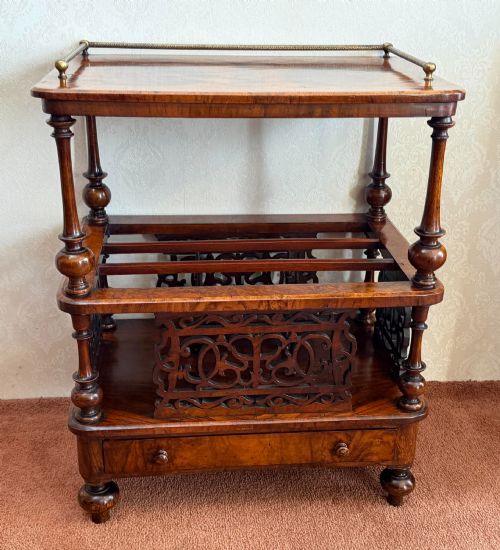
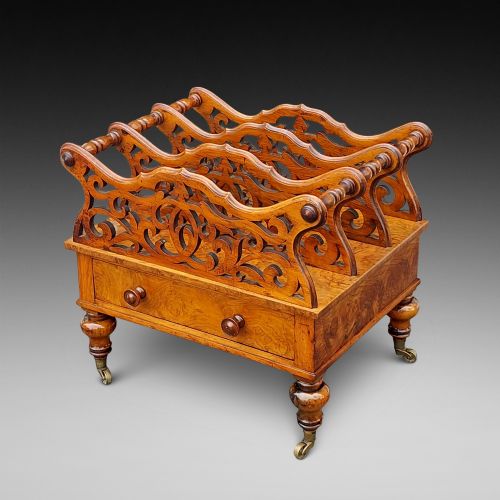

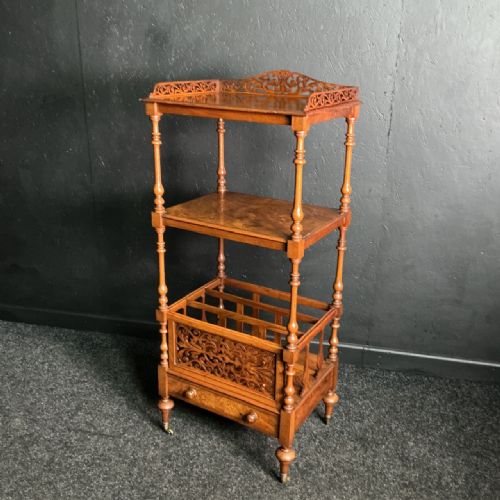
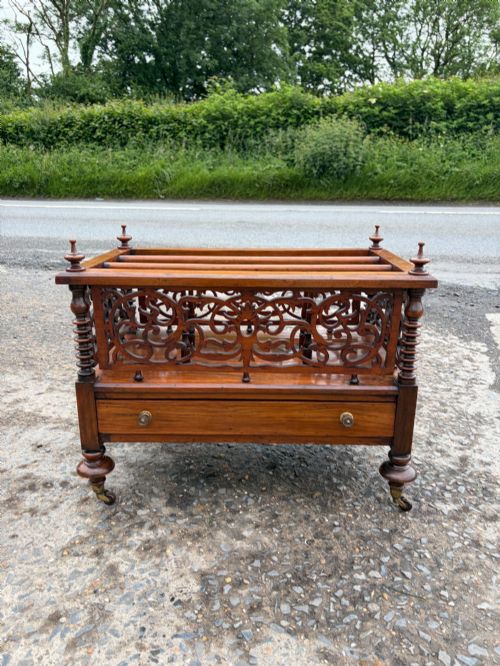


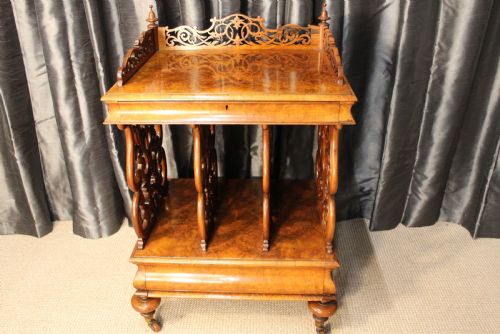


Fretwork Music Stand
A fretwork music stand brings Victorian craftsmanship into a room, offering both a functional folio holder and a striking decorative centrepiece.
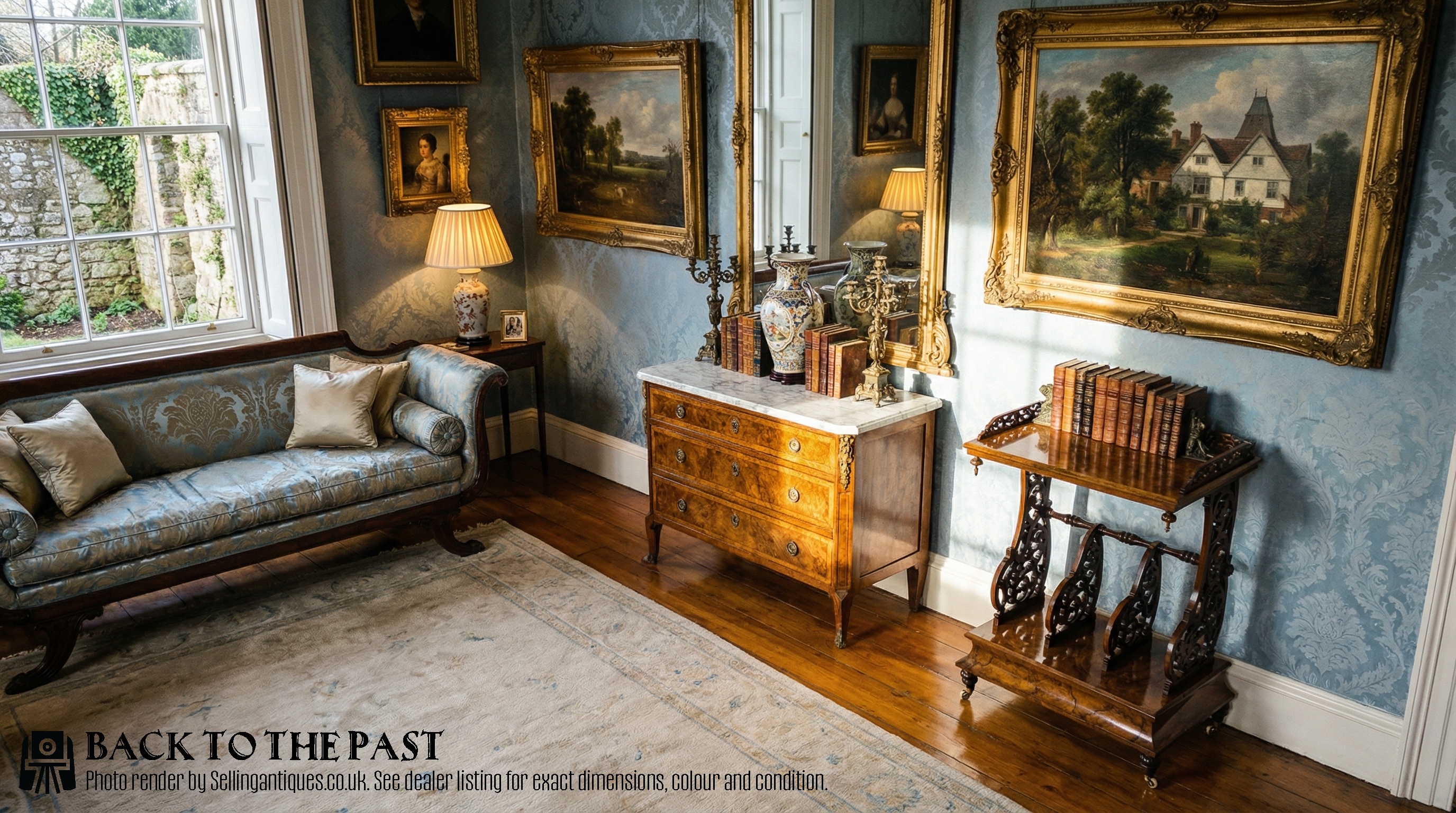
Fretwork Music Stand
When you search for a fretwork music stand, you encounter pieces that overlap with Victorian canterburys, whatnots and magazine racks. These items originate predominantly from the nineteenth century, spanning decades from eighteen fifty to eighteen eighty.
The form typically combines divided sections for folios and sheet music with pierced woodwork, occasionally appearing as an occasional table, lamp table or freestanding rack. Walnut, burr walnut, rosewood and mahogany dominate the offerings, occasionally supplemented by ceramic or porcelain components.
Many examples incorporate intricate pierced fretwork into their divisions, alongside stylistic influences such as Gothic Revival. Buyers are most likely to meet pieces featuring three pierced sections, lower drawers or multi-tiered whatnot structures.
Materials and construction
Cabinet makers utilised richly grained timbers such as burr walnut, rosewood and mahogany, often selecting veneers to highlight natural figures on table tops and panels. Solid timbers formed the structural frames, legs and upright supports necessary to bear the weight of heavy paper folios.
Pierced scrollwork and fretwork panels were laboriously hand-sawn or fretted out to create openwork patterns on the divisions and galleries. Brass castors, ceramic details and inlay work frequently completed the construction, adding mobility and ornamental contrast to the dark wood surfaces.
Fretwork Music Stand Retail Price Guide 2026
Typical asking prices for fretwork music stand among the pieces listed under this phrase on Sellingantiques today, from the lower quarter to the upper quarter. They describe what is for sale here now, not the wider market.
Materials recorded on this page include walnut, burr walnut, rosewood, mahogany, satinwood, brass, ceramic and porcelain.
Judging quality in nineteenth-century pieces
The distinction between standard items and superior examples lies in the depth of timber figure and the crispness of the pierced fretwork. Richly figured burr walnut and carefully matched veneers signal a higher grade of cabinet making than plain timber surfaces.
Structural integrity also separates the grades, visible in the joinery of the divided slots and the stability of the tier supports. Finer pieces demonstrate precision in their scroll-cut divisions and restraint in their inlaid decoration, maintaining balance across the whole stand.
The Fretwork Music Stand Glossary
- Canterbury
- A low piece of furniture with upright divisions designed for holding sheet music, folios or books. It often includes a small drawer beneath the main compartments.
- Whatnot
- An open set of multi-tiered shelves used for displaying ornaments or holding books, frequently combined with canterbury bases in Victorian designs.
- Fretwork
- Ornamental perforated woodwork created by cutting patterns through thin boards, commonly used on the divisions of music stands.
- Burr walnut
- A highly prized timber obtained from the warted growths of walnut trees, valued for its swirling, highly decorative grain patterns.
- Gothic Revival
- An architectural and decorative style drawing inspiration from medieval forms, noticeable in pointed arches and heavy structural motifs.
Fretwork Music Stand: Frequently Asked Questions
What is a music canterbury?
A music canterbury is a low compartmentalised stand designed specifically to hold sheet music, folios and books near an instrument.
Victorian makers frequently combined this storage purpose with occasional tables or magazine racks to suit contemporary drawing rooms.
How do I date a Victorian stand?
Dating relies on timber choices, construction techniques and stylistic markers recorded across the nineteenth century. Pieces from eighteen fifty to eighteen eighty often display characteristic burr walnut veneers or Gothic Revival influences.
Secondary woods, brass hardware and the complexity of the fretwork help narrow the period of manufacture further.
Where should I place a whatnot?
A whatnot functions well freestanding in a reception room or beside seating where its tiered shelves remain accessible. Its open design allows light to pass through while providing surface space for small objects.
Care should be taken to place timber pieces away from direct heat sources to protect the veneers.