

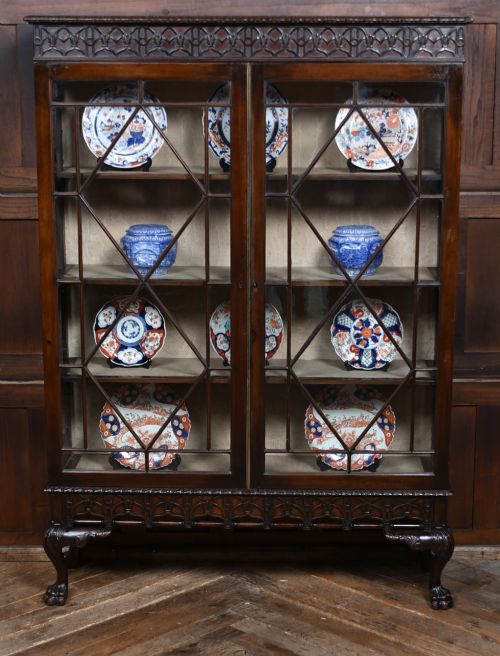


Fretwork Glazed Cabinet
These fretwork glazed cabinet examples bring together fine glazing and intricate woodwork to showcase precious collections.
Fretwork Glazed Cabinet
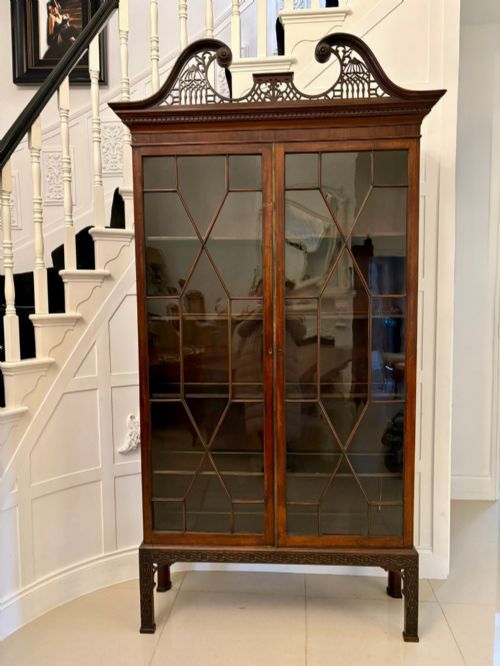
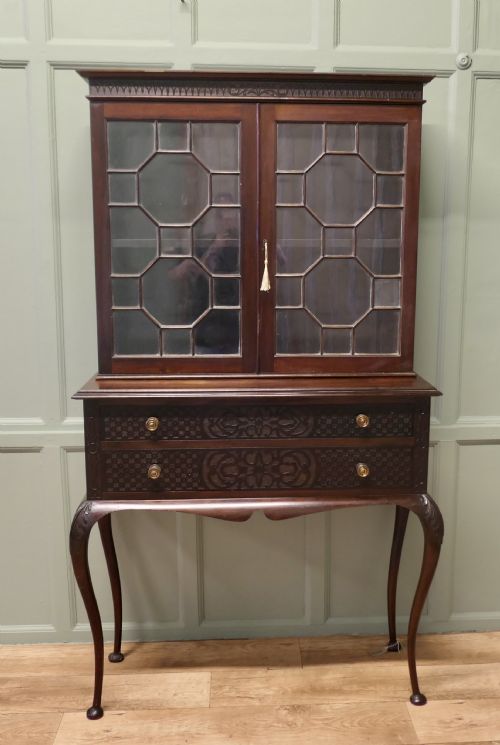
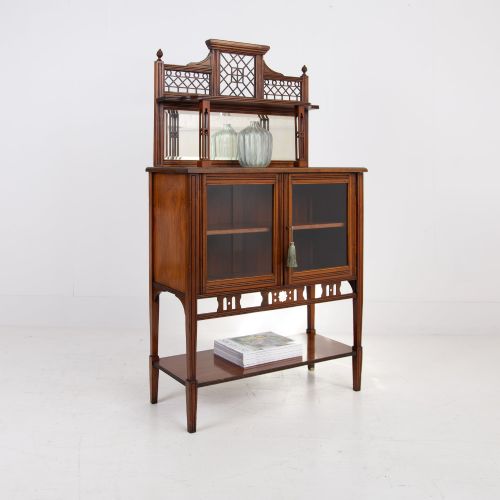
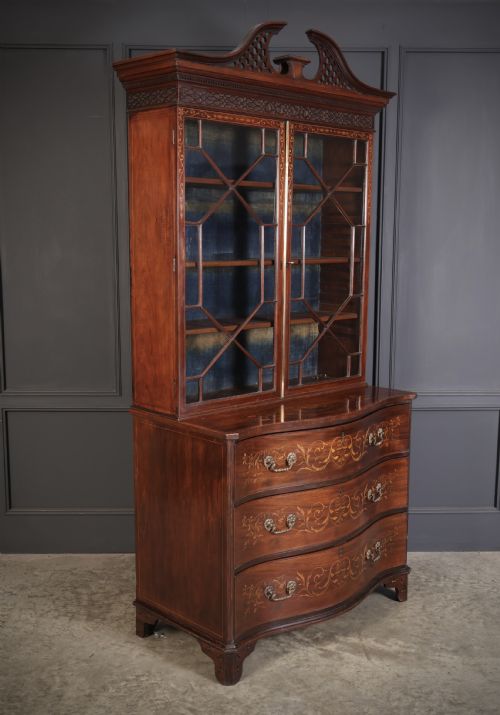
When searching for a fretwork glazed cabinet, you are looking at display furniture designed to hold books, silver, and decorative objects while keeping them visible through glass panes. The pieces on this page span the Victorian and Edwardian eras, alongside Georgian and 1910 examples, taking forms such as breakfront bookcases, side cabinets, and cabinets on stands.
The dominant aesthetic draws heavily on revival styles, particularly Chinese Chippendale and general Chippendale revival, alongside the Aesthetic Movement. These designs utilise mahogany and walnut, frequently incorporating intricate fretwork and astragal glazing bars to frame the glass doors and display areas.
Materials and construction
The construction of these cabinets relies heavily on solid and veneered timbers, with mahogany and walnut forming the primary structural materials. Artisans incorporated marquetry inlay and brass details to accent the timber frames.
Glazing is a central technical feature, ranging from astragal glazed doors to Chinese Chippendale fretwork patterns overlaid on the glass. Some pieces incorporate mirrored backs and fabric linings behind the display shelves to enhance the presentation of objects.
Fretwork Glazed Cabinet Retail Price Guide 2026
Typical asking prices for fretwork glazed cabinet among the pieces listed under this phrase on Sellingantiques today, from the lower quarter to the upper quarter. They describe what is for sale here now, not the wider market.
Tabletop bijouterie cabinets let you peek down at tiny treasures instead of staring straight ahead.
Quality variations
Quality in these cabinets rests upon the precision of the woodwork and the complexity of the fretwork detailing. Finer examples display crisp carving on the mahogany or walnut frames and balanced proportions in the astragal glazing bars.
The inclusion of specialist elements such as marquetry inlay, custom brass hardware, and integrated mirror backs or fabric linings distinguishes higher tier items from simpler utilitarian bookcases.
The Fretwork Glazed Cabinet Glossary
- Fretwork
- Openwork ornamentation carved or pierced out of wood in decorative patterns. It defines the distinctive pierced wooden motifs seen on Chinese Chippendale revival pieces.
- Astragal glazed
- Glass doors divided into smaller panes by narrow wooden mouldings called astragals. This technique is common in bookcases and display cabinets from the Georgian and Victorian periods.
- Bijouterie table
- A glass-topped display table designed for holding small valuable objects and jewellery. Several examples combine this tabletop form with cabinet work.
- Marquetry inlay
- Decorative patterns formed by fitting contrasting pieces of veneer into a wood foundation. It appears on select mahogany pieces across this selection.
Fretwork Glazed Cabinet: Frequently Asked Questions
What fits inside a fretwork glazed cabinet?
These cabinets suit the display of ceramics, books, silver, and small collectables. The glass doors protect the contents from dust while keeping them visible.
Shelved interiors allow for the organised arrangement of varied decorative objects within living spaces.
How do I date a cabinet?
Dating relies on timber choice, construction methods, and stylistic cues such as Victorian Chippendale revival or Edwardian proportions. Secondary woods and hardware also offer clues to the exact period.
Comparing the fretwork style and glass manufacturing traits helps narrow down the decade of manufacture.
Where should I place a display cabinet?
These cabinets work well in reception rooms, libraries, or dining areas where collections can be viewed. Positioning them away from direct sunlight protects both the timber and the displayed objects.
Cabinets on stands or narrow side variants also suit smaller hallway or study spaces.
How do I care for the wood and glass?
Maintenance involves dusting the carved fretwork with a soft brush and cleaning the glass panes with standard solutions. Avoiding excess moisture preserves the mahogany and walnut veneers.
Periodic polishing helps maintain the finish of the timber without building up residue on the intricate carvings.