

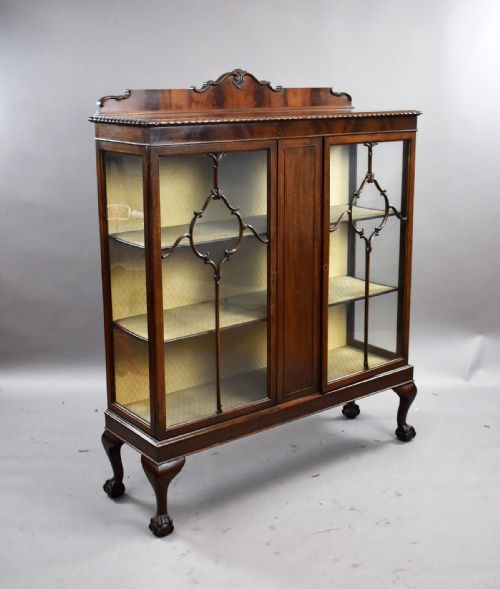
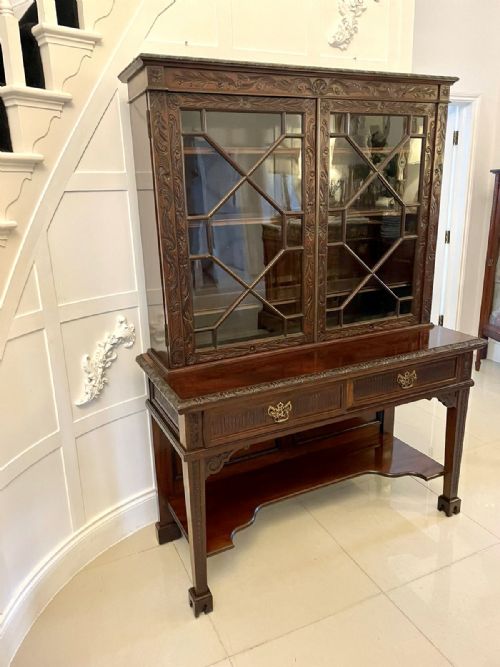


Chippendale Bookcase on Stand
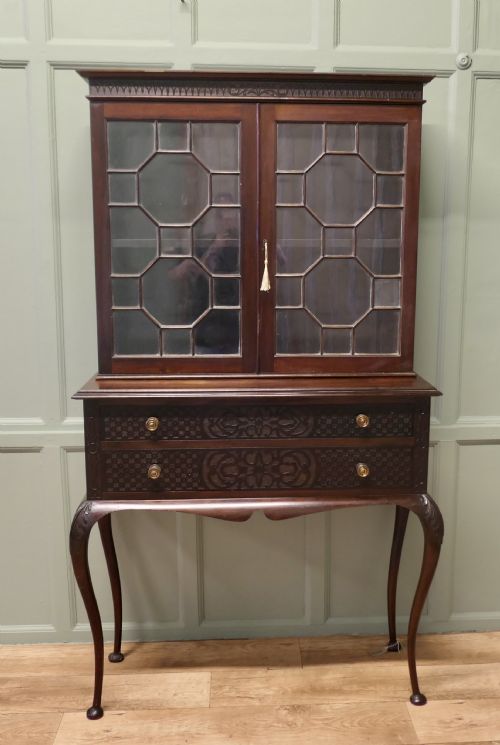
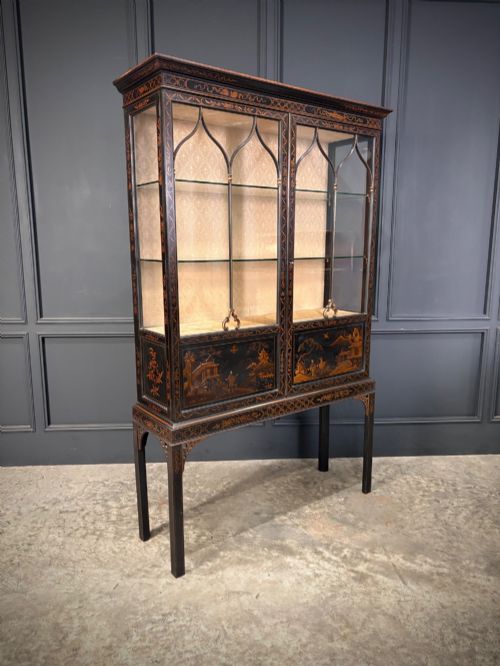
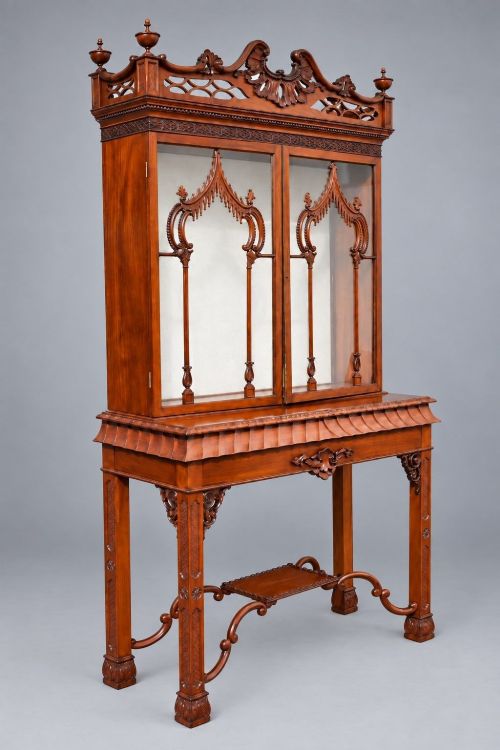
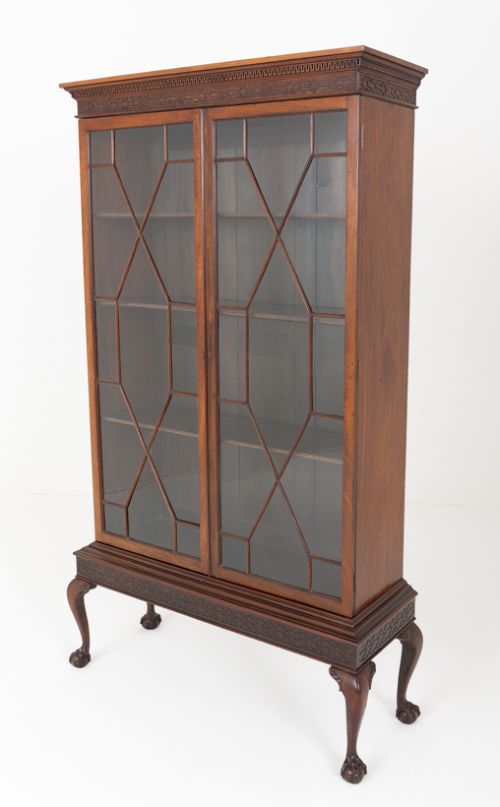
A chippendale bookcase on stand offers elegant elevation, combining fine timber and glass display with the distinct proportions of a raised cabinet.
Chippendale Bookcase on Stand
A chippendale bookcase on stand combines raised storage with glazed display space, creating a distinguished profile rooted in eighteenth-century design. When searching this phrase, collectors encounter various interpretations ranging from authentic Georgian examples to later revival pieces.
The pieces seen here span multiple eras, with nineteenth-century revival interpretations and Edwardian pieces appearing alongside Georgian originals. Most options favour mahogany construction paired with glass panels, fulfilling both storage and display functions in domestic interiors.
Materials and Construction
Makers relied primarily on mahogany for its strength, rich grain, and suitability for carving intricate details. Glass panels, often held within astragal glazing bars, protect the contents while maintaining visibility.
Brass fittings and hardware provide functional and decorative accents, whilst interior elements occasionally incorporate fabric or velvet linings. Oak and other secondary woods appear in the internal structure and drawer carcases.
Joinery techniques enable sturdy frames for both the upper cabinet and the supporting stand. Carved ornamentation, drawer construction, and glazed door assemblies reflect the skilled cabinet-making standards of the periods represented.
Chippendale Bookcase on Stand Retail Price Guide 2026
Typical asking prices for chippendale bookcase on stand among the pieces listed under this phrase on Sellingantiques today, from the lower quarter to the upper quarter. They describe what is for sale here now, not the wider market.
Some revolving bookcases make you wonder if reading ever felt like a merry-go-round.
Distinguishing Quality
Quality rests upon the crispness of carved detail and the proportion between the upper cabinet and its supporting stand. Master workshops achieved a harmony of scale that lesser cabinet-makers occasionally missed.
The selection of timber grain and the precision of the astragal glazing bars separate ordinary pieces from exceptional ones. Finer examples display meticulous attention to interior fittings and drawer construction.
The integrity of the structural joinery where the cabinet meets the stand dictates long-term stability. Superior execution ensures that decorative carvings remain sharp and integrated into the primary design rather than appearing superficial.
James Winter and Sons·Edwards and Roberts·Warings
The Chippendale Bookcase on Stand Glossary
- Astragal glazed
- Glass doors divided by narrow wooden bars into smaller panes. This technique creates a structured geometric grid across the bookcase front.
- Cabinet on stand
- An upper storage or display section raised upon a distinct supporting base with legs. This form lifts the primary storage off the floor.
- Chippendale revival
- Furniture produced in the nineteenth and early twentieth centuries copying eighteenth-century Thomas Chippendale designs. These pieces emulate classic carved motifs and proportions.
- Chinoiserie
- European decorative style employing Chinese motifs and motifs inspired by East Asian art. It frequently appears on revival cabinets alongside fretwork.
- Pier display cabinet
- A narrow cabinet designed to fit against the wall space between windows. These pieces maximise display opportunities in smaller architectural gaps.
Chippendale Bookcase on Stand: Frequently Asked Questions
How do I date a Chippendale revival piece?
Dating revival pieces requires examining secondary timbers, construction methods, and hardware styles. Nineteenth and early twentieth-century workshops often utilised machine-sawn elements alongside hand-carved details.
Makers' marks or stamps, where present, help pinpoint the active years of firms such as Edwards and Roberts or Warings.
Where were these cabinets used?
These cabinets traditionally served in formal reception rooms, libraries, and drawing rooms to display prized books and decorative objects. Their glazed doors protected valuable volumes from dust while keeping them visible.
In modern interiors, they function effectively in living spaces and studies as focal display points.
What defines Chinese Chippendale style?
Chinese Chippendale incorporates fretwork, astragal glazing patterns, and structural details inspired by traditional Chinese architecture and furniture design. It represents a specific ornamental subset within the broader Chippendale repertoire.
Cabinets in this style frequently display intricate pierced decoration on the stands and cornices.