


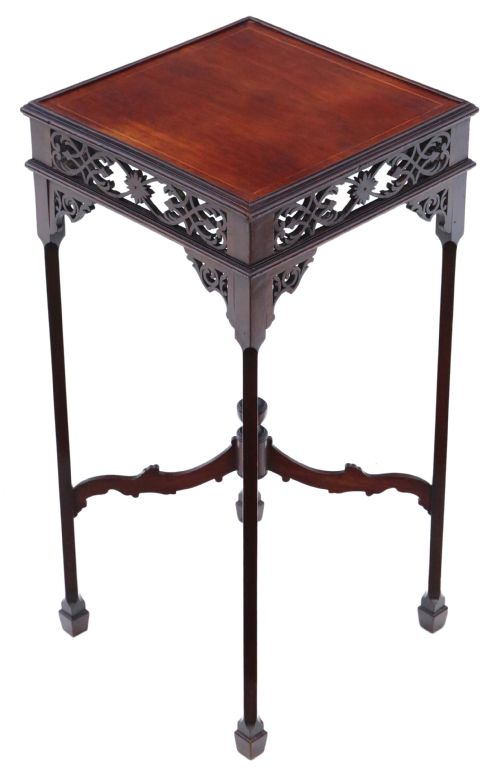

Fretwork Carved Plant Stand
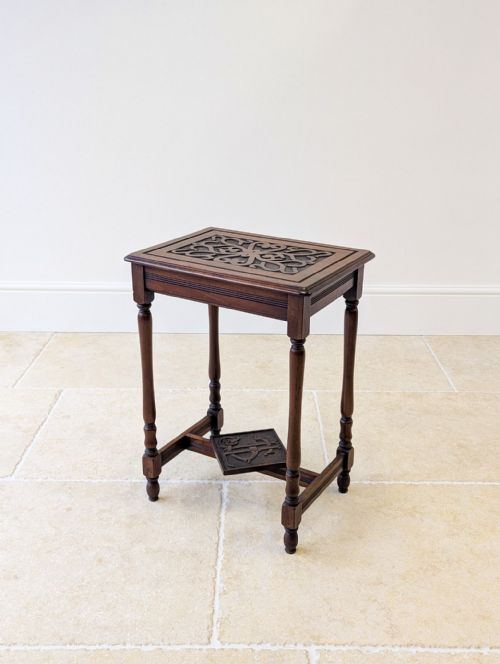
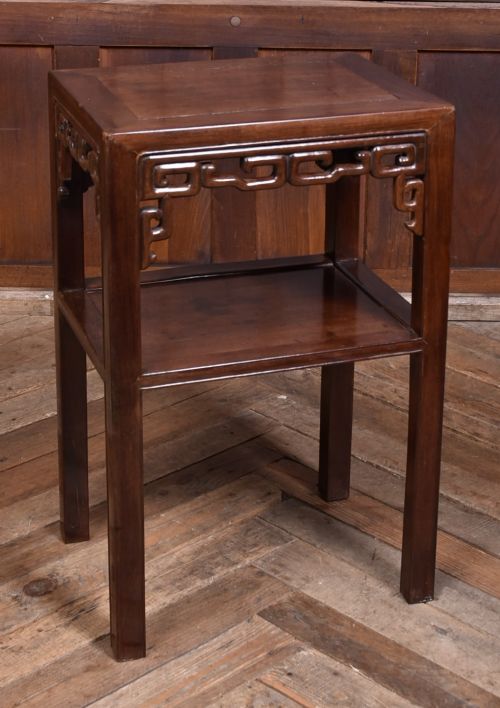
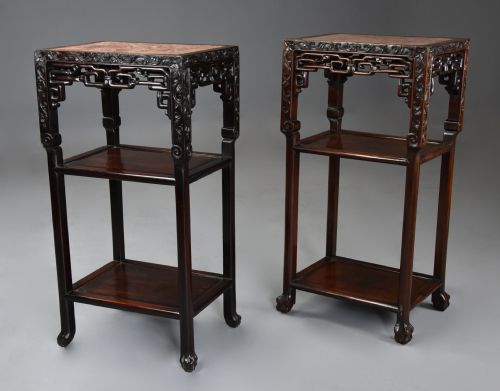
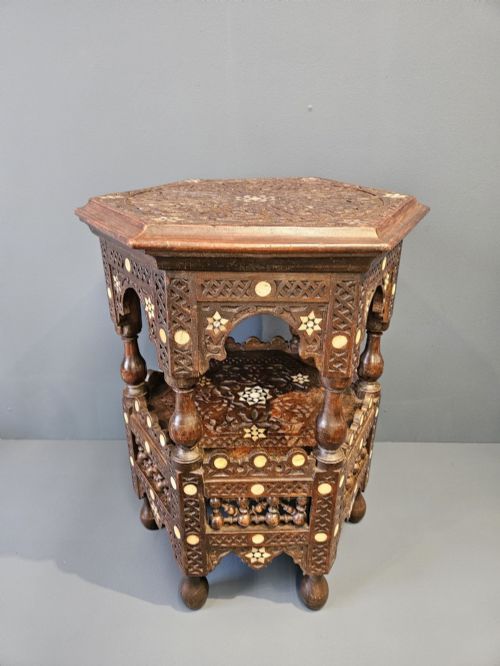
These fretwork carved plant stand examples bring intricate openwork design and solid timber into the home.
Fretwork Carved Plant Stand
A fretwork carved plant stand sits within a broad tradition of ornamental display furniture originating across various global workshops and domestic British cabinet-making traditions. When buyers search for a fretwork carved plant stand, they encounter forms ranging from tall jardiniere supports to low occasional tables with pierced decoration.
The pieces appearing on this page span from the mid-nineteenth century through to the early decades of the twentieth century. Common physical manifestations include octagonal tables, torchieres, and side tables employing dense geometric or floral openwork.
Origins represented in the evidence stretch from English workshops influenced by the Arts and Crafts movement to Anglo-Indian production centres and traditional Chinese ateliers. Buyers are most likely to meet hardwood or softwood structures exhibiting detailed pierced carving designed to elevate floral arrangements or lamps.
How they were made
Construction relies heavily on dense timbers such as mahogany, walnut, teak, oak, and hardwood, providing the structural integrity necessary for intricate pierced work. Craftsmen utilised hand-carving and fretsawing techniques to produce complex lattices and openings within the wood.
Surface enrichment often extends beyond the carved fretwork itself to incorporate contrasting elements. Artisans integrated bone inlay, brass wire, and marble inserts to create varied textures and visual depth across the tables and stands.
Several stands feature secret octagonal geometries that make assembling tea sets remarkably complicated.
What varies in quality
The standard of a fretwork carved plant stand depends on the crispness and depth of the pierced carving. Superior examples display sharp, cleanly defined apertures without splintering or ragged edges in the timber.
Material selection and structural joinery also determine the calibre of the piece. Dense hardwoods and well-fitted joints ensure stability, whereas lesser examples may rely on inferior timber or superficial surface decoration that lacks structural integration.
The Fretwork Carved Plant Stand Glossary
- Fretwork
- Openwork ornamentation produced by cutting patterns through thin wood. This technique creates lightweight yet visually dense decorative panels.
- Jardiniere
- An ornamental pot or stand designed to hold plants or flowers. These tall supports elevate greenery to improve room proportion and visibility.
- Torchere
- A tall stand or candlestick originally intended to hold a torch or lamp. In later periods, these forms frequently served as elevated plant supports.
- Octagonal
- Having eight sides and eight angles. Many tables and stands in this category adopt an eight-sided geometry derived from Eastern design influences.
Fretwork Carved Plant Stand: Frequently Asked Questions
What is a fretwork plant stand?
A fretwork plant stand is an elevated piece of furniture featuring pierced wooden decoration designed to support plants or decorative objects.
These stands utilise intricate openwork patterns carved directly into timber surfaces, combining display utility with ornamental craftsmanship.
How were these stands used historically?
Historically, these stands served primarily to elevate potted plants, flowers, or lamps within domestic interiors. By raising greenery off the floor, they allowed natural light to reach the plants while adding vertical interest to a room's layout.
They functioned flexibly as occasional tables, corner displays, or dedicated pedestals for interior focal points.
How do I style a plant stand at home?
Integrating a carved stand into a modern interior involves balancing its decorative woodwork with simple objects. Placing trailing plants or ceramic vessels on top allows the intricate fretwork to remain visible.
These pieces work effectively in corners, beside seating, or as standalone accent furniture in hallways and living spaces.
How can I tell the period of a stand?
Determining the period involves examining the timber types, joinery methods, and stylistic influences present in the construction. Pieces from the Victorian and Edwardian eras often reflect specific design movements such as the Arts and Crafts style or Anglo-Indian revival.
Material choices like walnut, oak, and teak, combined with specific carving motifs, help narrow down the date of production.