



French Wrought Iron Lighting
French wrought iron lighting brings together hammered metal frameworks and glass shades to illuminate rooms with distinct regional character.
French Wrought Iron Lighting
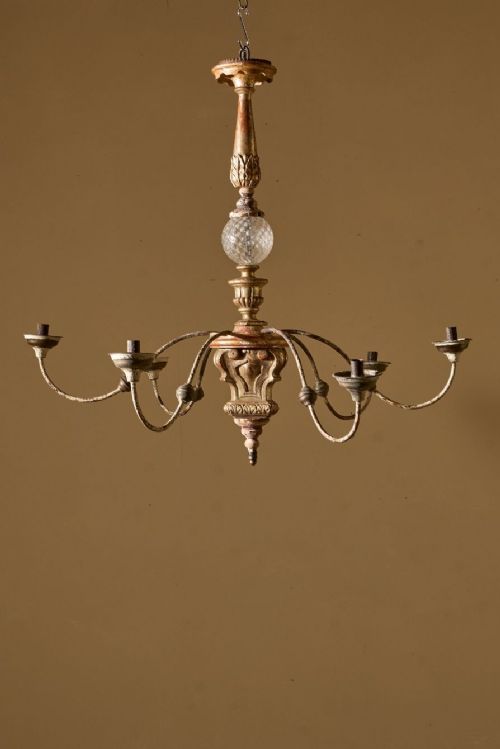
French wrought iron lighting encompasses a variety of functional forms, including chandeliers, table lamps, wall sconces, ceiling lights, and hanging lanterns. These pieces emerge from periods spanning the nineteenth century through the 1940s, capturing design movements such as Art Deco, Art Nouveau, and Gothic Revival.
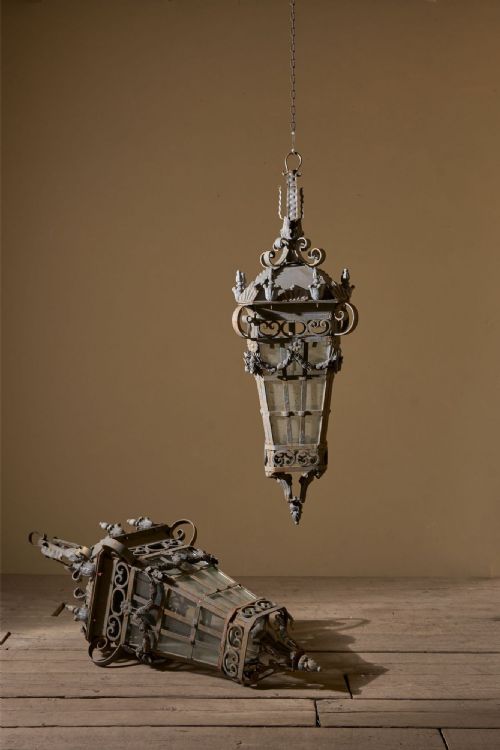
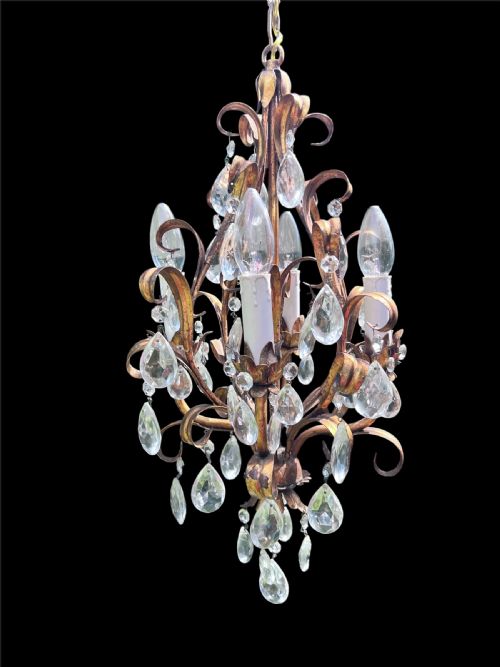
The version most commonly encountered on this page is the chandelier or hanging lantern from the early decades of the twentieth century, often combining dark metalwork with glass components. Wall lights and table lamps also appear frequently, reflecting domestic lighting needs of French chateaux, country homes, and urban interiors.
Origins trace across French stylistic traditions, ranging from heavy, decorative hall lanterns to slender, geometric table lamps. Pieces frequently display regional influences like French Chateau or Arts and Crafts aesthetics alongside the primary iron construction.
Materials and technique
Makers shaped wrought iron manually while hot, hammering the metal into scrolls, brackets, and structural frames that could support heavier glass elements. This blacksmithing technique produced rigid yet ornate armatures designed to hold multiple candle points or electric bulbs.
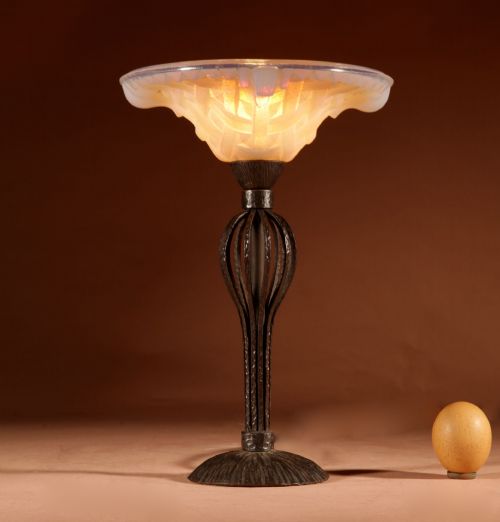
Glass played an integral role, appearing as frosted shades, opalescent bowls, coloured fruit drops, or stained panels inserted directly into the iron framework. Workshops paired the dark, textured metal with translucent or brightly coloured glass to diffuse light effectively across a space.
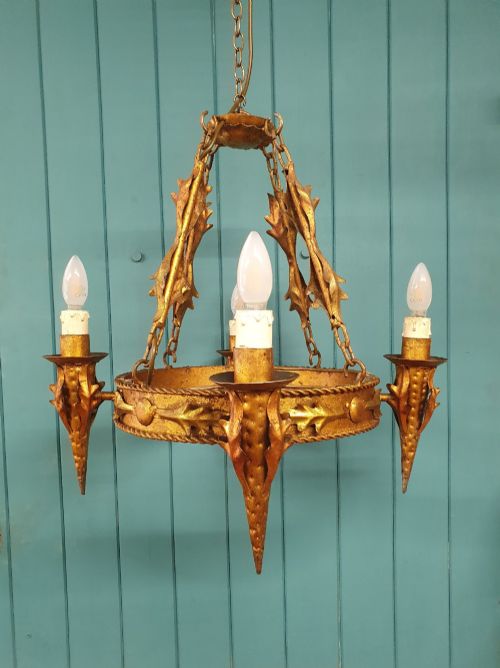
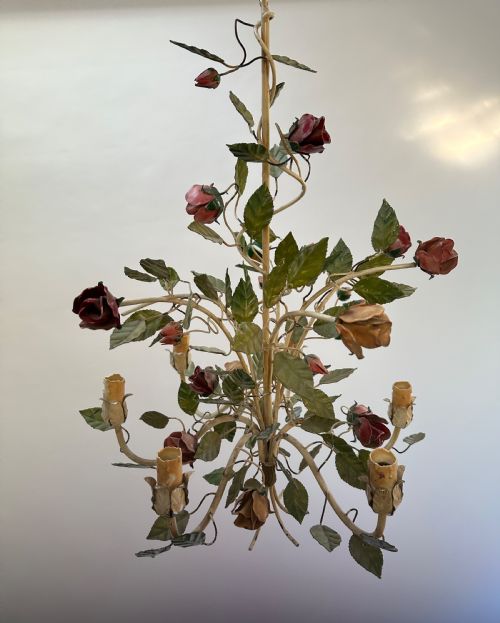
Surface treatments such as paint, gilt metal, and polychrome finishes added colour and prevented oxidation on the iron and steel components. Certain items incorporated supplementary materials like zinc, copper, and crystal pendants to enhance visual complexity.
Listings feature wrought iron lighting spanning from the nineteenth century through the 1940s, incorporating materials such as frosted glass, gilt metal, and painted steel.
Craftsmanship and distinction
Quality rests upon the dexterity of the ironwork, where fluid hammer marks and finely balanced scrolls distinguish superior blacksmithing from routine production. The integration between the metal armature and the accompanying glass elements reveals the maker's hand.
The incorporation of named glass works elevates certain pieces, particularly when signed shades from established glasshouses meet custom-forged metal frames. The presence of hand-painted polychrome details, gilt highlights, or moulded crystal additions further separates standard lighting fixtures from exceptional examples.
Lacroix Lalique·Schneider·Daum·Degue·Verrerie Des Vosge·Muller Freres
The French Wrought Iron Lighting Glossary
- Wrought iron
- A tough, malleable form of iron that can be heated and hammered into decorative and structural shapes. Blacksmiths rely on its fibrous structure to create the sweeping scrolls typical of these fixtures.
- Pricket
- A sharp metal spike set in a socket to hold a candle upright. This medieval method of support appears on earlier chandelier designs.
- Coronet
- A small crown-shaped decorative element positioned at the upper part of a chandelier or light fitting. It often crowns the main suspension points.
- Opalescent glass
- Glass that exhibits a milky, iridescent appearance with shifting tones of colour. It diffuses light softly through table lamp shades and ceiling fixtures.
- Pate de verre
- A glass-making technique involving crushed glass melted in a mould to produce dense, richly coloured objects. Master glassmakers utilised this method for textured lamp shades.
French Wrought Iron Lighting: Frequently Asked Questions
How do I wire old French lights?
Rewiring requires a qualified electrician to run modern flex through the existing iron channels and secure proper lampholders that meet safety standards. Many vintage fixtures accommodate contemporary wiring without altering the exterior metalwork.
Care must be taken to protect original glass shades and painted surfaces during the rewiring process. Professional installation ensures the heavy iron frames hang securely from ceiling joists.
How do I clean wrought iron?
Dust the metal regularly with a dry, soft brush to prevent the accumulation of dirt within the hammered recesses and scrollwork. Avoid harsh chemical cleaners that might strip away original paint or gilt finishes.
Glass shades can usually be removed and washed in warm soapy water, provided they lack fragile painted details. Ensure all components are completely dry before reassembly.
Were these originally for candles?
Many of the earlier nineteenth-century examples were built specifically for candles before being converted to electricity later in their operational lives. Pricket chandeliers and certain wall sconces originally relied on wax illumination.
Twentieth-century iterations frequently incorporated electric fittings from the outset, reflecting the rapid adoption of domestic power during the Art Deco era.
How do I tell periods apart?
Nineteenth-century pieces tend to feature Gothic Revival elements, pricket candle cups, and heavier ironwork reminiscent of ecclesiastical or chateau interiors. They often display simpler glass usage or rely entirely on metal construction.
Twentieth-century pieces, particularly from the 1920s and 1930s, embrace Art Deco geometry and pair dark iron with moulded opalescent or frosted glass shades by known makers.