


French Writing Chest
These french writing chest pieces combine practical storage with fitted writing surfaces, offering refined utility for domestic work.
French Writing Chest
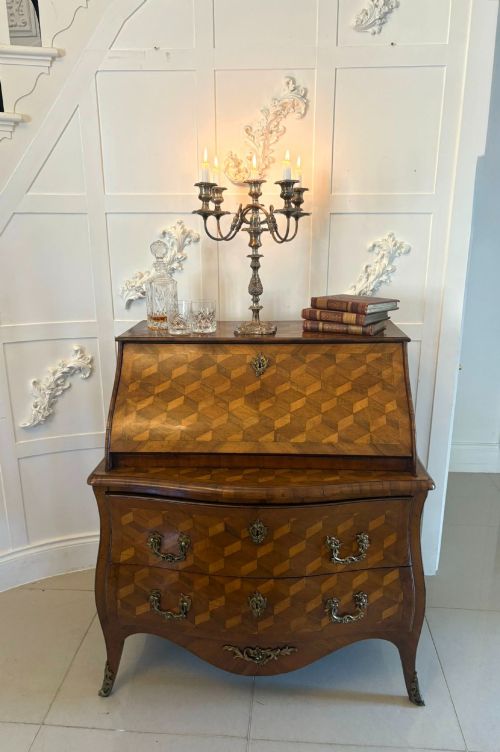
A french writing chest merges the drawer capacity of a standard chest with a dedicated writing surface, often featuring a fall-front panel that conceals internal compartments. These pieces appear across various periods, from eighteenth-century walnut bombe designs to nineteenth-century mahogany, satinwood, and rosewood examples.
Buyers encounter multiple stylistic variations on this page, including Louis XV and Louis XVI revivals, French Transitional forms, Baroque influences, and later Art Deco interpretations. Regional pieces such as nineteenth-century country elm examples and specialised apothecary chests also feature alongside grander chateau styles.
Materials and construction
Cabinetmakers utilised dense timbers like walnut, mahogany, rosewood, kingwood, and satinwood, frequently applying intricate parquetry and floral marquetry inlay across the exterior surfaces. Structural carcases also incorporate oak and elm, particularly in provincial or utilitarian pieces.
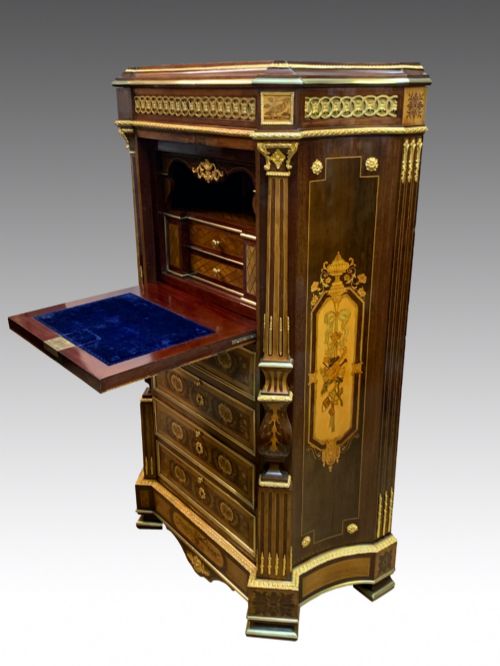
Metal mounts in brass and ormolu accent corners, handles, and key escutcheons, while interior writing surfaces are often lined with materials such as velvet and leather. Marble tops appear on selected pieces, adding weight and a cool decorative surface above the drawers.
One tall chest arrived directly from a nineteenth-century pharmacy, having swapped medicine bottles for paper and ink.
Distinctions in standard
The sophistication of the timber selection and the precision of the parquetry or marquetry inlay set individual pieces apart. Elaborate geometric and floral patterns demand high levels of joinery skill compared to plain veneered surfaces.
The integration of the writing mechanism dictates the overall success of the piece. Smooth movement in the fall-front hinges and well-fitted internal pigeonholes and small drawers demonstrate superior workshop execution.
Maison Krieger
The French Writing Chest Glossary
- Secretaire abattant
- A tall writing chest featuring a drop-front panel that opens to reveal a fitted interior of small drawers and pigeonholes. This vertical form saves floor space while providing a stable writing desk.
- Bombe
- A swelling, convex curved profile to the front and sides of a cabinet or chest. This contour requires advanced woodworking techniques to shape the timber accurately.
- Marquetry
- Decorative patterns formed by fitting together small pieces of veneer into wooden panels. Craftsmen utilise various coloured woods to create intricate pictorial or geometric designs.
- Ormolu
- Gilt bronze mounts applied to furniture for decorative and protective purposes. The technique involves coating bronze with a mercury and gold amalgam before heating.
- Parquetry
- Geometric wood inlay forming repeating patterns such as cubes or chequers. It differs from marquetry by relying strictly on regular geometric shapes.
French Writing Chest: Frequently Asked Questions
What is a secretaire chest?
A secretaire chest combines standard drawer storage with a concealed writing compartment, usually hidden behind a drop-front drawer or fall-front panel.
Inside, smaller drawers and compartments provide space for stationery and documents, keeping the main surface clear.
How do I identify a nineteenth-century piece?
Nineteenth-century examples often display revival styles such as Louis XV or Louis XVI, utilising woods like mahogany, walnut, and rosewood alongside brass or ormolu mounts.
Construction details, timber oxidation, and hand-cut dovetails within the drawer structures help confirm the period.
Where were these chests used?
These chests served primarily in domestic studies, bedrooms, and drawing rooms as private places for correspondence and record-keeping.
Some specialised examples, such as pharmacy chests, originated in commercial or institutional settings before entering domestic circulation.
How do I maintain wood and velvet surfaces?
Timber surfaces benefit from regular dusting with a dry cloth and occasional application of appropriate wax to nourish the grain and prevent drying.
Velvet writing surfaces require gentle brushing to lift pile and should be protected from direct sunlight to avoid fading.