

French Writing Cabinet
A french writing cabinet brings continental elegance to domestic study, combining refined cabinetry with practical compartments for correspondence.
Understanding french writing cabinet designs
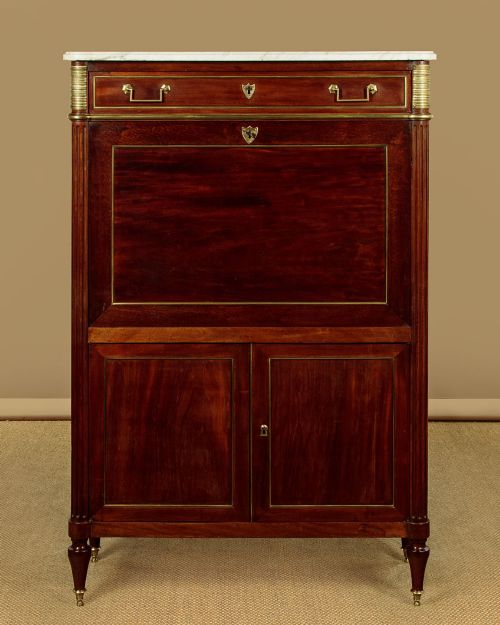
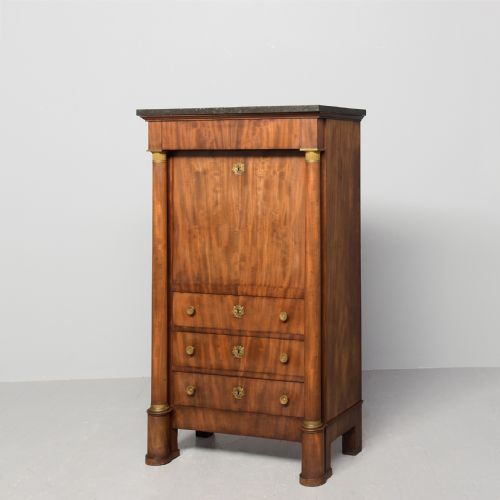
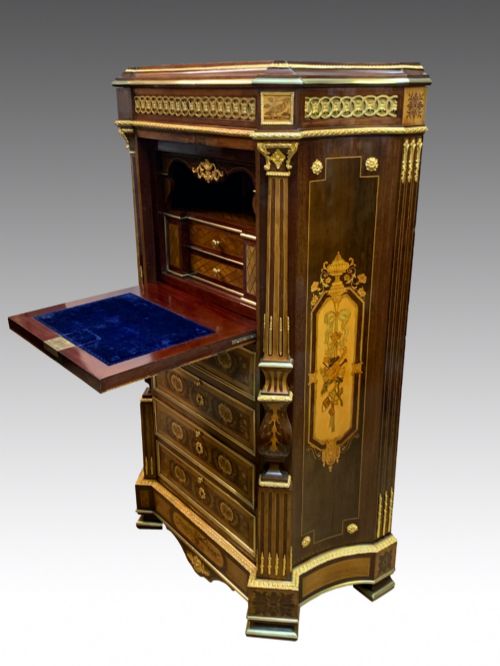
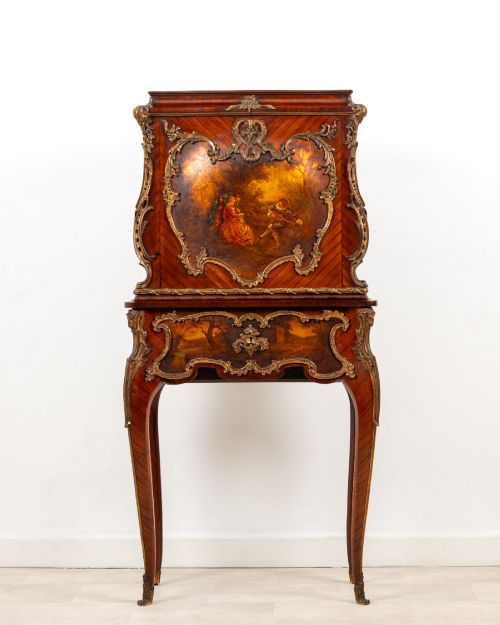
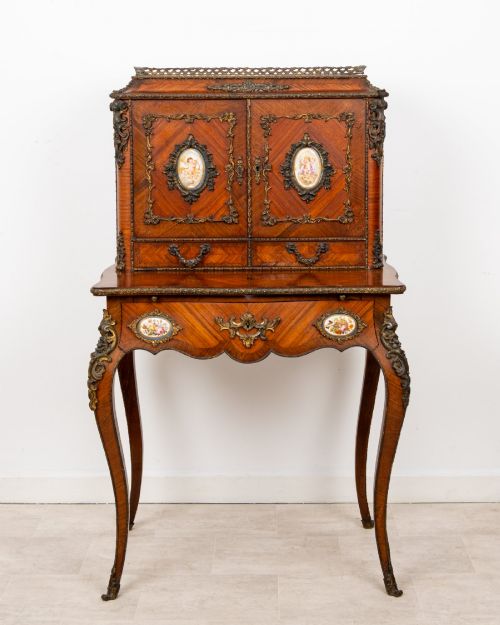
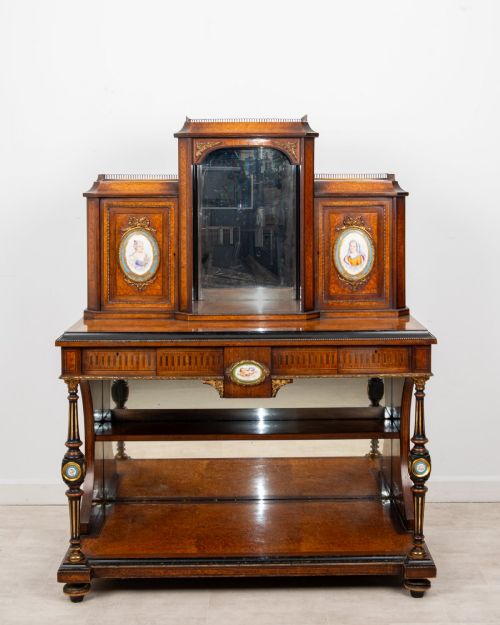
A french writing cabinet encompasses refined fall-front writing desks, bonheur du jour pieces, and escritoires dating from the nineteenth century. These items emerge from revival movements including Louis XV, Louis XVI, Rococo, and Napoleon III styles.
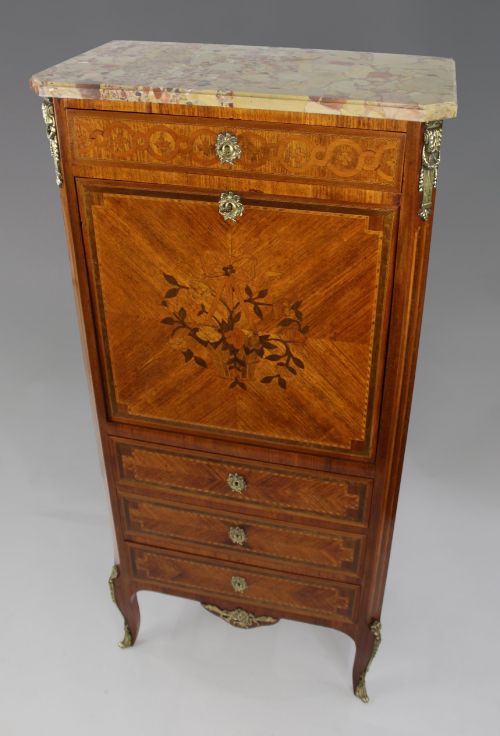
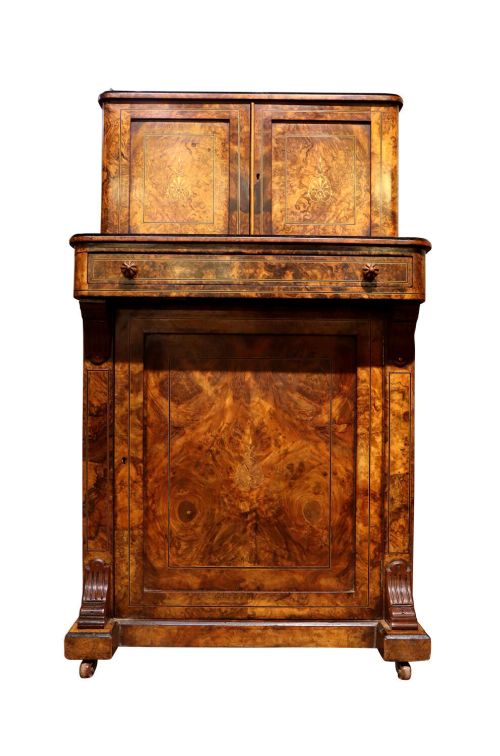
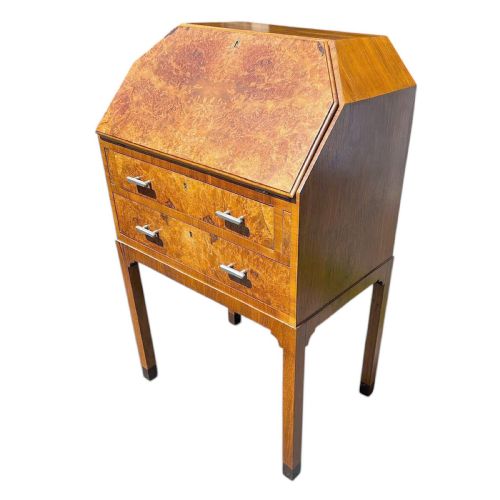
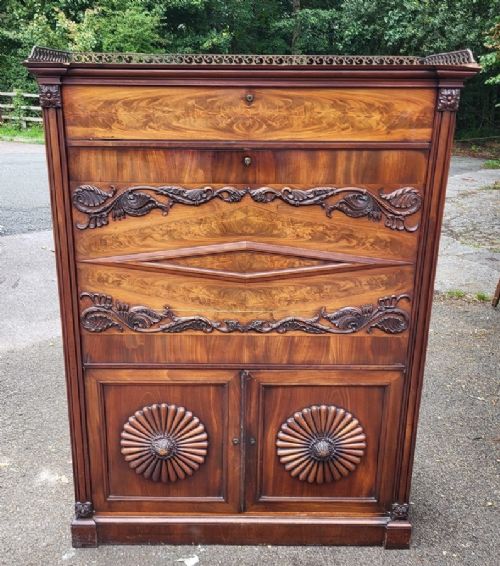
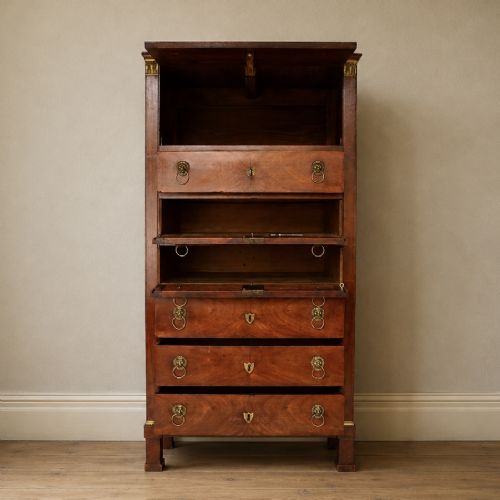
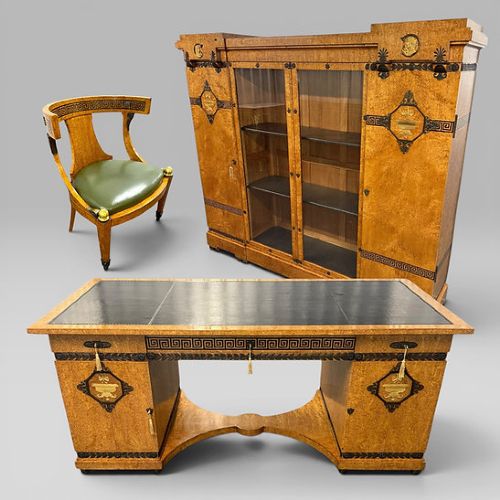
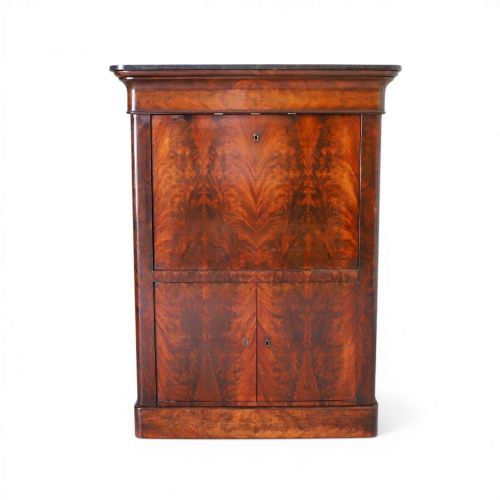
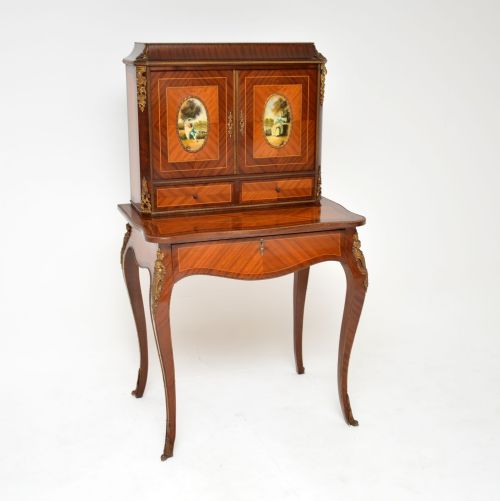
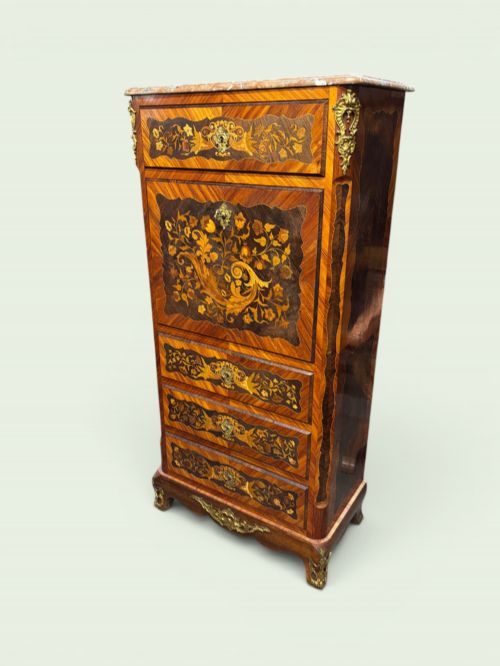
The buyer encounters varied configurations on this page, ranging from marble-topped secretaire abattants to compact bonheur du jour writing cabinets. Woods such as kingwood, walnut, rosewood, and ebonised timber dominate the selection, often enriched with marquetry or parquetry.
Originating predominantly from the nineteenth century, these pieces reflect both French workshop traditions and Victorian interpretations of continental design. They serve as functional desks while functioning as decorative focal points within a room.
Materials and construction methods
Cabinet makers utilised dense hardwoods including kingwood, walnut, and rosewood as foundational veneers, applying parquetry and marquetry geometric or floral patterns across the surfaces. Ebonised wood also appears, providing a dark, uniform ground for metallic inlays.
Retail Price Guide 2026
Typical UK retail prices for french writing cabinet, calculated from the Sellingantiques database of over a million retail prices indexed since 2003. This retail price guide relies exclusively on Sellingantiques data; no external sources or auction records are used, so the figures do not describe the wider market.
Listings feature woods such as kingwood, walnut, rosewood, and ebonised timber, complemented by marble and ormolu mounts.
Distinguishing quality across examples
The finesse of the bronze casting and the crispness of the gilt bronze mounts establish the upper tier of execution, whereas softer, simpler chased details mark standard production. Precision in the parquetry and marquetry alignment distinguishes master workshops from repetitive output.
The selection of timber grain, particularly the figuring in kingwood and rosewood veneers, dictates visual depth. Heavier structural integrity, such as thick marble tops and smoothly operating fall-front mechanisms, separates durable examples from lighter pieces.
The French Writing Cabinet Glossary
- Secretaire abattant
- A tall writing cabinet featuring a vertical drop-front panel that conceals internal pigeonholes and small drawers. This form keeps correspondence hidden when not in use.
- Bonheur du jour
- A light lady's writing desk originating in France, usually featuring a small cabinet or tier of shelves above the work surface. It was designed for casual letter writing rather than heavy administrative work.
- Ormolu
- Gilt bronze ornamentation applied to furniture mounts, feet, and key escutcheons. The technique involves a mercury-gilding process that imparts a deep, lasting metallic lustre.
- Marquetry
- The art of applying decorative veneer pieces in wood, brass, or shell to form pictorial or geometric designs. It requires exact cutting to ensure seamless joints.
- Boullework
- A type of marquetry utilising tortoiseshell and brass inlay, popularised during the reign of Louis XIV and revived in nineteenth-century Napoleon III pieces. The contrasting materials create a striking optical rhythm.
- Escritoire
- An alternative term for a writing cabinet or desk equipped with a sloping or drop-front writing surface. It provides both storage and a designated writing area.
Frequently Asked Questions
What is a secretaire abattant?
A secretaire abattant is a tall, vertical cabinet featuring a hinged fall-front panel that opens to reveal a writing surface and inner compartments. This design allows owners to conceal correspondence and writing materials behind closed doors.
These pieces typically include a drawer above the drop-front and cupboards below, making them practical storage units for smaller rooms. Their vertical orientation offers substantial desk space without dominating floor area.
How do I identify a bonheur du jour?
A bonheur du jour is recognised by its compact desk base paired with a small superstructure of shelves, drawers, or a mini-cabinet on top. It stands on slender legs and was traditionally used by women for morning correspondence.
Unlike heavy bureau desks, these lighter tables prioritise delicate proportions and decorative veneers such as kingwood or walnut. They often feature ormolu mounts and marquetry details typical of nineteenth-century revival styles.
Where were these cabinets made?
These pieces originate primarily from French workshops active during the nineteenth century, reflecting various historical revivals including Louis XV and Napoleon III aesthetics. Victorian makers in Britain also produced similar interpretations influenced by French designs.
The materials and construction methods mirror continental cabinet-making traditions, utilising exotic veneers like rosewood and kingwood alongside fire-gilt bronze mounts.
How do I care for wood and ormolu?
Maintain wood surfaces by applying a quality beeswax sparingly and buffing with a soft cloth to preserve the natural grain and sheen. Avoid placing antique furniture near direct heat sources or strong sunlight to prevent veneer cracking.
Clean gilt bronze mounts gently with a dry microfibre cloth, avoiding harsh chemical polishes that can strip the original gilding. Proper humidity control in the room ensures the timber and inlays remain stable.