




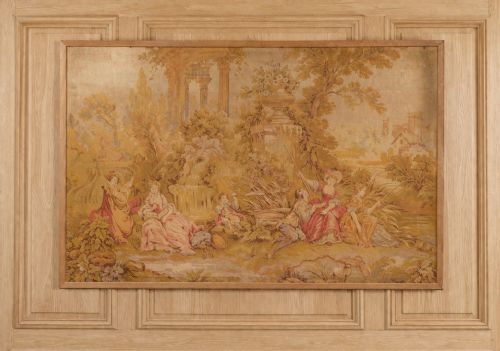
French Woven Wall Hanging
A French woven wall hanging brings centuries of textile artistry indoors, offering texture and colour that modern prints simply cannot match.
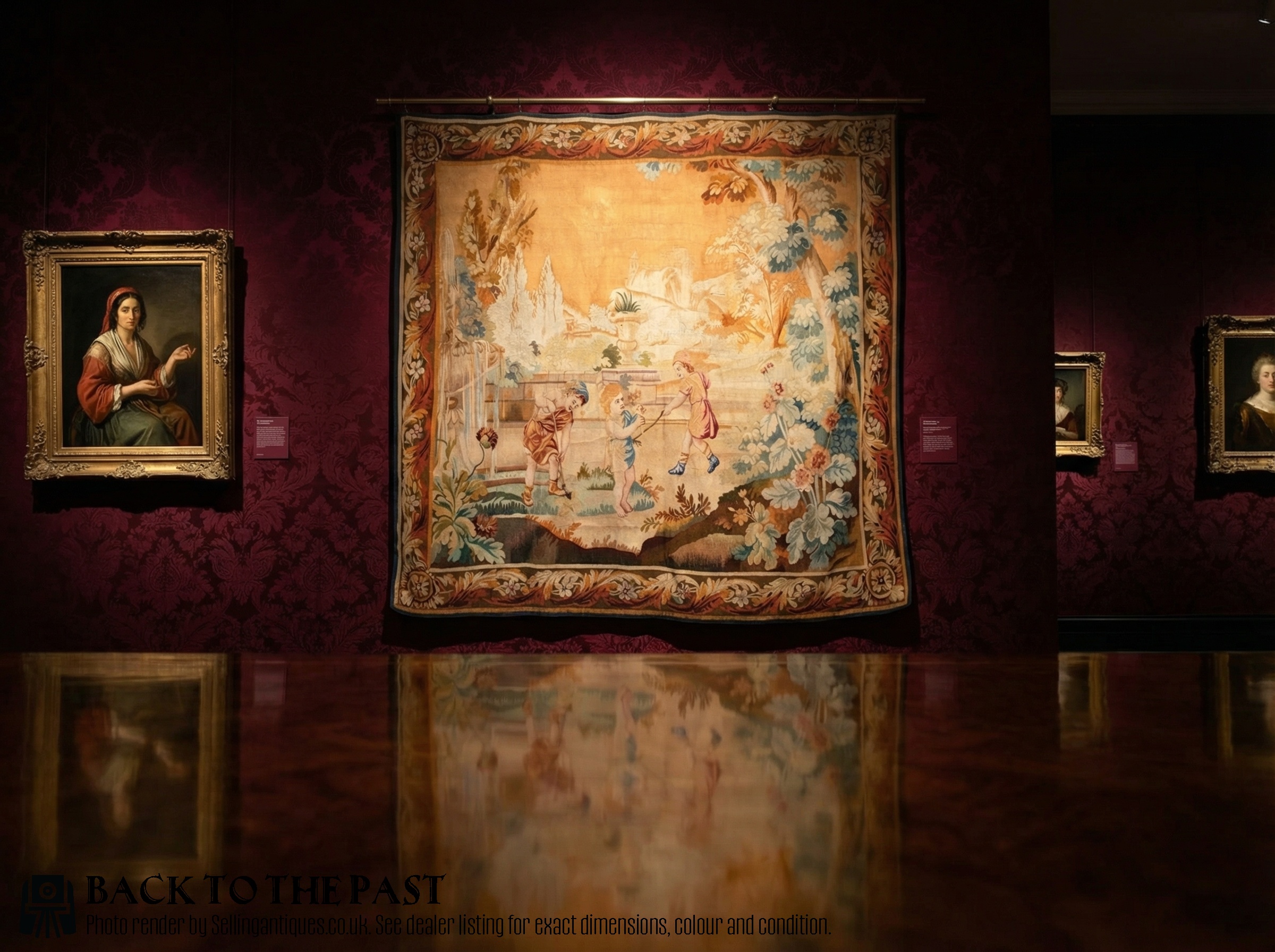
French Woven Wall Hanging
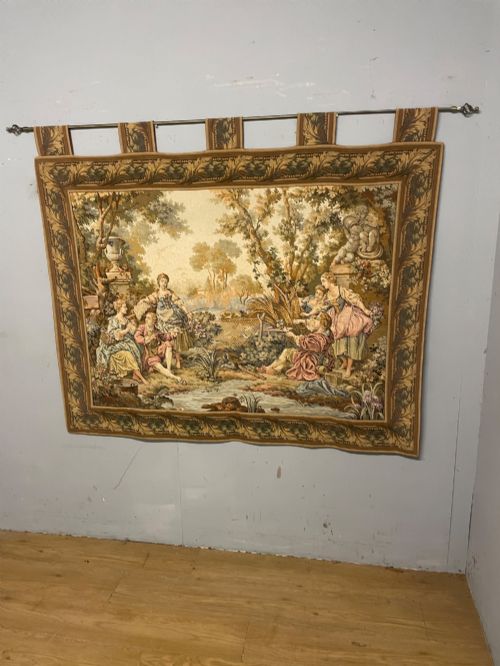
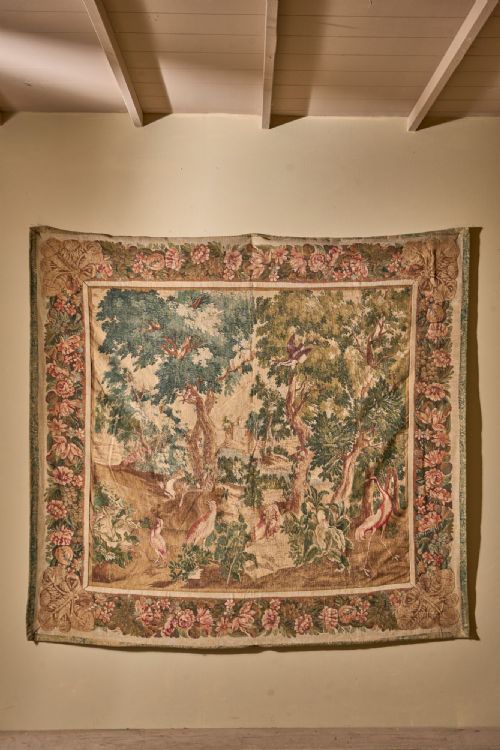
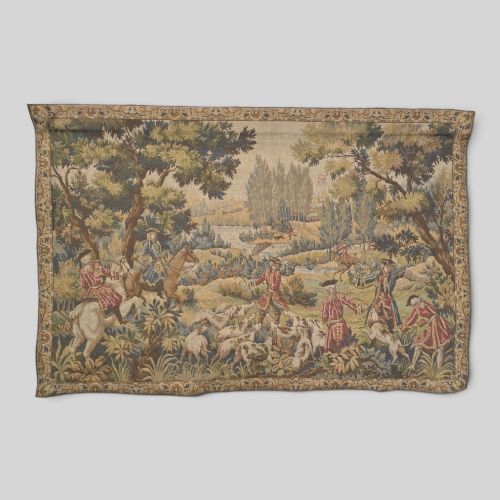
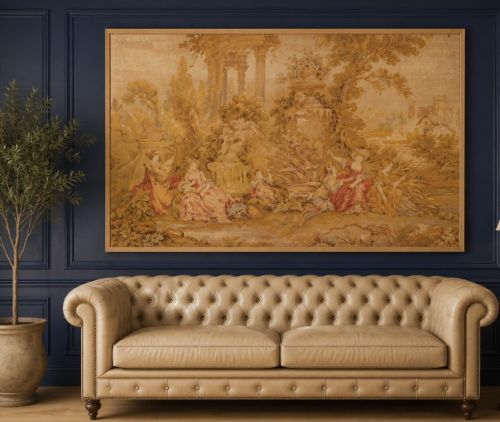
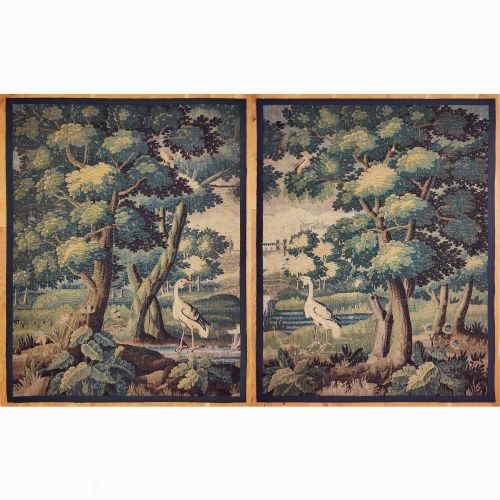
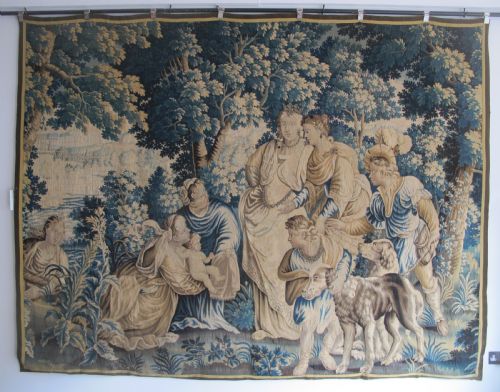
A french woven wall hanging encompasses large wall tapestries, needlework panels, and framed silk velvet textiles designed for interior display. Buyers searching this category frequently encounter verdure scenes depicting foliage, pastoral landscapes, and classical motifs originating from workshops in France.
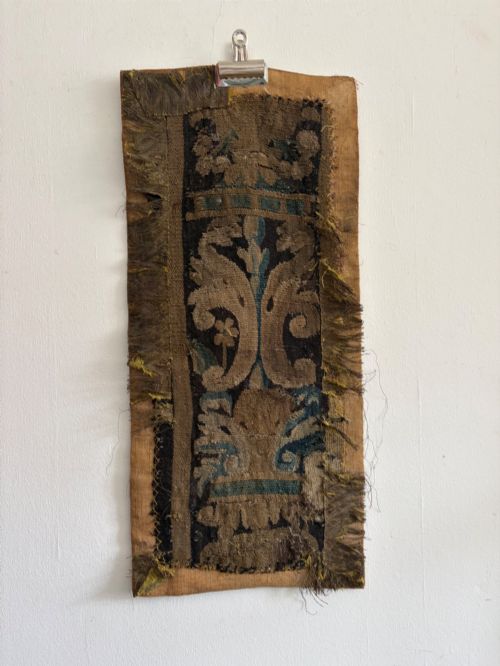
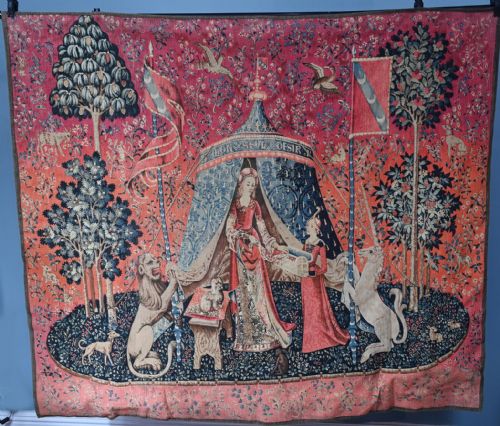
The selections span from medieval mille-fleurs designs and seventeenth-century Aubusson panels to nineteenth-century interpretations of earlier styles. Pieces appear as expansive room-scale wall coverings, narrow entre-fenêtre panels, or smaller border fragments mounted carefully to linen.
Dating ranges widely across the centuries, with seventeenth, eighteenth, and nineteenth-century examples forming the core of the available selection. Formats vary from unfurled wall hangings to framed panels incorporating wood and brass elements.
Materials and Construction
These textiles rely primarily on natural fibres including wool, silk, cotton, and linen, woven meticulously by hand on traditional looms. Master weavers employed dyed yarns to build complex pictorial depths, occasionally combining weave structures with supplementary needlework.
Certain hanging panels utilise luxurious ciselé silk velvet mounted onto supportive backing fabrics or frames of walnut and brass. Structural reinforcement, such as linen backings applied to older fragments, preserves delicate historical textiles against gravity and tension.
Several seventeenth-century verdure panels secretly hide small woven birds deep within their leafy branches, waiting patiently for observant buyers.
Factors of Quality
Quality rests upon the fineness of the weave, the complexity of the pictorial composition, and the integrity of the surviving textile fibres. Superior examples exhibit subtle tonal gradation within verdure foliage and crisp delineation of figures, animals, and architectural elements.
The survival rate of the original materials dictates desirability, as exposure to light and time alters dye saturation and fibre strength. Exceptional pieces retain their initial chromatic richness and structural density without extensive modern intervention.
The French Woven Wall Hanging Glossary
- Aubusson
- A town in France renowned for producing woven tapestries and carpets since the fifteenth century. Aubusson pieces typically feature verdure landscapes or pastoral scenes.
- Verdure
- A tapestry style dominated by botanical motifs, trees, foliage, and often birds or animals. These green-toned landscapes formed a popular wall hanging choice for centuries.
- Mille-fleurs
- A decorative style translating to a thousand flowers, featuring a dense background of small flowers and plants. This medieval aesthetic appears on early woven wall panels.
- Entre-fenêtre
- A tall, narrow tapestry designed specifically to hang on the wall space between two windows. These panels make efficient use of restricted architectural spaces.
- Ciselé velvet
- A velvet fabric featuring a pattern created by cut and uncut loops, often utilising silk. Such textiles provide rich tactile contrast when mounted as wall hangings.
French Woven Wall Hanging: Frequently Asked Questions
How do I hang a heavy antique tapestry safely?
Large woven wall hangings require weight distribution across a custom support rather than hanging from a single point. Conservation framing or stitching a continuous Velcro heading to a linen backing helps secure the textile without damaging the fibres.
Keeping the piece away from direct sunlight and damp walls ensures the wool and silk threads do not degrade over time. Professional consultation is advisable for exceptionally heavy frames or delicate needlework panels.
What is a verdure tapestry?
A verdure tapestry depicts a stylised landscape dominated by trees, leaves, plants, and frequently birds or chateaux in the background. These pieces served as decorative woodland scenes to bring nature indoors.
Master weavers used varied shades of green, blue, and brown wool yarns to create a sense of depth and shadowed undergrowth.
How can I tell an eighteenth-century tapestry from a nineteenth-century copy?
Examining the dye types, fibre wear patterns, and selvage edges helps distinguish period pieces from later revivals. Eighteenth-century weaving often displays natural hand-dyed colour variations and organic fading, whereas nineteenth-century Aubusson-style works may show different tension and yarn consistency.
Stylistic cues within the border designs and floral motifs also align with the decorative preferences of specific centuries.