
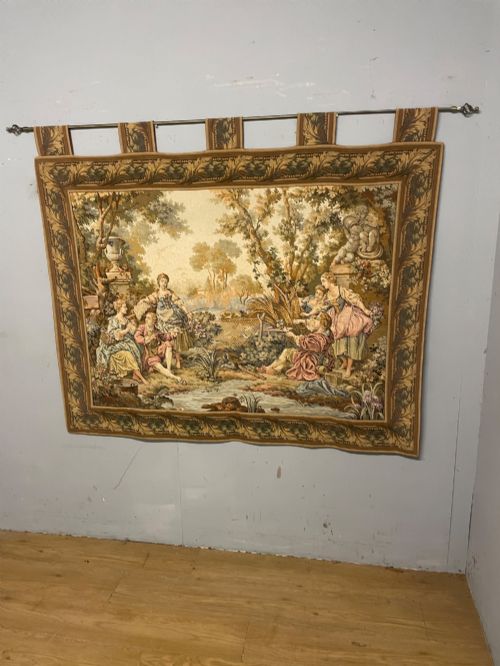
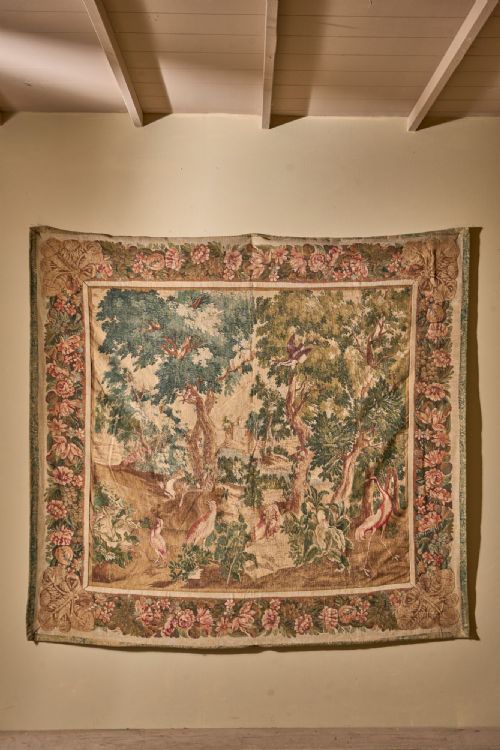
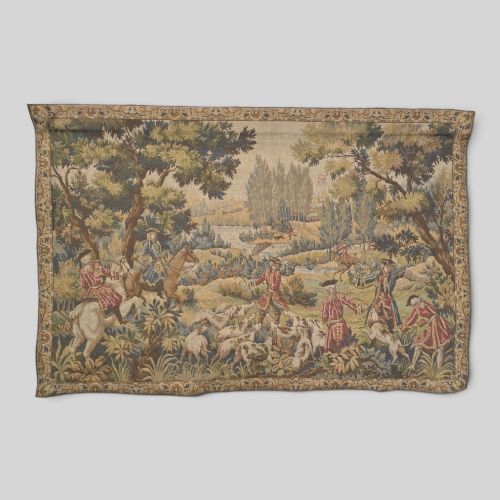
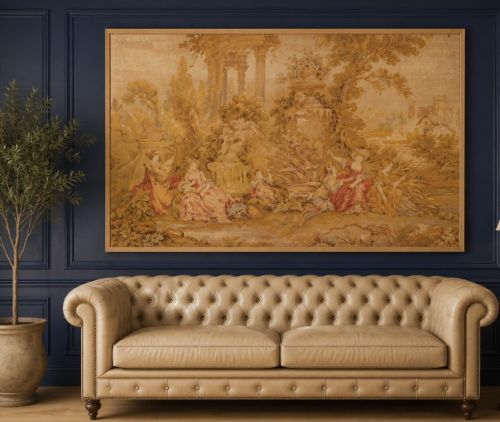




Beige French Textile Tapestry
A beige french textile tapestry brings understated warmth and historic narrative to an interior.
Beige French Textile Tapestry
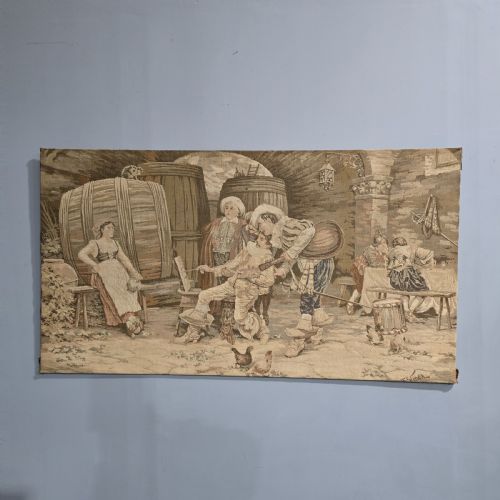
A beige french textile tapestry spans wall hangings, framed panels, and needlework textiles originating from French traditions. These works frequently arrive in neutral tones of beige, anchored by pastoral scenes or traditional compositions designed for grand interiors.
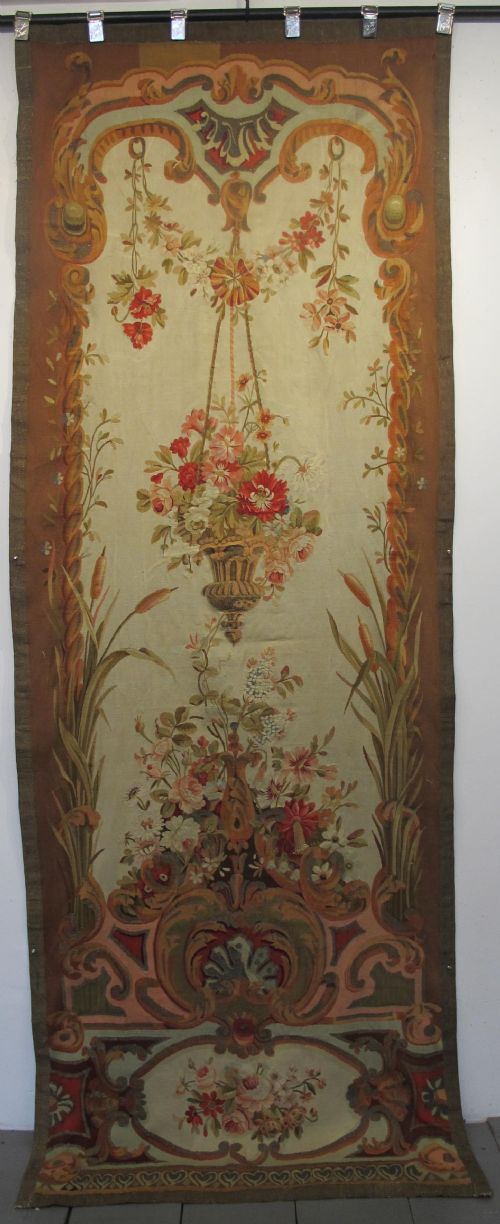
The pieces on this page lean heavily towards the nineteenth century alongside eighteenth-century examples and later twentieth-century interpretations. Buyers encounter formats ranging from large wall tapestries and long narrow entre-fenêtre panels to framed works mounted on wood boards.
Stylistic influences draw directly upon French Baroque, Rococo, and chateau aesthetics, often employing the characteristic Aubusson style. These textiles function primarily as wall art, bringing historical texture and architectural presence to domestic spaces.
Materials and construction methods
Makers constructed these textiles using wool, cotton, and silk threads woven or needle-worked into complex pictorial surfaces. Natural fibres formed the core of the textile body, creating substantial weight and tactile depth.
Mounting and framing methods varied according to the format, utilising timber frames, brass elements, and wood boards to support large textile panels. Canvas backings frequently provided structural stability for needlepoint panels and hanging tapestries.
The listings span from the eighteenth century through the 1930s, featuring wool, cotton, silk, timber frames, and brass supports.
Factors of quality and execution
The nuance of the woven palette and the complexity of the pictorial composition determine the distinction between standard examples and finer works. Aubusson-style pieces and signed works demonstrate greater intricacy in their threadwork and tonal transition.
Scale and structural mounting also differentiate the range, as large-proportion wall tapestries and framed entre-fenêtre panels require robust timber or brass support systems to maintain their integrity over centuries.
The Beige French Textile Tapestry Glossary
- Aubusson
- A style of tapestry originating from the town of Aubusson in France, known for pictorial scenes and sophisticated weave structures. These pieces often replicate traditional pastoral or architectural motifs.
- Entre-fenêtre
- A narrow tapestry panel specifically designed to hang on the wall space between two windows. Such pieces are typically elongated in format to suit architectural proportions.
- Needlepoint
- A type of embroidery stitched on a canvas mesh foundation rather than woven on a loom. This technique creates a dense, durable surface utilised in early French panels.
- Textile
- Any material made of interlocking fibres, including wool, cotton, and silk. In this context, textiles form the primary medium for historical wall hangings and art panels.
Beige French Textile Tapestry: Frequently Asked Questions
How do I hang a large tapestry?
Large wall tapestries require secure mounting systems, often utilising a timber frame, wooden board, or concealed batten to distribute the weight evenly across the wall without straining the textile fibres.
Heavier needlework and framed panels benefit from professional hardware attached directly to structural wall studs to ensure stability.
What defines the Aubusson style?
The Aubusson style references traditional French weaving traditions associated with pastoral landscapes, floral motifs, and classical architectural scenes.
These works rely on muted colour palettes dominated by beige and earthy tones to create depth and historical atmosphere.
How do I care for antique textiles?
Maintenance involves gentle surface dust removal using a soft brush or low-suction vacuum applied through a mesh screen to protect delicate threads.
Professional textile conservators should handle any deep cleaning or structural repairs required for eighteenth- and nineteenth-century pieces.