

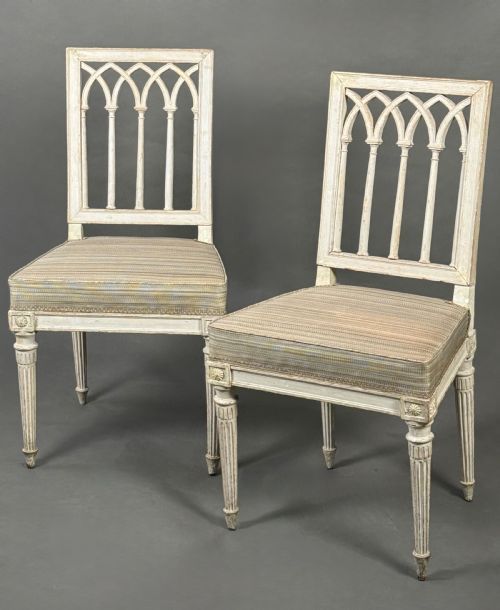
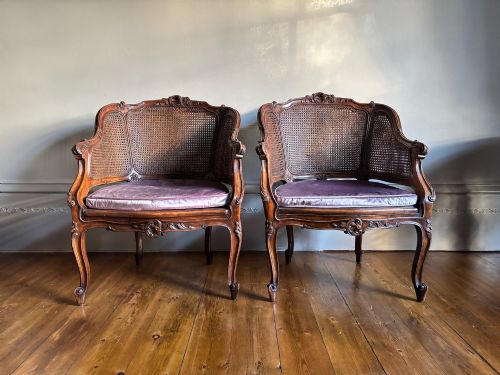
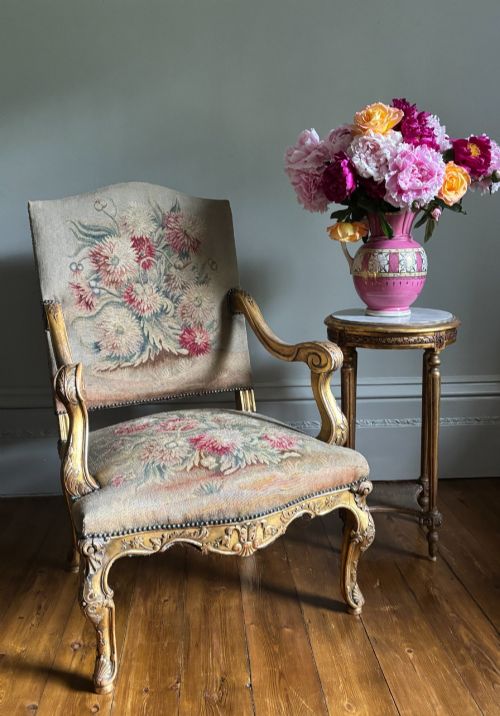
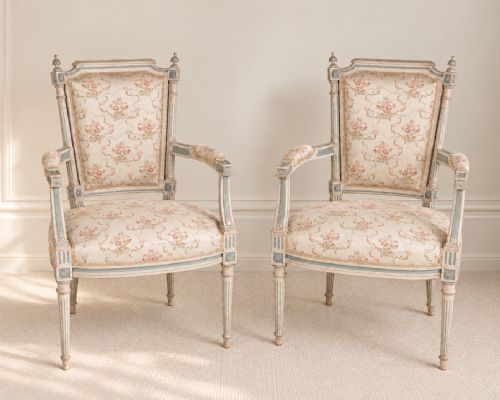
French Wooden Chairs
French wooden chairs bring provincial warmth and formal elegance into a room through carved fruitwood, walnut, and upholstered frames.
French Wooden Chairs
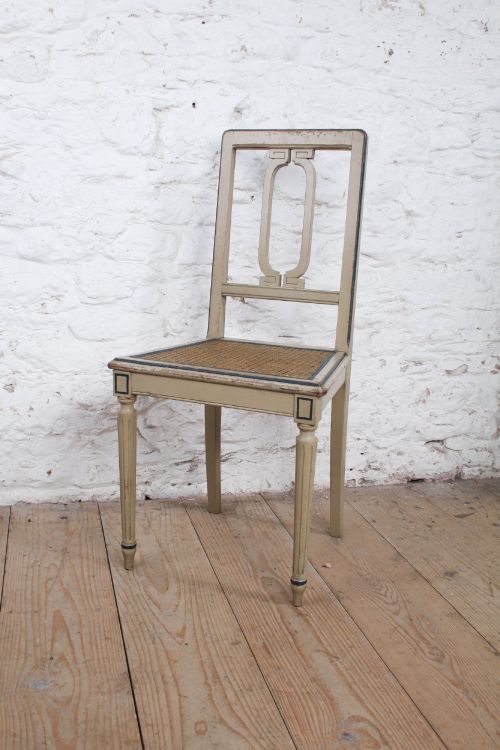
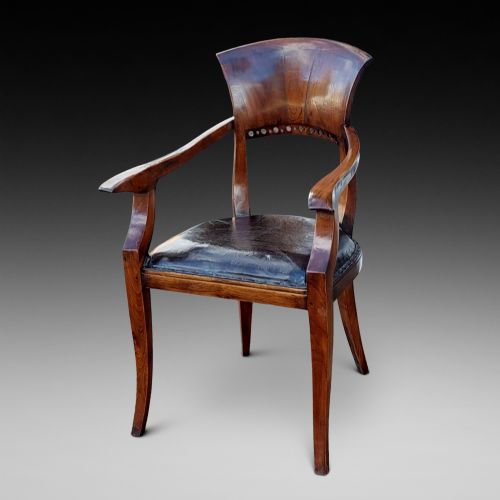
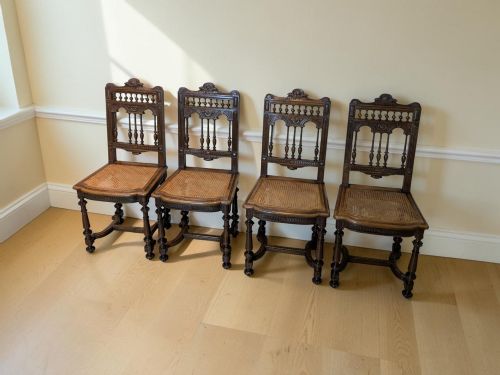
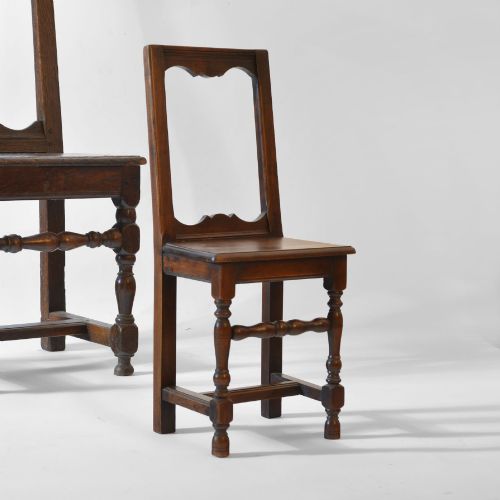
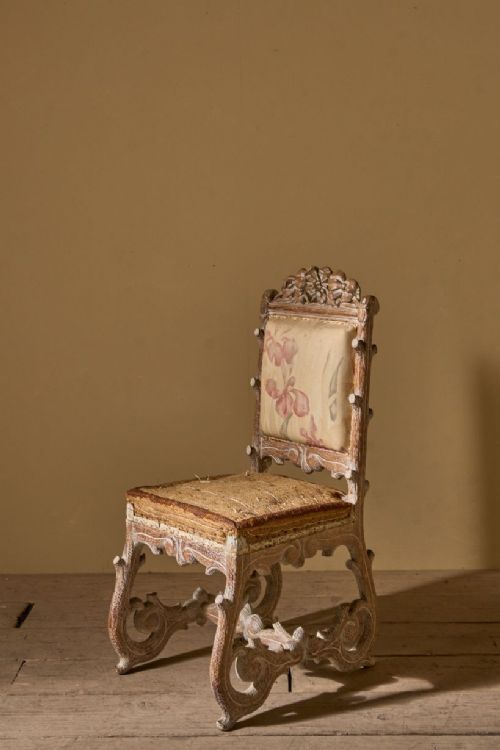
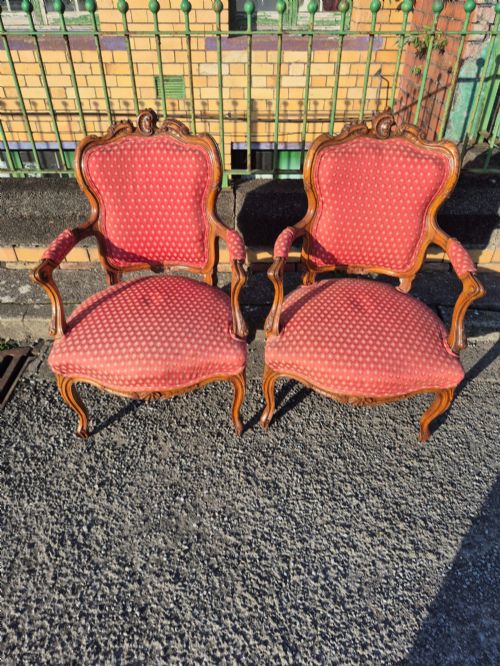
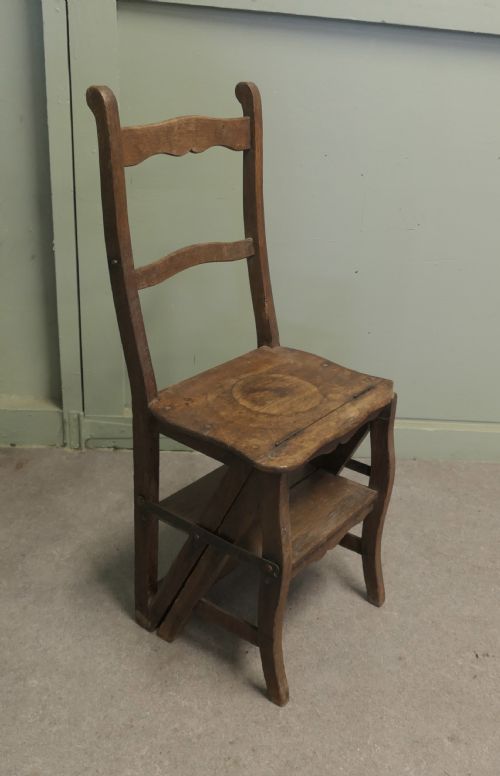
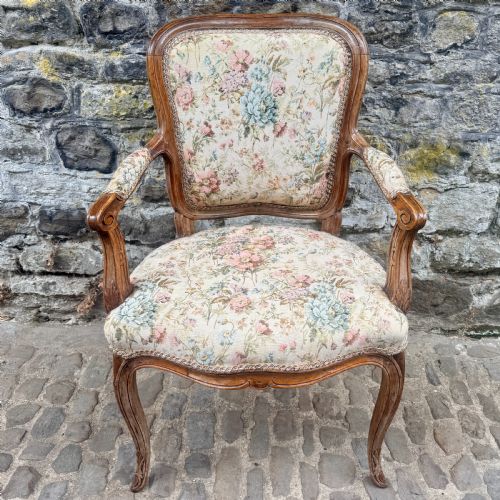
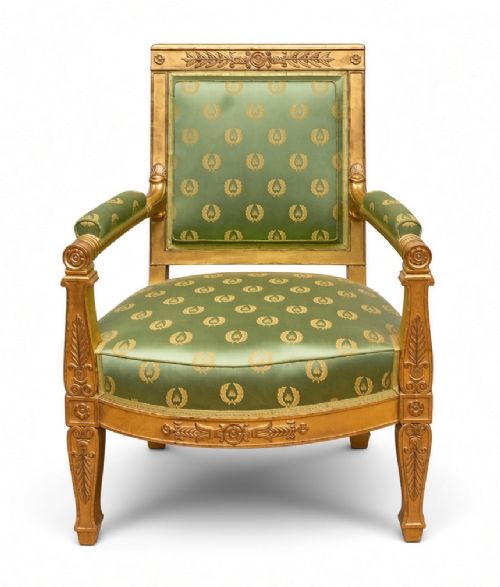
When you search for french wooden chairs, you encounter seating ranging from rustic elm farmhouse styles to gilded Louis XV and Louis XVI armchairs sourced from chateaux. These pieces include armchairs, side chairs, dining sets, and benches spanning the eighteenth, nineteenth, and early twentieth centuries.
Provincial and country models utilise fruitwood, oak, and elm with rush or wooden seats, offering a simpler form than formal salon seating. Town and court models present walnut, beech, and rosewood frames embellished with carving, paint, giltwood, and needlework tapestry panels.
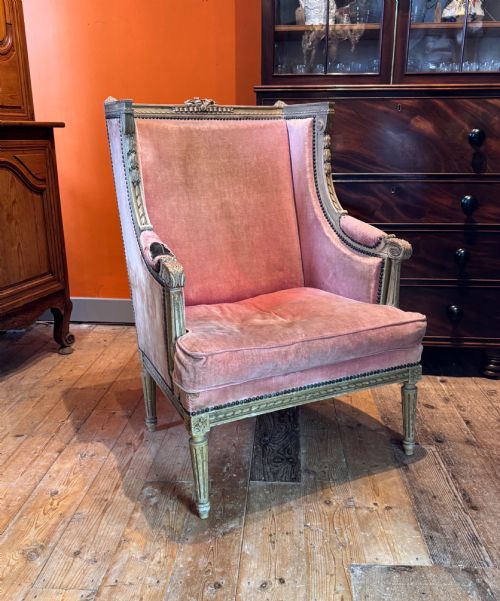
The selection encompasses specialist forms such as metamorphic step chairs, bergere armchairs, and chaise longues alongside sets of dining chairs and occasional bedroom chairs. Each piece reflects the regional vernacular or the prevailing classical revival style of its period.
Materials and construction
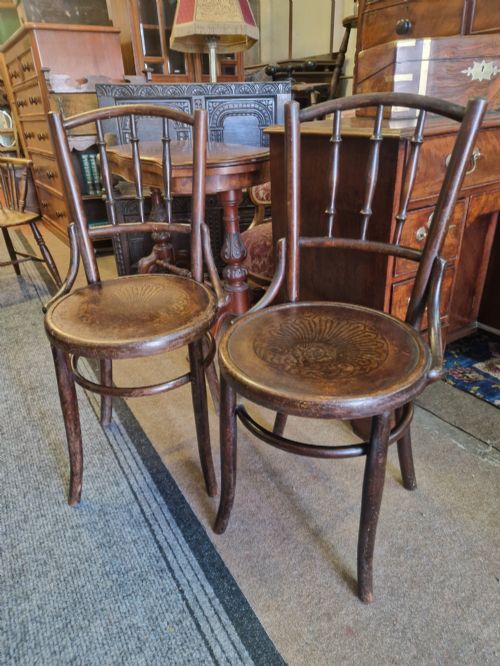
Cabinetmakers and joiners utilised native hardwoods including walnut, fruitwood, oak, elm, and beech, shaping frames with hand-carved details. Structural stability relied on traditional mortise and tenon joints, augmented by turned spindles or curved elements in bentwood and country pieces.
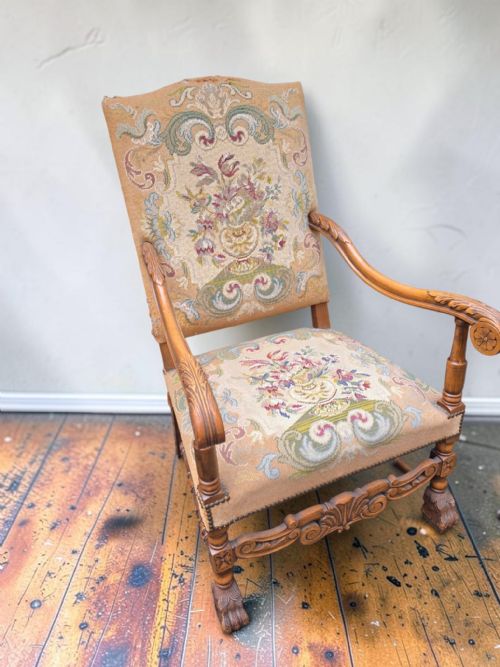
Surfaces received various treatments, from natural waxed wood and ebonisation to original paint finishes and applied giltwood. Upholstered models integrated canvas or webbing support beneath horsehair stuffing, finished with textile coverings such as velvet, silk, tapestry, and needlework panels.
French Wooden Chairs Retail Price Guide 2026
Typical asking prices for french wooden chairs among the pieces listed under this phrase on Sellingantiques today, from the lower quarter to the upper quarter. They describe what is for sale here now, not the wider market.
Materials recorded on this page include walnut, fruitwood, oak, elm, giltwood, cane, velvet, iron, and painted beech.
Judging quality and character
The distinction between standard utility seating and exceptional pieces lies in the crispness of the hand-carved ornamentation and the integration of the timber grain. Refined proportions, balanced joinery, and the preservation of original paint or gilding elevate a chair from a simple utilitarian object to a notable example of period craftsmanship.
Makers working in major workshops employed superior joinery techniques and selected dense hardwoods that resisted warping over centuries of use. The survival of period textiles, original upholstery stuffing, and untouched surface patination indicates careful provenance and minimal structural alteration.
Jacob-Desmalter
The French Wooden Chairs Glossary
- Fauteuil
- An open-framed upholstered armchair with exposed wooden armrests, typical of French domestic interiors from the seventeenth century onward.
- Bergere
- An enclosed upholstered armchair featuring solid or padded sides filled with upholstery, cane, or fabric panels.
- Fruitwood
- Timber derived from fruit-bearing trees such as pear, apple, or cherry, frequently utilised in provincial cabinetmaking for its fine grain and warm tone.
- Giltwood
- Timber surfaced with a thin layer of gold leaf applied over a prepared gesso ground.
- Needlework
- Hand-stitched textile work utilising wool or silk threads on a canvas mesh ground, often applied to chair seats and back panels.
French Wooden Chairs: Frequently Asked Questions
How do I identify a provincial French chair?
Provincial chairs display simpler lines, regional timber choices like fruitwood or elm, and minimal carved decoration compared to court furniture.
They often incorporate rush seating or plain wooden panels suited to country homes rather than gilded salons.
Are original paint finishes common on these chairs?
Original paint finishes survive on select chateau and provincial pieces, often showing craquelure and gentle wear from age.
Such surfaces are preserved because they indicate the authentic historical aesthetic of the piece.
How should I care for antique wooden frames?
Maintain wooden frames by dusting with a dry cloth and applying appropriate beeswax sparingly to nourish the timber.
Keep seating away from direct heat sources and strong sunlight to prevent the wood and historical finishes from drying out.