
French Wood Kitchen Table
A french wood kitchen table brings utilitarian warmth to a room, offering sturdy charm shaped by decades of daily domestic use.
French Wood Kitchen Table
When searching for a french wood kitchen table, buyers encounter a diverse selection of practical domestic furniture originating from rural and provincial settings. These pieces primarily span the eighteenth, nineteenth, and early twentieth centuries, reflecting utilitarian regional designs suited to hard work and communal meals.
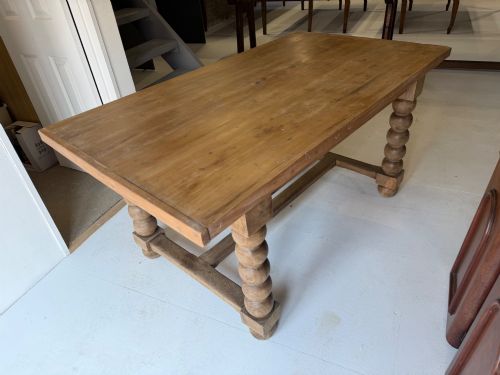
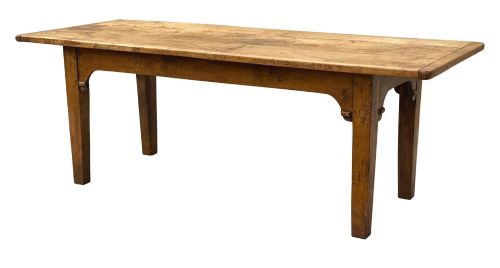
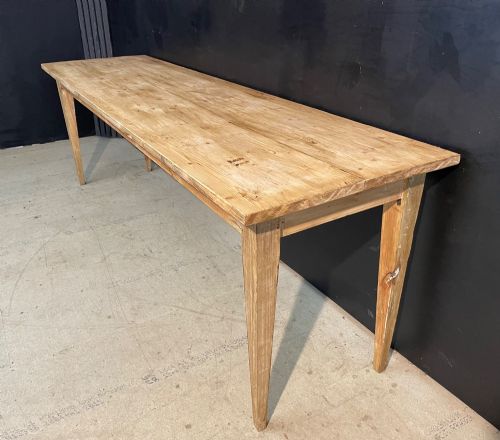
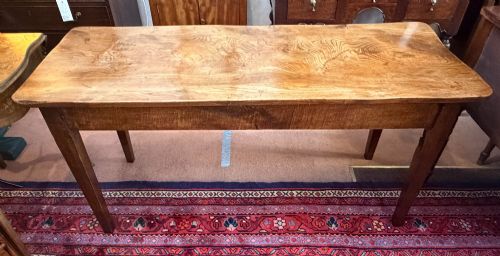
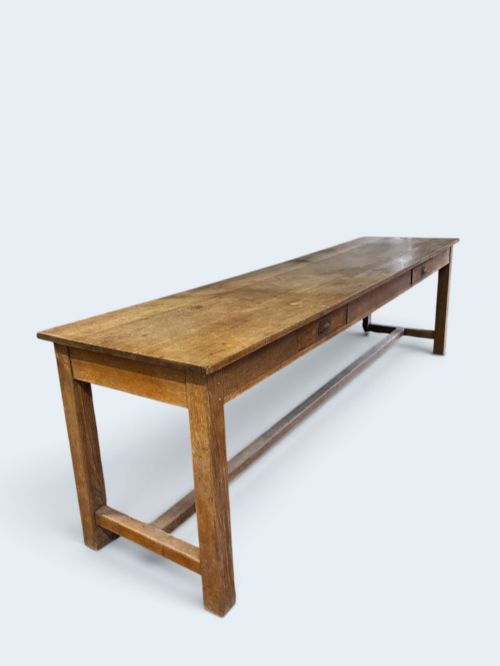
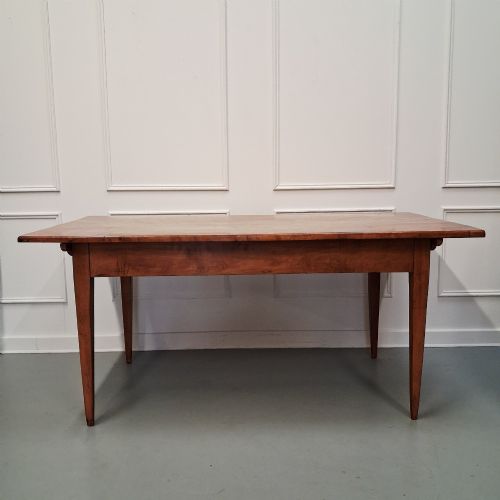
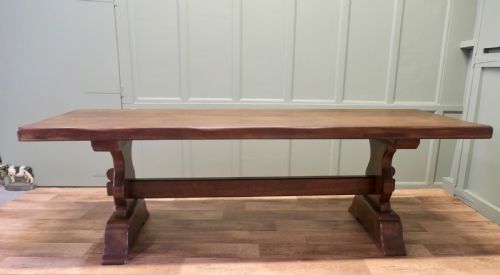
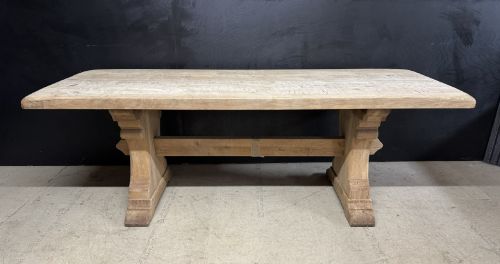
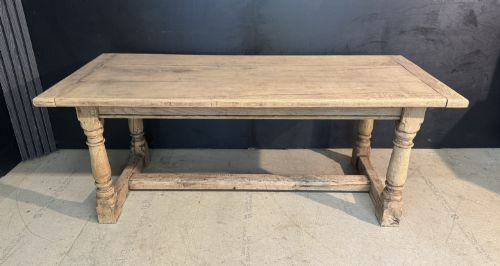
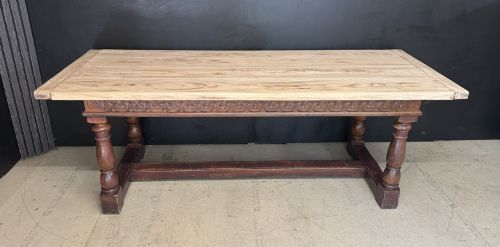
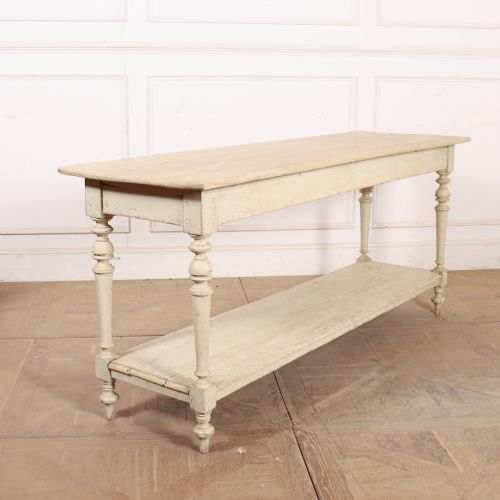
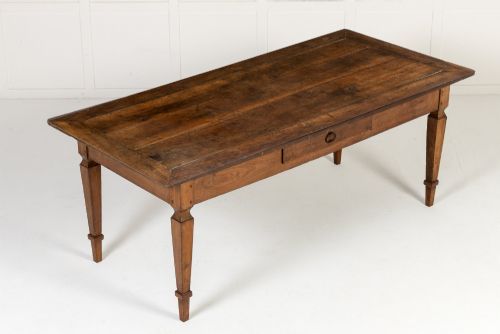
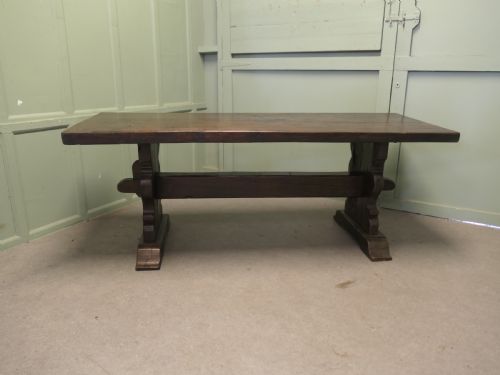
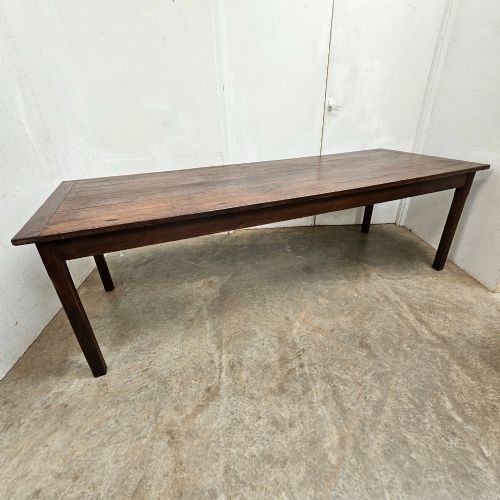
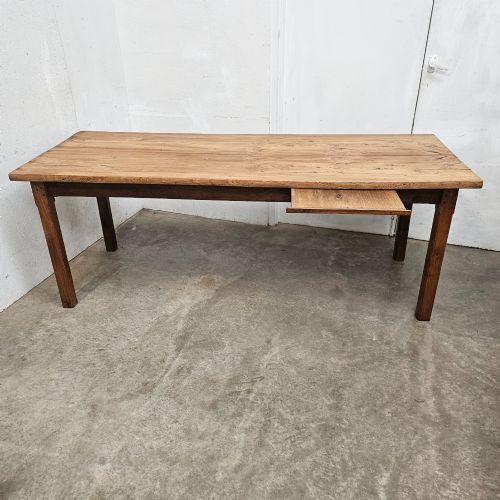
The most common formats on this page include substantial farmhouse dining tables, refectory tables, and specialised prep surfaces such as drapers tables, pastry tables, and butchers blocks. Many feature functional additions like end drawers, sliding bread boards, or fruitwood benches designed to maximise everyday kitchen efficiency.
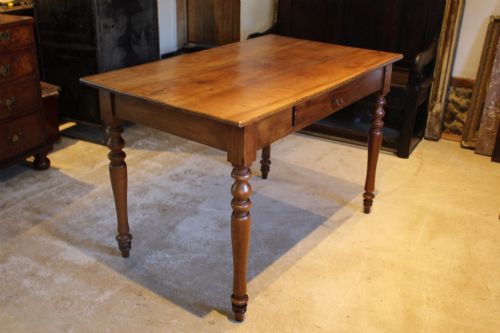
Originating from traditions of French provincial and rustic country craftsmanship, these tables showcase varied regional woods and patinas developed over generations of continuous service. From expansive oak refectory boards to compact cherrywood workbenches, each piece carries distinct historical marks of its working life.
How They Were Made
Construction relied heavily on durable domestic hardwoods and softwoods, with cherrywood, oak, pine, and fruitwood forming the primary structural foundations. Cabinetmakers and local artisans utilised sturdy joinery techniques, including pegged mortise and tenon frames, to withstand the heavy loads demanded by agricultural and culinary labour.
Surfaces were frequently constructed from wide timber planks, sometimes featuring multi-board tops reinforced with breadboard ends to manage natural wood movement over time. Iron fittings, brass hardware, and occasional marble insertions were integrated into specific work tables to handle food preparation and baking tasks.
Listings feature eighteenth, nineteenth, and early twentieth century pieces constructed from oak, pine, cherrywood, fruitwood, and ash.
What Varies in Quality
The distinction between tiers largely rests upon timber selection, structural integrity, and the preservation of original surfaces. Tables fashioned from dense hardwoods like cherry or oak with minimal alterations command greater attention than heavily restored utility pieces.
Quality also manifests in the subtlety of regional detailing, such as cleanly turned legs, finely fitted bread slides, and integrated drawers that retain their original operational smoothness. The depth and warmth of the natural patina accumulated across decades further separate standard utilitarian boards from exceptional examples.
The French Wood Kitchen Table Glossary
- Breadboard ends
- Transverse pieces of timber fixed to the ends of a table top to prevent warping and conceal end grain. This traditional construction method allows the main planks to expand and contract naturally with humidity changes.
- Refectory table
- A long, narrow dining table historically used for communal meals in monastic or large domestic settings. In provincial French furniture, these pieces often feature substantial stretcher bases and thick timber tops.
- Fruitwood
- An umbrella term for timber harvested from fruit-bearing trees such as cherry, pear, apple, and plum. Cabinetmakers prized these woods for their fine grain, warm tones, and ability to accept a rich, glowing patina.
- Drapers table
- A long, narrow utility table traditionally utilised in textile shops for measuring and folding cloth. Their generous length and shallow drawers made them exceptionally versatile for domestic preparation and serving.
- Charcuterie prep table
- A specialised work table often featuring an inset marble slab designed for butchery and meat preparation. The cool stone surface provided an ideal hygienic workspace for culinary tasks.
French Wood Kitchen Table: Frequently Asked Questions
How were these tables used originally?
In historical settings, these tables served as the central hub for food preparation, kneading dough, processing harvested produce, and gathering the household for communal family meals.
Specialised variants like pastry tables, workbenches, and drapers tables performed specific workshop or culinary duties, while associated benches provided ample seating around the kitchen hearth.
How do I care for an antique table?
Living with an antique wood table requires managing environmental humidity and protecting the surface from excessive moisture and heat. Regular dusting with a soft cloth and occasional application of natural wax helps maintain the historical patina without stripping character.
Avoiding direct placement near heat sources prevents the aged timbers from drying out, splitting, or warping over time.
How can I tell the period?
Determining the age involves examining construction marks, tool signatures, timber selection, and overall joinery style. Eighteenth and early nineteenth-century examples frequently display hand-sawn board variations and pegged joints, whereas later nineteenth and early twentieth-century pieces may incorporate machine-planed elements.
Regional styles, such as French provincial or rustic country designs, also offer strong chronological clues regarding when and where a table was built.