




French Window Seat
A French window seat offers an elegant resting place beneath a casement, drawing on centuries of European seating traditions.

French Window Seat
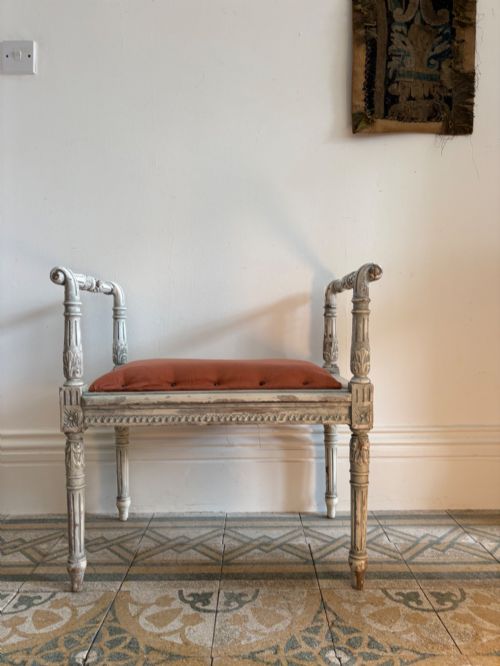
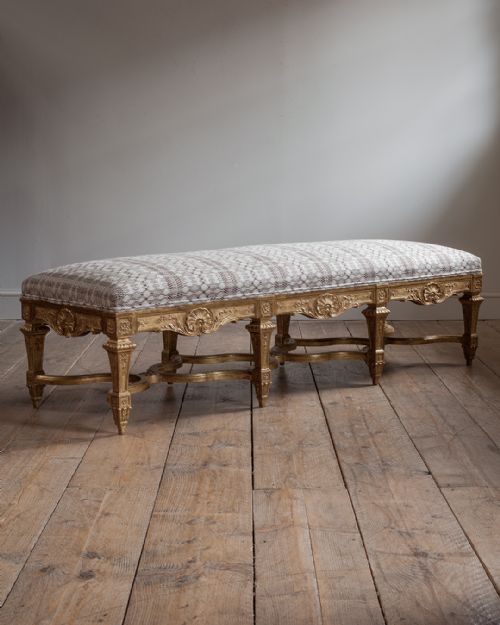
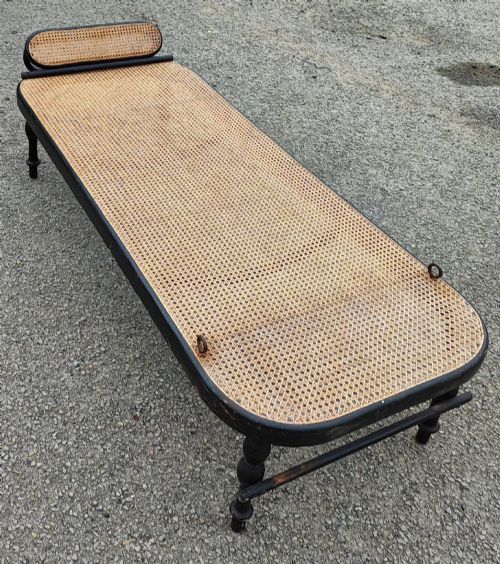
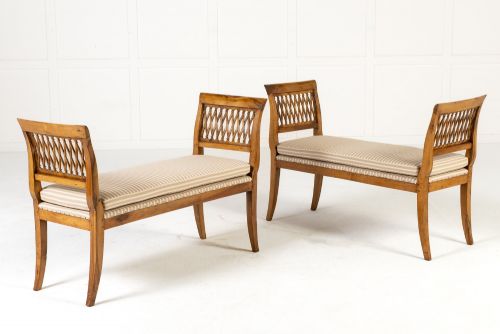
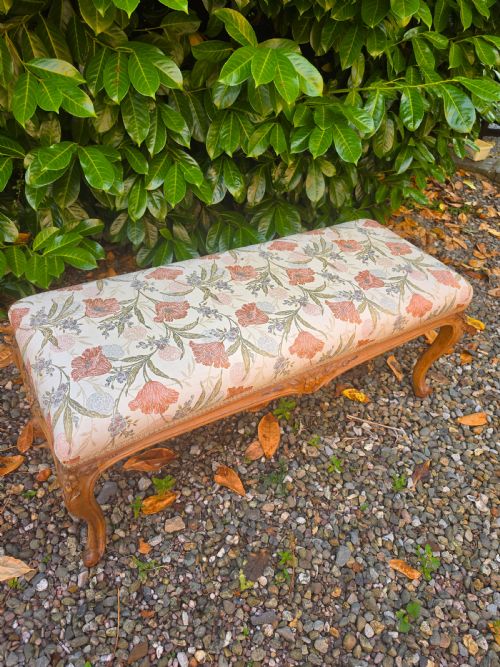
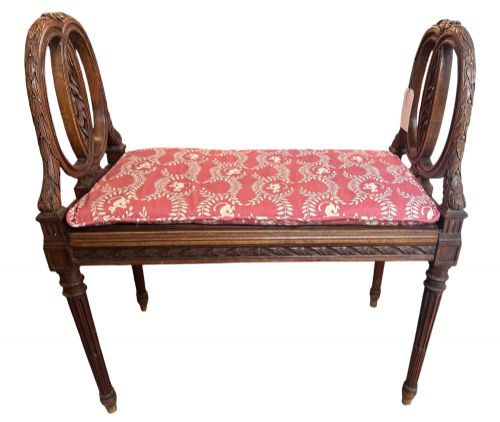
When searching for a french window seat, buyers encounter long stools, benches, and duet seats designed to sit low beneath sills or at the foot of a bed. The selection spans the nineteenth and early twentieth centuries, drawing heavily on Louis XVI, Rococo Revival, and Empire design vocabularies.
Most examples originate from French workshops or provincial centres, though related Gustavian and Italian pieces appear alongside them. Forms range from simple caned banquettes to grand giltwood and walnut frames upholstered in silk, velvet, or traditional textiles.
How they were made
Frames rely on sturdy timbers such as walnut, oak, and beech, frequently shaped with hand-carved details or finished in giltwood, brass accents, and painted surfaces. Artisans incorporated woven cane panels or prepared foundations for traditional upholstery covered in silk, leather, and decorative fabric.
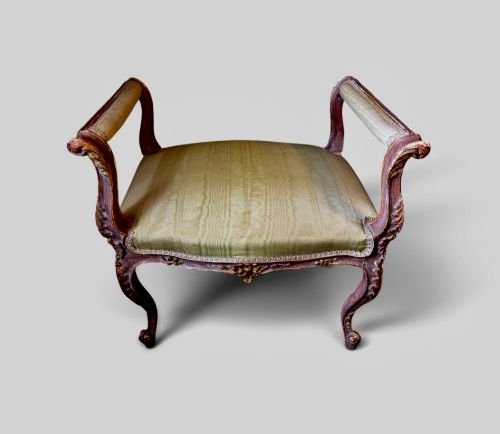
Structural joinery employs traditional techniques to support long spans without backs, often featuring cabriole legs, fluted neoclassical columns, or curule X-frames. Surface decoration combines gesso, gilding, and subtle paint layering to achieve the characteristic appearance of each period.
Listings feature pieces spanning the nineteenth century through to the early nineteen-thirties, using walnut, giltwood, and cane.
What varies in quality
The standard of a piece rests primarily on the crispness of the wood carving and the integrity of the underlying frame. Finer examples display deeply undercut foliage, balanced proportions, and original gilding or high-grade painted finishes rather than flat, machine-cut mouldings.
Upholstery materials and caning work also differentiate tiers of production, with hand-woven cane and heavy silk or velvet textiles indicating higher-status commissions. The weight and selection of the timber, from dense walnut to secondary woods, further mark the distinction between provincial utility and metropolitan craftsmanship.
Gillows
The French Window Seat Glossary
- Giltwood
- Timber coated with a thin layer of gold leaf over a prepared gesso ground. This finish was favoured for formal salon furniture.
- Caning
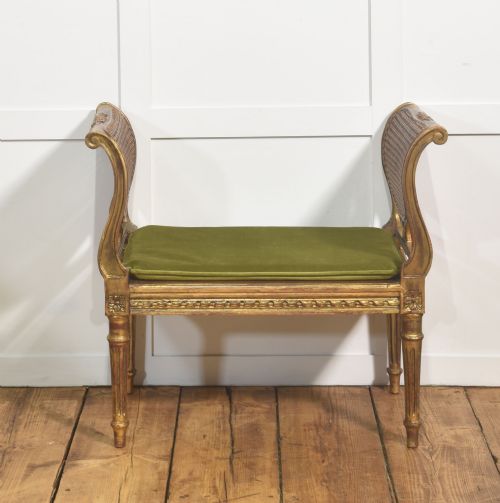
- Woven rattan or split cane used for seats and back panels. It provides a lightweight, flexible surface popular in warmer climates.
- Curule stool
- An ancient Roman magistrate seat form featuring crossed concave legs. The X-frame shape reappeared frequently during the Empire period.
- Cabriole leg
- A furniture leg that curves outward at the knee and tapers inward at the ankle. It echoes animal limbs and defines many Rococo Revival designs.
- Banquette
- A long upholstered bench or stool without a back. These pieces often served in hallways and bedchambers.
French Window Seat: Frequently Asked Questions
Where should I place a French window seat?
These benches fit naturally beneath low window frames, filling empty architectural spaces with functional seating.
They also serve at the foot of a bed or as occasional seating in long hallways and drawing rooms.
How do I identify a Louis XVI style piece?
Louis XVI designs are distinguished by straight fluted legs, symmetry, and classical geometric motifs.
Craftsmen of this style favoured restrained carvings over the exuberant curves of earlier Rococo work.
What is the difference between a window seat and a duet stool?
A window seat is typically long and narrow, designed specifically to fit the width of a casement window.
A duet stool is built wider to accommodate two people seated side by side, often used for musical practice.
Are these seats comfortable for daily sitting?
Most antique examples feature padded upholstery over traditional webbing or supportive cane foundations.
Their primary purpose was decorative and resting rather than heavy lounging, though cushions can enhance comfort.