





French Watercolour Landscape
A french watercolour landscape brings the light and topography of rural and urban France into a room through delicate washes on paper.
French Watercolour Landscape
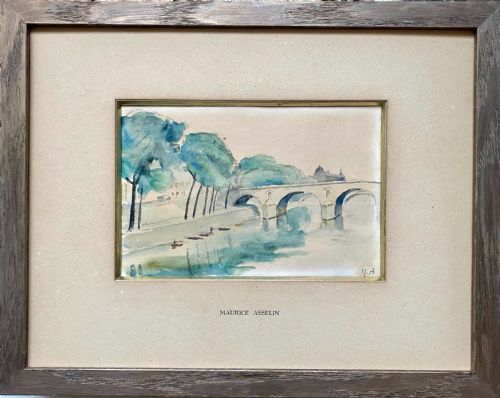
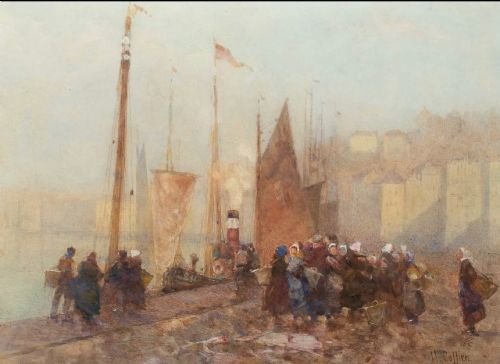
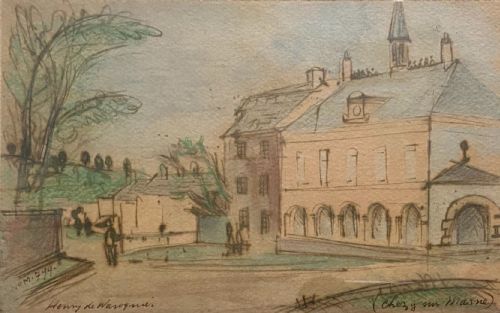
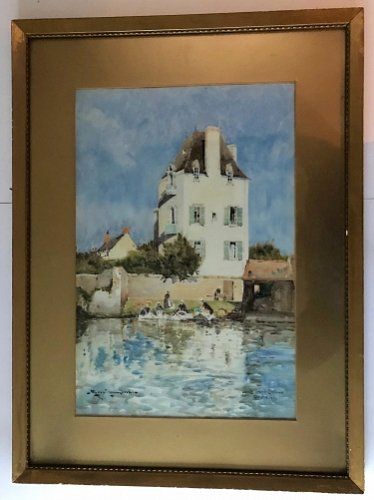
A french watercolour landscape captures river scenes, townscapes, and coastal views created across the nineteenth and twentieth centuries. These works range from nineteenth-century woodland paths and Normandy harbours to mid-century village views and architectural subjects.
The pieces on this page appear in various formats including framed watercolours, gouache mixed media drawings, and works combining ink with watercolour pigment. Many are housed behind glass in wooden or gilt wood frames that complement the delicate nature of works on paper.
Materials and execution
Artists apply watercolour pigment and ink onto paper, sometimes combining these washes with crayon, pastel, or gouache to build texture and tone. Support materials typically include fine paper framed beneath glass within wood or gilt wood surrounds.
Techniques span traditional transparent washes deployed by Barbizon School painters to the more expressive mixed media applications seen in later works from the mid-twentieth century.
French Watercolour Landscape Retail Price Guide 2026
Typical asking prices for french watercolour landscape among the pieces listed under this phrase on Sellingantiques today, from the lower quarter to the upper quarter. They describe what is for sale here now, not the wider market.
Several pieces preserve the quiet travels of artists who walked the Seine, crossed Normandy, and recorded market mornings long before tourists arrived.
Distinctions in quality
Quality rests upon the sureness of the draughtsmanship and the artist's command of light and atmosphere across the paper. Stronger examples reveal confident brushwork and a balanced composition that captures the specific essence of a French locale.
Condition of the paper and the preservation of the pigments under glass also determine the appeal of an individual painting. Works retaining their original vibrancy without heavy fading or excessive foxing stand higher in the range.
Maurice Asselin·Hector Caffier·Henry de Waroquier·Gaston Cornil·William Lee Hankey·Henri Joseph Harpignies·Joseph W Milliken·Noel Harry Leaver·Eugene Boudin·Irene Lagut·Yves Brayer·Charles Eyres Simmons·Lamorna Birch
The French Watercolour Landscape Glossary
- Gouache
- An opaque watercolour paint that produces a heavier, more solid layer of colour on paper than traditional transparent washes. Artists often use it alongside standard watercolour to add highlights.
- Barbizon School
- A nineteenth-century French art movement focused on realistic, atmospheric landscape painting en plein air. Practitioners turned away from classical idealisation to observe nature directly.
- Post-Impressionism
- A diverse artistic movement following Impressionism where painters explored emotion and structure through bold use of form and colour. Works from this stylistic umbrella appear in twentieth-century French landscape art.
- Mixed media
- An artwork created using more than one medium on the same support. In these listings, artists frequently combine watercolour with ink, crayon, or pastel.
- Works on paper
- A collective term encompassing watercolours, drawings, prints, and pastels created on a paper support. These pieces generally require framing behind glass for protection.
French Watercolour Landscape: Frequently Asked Questions
How do I hang a watercolour painting safely?
Watercolours are sensitive to strong sunlight and excessive humidity, which can fade pigments and damage paper over time. Hang them away from direct, harsh rays and maintain a stable indoor climate.
Ensure the frame is sealed properly and that the glass does not press directly against the surface of the paper to prevent condensation buildup.
What subjects appear in these French landscapes?
The works depict diverse locations across France, ranging from the banks of the Seine in Paris to coastal towns in Normandy and Brittany. You will also find rural village scenes, woodland paths, and architectural townscapes.
Artists captured both bustling markets and quiet provincial corners, reflecting the varied topography of the country.
How can I tell the period of a watercolour?
Stylistic clues, framing materials, and artist signatures or biographical dates offer the clearest indication of a piece's era. Nineteenth-century works often align with Barbizon or academic traditions, while mid-century examples show modernist or Post-Impressionist influences.
Paper stock, mount styles, and inscription handwriting also provide helpful context when dating an unsigned sheet.
Are these watercolours original artworks?
Yes, the listings comprise original hand-painted works on paper created directly by the artists rather than modern mechanical reproductions. Each piece shows the distinct brushwork, pigment pooling, and paper texture unique to an individual painting.
Some items combine watercolour with ink, gouache, or crayon as mixed media compositions.