




Green Toned River Landscape
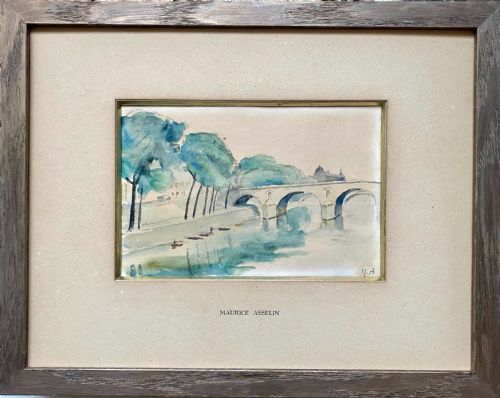
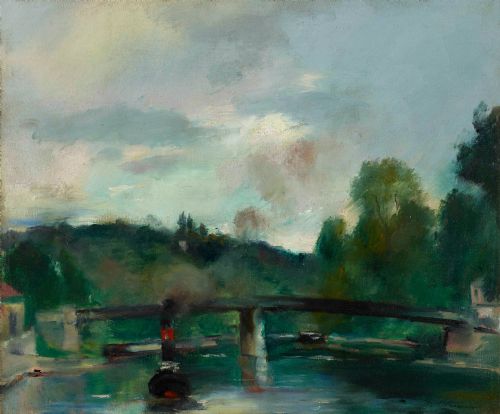
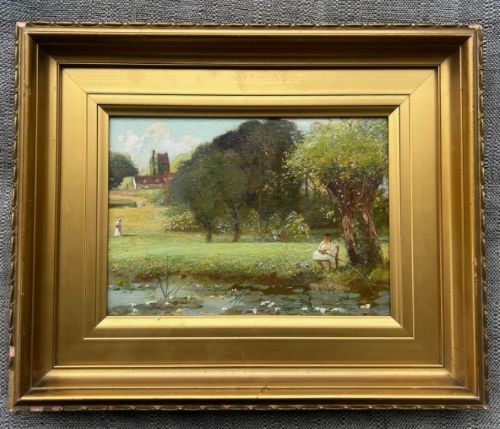
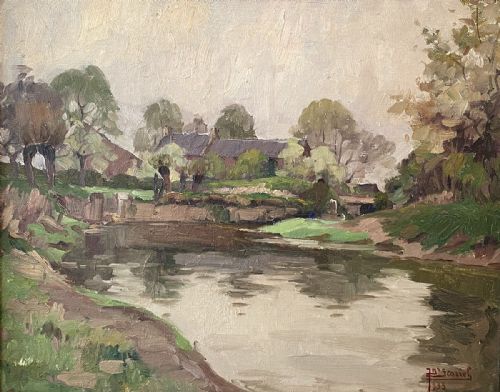
A green toned river landscape brings the quiet movement of water and verdant banks straight into a room through oil and watercolour.
Green Toned River Landscape
A green toned river landscape captures pastoral waterways, canals, and riverbanks painted across the nineteenth and twentieth centuries. These works span periods from the Victorian era through Edwardian pastoral scenes up to mid-century modern views.
Buyers encounter oil paintings on canvas and wood panel alongside delicate watercolour paintings on paper. Common subjects depict local bridges, fishermen, and rural mills rendered in styles ranging from British Impressionism to the French Barbizon School.
How They Were Made
Artists built these scenes using oil paint or watercolour applied to stretched canvas, prepared wood panels, or heavy paper. Canvases and panels frequently sit within original giltwood frames that complement the painted river scenes.
Techniques draw on Impressionist brushwork and traditional Barbizon methods, balancing loose application of green pigment with fine handling of water and sky.
Green Toned River Landscape Retail Price Guide 2026
Typical asking prices for green toned river landscape among the pieces listed under this phrase on Sellingantiques today, from the lower quarter to the upper quarter. They describe what is for sale here now, not the wider market.
Listings span from the nineteenth century into the mid-twentieth century, recording British and French approaches to pastoral river scenes in oil and watercolour.
What Varies in Quality
The strength of a green toned river landscape depends upon the confidence of the brushwork and the artist's command of light upon the water. Superior examples display subtle tonal variation in the foliage rather than flat washes of green.
The harmony between the painting and its period frame alters the visual impact, as original giltwood settings enhance the depth of the composition.
Maurice Asselin·Henri Ottmann·Sir David Murray·David Cox Jnr·Thomas Creswick·Augustus William Enness
The Green Toned River Landscape Glossary
- Canvas
- A heavy woven fabric stretched across a wooden frame to serve as a sturdy support for oil paint. It provides a textured surface that holds thick applications of pigment.
- Giltwood
- Timber carved and coated with a thin layer of gold leaf or gold-coloured finish. This material frames many nineteenth-century paintings to add reflective brilliance.
- Barbizon School
- A mid-nineteenth-century French art movement focused on direct observation of nature and tonal landscapes. Painters in this style prioritised atmospheric effects and earthy palettes.
- Watercolour
- A paint consisting of pigment suspended in a water-soluble binder, applied to paper. It allows for transparent washes that capture light and fluid river surfaces.
Green Toned River Landscape: Frequently Asked Questions
How do I care for an antique watercolour?
Watercolours on paper require protection from direct sunlight to prevent the green pigments and paper support from fading over time.
Keep them away from damp environments and ensure they hang behind conservation glass with suitable matting.
Are these paintings signed by the artists?
Many works bear the artist signature or attribution in the corners, while others remain anonymous records of river scenes from the period.
Signatures help place the work within specific artistic movements like British Impressionism or the Barbizon School.
What is the difference between oil and watercolour?
Oil paint uses a slow-drying oil medium on canvas or wood panel, allowing rich layering and textured brushwork. Watercolour relies on water-soluble pigment on paper, offering luminous transparency.
Both mediums found frequent use in capturing rural river views across the nineteenth and twentieth centuries.
How do I date a nineteenth-century landscape?
Dating relies on stylistic clues, clothing of figures by the water, frame construction, and artist biographical records. Victorian works often combine romantic pastoral elements with precise drawing.
Later pieces shift towards looser Impressionist brushwork and muted green tones.