


French Walnut Plant Stand
These french walnut plant stand examples combine decorative display surfaces with functional planting vessels, originating primarily across nineteenth and twentieth century periods.

French Walnut Plant Stand
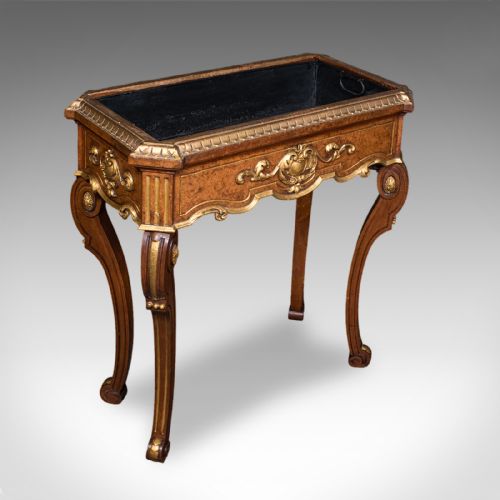
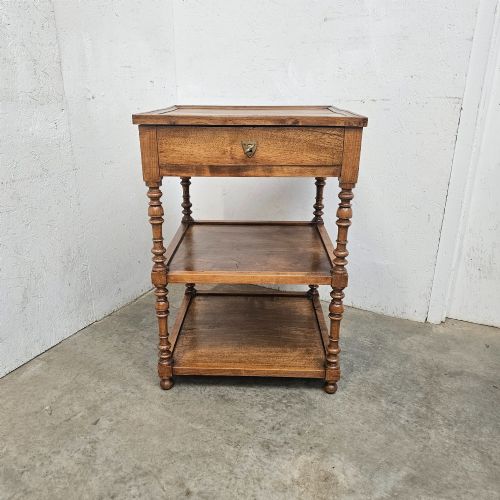
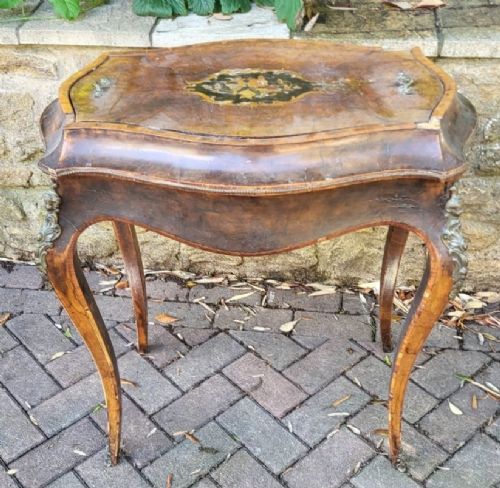
A french walnut plant stand functions as an elevated display piece, frequently combining side table surfaces with incorporated planters, jardiniere liners, or tiered shelving. The objects on this page span the nineteenth century through to the 1930s, encompassing styles from Louis XV and Rococo revivals to Art Deco designs.
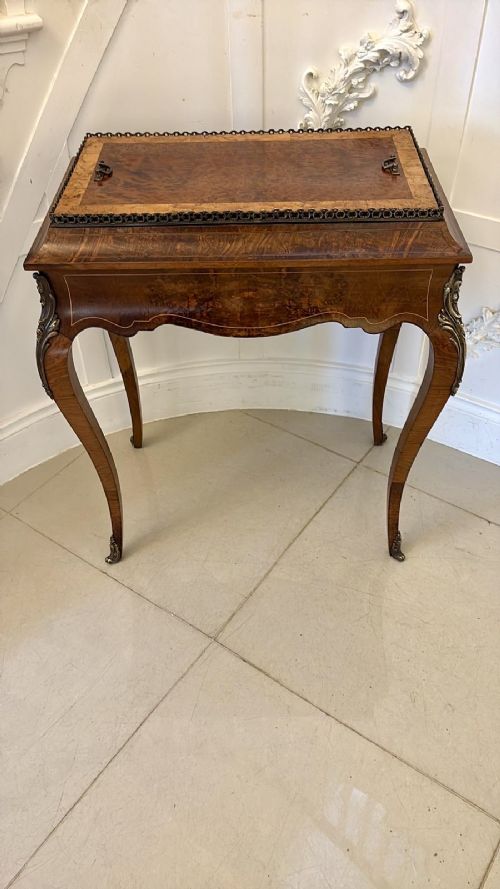
Buyers most frequently encounter multi-functional forms such as jardiniere tables with lift-off lids, two-tier etageres, and occasional tables with galleried edges. These pieces often serve alternative uses as wine coolers, cellarettes, or torchieres alongside their primary function as plant stands.
Materials and construction
Constructed predominantly from walnut and burr walnut, these stands frequently incorporate contrasting veneers, marquetry inlay, and parquetry patterns. Structural stability relies on turned or carved legs, sometimes enhanced with ebonised wood or satin walnut.
Metal mounts in brass and ormolu accent many pieces, while liners and inserts utilise zinc, porcelain, or Sevre-type plaques to hold water and earth safely. Marble tops and onyx surfaces also appear on specific occasional tables and gueridons.
One extraordinary stand carries a Rolls Royce attribution, proving that fine automotive polish and fancy plant pots occasionally share a workshop.
Craftsmanship and distinction
The standard of a french walnut plant stand rests on the execution of its marquetry, the crispness of its carved walnut details, and the quality of its metal mounts. Pieces featuring intricate floral inlay or heavy cast ormolu display higher levels of workshop skill than plain walnut surfaces.
Structural integrity also separates standard examples from finer ones, particularly in the preservation of original lift-off lids, galleried edges, and internal zinc liners. The integration of decorative elements like porcelain plaques or marble tops elevates the visual impact of the stand.
Donald Ross·Michel Dufet
The French Walnut Plant Stand Glossary
- Jardiniere
- A decorative pot or stand designed to hold plants or flowers indoors. These often feature waterproof metal liners.
- Etagere
- A piece of furniture consisting of a set of open shelves for displaying small objects. They frequently appear in two or three tiers.
- Burr walnut
- Wood taken from a walnut tree growth where the grain has grown in a deformed manner, producing intricate patterns. It is sliced into veneers for decorative surfaces.
- Ormolu
- Gilt bronze mounted on furniture pieces for ornamental effect. This technique was widely utilised in French cabinet making.
- Gueridon
- A small round table supported by one or more columns or figures. They often feature marble tops or multiple tiers.
French Walnut Plant Stand: Frequently Asked Questions
What is a french walnut plant stand used for?
These pieces serve primarily to elevate potted plants and florals within interior spaces, utilising built-in trays or waterproof liners. Many examples double as side tables, occasional tables, or display stands for decorative objects.
Historically, similar forms functioned as wine coolers or cellarettes alongside their plant-holding duties. The inclusion of lower tiers and galleried tops allows for versatile storage and display options in modern rooms.
How do I date a french walnut plant stand?
Dating relies on identifying stylistic markers, construction methods, and materials associated with specific periods from the nineteenth century through the 1930s. Pieces exhibiting elaborate ormolu mounts and Rococo curves often align with nineteenth-century revival movements.
Streamlined silhouettes, geometric marquetry, and modernist influences generally point toward later Art Deco production. Examining the secondary woods and interior liners provides further clues to the manufacturing era.
Can these stands hold heavy plants?
Most stands are built to support standard indoor potted plants within their fitted liners or tabletop surfaces. Sturdier forms featuring solid walnut construction and multiple legs handle weight better than delicate occasional pieces.
It is advisable to check the condition of internal zinc or metal liners and the stability of joints before placing heavy or damp items upon them. Using saucers inside the liners prevents moisture damage to the surrounding wood.
What is the difference between a jardiniere and an etagere?
A jardiniere specifically incorporates a planter or container designed to hold living greenery, often featuring a removable lid or metal liner. An etagere consists purely of open shelving tiers intended for displaying decorative objects and small items.
Some hybrid pieces on the market combine both functions by offering open display shelves alongside a dedicated plant-holding section.