


French Walnut Bedside Cupboard
A french walnut bedside cupboard brings continental storage to a bedroom, combining practical surfaces with decorative veneers and marble tops.
French Walnut Bedside Cupboard
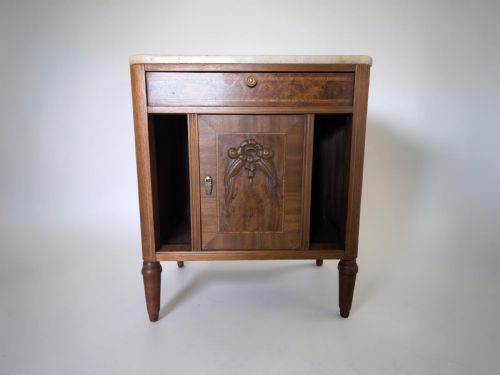
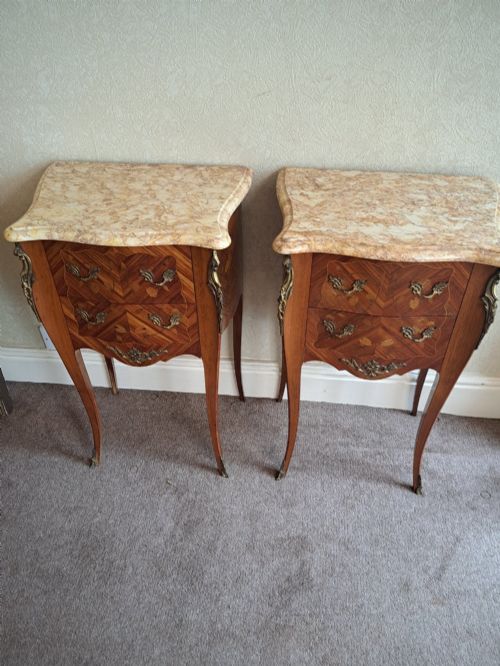
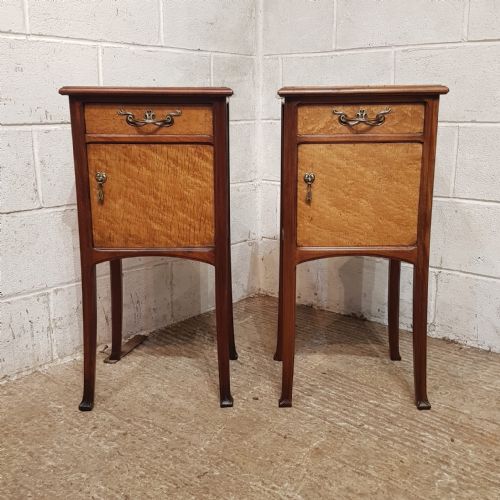
A french walnut bedside cupboard serves as a compact night table, frequently appearing in pairs dating from the late nineteenth century through to the Art Deco period of the 1930s. These pieces often feature an enclosed cupboard space beneath a stone surface, functioning traditionally as a pot cupboard alongside a bed.
Buyers will encounter various regional and stylistic interpretations on this page, ranging from rustic provincial designs to elaborate Louis XV and Louis XVI revival models. Alongside standard bedside cabinets, the selection includes side tables and lamp tables sharing the same timber and proportion.
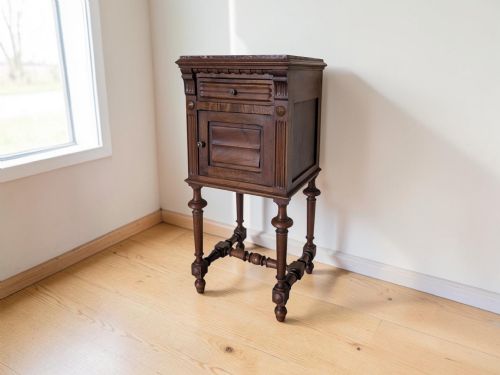
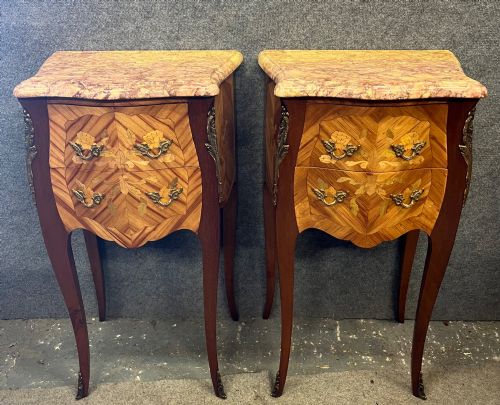
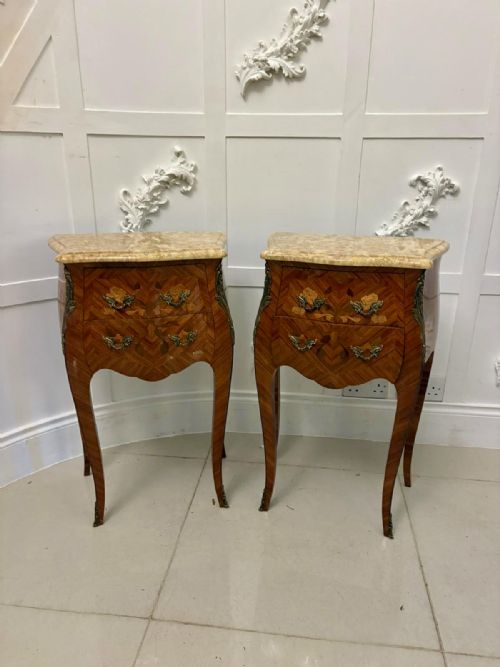
Construction spans the Victorian era into the twentieth century, bringing different decorative approaches including carved walnut, burr walnut veneers, and geometric parquetry. Many examples incorporate fitted marble slabs in shades such as Belgian Sainte-Anne, designed to protect the wood from water jugs and wash basins.
Materials and construction methods
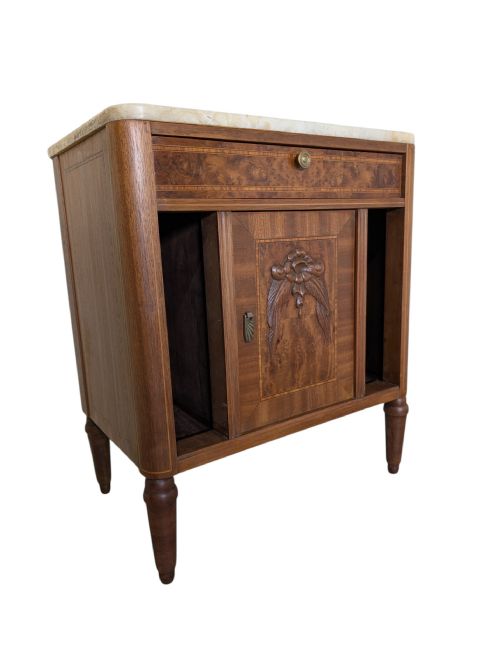
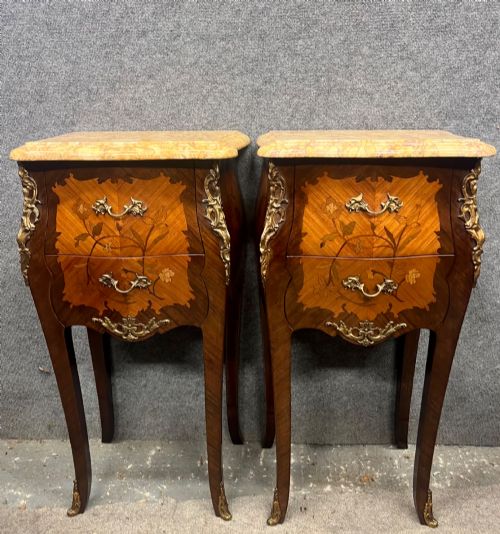
Cabinetmakers relied on solid walnut and figured walnut veneers, often laying down complex marquetry patterns or parquetry squares across the door panels and tops. Secondary timbers support the internal framing while brass mounts and ormolu accents provide structural highlights and keyhole escutcheons.
Stone tabletops form a defining element of the construction, fitted precisely into the timber carcase to create a durable, wipeable surface. Traditional joinery secures the upright panels and internal shelving, accompanied by turned supports or barley twist legs depending on the period.
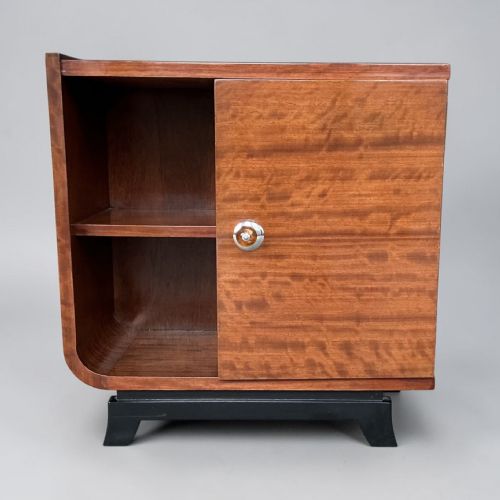
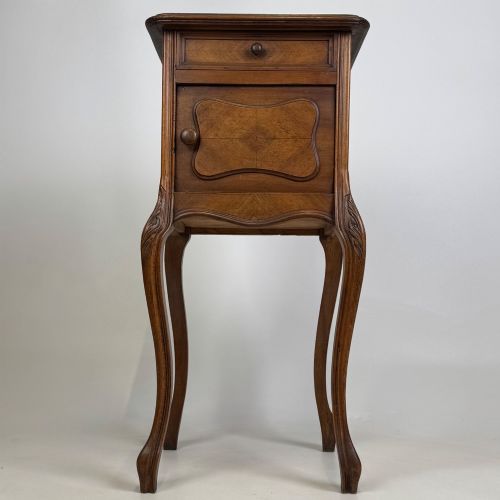
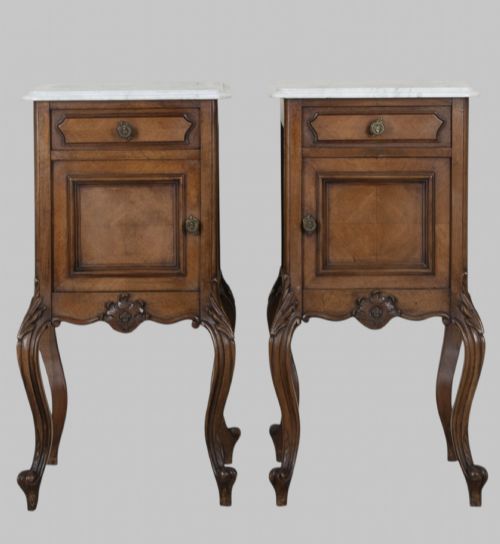
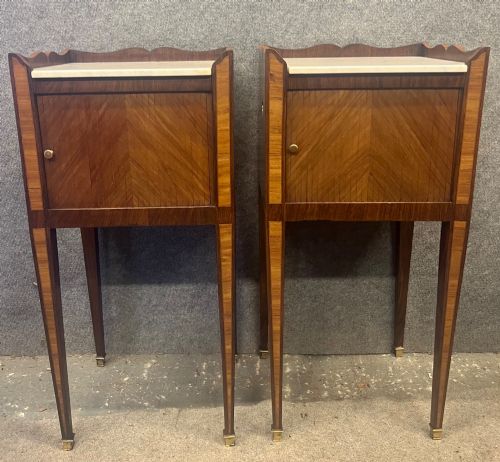
Cabinet styles span French Provincial, Louis XV revival, and geometric parquetry designs.
Assessing craftsmanship and finish
Quality reveals itself in the choice of timber and the precision of the veneer work, where figured burr walnut and symmetrical marquetry indicate a higher tier of workshop production. The thickness and figuring of the walnut display greater depth on finer examples.
The integration of the marble top and the crispness of any carved detailing set standard utility pieces apart from superior decorative specimens. Well-executed brass mounts and smoothly operating doors reflect the original maker's investment of time and skill.
The French Walnut Bedside Cupboard Glossary
- Chevet
- A small bedside table or nightstand. This French term frequently appears in descriptions of continental bedroom furniture.
- Parquetry
- Geometric wood mosaic work formed by small veneer pieces laid in patterns. It creates a structured, repeating design on cabinet doors and tabletops.
- Marquetry
- Elaborate pictorial or decorative veneer work using various tinted woods. Artisans assemble floral or scroll motifs to ornament the front surfaces.
- Ormolu
- Gilded bronze mountings applied to furniture for decoration. These metal details accent corners, feet, and drawer pulls.
- Pot Cupboard
- A small cabinet historically designed to house a chamber pot. They typically feature an internal shelf and a lower enclosed compartment.
French Walnut Bedside Cupboard: Frequently Asked Questions
What is a french walnut bedside cupboard used for?
These cabinets provide beside storage with an enclosed interior compartment and a flat top surface for a lamp or books. Historically they served as night tables and washstand companions.
Today they function as compact side tables in living spaces or bedrooms, offering hidden storage while taking up minimal floor space.
Are these cabinets usually found in pairs?
Many examples on the market survive as matching pairs, which proves particularly common for late nineteenth and early twentieth century bedroom suites. Single items also appear frequently.
Matching pairs command strong interest from buyers looking to balance both sides of a double bed with identical wood grain and marble tops.
How do I identify the period of a bedside cabinet?
Dating relies on stylistic clues, timber treatments, and hardware details ranging from nineteenth century revival styles to 1930s Art Deco geometric forms. Earlier Victorian and 19th Century pieces often feature heavier carving and darker walnut.
Later Edwardian and 1920s or 1930s items lean towards streamlined parquetry, lighter veneers, and simplified silhouettes without heavy ornamentation.
How do I care for a marble top cabinet?
The stone surface requires simple cleaning with a damp cloth and mild soap, avoiding acidic cleaners that can etch the polish. Using coasters protects the marble from rings and spills.
The walnut body benefits from occasional polishing with traditional wax to nourish the timber and maintain the lustre of the grain.