

French Wall Lighting
French wall lighting brings warmth and architectural focus to a room through cast metal and gilt surfaces.
French Wall Lighting
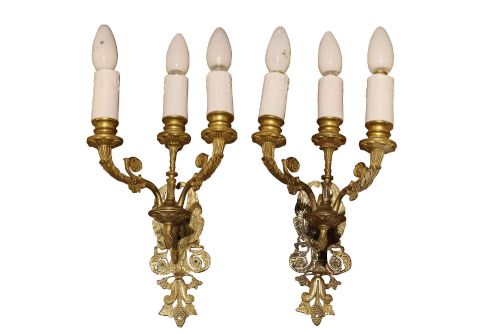
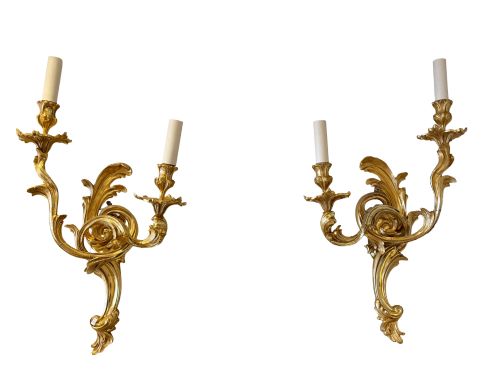
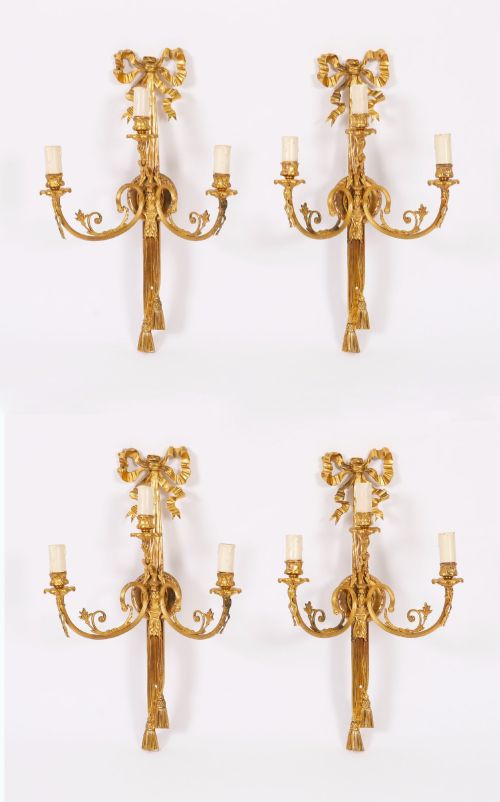
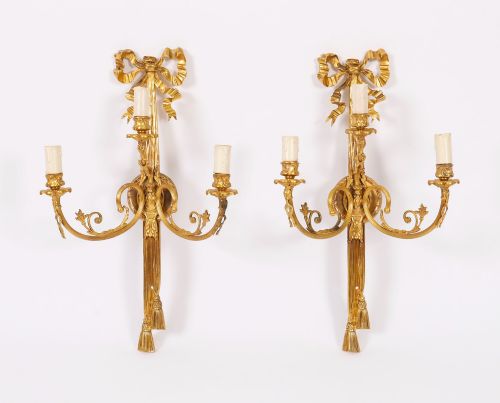
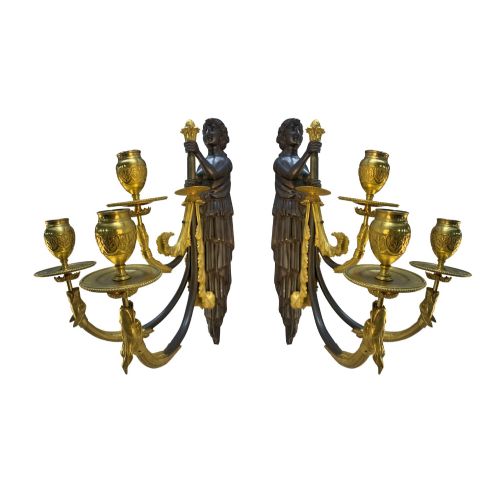
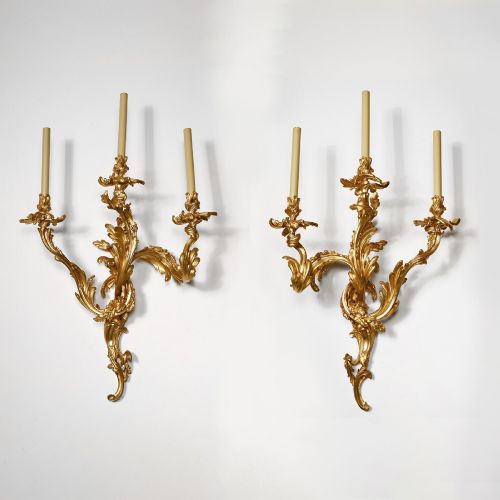
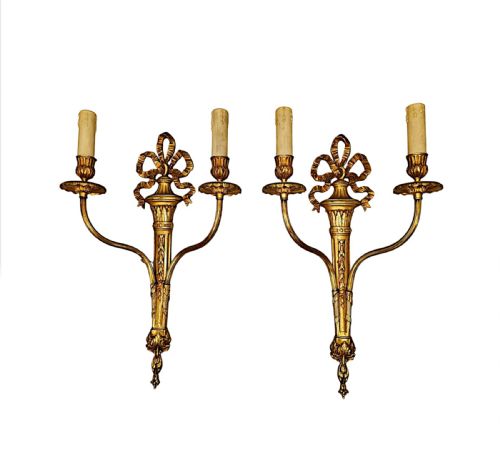
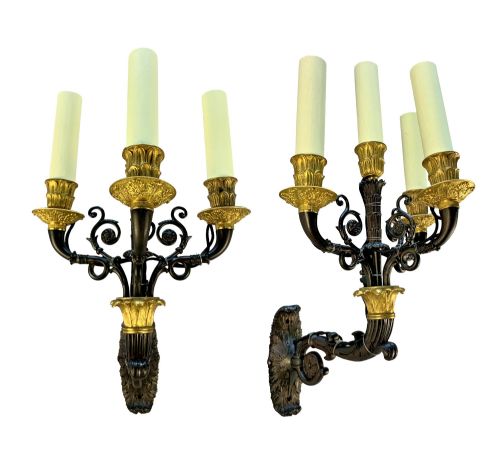
French wall lighting encompasses multi-branch sconces, wall lanterns, girandoles, and mirrored candelabra designed to mount directly onto interior walls. Buyers searching for french wall lighting most frequently encounter matched pairs and sets of four twin-arm or triple-arm fixtures dating from the nineteenth and early twentieth centuries.
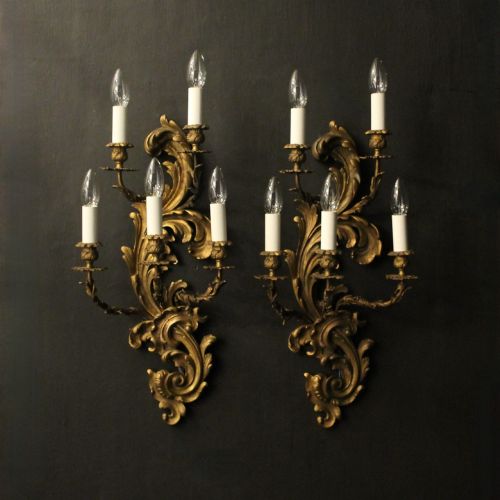
The forms draw heavily upon historical design vocabularies including Louis XV, Louis XVI, and Empire styles, translating grand palatial aesthetics into domestic illumination. These pieces function simultaneously as decorative wall sculpture and functional light sources.
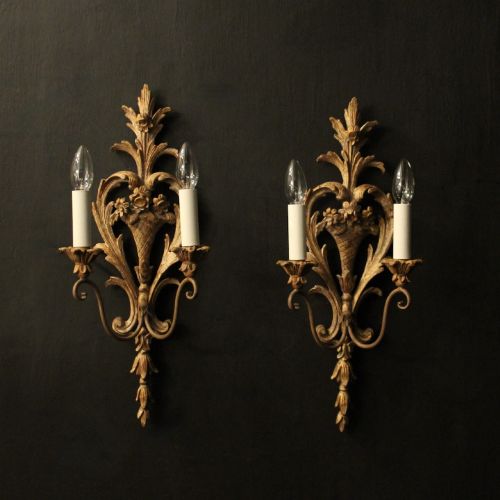
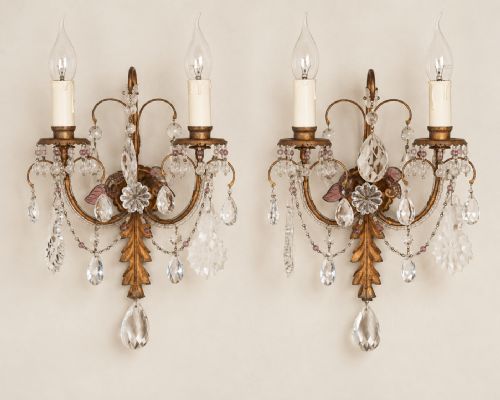
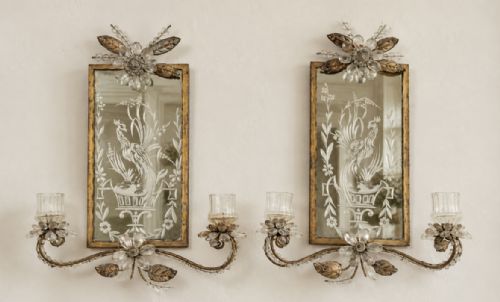
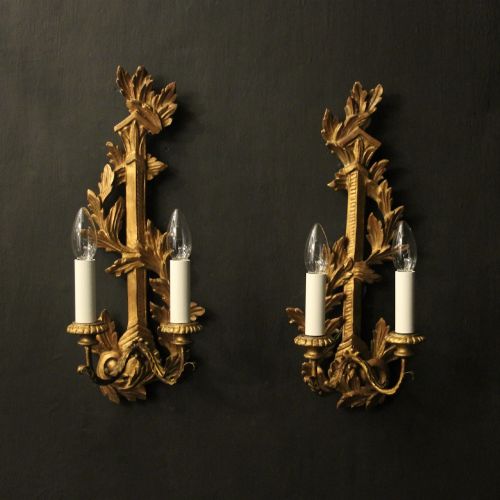
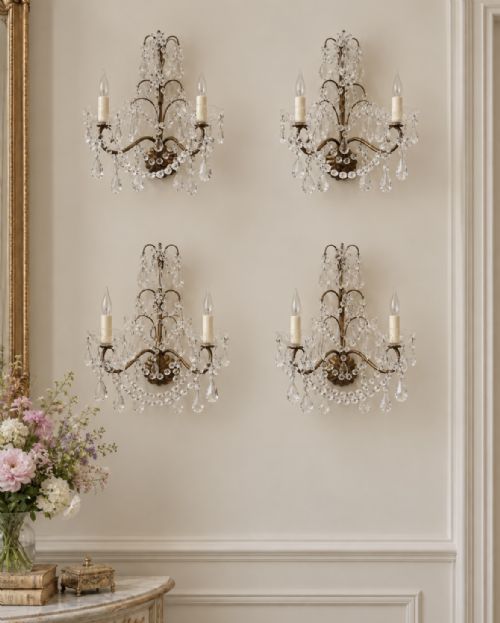
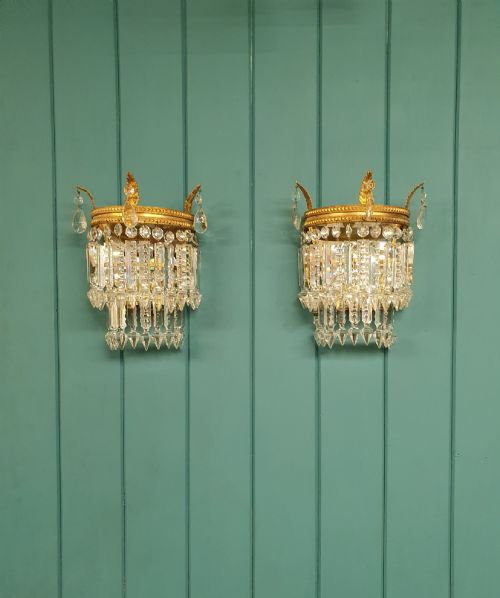
Surviving examples range from simple brass half-lanterns to large ormolu appliques adorned with cast ribbons, acanthus leaves, and crystal drops. Many pieces integrate mirrors to amplify the spread of candlelight or early electric illumination.
Materials and construction methods
Foundry casting forms the foundation of these fixtures, utilising brass, bronze, and tole peinte shaped into intricate arms, backplates, and nozzles. Metal components frequently receive a heavy application of gold leaf, mercury gilt, or ormolu to achieve a rich, enduring metallic lustre.
Secondary materials such as hand-cut crystal drops, mirrored glass plates, and occasionally burr walnut introduce textural contrast and reflect light. Joinery relies on threaded pins, screws, and brazed joints hidden behind decorative cast motifs.
French Wall Lighting Retail Price Guide 2026
Typical asking prices for french wall lighting among the pieces listed under this phrase on Sellingantiques today, from the lower quarter to the upper quarter. They describe what is for sale here now, not the wider market.
French wall lighting forms represented here include girandoles, overmantel mirrors, and multi-branch wall lanterns.
Distinctions in execution and design
Quality reveals itself in the crispness of the metal chasing and the depth of the original gilding, where superior examples exhibit sharp relief and hand-finished details rather than soft, mass-produced contours. The weight and thickness of the cast bronze or brass components also separate substantial fixtures from lighter alternatives.
Coherence of the design vocabulary defines the upper tiers, seen in balanced proportions, harmonious branch arrangements, and finely integrated decorative elements like ribbon crests or acanthus scrolls.
Maison Baguès·Casier
The French Wall Lighting Glossary
- Ormolu
- Gilded bronze produced through a mercury amalgamation process that leaves a deep, durable gold surface. This technique was widely employed in high-status French decorative arts.
- Applique
- A wall-mounted lighting fixture designed to hold candles or electric lamps. The term is frequently used interchangeably with wall sconce.
- Girandole
- A decorative wall bracket featuring a candle branch combined with a mirror. The reflective glass serves to multiply the light emitted in the room.
- Tole Peinte
- Painted sheet metal used for decorative objects and lighting fixtures. It often appears in dark or lacquered finishes with parcel-gilt highlights.
- Overmantel
- A large mirror or decorative panel designed specifically to hang above a fireplace mantel. These pieces frequently incorporate candle arms or console brackets.
French Wall Lighting: Frequently Asked Questions
How are french wall lighting fixtures wired?
Most antique fixtures arrive adapted for modern electrical wiring, often with internal channels routed through the backplate and arms during previous restorations. Qualified electricians can easily integrate them using standard mounting brackets.
Original candle tubes and drip pans are frequently retained to preserve the visual character, even when internal bulb holders are updated for contemporary safety standards.
How do I identify Louis XV style?
Louis XV style pieces are characterised by asymmetrical forms, flowing C-scrolls, and naturalistic motifs such as leaves and floral arrangements. The metalwork feels organic and curving rather than rigidly geometric.
This aesthetic dominated much of the eighteenth century and experienced major revivals throughout the nineteenth century.
What is the difference between brass and ormolu?
Brass is an alloy of copper and zinc with a natural yellowish metallic tone, while ormolu specifically denotes cast bronze treated with a fine layer of gold. Ormolu displays a warmer, richer gold hue that resists tarnishing compared to exposed brass.
Many nineteenth-century pieces combine cast bronze components with mercury gilding to achieve this luxurious finish.