

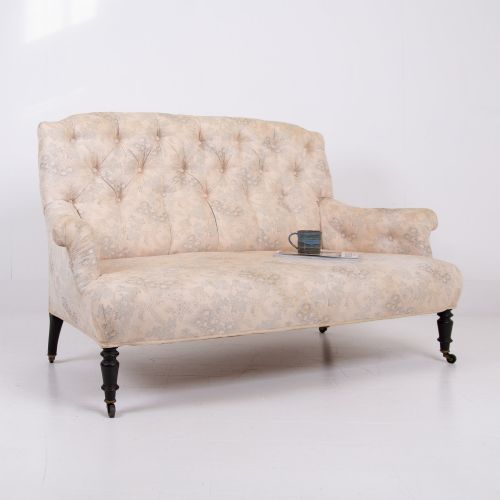
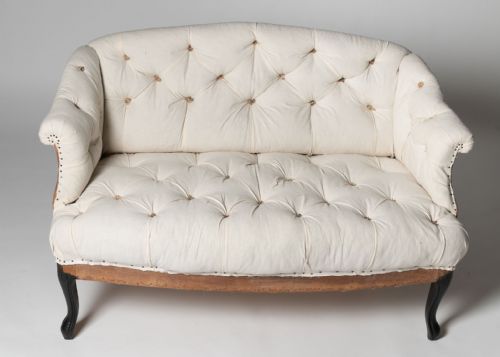
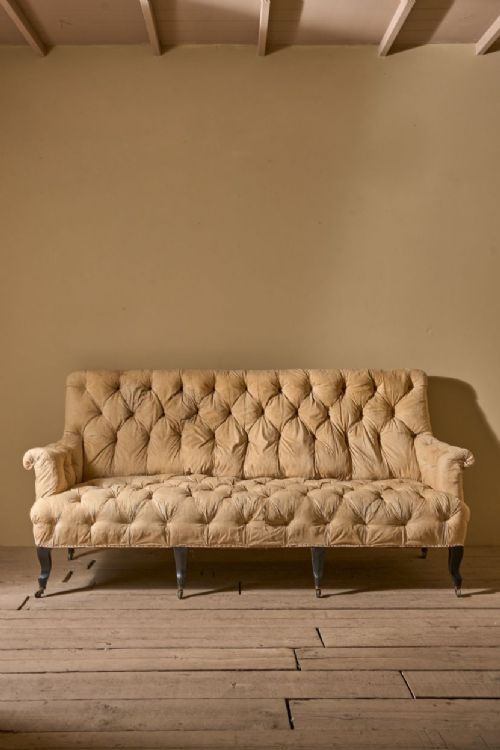
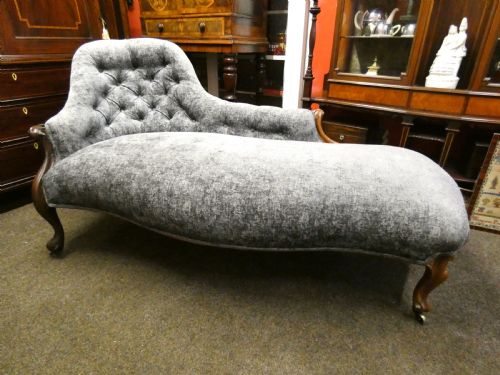
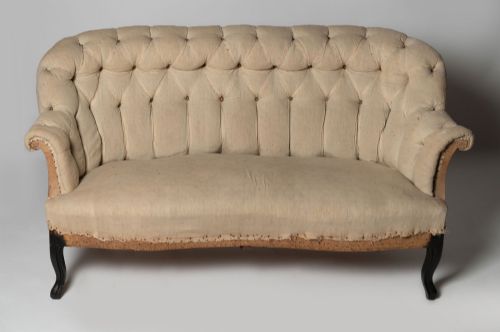
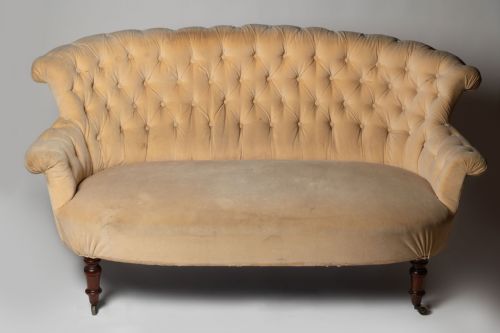


French Tufted Couch
A French tufted couch brings deep buttoning and curvaceous timber frames straight from nineteenth-century parlours into modern sitting rooms.
French Tufted Couch
When you search for a French tufted couch, you are looking at nineteenth-century seating that ranges from buttoned Napoleon III buttoned back and seat sofas to Victorian walnut chaise longues and gilt settees. The pieces on this page span the Victorian era, the 1860s, 1890s, and 1900, capturing both French Rococo Revival forms and English interpretations of French styles.
The most common forms you will meet here include double-end settees, day beds, button-backed canapés, and bedroom sofas upholstered in velvet with tassel trim. These encompass classic chaise longues alongside larger settees and sofas designed for formal reception rooms or private chambers.
How they were made
Frames are constructed from solid timber, specifically mahogany, walnut, rosewood, and giltwood, often heavily carved with decorative motifs before being painted or gilded. These structural woods provide the necessary rigidity to support the deep upholstery and sprung internals characteristic of the period.
Upholstery relies on traditional techniques featuring buttoning across the back and seat, paired with velvet and various decorative fabrics. Finish details frequently incorporate tassel trim and exposed carved wooden woodwork to frame the textile work.
French Tufted Couch Retail Price Guide 2026
Typical asking prices for french tufted couch among the pieces listed under this phrase on Sellingantiques today, from the lower quarter to the upper quarter. They describe what is for sale here now, not the wider market.
Listings here feature pieces from the nineteenth century, including specific years like 1860, 1890, and 1900, alongside general Victorian and Napoleon III periods.
What varies in quality
Quality rests heavily on the crispness of the timber carving and the integrity of the underlying frame, distinguishing superior walnut and rosewood work from simpler structures. Gilt decoration and painted surfaces also show varying degrees of preservation and hand-finishing.
The execution of the buttoned upholstery and the choice of covering fabric dictate the finish of each piece. Original upholstery states and period textiles elevate a piece above those requiring complete reupholstery.
The French Tufted Couch Glossary
- Canapé
- An ornamental settee with an exposed wooden frame, typically upholstered across the back and seat in the French taste. They often feature carved details along the crest rail and cabriole legs.
- Napoleon III
- A nineteenth-century French design period known for eclectic revivals, deep buttoning, and lavish squab cushions. Furniture from this era prioritises comfort alongside ornate decorative flourishes.
- Rococo Revival
- A nineteenth-century style drawing on eighteenth-century asymmetry, C-scrolls, and naturalistic floral carvings. It appears frequently on the walnut and giltwood frames found within these listings.
French Tufted Couch: Frequently Asked Questions
What is a French tufted couch?
A French tufted couch is a nineteenth-century seat featuring deep buttoning across the back or seat, framed in carved timber such as walnut, mahogany, or giltwood.
These pieces draw on Victorian and French revival styles, including Napoleon III and Louis XVI designs, offering both formal elegance and deep lounging comfort.
How do I date a nineteenth-century couch?
Dating relies on identifying the underlying timber, the style of the carved ornament, and the construction methods used in the frame. Victorian and Napoleon III pieces often exhibit specific revival motifs and characteristic upholstery depths.
Comparing the woodwork and frame geometry against documented nineteenth-century forms provides the most reliable guide to age.
Where should I place a settee?
These settees and day beds suit drawing rooms, bedrooms, or large hallways where their decorative carved frames and upholstered backs can be viewed from multiple angles. Smaller bedroom sofas and chaise longues also fit comfortably into dressing rooms or quiet reading corners.
Ensure adequate floor space so the curved timber and exposed woodwork remain visible rather than crowded against other furniture.
How do I care for antique velvet?
Antique velvet requires gentle brushing with a soft-bristled brush to maintain the pile and prevent dust accumulation over time. Keep upholstered pieces away from direct sunlight to prevent the coloured fabric and tassel trims from fading.
Professional cleaning is recommended for deeper maintenance to preserve the historic textiles without damaging the delicate fibres or buttoned tufting.