



French Town Landscape Art
French town landscape art brings the streets and squares of France into your room through oil paint and watercolour.
French Town Landscape Art
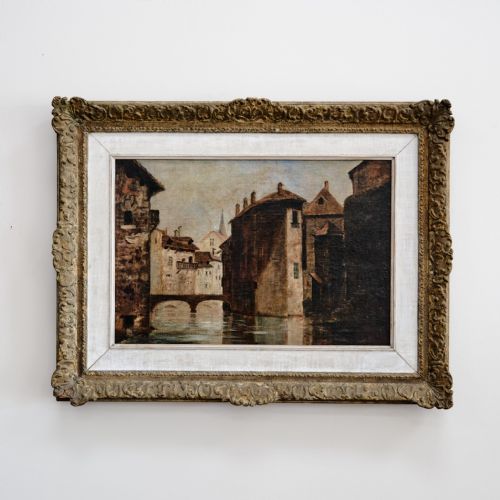
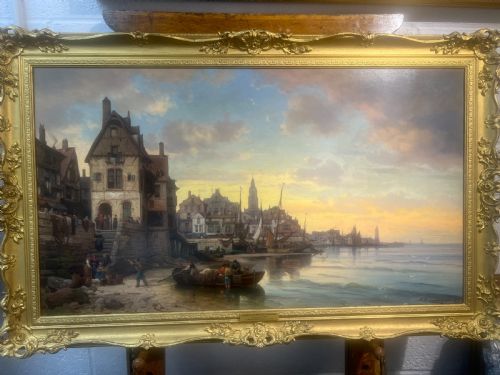
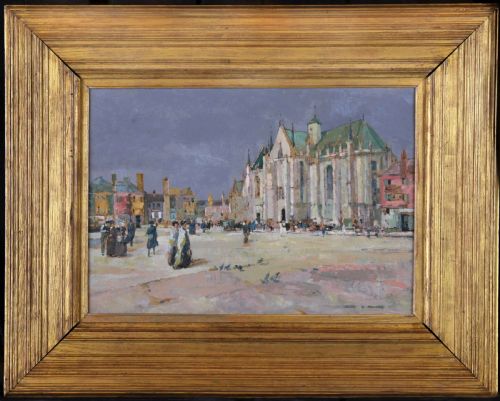
French town landscape art captures urban scenes, street views, and architectural settings across several decades. Buyers find works originating from the nineteenth century up through the mid-twentieth century.
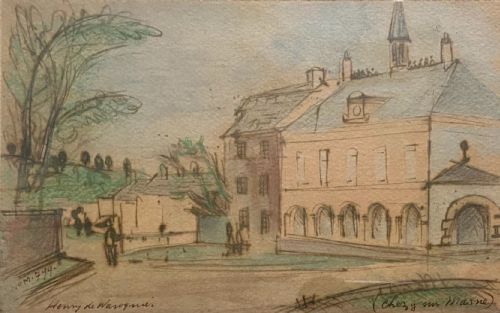
The selections on this page include oil paintings on canvas and board, alongside works on paper such as watercolour and mixed media drawings. These pieces portray specific locations like Concarneau, Martigues, and various Mediterranean streets.
Makers and artists represented span distinct movements, from nineteenth-century French school pieces to post-impressionist and mid-century modern interpretations. Each work offers a specific window into European townscapes and village scenes.
Materials and methods
Artists utilised oil paint on canvas or board to build textured surfaces and rich colour fields. Watercolour and ink on paper appear in lighter, more immediate graphic works.
Frames incorporate wood and giltwood, sometimes embellished with gold leaf to complement the painted imagery.
Materials seen across the inventory include canvas, oil paint, oil on canvas, gold leaf, giltwood, paper, watercolour, and wood.
Judging quality
Quality rests upon the confidence of the brushwork and the clarity of composition within the townscape. Stronger pieces demonstrate a purposeful handling of light and perspective.
The preservation of the underlying canvas, board, or paper surface contributes significantly to the overall integrity of the piece.
Charles Euphraisie Kuasseg·Henry de Waroquier·Cecil Rochfort D'Oyly-John·Maurice Asselin·Augustus William Enness·Allan Douglass Mainds
The French Town Landscape Art Glossary
- Oil on canvas
- Pigment suspended in drying oil applied to a stretched woven fabric support. This traditional method allows for rich blending and textured impasto.
- Watercolour
- A paint consisting of pigment suspended in a water-based solution, typically applied to paper. It yields transparent washes of colour.
- Post-Impressionism
- An art movement extending beyond impressionism that rejected its limitations while continuing to use vivid colours and distinct brushstrokes. Artists focused on symbolic content and structural form.
- Giltwood
- Wood that has been treated with a thin layer of gold leaf or gold paint. It frequently appears on decorative frames surrounding these paintings.
French Town Landscape Art: Frequently Asked Questions
What periods do these artworks cover?
The listings span from the nineteenth century through the mid-twentieth century, capturing shifts in artistic style over several decades.
You will encounter nineteenth-century works alongside post-impressionist and mid-century modern pieces from the 1920s, 1930s, 1940s, 1950s, and 1960s.
Are these works painted on canvas or paper?
Both mediums are present in the collection, offering different visual qualities depending on the artist's preference.
Oil paintings use canvas or board supports, while works on paper incorporate watercolour, ink, and mixed media.
How do I identify a post-impressionist town scene?
Post-impressionist town scenes typically feature expressive brushwork, bold use of colour, and a focus on atmospheric light rather than strict photographic realism.
Artists in this group prioritized personal interpretation of the streetscape over exact topographical recording.
How should I frame and display works on paper?
Works on paper require framing behind glass with acid-free mounts to protect the delicate surface from moisture and light damage.
Keep them away from direct sunlight to preserve the watercolours and inks over time.