




French Tortoiseshell Table Clock
A french tortoiseshell table clock brings a striking blend of warmth and metallic shine to a mantelpiece, combining organic pattern with polished brass.
French Tortoiseshell Table Clock
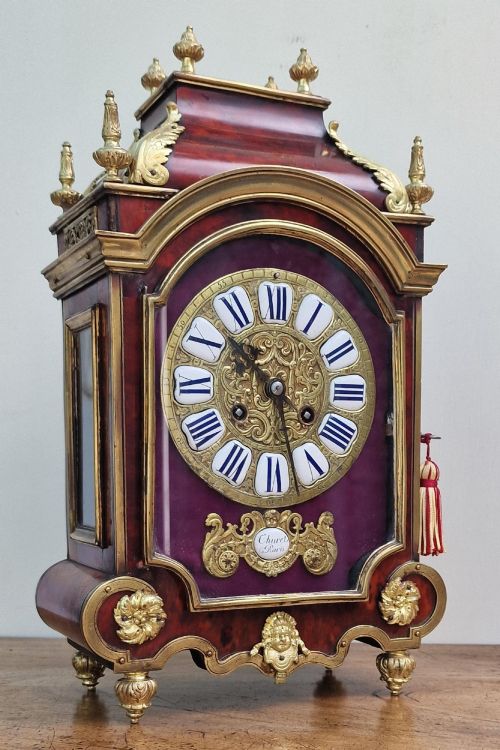
A french tortoiseshell table clock sits primarily on mantelpieces, desks, or brackets, taking the form of mantel, bracket, and boudoir clocks. When searching for a french tortoiseshell table clock, you encounter pieces spanning the nineteenth century, including Victorian examples and specific dates around eighteen eighty and nineteen hundred. These domestic timepieces often follow revivalist aesthetics inspired by earlier royal courts.
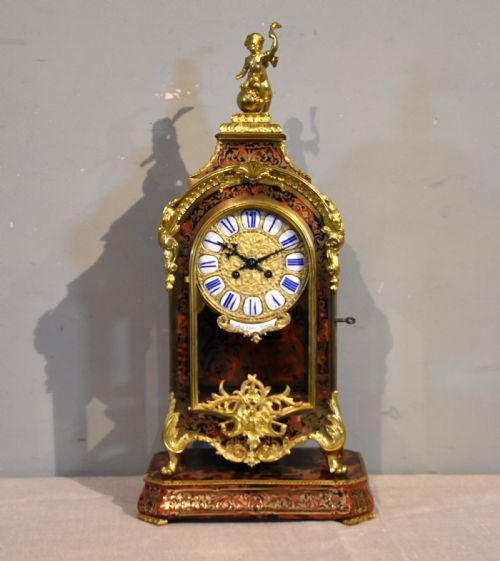
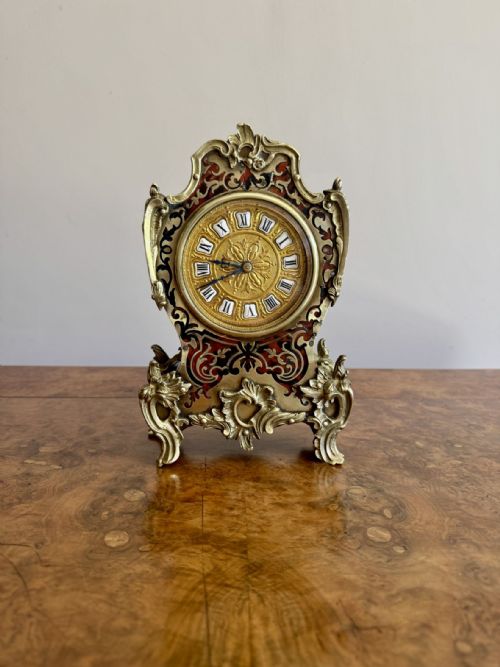
Makers and workshops range from Samuel Marti and Vincenti to Thuret in Paris, alongside London retailers such as Payne. Many items utilise Boulle marquetry, incorporating cut brass alongside genuine or faux tortoiseshell veneer. Styles lean heavily towards French Rococo Revival, Louis XIV, and Louis XV designs, reflecting elaborate historical ornament.
Materials and construction
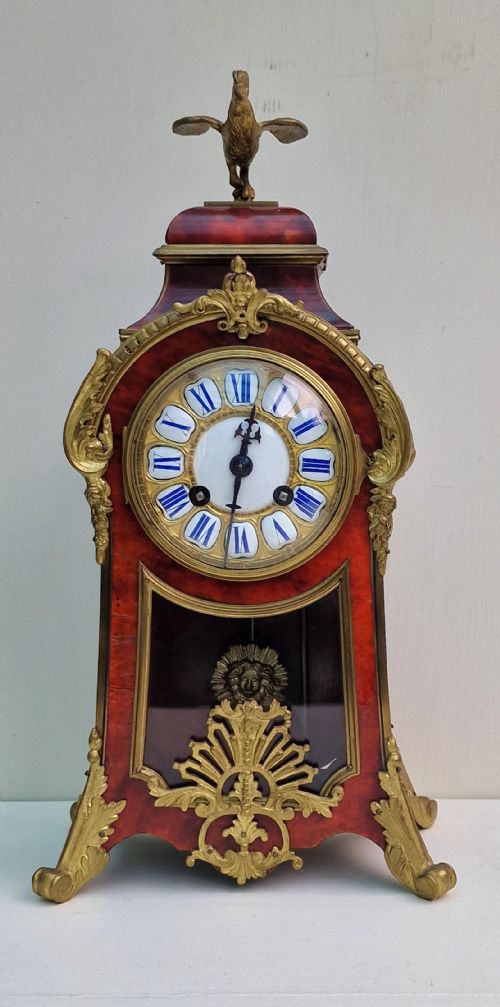
Craftsmen built these clocks using wooden carcases clad in tortoiseshell veneer, which was frequently paired with cut brass in intricate Boulle marquetry patterns. Faux tortoiseshell alternatives also appear across the selection. Ormolu and gilded brass mounts provide structural highlights and decorative feet, masks, and finials.
Clock movements typically run on an eight-day cycle, sometimes featuring quarter-striking capabilities or chain fusee mechanisms. Enamel dials display the numerals, protected behind glass within ornate bezels, while green tortoiseshell variations demonstrate colour experiments in the veneer.
Current listings feature nineteen-century production dates spanning from eighteen sixty through to the nineteen-twenties, alongside Regency periods.
Quality factors in construction and finish
The refinement of the Boulle marquetry sets higher tier examples apart, particularly where cut brass inlay displays sharp precision and tight engagement with the tortoiseshell ground. Lesser pieces show wider gaps in the brasswork or simplified veneer patterns without the depth of colour found in superior specimens.
Cast ormolu mounts dictate another level of distinction, where crisp chasing and heavy gilding reveal superior foundry work. Plain brass or lightweight cast metal fittings indicate a more modest workshop production compared to fully articulated architectural cases.
Thuret Paris·Samuel Marti·Payne London·Vincenti
The French Tortoiseshell Table Clock Glossary
- Boulle marquetry
- A decorative technique of inlaying brass and tortoiseshell developed by André-Charles Boulle. It creates elaborate floral or abstract patterns across the clock case.
- Ormolu
- Gilded bronze used for decorative mounts and feet. The technique involves applying a mercury and gold amalgam to cast bronze.
- Bracket clock
- A portable clock designed to sit on a wall bracket or furniture surface. Many examples include a matching shelf in the evidence.
- Fusee
- A conical pulley used in clock movements to maintain even driving force as the mainspring unwinds. This mechanism improves timekeeping accuracy.
French Tortoiseshell Table Clock: Frequently Asked Questions
How do I wind an eight day clock?
Use the designated winding key on the dial face to turn the arbors clockwise until resistance stops the movement. Take care not to overwind the mainspring.
Ensure you stop immediately when tension increases to protect the internal brass teeth from stripping.
Where should I place my clock?
Select a stable, level surface such as a mantelpiece, sturdy desk, or dedicated wall bracket away from direct sunlight. Vibrations from heavy footfall can disrupt the pendulum swing.
Keep the timepiece away from damp walls and temperature fluctuations to protect the wooden carcase and shell veneer.
How do I date a nineteenth century clock?
Examine the movement backplate for maker stamps, serial numbers, and exhibition medals awarded to factories like Samuel Marti or Vincenti. Case styles referencing Louis XIV or Rococo Revival point towards specific decades.
Construction methods, such as the transition from thread suspensions to pendulum springs, help narrow down the manufacturing period.