





French Tapestry Wall Art
These french tapestry wall art pieces bring centuries of woven texture and classical narrative directly into modern interiors.
French Tapestry Wall Art
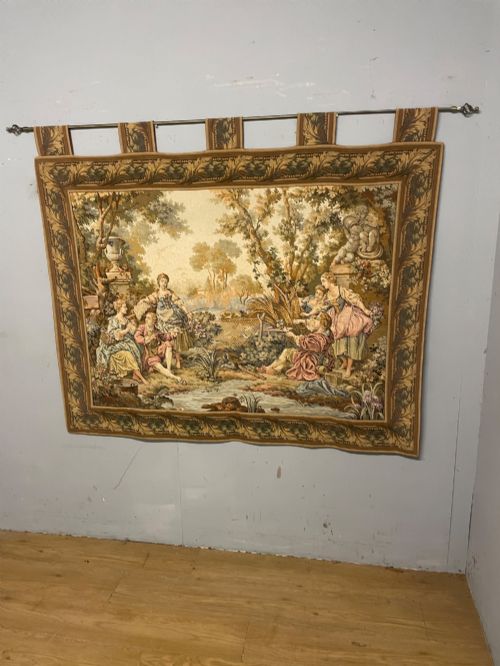
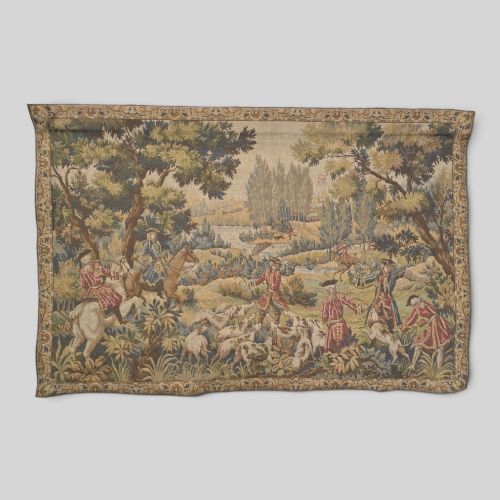
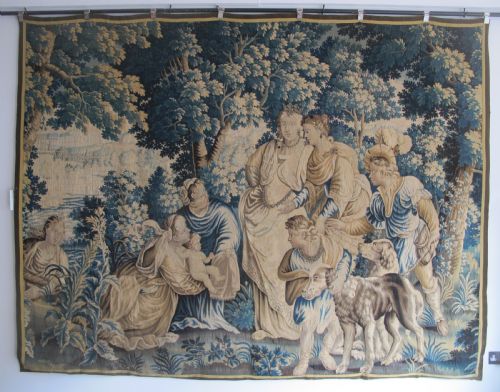
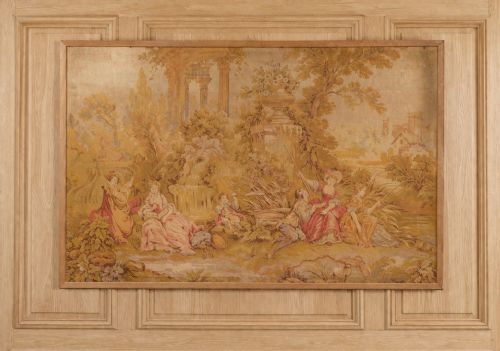
French tapestry wall art encompasses large woven wall hangings, framed panels, and needlework pieces originating from periods spanning the seventeenth to the twentieth century. Buyers seeking french tapestry wall art frequently encounter pastoral scenes, verdure landscapes, and biblical or historical narratives.
The selections available here range from grand Aubusson weaves and mille-fleurs wall coverings to nineteenth-century revival panels and framed canvas artworks. These textiles function primarily as architectural wall coverings or focal decorative panels within large rooms.
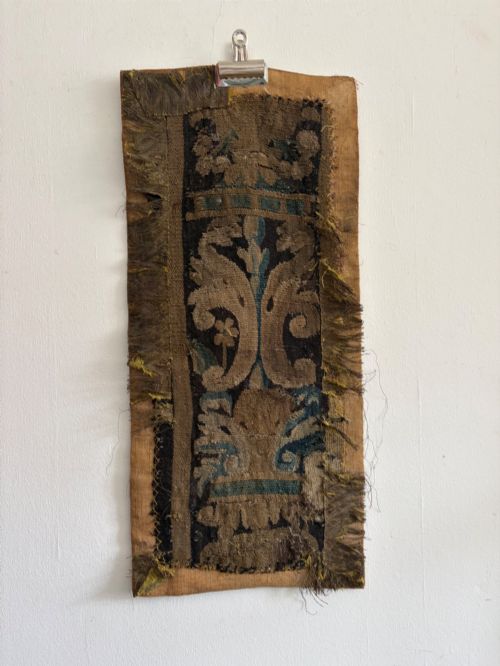
Smaller formats such as border fragments, cushion covers, and entre-fenêtre panels also appear alongside room-sized hangings. Each piece reflects specific regional French traditions, notably the workshops of Aubusson, executed in formats designed for interior display.
Materials and Construction Techniques
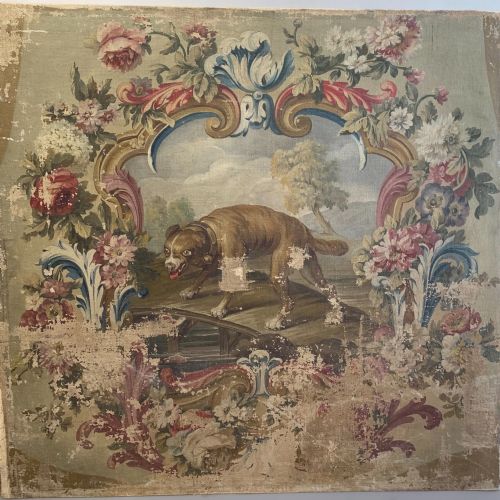
These textiles rely on natural fibres, predominantly wool, silk, cotton, and linen, combined through traditional weaving and needlework methods. Artisans often mounted fragile or fragmentary historic panels onto supportive linen or canvas backing for structural stability.
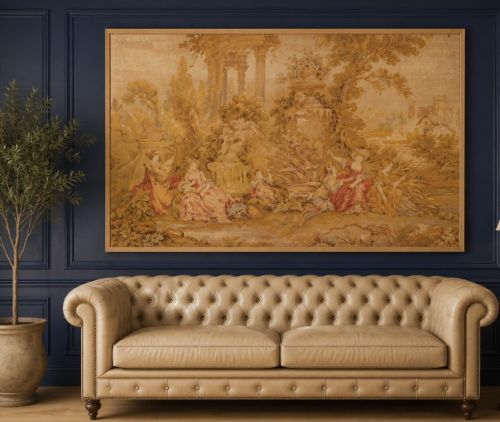
Framed pieces utilise wood surrounds, sometimes incorporating walnut, to protect and display woven or embroidered textile panels. Structural assembly ranges from large vertical loom weaving to detailed needlepoint and needlework embroidery.
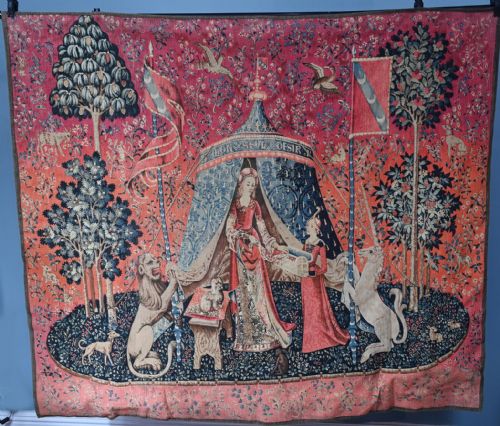
Napoleon managed to find time for a heroic art session, appearing here alongside unicorns and leafy French forests.
Evaluating Quality and Execution
Quality in these textiles rests upon the density of the weave, the complexity of the pictorial design, and the survival of original colour pigments. Superior examples exhibit intricate botanical detail in verdure scenes and finely rendered facial expressions in figural panels.
The condition of the textile fibres significantly influences overall integrity, distinguishing complete room-scale panels from mounted fragments or later revival copies. Masterful execution by established weaving centres like Aubusson yields greater depth and visual nuance.
The French Tapestry Wall Art Glossary
- Verdure
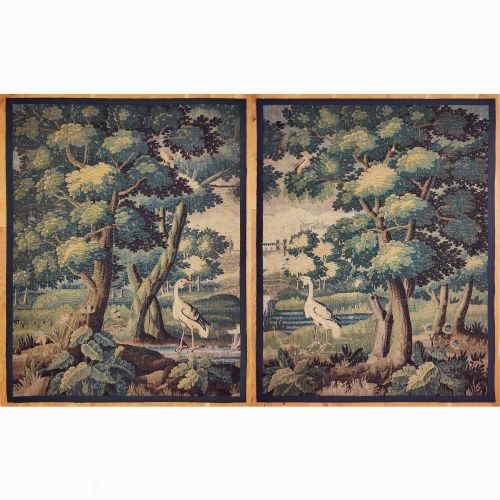
- A tapestry style dominated by lush foliage, trees, and plants, often featuring small birds or animals hidden among the leaves. These landscape designs were especially popular in seventeenth and eighteenth-century French workshops.
- Aubusson
- A town in central France renowned for producing distinctive woven tapestries and carpets since the fifteenth century. Aubusson pieces typically depict pastoral or mythological scenes.
- Mille-fleurs
- A background style composed of a multitude of small flowers and plants scattered across a solid field. This medieval and renaissance design motif appears frequently in decorative wall coverings.
- Entre-fenêtre
- A tall, narrow tapestry specifically designed to hang on the wall space situated between two windows. These vertical panels complement symmetrical architectural room layouts.
- Needlepoint
- A type of canvas work embroidery stitched by hand using wool or silk yarn. Historic examples often replicate the pictorial depth of larger loom-woven tapestries.
French Tapestry Wall Art: Frequently Asked Questions
How do I hang a heavy tapestry?
Large woven panels require weight distribution across a sturdy wooden batten or hidden metal rod system. Sewing a continuous Velcro or sleeve heading along the reverse top edge prevents distortion of the antique textile.
Avoid hanging textiles directly in strong sunlight to protect natural wool and silk dyes from fading. Ensure the wall surface behind the hanging remains dry to prevent moisture damage to historic fibres.
What is a verdure tapestry?
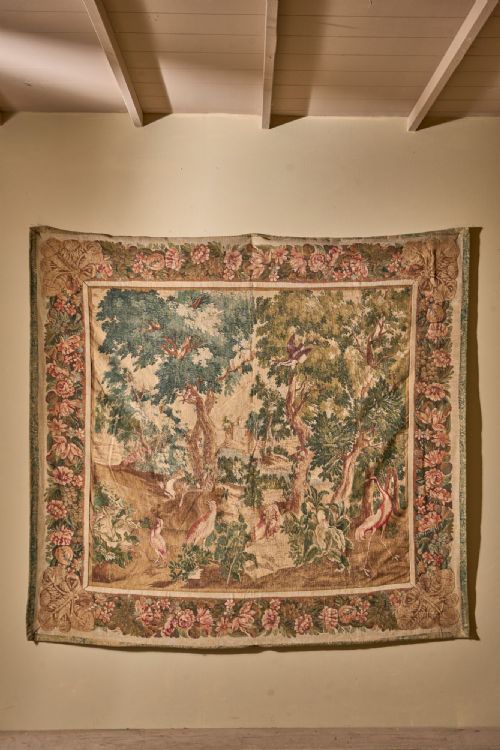
Verdure tapestries depict dense forest landscapes, foliage, trees, and occasionally wildlife without central human narratives. They were designed to bring the feeling of an outdoor garden into interior rooms.
These seventeenth and eighteenth-century pieces often use varied shades of green, blue, and brown wools. Over centuries, certain dye formulas oxidize, shifting greens toward subtle blue or khaki tones.
Are these pieces original or reproduction?
Authentic pieces date from specific historic periods including the seventeenth, eighteenth, and nineteenth centuries, while others reflect later revival eras. Material analysis, weave density, and natural dye characteristics help verify the age of each textile.
Documentation often notes whether a panel is an eighteenth-century original, an Aubusson production, or a later twentieth-century interpretation. Examining the reverse side reveals construction methods consistent with period manufacturing techniques.