


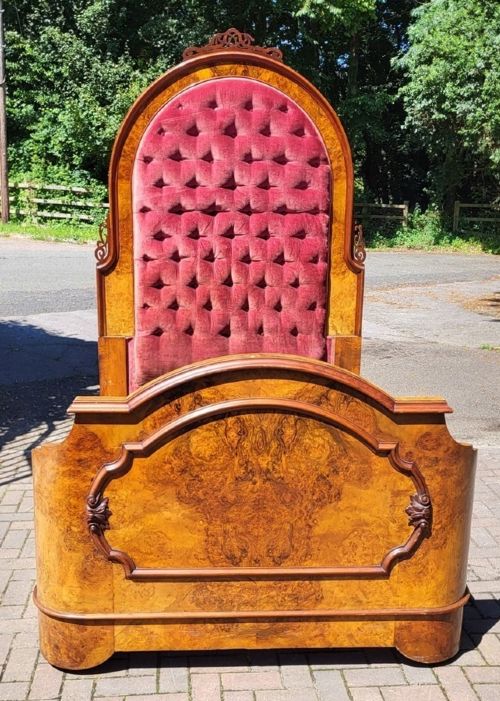
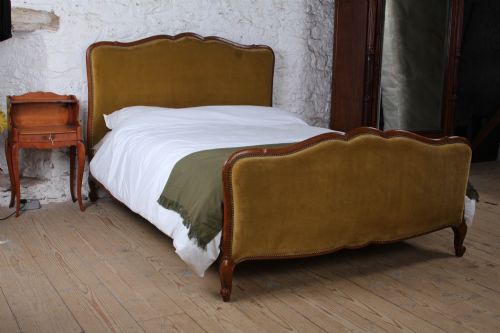
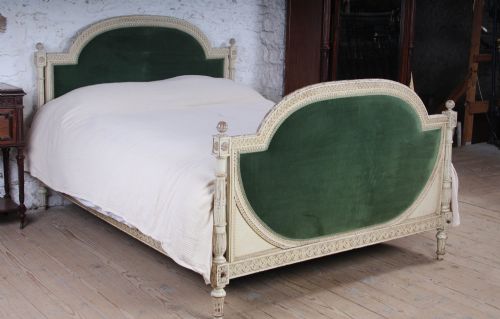
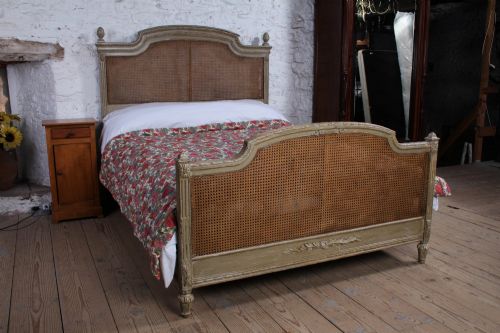
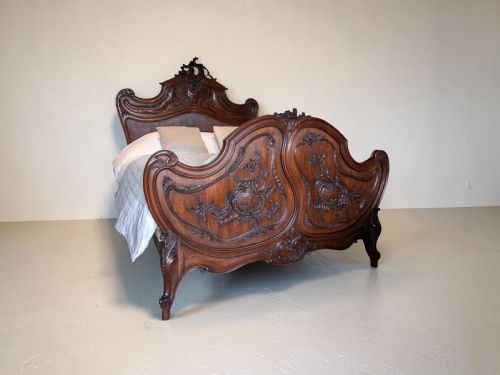

French Style Headboard
A French style headboard brings continental elegance to a bedroom, offering carved woodwork, decorative upholstery and classic proportions.
French Style Headboard
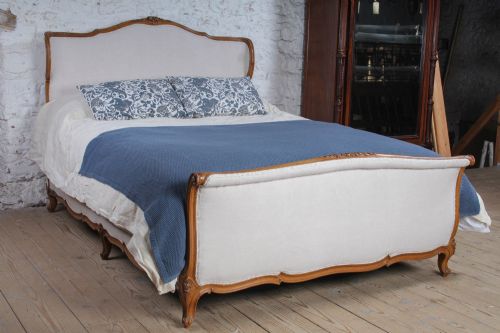
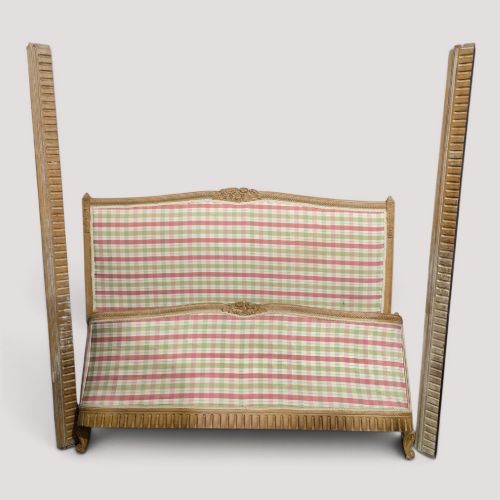
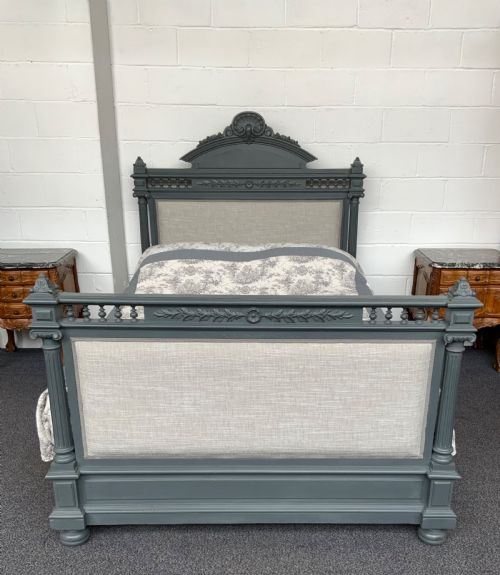
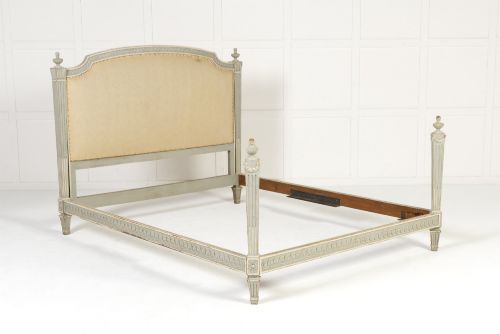
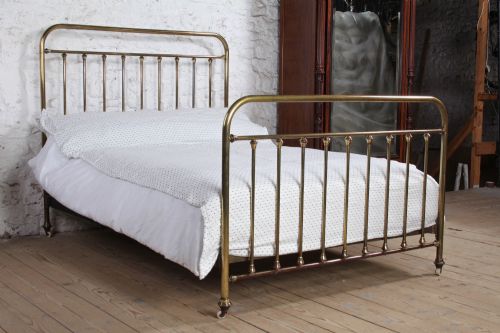
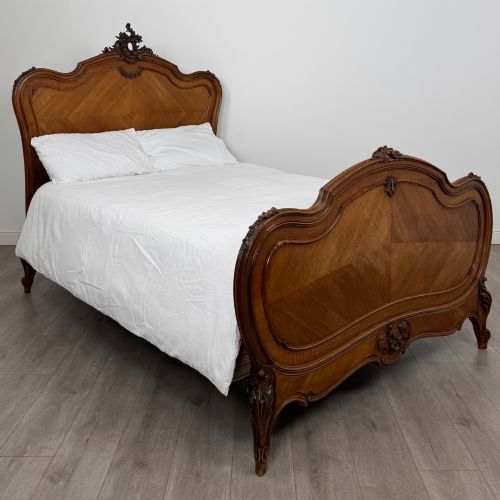
A french style headboard or bedstead anchors a bedroom with established continental character, drawing from regional aesthetics and royal court designs. When searching for a french style headboard, buyers encounter substantial wooden frameworks, upholstered panels and metal constructions originating from the nineteenth and early twentieth centuries. These pieces reflect historic design movements including Louis XV, Louis XVI, Empire and provincial interpretations, ranging from grand chateau furnishings to simpler country styles.
The selection on this page encompasses full bed frames, headboards and complete bedsteads rather than isolated headboard panels alone. The listings span double, king and single sizes, constructed primarily in walnut, painted wood, mahogany and brass. Periods represented stretch from the Victorian era and the late nineteenth century through to the nineteen thirties, maintaining traditional joinery and decorative detailing.
How they were made
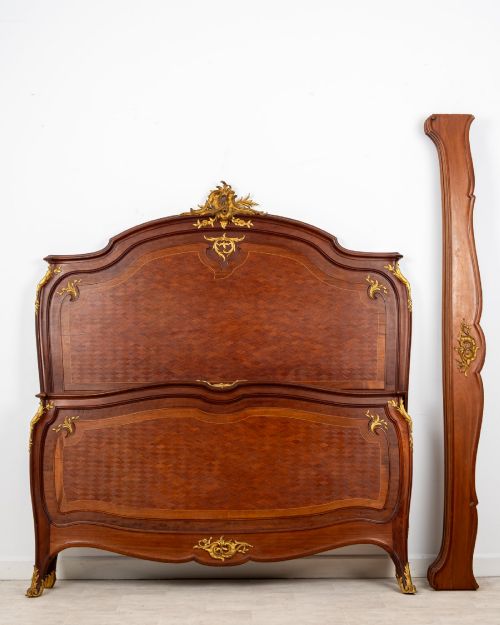
Cabinetmakers constructed these frames using dense timbers like walnut, mahogany and oak, often finished with intricate hand-carving or painted surfaces. Marquetry and quarter-veneering techniques introduced patterned wood grain across large surfaces, while applied ormolu mounts added metallic contrast to the timber. Brass and iron work appeared both in simple structural forms and ornate detailing.
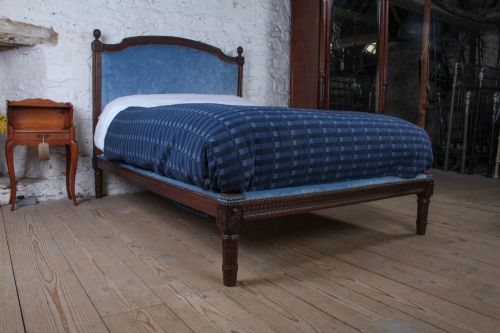
Upholstery formed an integral part of construction, utilising fabric, leather and button-back techniques on shaped wooden backrests. Caning was woven directly into frames to create light, textured panels within the wooden structure.
Listings feature timber, painted wood and brass materials across Victorian and early twentieth-century periods.
What varies in quality
The distinction between standard and exceptional pieces rests upon the crispness of the hand-carving and the selection of timber veneers. Superior examples display deeply sculpted woodwork without mechanical uniformity, alongside matched grain patterns such as quarter-veneered walnut or intricate parquetry.
The quality of hardware and mounting also dictates value, with cast ormolu mounts and solid brass detailing demonstrating superior craftsmanship compared to stamped metal substitutes. Structural integrity relies upon traditional joinery methods that endure decades of use.
The French Style Headboard Glossary
- Ormolu
- Gilded bronze mounts applied to furniture for decorative enrichment. This technique was widely utilised during the eighteenth century and revived in later nineteenth-century revival pieces.
- Parquetry
- Geometric wood mosaic work used for floors and furniture surfaces. It involves arranging small veneer blocks to create repeating patterns.
- Caning
- Woven rattan material used for chair backs and bed panels. It provides a lightweight, breathable surface within a solid frame.
- Quarter-veneered
- Timber veneer sliced and arranged so the grain meets in symmetrical quarters. This method highlights the natural pattern of walnut and mahogany.
- Louis XVI Style
- A neoclassical design style characterised by straight lines, symmetry and classical motifs. It stands in contrast to the earlier curved ornamentation of the Rococo period.
French Style Headboard: Frequently Asked Questions
How do I identify a true period piece?
Examine the timber construction, joinery methods and hardware for signs of age. Nineteenth-century pieces typically feature hand-cut joints and patinated surfaces that modern reproductions cannot replicate.
Check the back of the frame for construction details and tool marks. Period items show consistent wear and material degradation appropriate to their age.
Can antique beds fit modern mattresses?
Many historic bed frames accommodate standard mattress sizes with slight adjustments or modern slat systems. King and double proportions often align closely with contemporary dimensions.
Measure the interior frame space carefully before purchasing bedding. Custom slats or supports can be integrated to ensure a secure fit for modern mattresses.
What is the difference between Louis XV and Louis XVI styles?
Louis XV pieces feature asymmetrical curves, scrolling foliage and exuberant Rococo carving. The overall aesthetic is fluid and organic.
Louis XVI design shifts toward straight lines, geometric symmetry and neoclassical restraint. Columns, fluting and rectangular panels dominate this later aesthetic.
How should I care for painted and polished wood?
Maintain wooden surfaces by dusting regularly with a soft, dry cloth and avoiding silicone-based polishes. Wax finishes benefit from occasional nourishment with traditional beeswax.
Keep wooden furniture away from direct sunlight and heat sources to prevent timber splitting. Stable indoor humidity protects both the wood and any applied gesso or paint.