

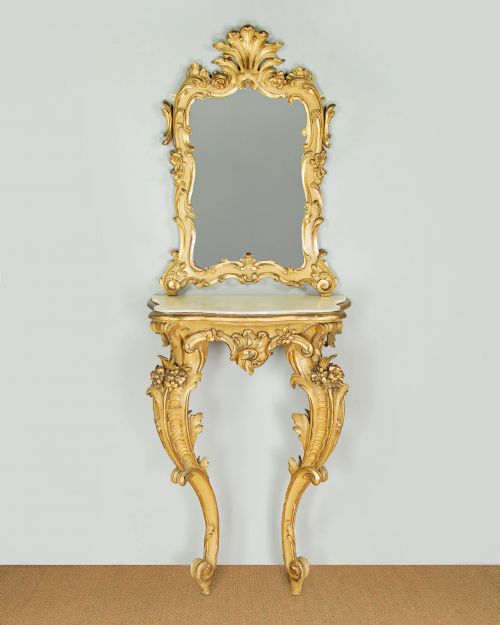
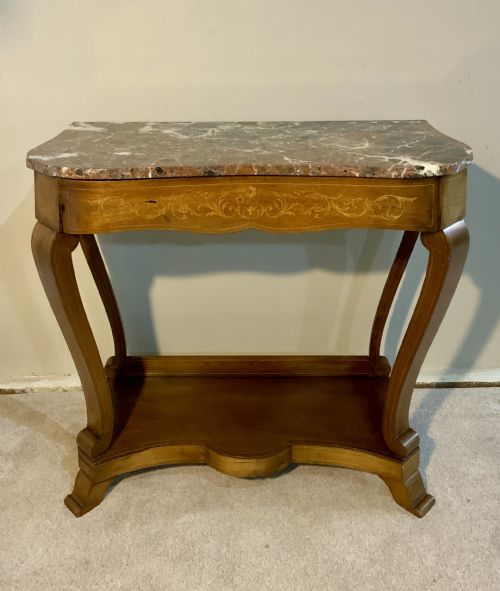
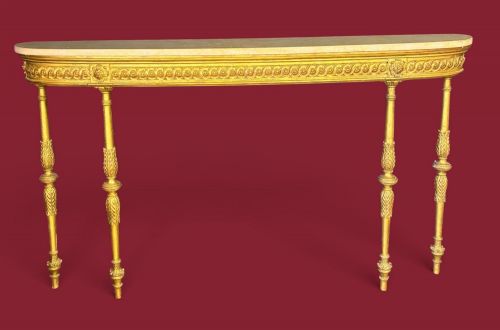


French Style Hall Console
A french style hall console brings immediate continental character to an entrance, offering a slender surface for a lamp or a bowl.
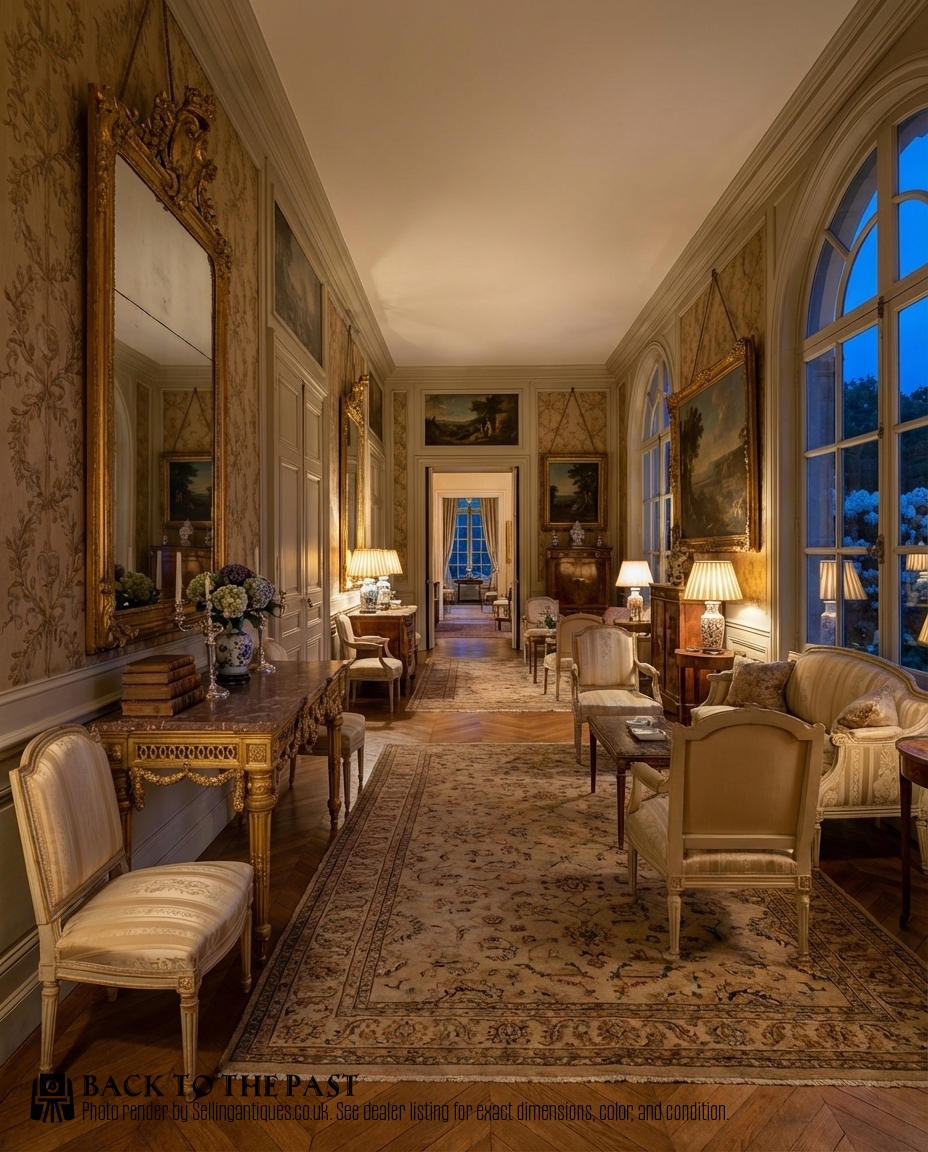
French Style Hall Console
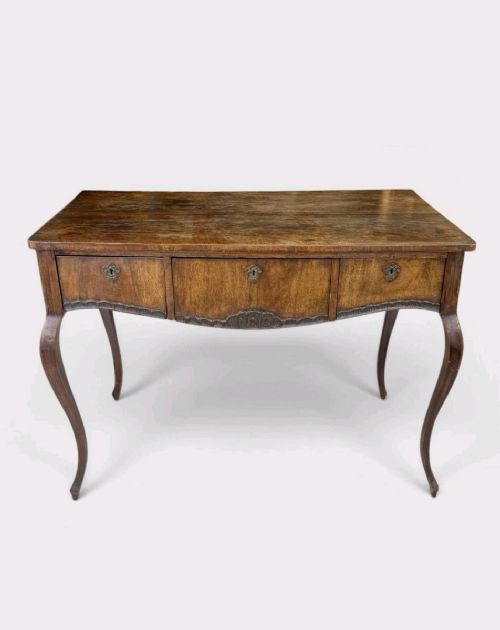
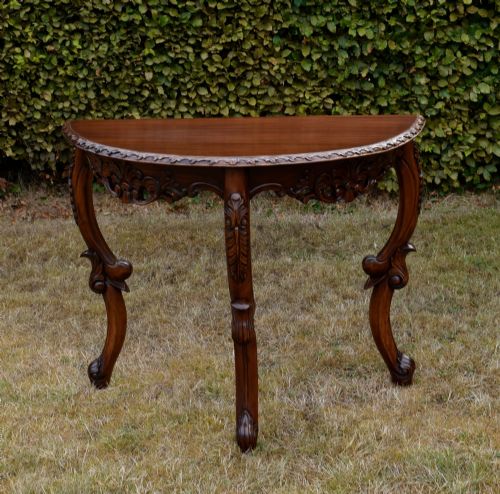
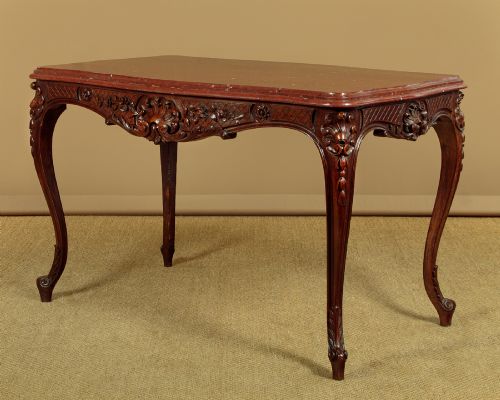
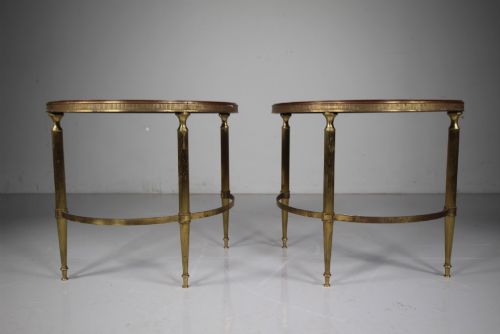
A french style hall console is defined by its architectural silhouette, built to stand flat against a wall in a narrow space or entrance hall. These tables appear in demi-lune, rectangular, and serpentine shapes, often accompanied by matching wall mirrors.
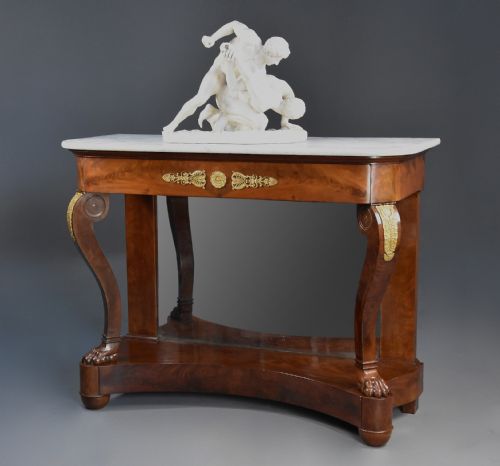
The pieces on this page span the eighteenth, nineteenth, and early twentieth centuries, drawing heavily on revival idioms such as Louis XVI, Rococo, and Empire. Walnut, mahogany, and painted finishes dominate the domestic repertoire.
Makers and workshops looked back to earlier royal French aesthetics, adapting ornate carvings and inlaid veneers into practical furniture for nineteenth- and twentieth-century interiors.
Materials and Technique
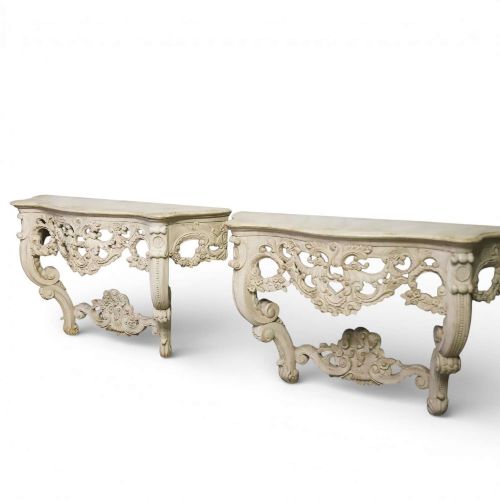
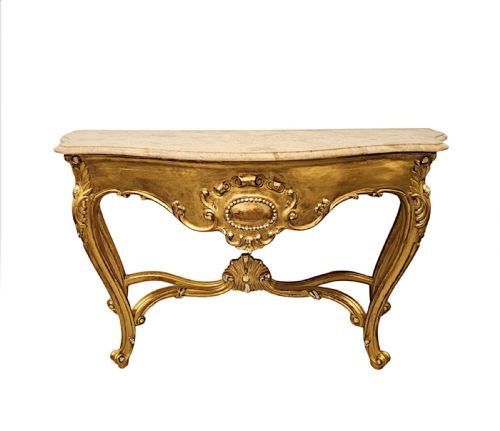
Cabinetmakers utilised dense timbers like mahogany, walnut, and kingwood, frequently applying decorative veneers or parquetry to flat surfaces. Carved elements in gesso and giltwood provided the elaborate scrolling and floral motifs typical of revival pieces.
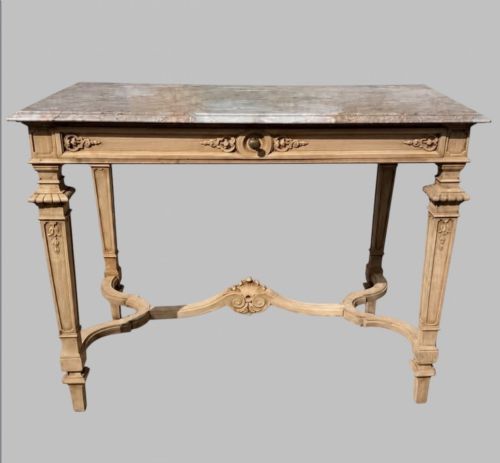
Heavy slabs of marble, including white Carrara and rouge varieties, form the fitted tops on many examples, supported by robust wooden frames. Hand-carving and painted or parcel-gilt finishes completed the decorative surface work on both tables and paired mirrors.
Listings feature marble, giltwood, mahogany, brass, walnut, glass, and gesso across several revival periods.
Craftsmanship and Proportion
Quality rests in the crispness of the hand-carved wood or gesso details and the balanced proportions of the frame against a heavy stone top. Superior tables show tight joinery in the underframe and refined execution in the inlay or gilding.
The choice and thickness of the fitted marble top also indicate the grade of the piece, alongside the fluidity of serpentine or demi-lune curves.
The French Style Hall Console Glossary
- Demi-lune
- Half-moon shape. These tables fit flush against a wall, making them suited for narrow hallways.
- Giltwood
- Wood carved and coated with a thin layer of gold leaf. This finish reflects light in reception rooms.
- Parquetry
- Geometric patterns formed from inlaid wood veneers. Carpenters arrange contrasting timbers to create decorative surfaces.
- Serpentine
- A curved line that undulates gently inward and outward. This contour softens the profile of heavy timber furniture.
French Style Hall Console: Frequently Asked Questions
Where should I place a console table?
These tables suit narrow entrance halls, corridors, and reception rooms where floor space is limited. Their shallow depth allows them to sit against a wall without obstructing movement.
Pairs of these tables also work effectively beneath matching wall mirrors in formal living spaces.
How do I care for a marble top?
Marble requires gentle cleaning with a damp cloth and mild soap to protect the polished surface. Acidic liquids can etch the stone, so coasters protect the top during daily use.
Waxing is unnecessary for the stone insert, though the wooden base benefits from occasional treatment.
What is the difference between a console and a side table?
Console tables are traditionally designed to stand against a wall, sometimes requiring wall fixings for stability when carrying heavy marble slabs. Side tables are freestanding pieces finished on all sides.
Many listings blur this distinction based on how the table was used historically.
How do I identify a revival piece?
Revival furniture borrows decorative vocabulary from earlier periods like the reign of Louis XVI or the Rococo era. Examining the secondary timbers, fixing methods, and tool marks helps separate nineteenth-century interpretations from eighteenth-century originals.