


French Style Foyer Light
A french style foyer light brings warmth and architectural presence to an entrance, casting clear illumination through glass panels and metal frames.
French Style Foyer Light
When you search for a french style foyer light, you encounter grand chandeliers and hallway lanterns originating from the nineteenth and early twentieth centuries. These hanging light fixtures serve as focal points in entryways, combining structural metalwork with transparent glass components.
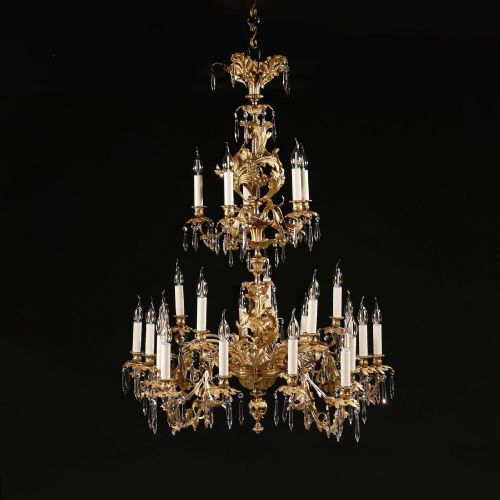
The selections available here lean heavily towards French Rococo Revival, Louis XV, and Louis XVI aesthetics alongside Edwardian examples. You will frequently find multi-light configurations designed to hang centrally from high ceilings.
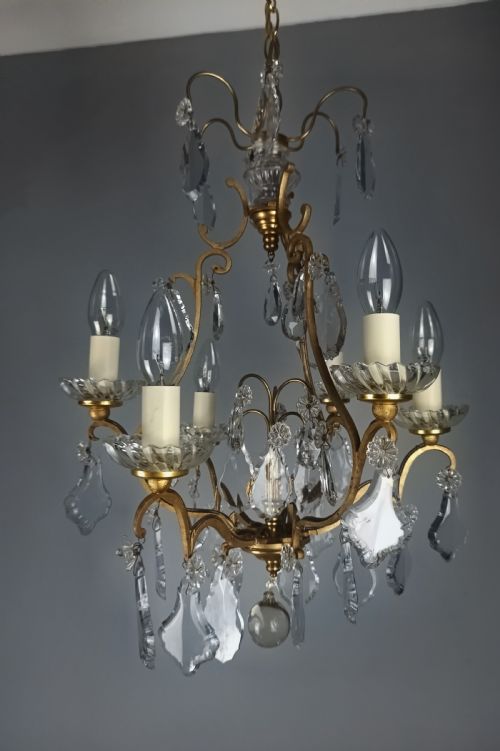
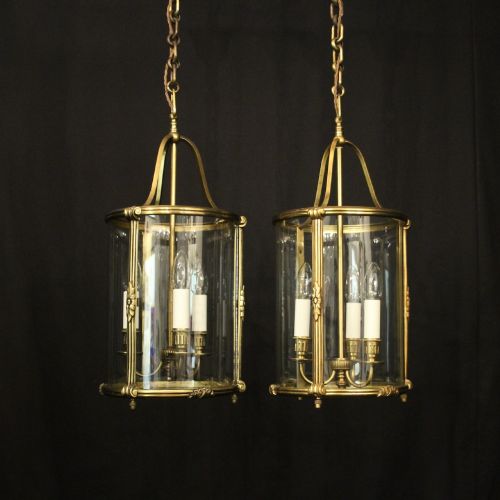
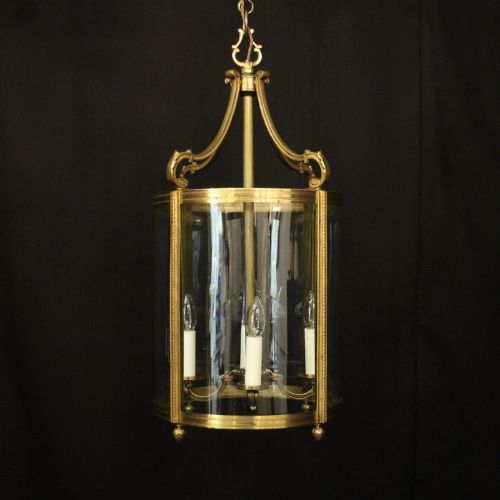
Forms alternate between expansive birdcage or multi-tier chandeliers holding numerous bulbs and convex or glazed hall lanterns enclosing internal candle or electric fittings. Brass, bronze, and gilt finishes dominate the selection, often complemented by hanging crystal drops.
Materials and construction
The physical structure of these pieces relies on cast and chased brass, bronze, and gilt metal frames. Metal components are frequently gilded to achieve a rich surface sheen that catches ambient light.
Glazing takes the form of curved or flat cut glass panes fitted tightly into metal frameworks for hall lanterns. Chandeliers incorporate intricate arrangements of crystal drops and strands suspended from metal arms.
Birds and cages meet in glass and metal when you inspect a birdcage chandelier.
Distinctions in quality
Quality reveals itself in the weight of the metal and the depth of the chasing on the bronze or brass frames. Superior examples display crisp casting details on decorative mounts and sturdy structural joints capable of supporting substantial glass or crystal weight.
The clarity and cut of the glass panes or crystal drops distinguish finer pieces from simpler utilitarian lighting. Precision in the assembly of convex glass panels and the uniformity of the gilding separate standard production from exceptional work.
The French Style Foyer Light Glossary
- Hall lantern
- A ceiling-mounted hanging light enclosed by glass panels designed specifically for corridors and entryways. These fixtures usually feature a hinged door or accessible panels for maintenance.
- Gilt bronze
- Metal cast in bronze and treated with a gold leaf or mercury gilt finish. This technique provides a durable, reflective surface characteristic of high-end period light fittings.
- Convex glass
- Curved glass panes used in lantern construction to diffuse light evenly and add visual volume. They require skilled glassmaking techniques to achieve consistent curvature.
- Birdcage chandelier
- A skeletal open-frame chandelier resembling the silhouette of a birdcage, often adorned with crystal swags and multiple internal lights. This form became popular during the nineteenth and early twentieth centuries.
French Style Foyer Light: Frequently Asked Questions
How do I choose the right size foyer light?
Consider the height and floor area of your entrance hall to determine appropriate proportions. Larger rooms accommodate expansive multi-light chandeliers, whereas narrower corridors suit compact hanging lanterns.
Ensure adequate clearance beneath the fixture for foot traffic and door swings. Hanging height should balance practical illumination with aesthetic placement in the space.
Are these fixtures wired for modern electricity?
Period lighting fixtures often arrive with varying electrical setups reflecting their history and previous installations. Many require professional rewiring to meet current safety standards before domestic use.
Consult a qualified electrician to inspect internal wiring and adapt fittings for contemporary bulbs. Proper installation ensures secure ceiling attachment for heavy bronze and crystal pieces.
How do I clean a crystal chandelier?
Dust crystal drops and glass panels gently using a soft, dry cloth or specialised cleaning brush. Regular maintenance prevents dust accumulation on intricate metalwork and reflective surfaces.
Avoid harsh chemical sprays that might damage gilt surfaces or aged brass patina. For thorough cleaning, remove delicate elements carefully or use targeted liquid cleaners applied directly to the cloth.
What distinguishes Louis XV style from Louis XVI style?
Louis XV style embraces asymmetrical Rococo curves, naturalistic leaf motifs, and flowing organic lines. Frames tend to feel ornate, playful, and dynamic in their sculptural composition.
Louis XVI style shifts towards Neoclassical symmetry, straight lines, geometric precision, and classical ornamentation such as urns or fluting. This transition offers a more restrained and architectural visual balance.