


French Style Floor Lamp
These French style floor lamp pieces bring continental presence to a room, offering height and illumination through classical forms and polished metals.
French Style Floor Lamp
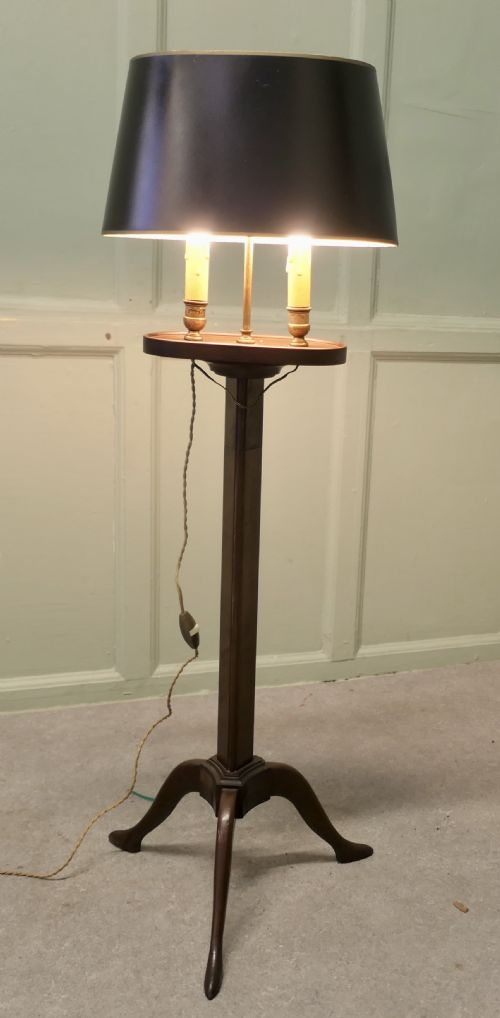
A french style floor lamp stands as a tall lighting fixture derived from continental design traditions, appearing in forms such as standard lamps and boudoir lamps. These pieces originate from periods including the nineteenth century, the Victorian era, and decades like nineteen thirty and nineteen sixty, reflecting styles from French Chateau to Louis XVI and Regency.
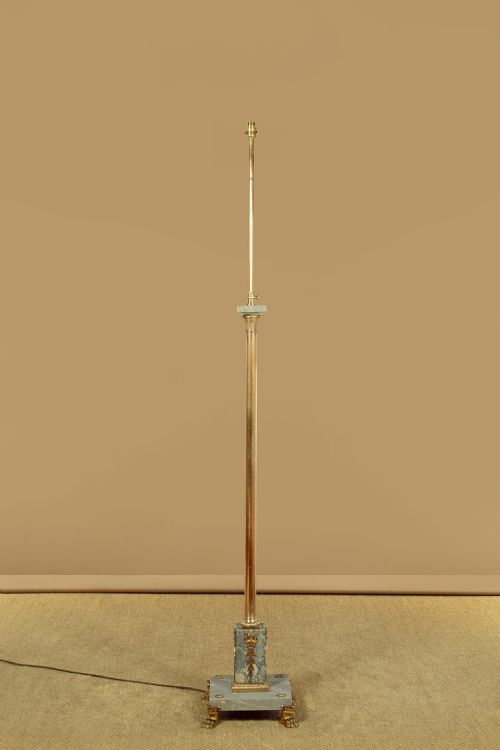
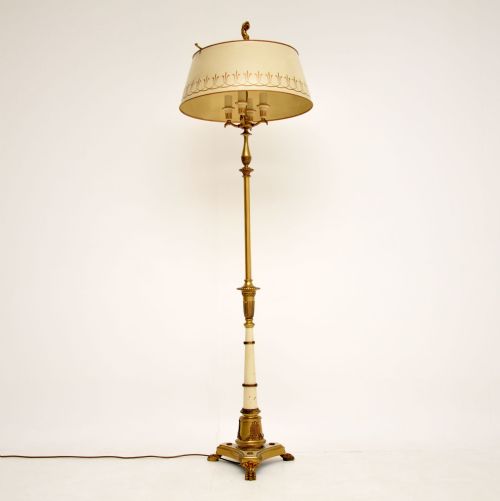
The most common versions met on this page combine brass, metal, or giltwood with fabric shades, often utilising adjustable heights or twin candle fittings. Makers and designers drew upon Neoclassical and French Empire revivals to create vertical structures that served both reading and ambient lighting needs in period interiors.
How they were made
Makers constructed these floor lamps using cast and turned brass, gilded ormolu, carved giltwood, and painted metal, frequently mounting them upon heavy marble columns for stability. The physical build relies on traditional joinery for wood elements and precision casting for metal stems, which support wiring and candle-style arms.
Surface decoration involved hand-gilding, carving, and tole painting on metal components, complemented by fabric elements. These techniques combined structural integrity with ornate decorative vocabulary drawn from Neoclassical and French Empire motifs.
Several charming boudoir lamps were once tasked with lighting late-night French correspondence.
What varies in quality
The distinction between ordinary and superior examples rests upon the crispness of metal casting, the depth of gilding or ormolu work, and the quality of marble or wood carving. Heavy, solid brass components and finely chased details indicate a higher standard of workshop production.
Proportion and material authenticity also determine standing within the range. Pieces utilising genuine marble columns and substantial carved giltwood exhibit a finer execution than simpler painted metal or standard turned wood variants.
The French Style Floor Lamp Glossary
- Ormolu
- Gilded bronze or brass applied to decorative mounts and lamp bases. This technique creates a rich, metallic lustre characteristic of classical French furniture and lighting.
- Bouillotte
- A style of lamp traditionally featuring an adjustable shade on a central rod, originating from French card table lighting. It provides focused illumination suitable for reading or desk work.
- Giltwood
- Wood that has been coated with gold leaf or a gold-coloured finish. It adds reflective warmth and decorative detail to standard lamp columns.
- Tole
- Painted or lacquered sheet metal used for decorative objects and lamp shades. It brings colourful or dark contrasting finishes to lighting fixtures.
- Neoclassical
- A style drawing inspiration from classical antiquity, marked by symmetry, columns, and restraint. It heavily influences the proportions and ornamentation found on these standard lamps.
French Style Floor Lamp: Frequently Asked Questions
Where should I place a french style floor lamp?
These lamps suit corners of reception rooms, beside reading armchairs, or adjacent to writing desks where height and focused illumination are required.
Their classical proportions allow them to complement traditional furniture arrangements without overwhelming smaller spaces.
How do I distinguish between periods?
Nineteenth-century and Victorian examples often display heavier brass casting and hand-finished components, whereas nineteen thirty and nineteen sixty pieces may show cleaner lines or alternative stem materials like glass.
Material choices, such as giltwood versus painted metal, also signal the stylistic preferences of different decades.
Were these originally electrified?
Most surviving examples from the nineteenth century were initially designed for candles or oil before being converted to electricity later in their lifespan.
Later twentieth-century iterations were manufactured specifically for electrical wiring, though many retain traditional candle-arm configurations.
How do I care for the metal surfaces?
Dust brass, giltwood, and ormolu gently with a dry microfibre cloth to preserve the finish without stripping patination.
Avoid chemical polishes on antique gilded surfaces, as abrasive substances can permanently damage the metallic layer.