


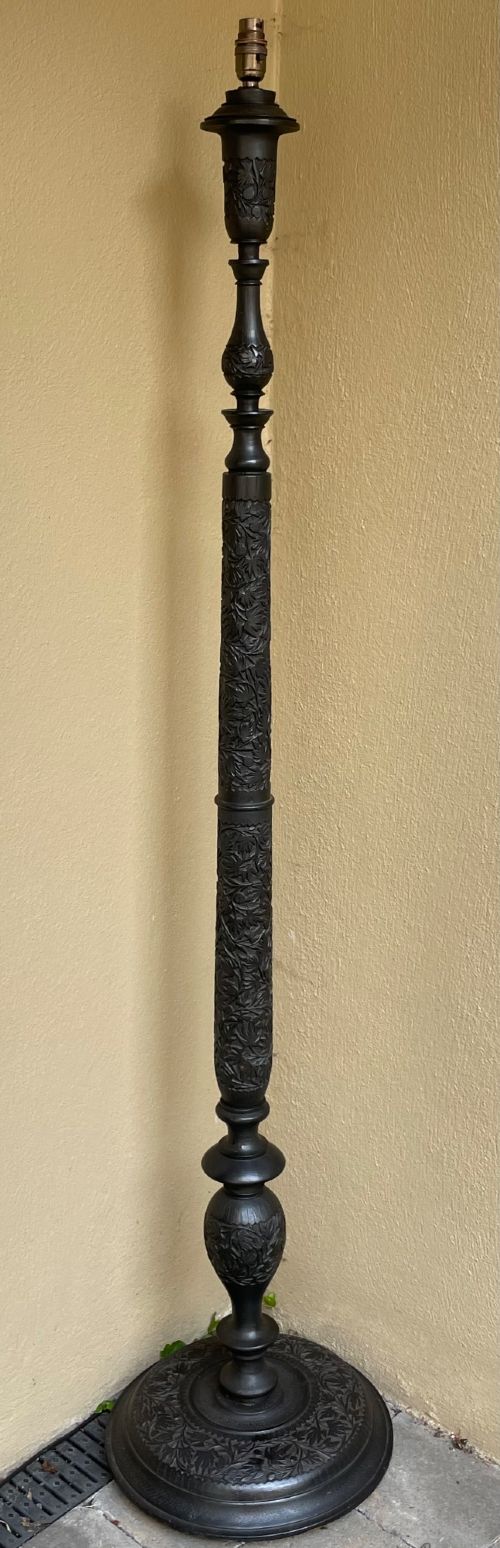


Ornate Floor Lamp
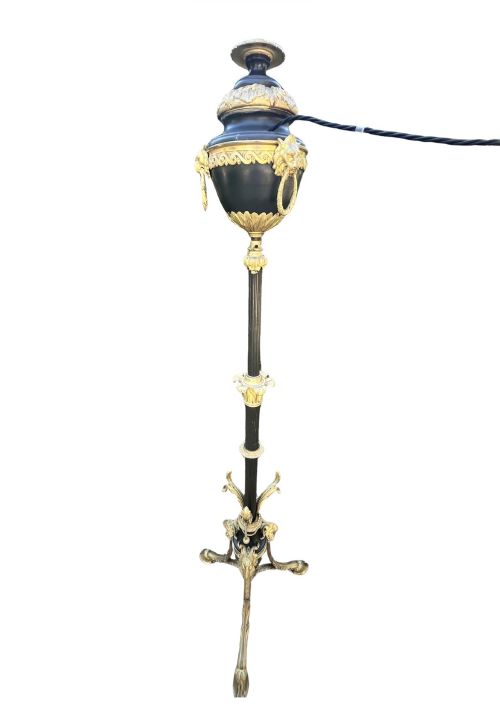
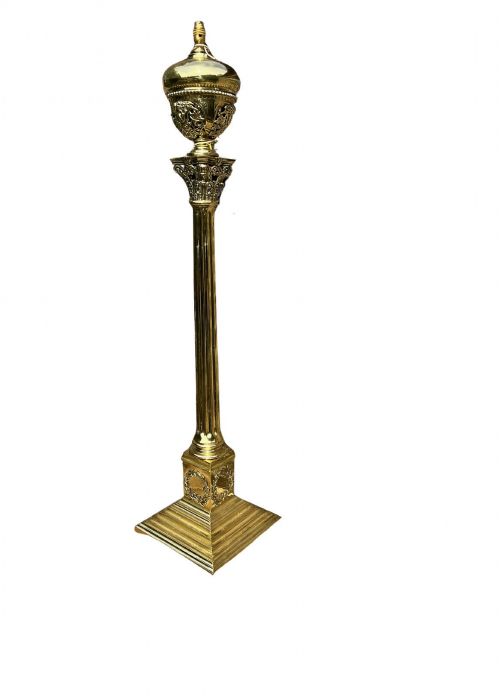
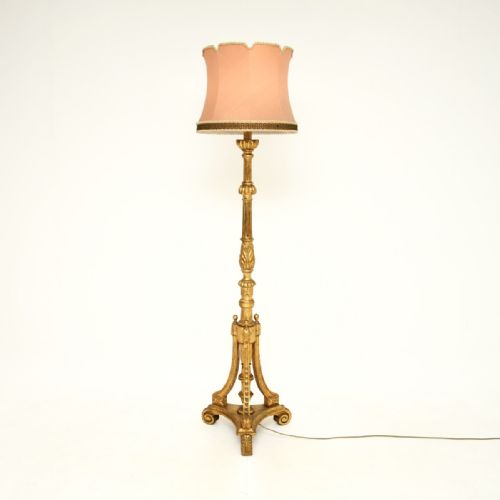
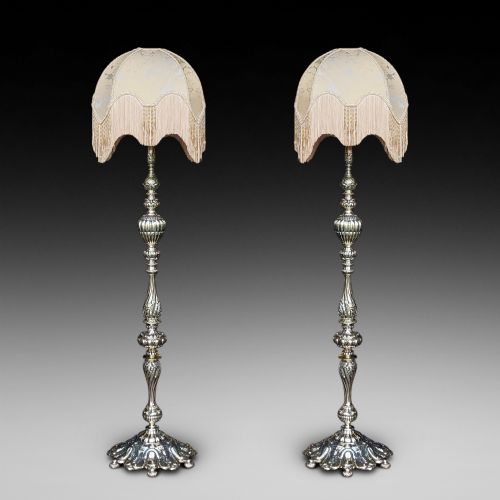
An ornate floor lamp brings sculptural presence and height to a room, offering both ambient illumination and period character through elaborate cast brass or carved giltwood.
Ornate Floor Lamp
When you search for an ornate floor lamp, you encounter tall, vertical lighting fixtures designed to stand directly on the floor rather than sit upon tables or furniture. These pieces serve as major decorative focal points within a room, combining practical illumination with elaborate artistic detailing from base to shade.
The versions you meet most frequently on this page date from the Victorian era through the early twentieth century, spanning styles such as French Chateau, Art Nouveau, and Classical Revival. Common forms range from heavy brass and cast bronze standards to carved wooden columns embellished with giltwork.
Makers utilised various regional aesthetics, producing Anglo-Indian carved standards, Italian Baroque giltwood torcheres, and Parisian cast brass designs. Many examples incorporate adjustable mechanisms, telescopic heights, or oil-to-electric conversions originating from the nineteenth and early twentieth centuries.
How they were made
Makers fashioned these standards using heavy metals like brass, bronze, and cast brass, often employing detailed openwork, scroll arms, and floral motifs. Woodworkers carved giltwood, padouk, and other timbers to create elaborate columns and bases finished with gilding or ormolu.
Many designs incorporate structural elements of marble alongside metal work, while textile components such as fabric, fringe, and velvet frequently dress the accompanying shades. Telescopic mechanisms and rise-and-fall systems utilised precision engineering within the brass shafts to allow adjustable height.
Ornate Floor Lamp Retail Price Guide 2026
Typical asking prices for ornate floor lamp among the pieces listed under this phrase on Sellingantiques today, from the lower quarter to the upper quarter. They describe what is for sale here now, not the wider market.
A steamer oil lamp variant allowed maritime travellers to read by steady light on rolling waves.
What varies in quality
The distinction between ordinary and superior pieces often lies in the depth and crispness of the casting or carving, where finely chased brass and deeply carved giltwood display superior artistry. Heavy gauge metals and solid marble columns provide greater stability and tactile substance compared to lighter alternatives.
Complexity of mechanism also sets standards apart, with smooth-working telescopic adjustments and original rise-and-fall systems reflecting high-grade nineteenth and early twentieth-century manufacturing. The integrity of the surface finish, whether original gilding or patinated bronze, preserves the intended decorative impact.
Messenger
The Ornate Floor Lamp Glossary
- Standard lamp
- A traditional British term for a floor lamp, describing a tall vertical light fixture standing on a weighted base. These pieces often feature adjustable height mechanisms.
- Torchere
- An ornate tall stand or floor lamp, originally designed to carry a torch or candle and later adapted for electricity. They frequently display classical revival or baroque styling.
- Giltwood
- Timber that has been coated with a thin layer of gold leaf or gold paint. This technique is prominent on decorative Italian and French frames and lamp standards.
- Ormolu
- Finely ground high-carat gold-bronze applied to metal objects, typically French in origin. It provides a rich, durable metallic finish on decorative mounts and bases.
- Telescopic
- A construction method allowing the upper shaft of the lamp to extend upwards from a lower column. This allows the overall height of the standard to be adjusted.
- Cairoware
- Metalwork featuring intricate silver or copper inlay set into brass or bronze backgrounds. Pieces in this style reflect Middle Eastern craftsmanship popular during the late nineteenth and early twentieth centuries.
Ornate Floor Lamp: Frequently Asked Questions
How do you date an antique floor lamp?
Dating relies on examining the materials, manufacturing techniques, wiring methods, and stylistic cues present in the base and column. Victorian and early twentieth-century examples often feature cast brass components, telescopic height adjustment, or evidence of conversion from oil burning.
Looking at specific decorative idioms like Art Nouveau whiplash lines or Italian Baroque scrollwork helps narrow the period of manufacture.
How were standard lamps used historically?
Historically, standard lamps provided movable ambient and task lighting in grand reception rooms and parlours before fixed ceiling fixtures became dominant. Early versions often functioned as oil lamps before being converted to electricity during subsequent decades.
Their substantial height and decorative presence allowed them to sit beside seating areas or illuminate dark corners of large rooms.
How do you care for a brass floor lamp?
Care involves gentle dusting with a soft cloth to protect the metal finish and any applied patination. Avoid harsh chemical cleaners that can strip the historic surface or damage delicate giltwood and fabric elements.
Periodic checks of the wiring by a qualified professional ensure safe operation while preserving the original structural components.