


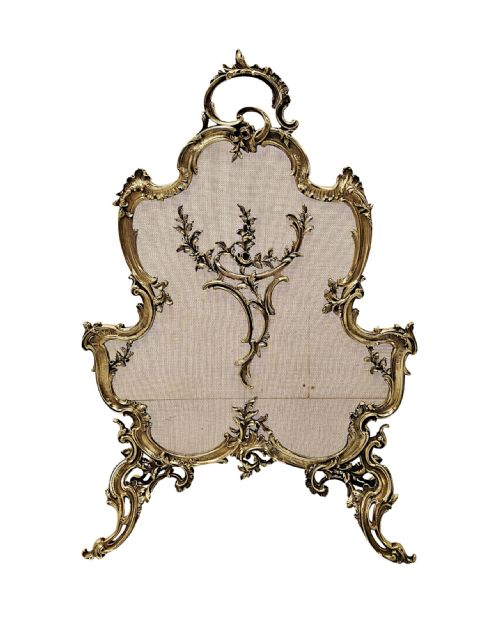

French Style Fireplace Screen
A french style fireplace screen brings architectural elegance and period character to a hearth, offering both ornamental appeal and functional domestic warmth.
French Style Fireplace Screen
When you search for a french style fireplace screen, you encounter decorative guards designed to shield a room from excess heat when the hearth is unlit. The selection spans the nineteenth century and the early twentieth century, reflecting enduring Victorian interest in continental continental aesthetics.
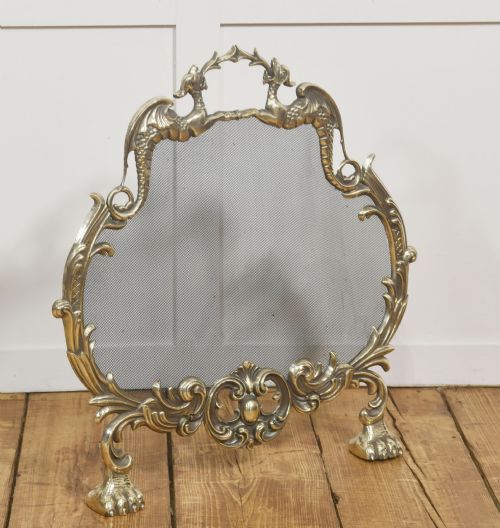
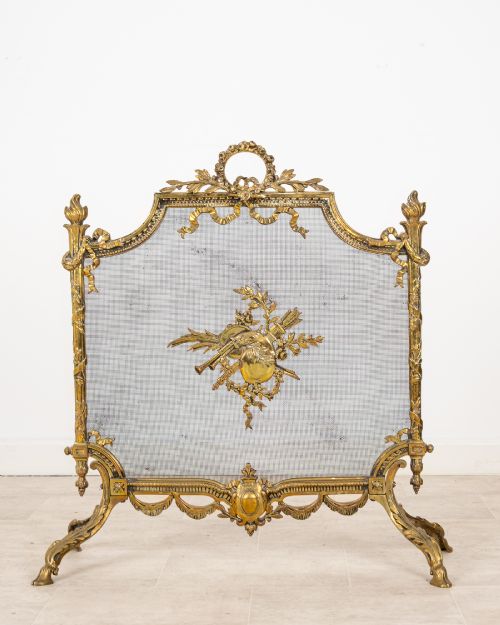
The dominant forms on this page include Rococo Revival, Louis XV, and Louis XVI styles, alongside Victorian interpretations. These pieces typically stand independently as decorative screens positioned before the firebox during warmer months.
Originating in grand continental drawing rooms, these accessories crossed into British homes to soften the gaping dark void of an empty fireplace. You are most likely to meet brass and gilt bronze examples that showcase elaborate scrolling foliage and ornate metalwork.
Materials and construction
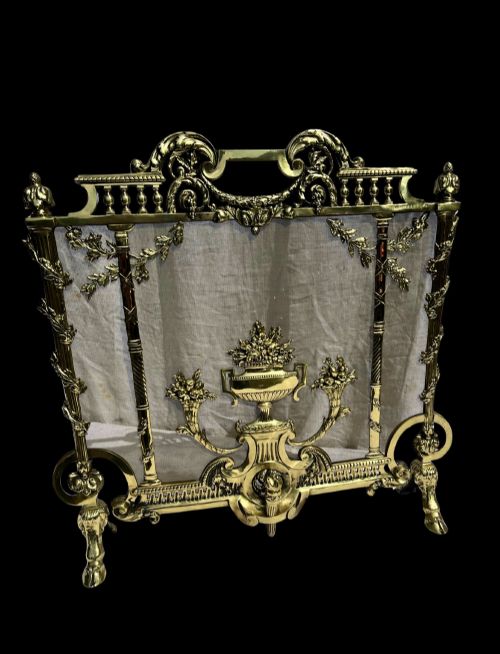
The primary metals utilised across these pieces are brass and gilt bronze, often cast into sculptural frames with intricate detailing. Artisans employed wire mesh and metal mesh inserts to create the central protective panel while maintaining transparency.
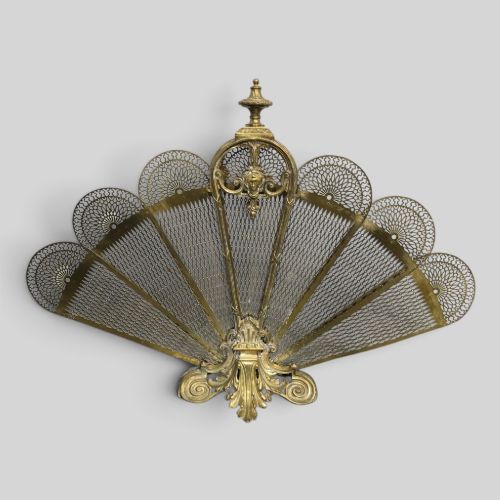
Giltwood elements and painted surfaces occasionally appear on folding configurations, adding colour and texture to the framework. The construction relies on traditional metalworking and casting techniques characteristic of the late nineteenth and early twentieth centuries.
Distinctions in quality
Quality separates through the crispness of the cast ornamentation and the weight of the metal utilised in the frame. Finer examples display deeply chased details in the bronze or brass, whereas simpler pieces rely on smoother, less articulated castings.
The condition and fineness of the mesh panel also mark the standard of the piece, alongside the integrity of any original gilding or painted surfaces. Substantial construction and balanced proportions distinguish the more accomplished decorative screens.
The French Style Fireplace Screen Glossary
- Rococo Revival
- A nineteenth century design movement that revives the asymmetrical scrolling and naturalistic motifs of the eighteenth century. It defines much of the decorative metalwork seen on these screens.
- Gilt Bronze
- Bronze metal that has been treated with a thin layer of gold or gold-coloured wash. It provides a rich, warm metallic lustre.
- Wire Mesh
- A woven metal grid fitted into the centre of the screen frame. This material allows warmth to filter through while catching stray embers.
- Louis XVI Style
- A neoclassical design aesthetic characterised by straight lines, symmetry, and classical restraint. It contrasts with the flowing curves of earlier Rococo forms.
- Fire Guard
- An alternative term for a fireplace screen designed to protect the room from sparks and heat. These items serve the same protective and decorative function.
French Style Fireplace Screen: Frequently Asked Questions
How do I use a fire screen?
These screens stand directly on the floor in front of the fireplace opening when the hearth is not in active use. They serve to dress the empty fireplace space during warmer months while complementing the room's interior decor.
Position the screen centrally to hide the grate and provide a decorative focal point. Ensure the piece sits stably on the hearth surface without rocking.
What periods do these screens date from?
The available pieces originate from the nineteenth century and the early twentieth century. Common periods include the Victorian era alongside specific decades such as eighteen eighty and nineteen ten.
Design influences stretch back to earlier French court styles, though the physical items themselves were manufactured during the Victorian and Edwardian periods.
Are these screens made of solid brass?
Many examples utilise solid brass or bronze for their primary structural frames. Wire mesh and metal mesh form the protective centre panels.
Gilt treatments and painted finishes are frequently applied to enhance the metallic appearance of the cast components.
How do I tell Rococo Revival from Louis XVI?
Rococo Revival pieces feature exuberant, asymmetrical curves, C-scrolls, and plant motifs. They present a flowing and organic visual rhythm.
Louis XVI style pieces employ stricter symmetry, straight lines, and classical architectural details. This creates a more restrained and orderly appearance.