
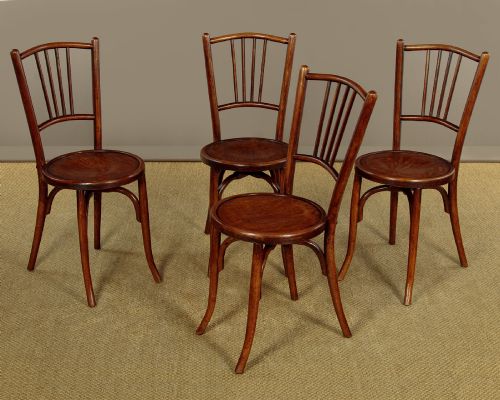
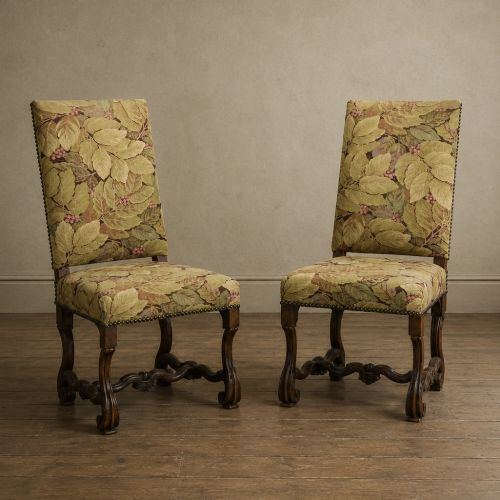
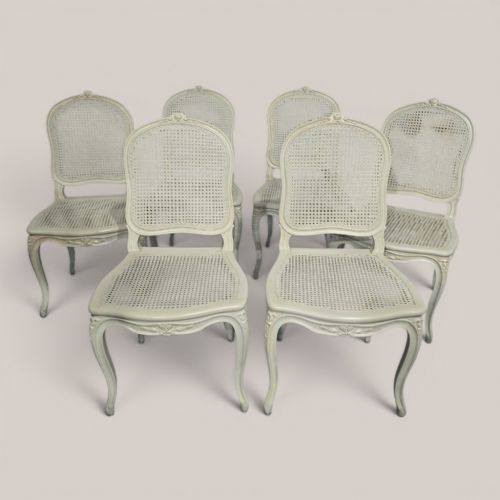
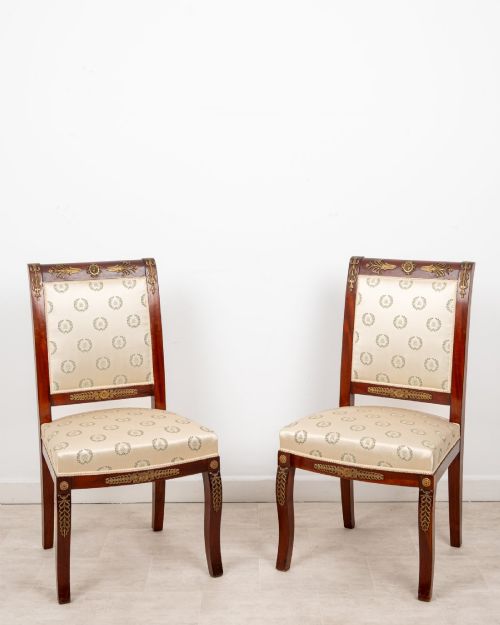
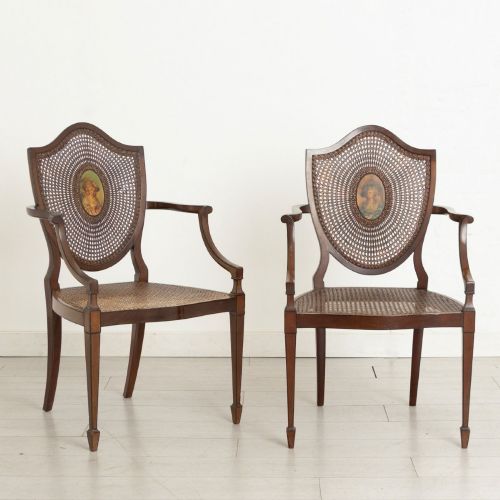


French Style Dining Chairs
These french style dining chairs bring continental elegance to a room, offering carved frames and upholstered seats rooted in historical design.
French Style Dining Chairs
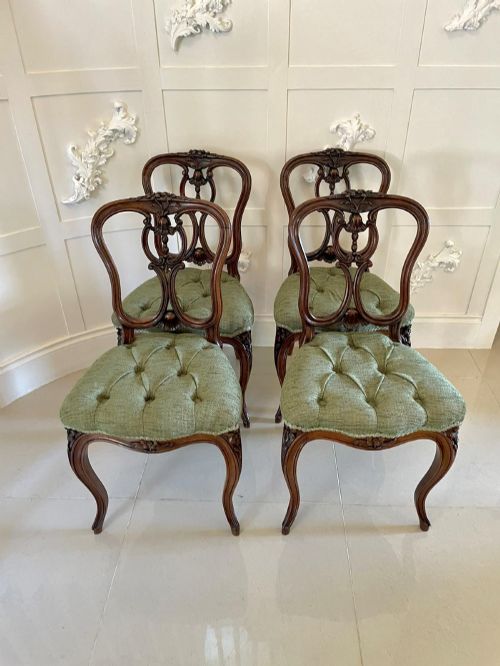
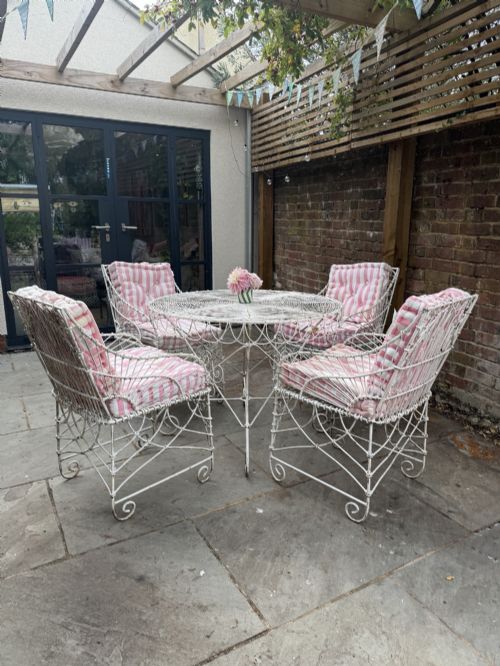
When searching for french style dining chairs, collectors encounter seating spanning the nineteenth and early twentieth centuries, drawing heavily on classical Parisian aesthetics. The selection ranges from ornate giltwood armchairs to provincial rush seat ladder backs originating from rural workshops.
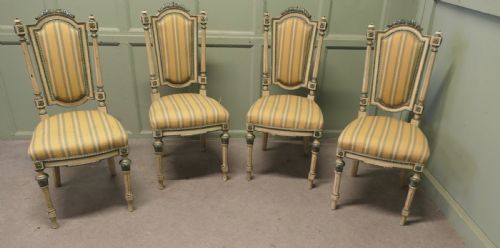
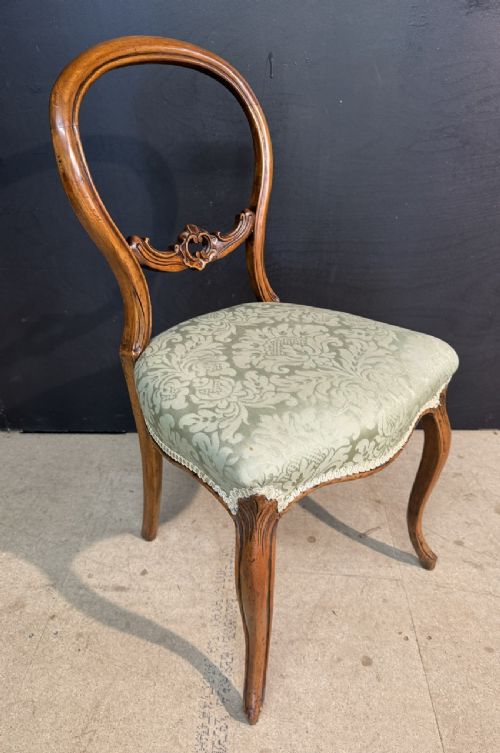
Most examples available lean towards Louis XV and Louis XVI revivals, featuring characteristic cabriole legs, carved cartouche backs, and painted or gilded finishes. These pieces function both as formal dining room accompaniments and decorative salon accents.
Originating from periods spanning the Victorian era through the interwar years, these chairs reflect enduring European craftsmanship. Buyers frequently find matching sets suitable for daily dining alongside individual armchairs and side chairs.
How they were made
Traditional framing relies predominantly on timbers such as walnut, oak, and beech, shaped through joinery and manual carving to achieve flowing scrollwork and cabriole forms. Artisans applied gesso and gold leaf to create gilded surfaces, or layered paint for classic French provincial finishes.
Seating construction frequently incorporates natural materials like woven rush and cane alongside traditional upholstery textiles. Metal mounts in brass or ormolu provide structural accentuation on Empire revival pieces.
Hoof feet peek out from beneath provincial dining chairs, quietly reminding diners of the forest floor.
What varies in quality
The refinement of the hand carving distinguishes standard production from superior examples, with finer chairs exhibiting crisp relief work and deeply undercut foliage. Original surface treatments, such as untouched period gilding or patinated paint, elevate an individual piece above later decorative interventions.
Structural integrity depends on the precision of the frame joints and the preservation of original webbing or cane work. Complete, matching sets maintain greater desirability than assembled groups of similar design.
Codina·Morison & Co of Edinburgh
The French Style Dining Chairs Glossary
- Cabriole leg
- A furniture leg that bends outward in a convex curve and tapers inward in a concave arc, terminating in a pad or hoof foot. This design originates from classical animal forms and defines much of the Louis XV aesthetic.
- Ormolu
- Gilded bronze mounts applied to furniture for decorative effect. This technique was widely utilised during the French Empire revival period.
- Caning
- A method of weaving peeled rattan or cane to create permeable panels for chair backs and seats. It requires skilled manual labour to tension correctly across the wooden frame.
- Ladder back
- A chair back featuring multiple horizontal arched slats resembling the rungs of a ladder. This form is common in provincial kitchen and dining seating.
French Style Dining Chairs: Frequently Asked Questions
How do I identify Louis XV style chairs?
Louis XV style chairs are characterised by asymmetrical flowing lines, prominent cabriole legs, and delicate floral carvings. The overall form avoids straight edges in favour of graceful curves.
These pieces often include cartouche-shaped backs and natural wood or painted finishes designed to create an organic, refined silhouette.
Are rush seat chairs durable for dining?
Rush seating woven from natural river reeds provides surprising strength and flexibility for daily use. When maintained away from excessive moisture, these seats endure regular dining wear.
Over decades, the material develops a rich patina while retaining its supportive tension across the wooden frame.
How do I care for gilded wood frames?
Gilded surfaces require gentle dusting with a soft, dry cloth to prevent abrasion of the delicate gold leaf. Avoid liquid cleaners and chemical solvents entirely.
Maintaining stable room humidity protects the underlying gesso and wood from expanding or cracking over time.
Can I mix different styles around a table?
Pairing side chairs with distinct armchairs at the table head creates an eclectic dining arrangement rooted in historical precedent. Ensuring consistent wood tones or matching painted finishes unifies the grouping.
Similar seat heights and proportional back styles maintain visual harmony across the assembled set.