



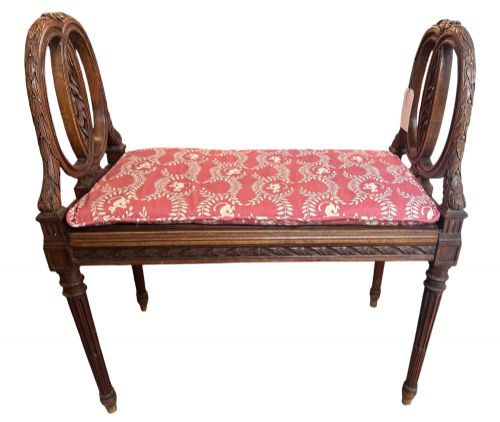


French Style Bedroom Bench
A french style bedroom bench brings classic Continental seating into a private room, offering elegance and a practical perch at the foot of a bed.
French Style Bedroom Bench
A french style bedroom bench covers a range of low seating forms designed for private apartments and salons, including window seats, stools, daybeds, and small settees. You are most likely to meet elongated window seats and carved stools dating from the nineteenth and early twentieth centuries on this page.
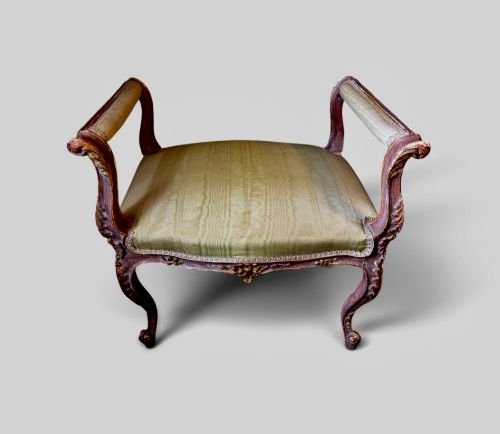
The objects span varied periods such as the nineteenth century, the Regency era, and the nineteen-tens, reflecting both authentic Continental revivals and British interpretations. Makers and designers drew heavily on historical forms like Louis XVI and Régence to create pieces suited for domestic repose.
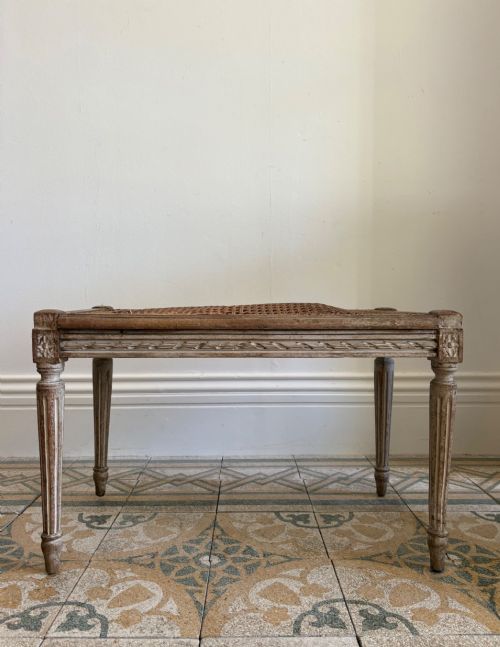
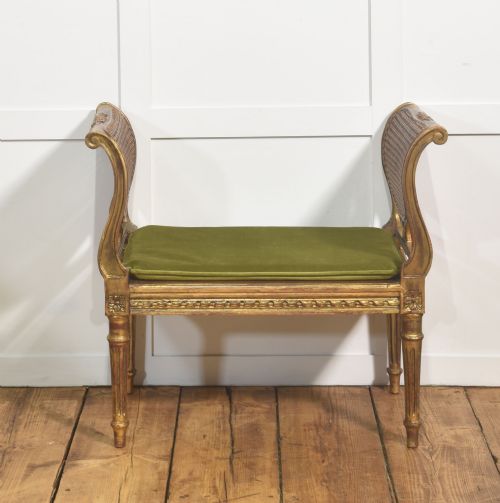
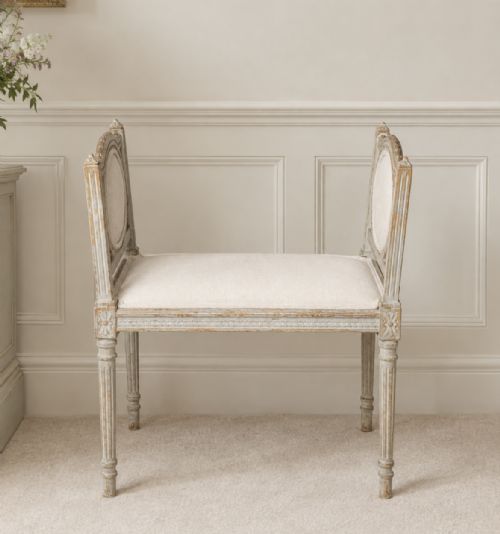
Forms vary from simple long stools to sophisticated daybeds and two-seat sofas upholstered in velvet or fitted with cane panels. These pieces function naturally at the foot of a bed or beneath a window, bridging decorative carving with practical utility.
Materials and construction
Timbers selected for frames include beech, walnut, and resilient hardwoods capable of supporting intricate hand-carved ornamentation. Artisans shaped these woods into cabriole legs and linear neoclassical frameworks depending on the stylistic vocabulary of the period.
Surface treatments range from gilded leaf and painted finishes to polished wood grains that highlight the natural grain of walnut or beech. Canework panels provide lightweight texture to seats and backs, complementing solid wood structural elements.
Upholstery materials such as silk velvet, patterned fabric, and traditional trim details like tassels finish the upper portions of benches and sofas. Hand-carved details are integrated directly into the wooden framework rather than applied as separate ornamentation.
French Style Bedroom Bench Retail Price Guide 2026
Typical asking prices for french style bedroom bench among the pieces listed under this phrase on Sellingantiques today, from the lower quarter to the upper quarter. They describe what is for sale here now, not the wider market.
The listings span the nineteenth century through the nineteen-thirties, incorporating materials like beech, walnut, giltwood, velvet, and cane across various seating forms.
Assessing craftsmanship and execution
The crispness and depth of the hand-carving define the level of artisan skill invested in the wooden frame. Sharper execution in floral motifs and fluted legs distinguishes finer workshop output from simpler commercial production.
The integrity of the structural joinery and the selection of primary timbers, such as solid walnut versus secondary painted woods, influence the longevity of the piece. Superior examples maintain rigid frames and balanced proportions without relying on excessive secondary bracing.
The quality of the secondary materials, including tightly woven cane panels and hand-applied gilding rather than modern metallic paint, dictates the overall authenticity of the finish.
The French Style Bedroom Bench Glossary
- Cabriole leg
- A furniture leg that curves outward in a convex arc and then bends inward in a concave arc, ending in a pad, scroll, or hoof foot. This shape derives from animal limbs and appears frequently on eighteenth-century revival seating.
- Giltwood
- Wood that has been coated with a thin layer of gold leaf or powder. It provides a luminous, reflective surface popular in formal French seating designs.
- Canework
- Woven rattan, cane, or split reed material used to form light, patterned panels for seats and backs. It adds textural contrast to solid wood frames.
- Régence style
- A transitional design period bridging the seventeenth-century baroque and eighteenth-century rococo movements, characterised by symmetrical carved scrolls and shell motifs. Pieces from this aesthetic display early curved structural lines.
French Style Bedroom Bench: Frequently Asked Questions
Where should I place a french style bedroom bench?
These seats sit naturally at the foot of a bed, providing a surface for dressing or placing garments. They also function well placed against a bedroom wall or beneath a window.
The long, narrow profile of window seats and benches allows them to occupy circulation spaces without blocking pathways. Their decorative carved frames ensure they contribute to the room's visual balance even when empty.
How do I identify a Louis XVI style bench?
Louis XVI style pieces are defined by straight, tapered, and often fluted legs, contrasting with the curved cabriole legs of earlier rococo designs. Rectangular geometric shapes and classical architectural motifs such as beaded channels dominate the framework.
Carvings on these pieces typically feature restrained floral garlands, ribbons, and laurel leaves rather than asymmetric scrolls. This symmetry reflects the neoclassical taste of the late eighteenth century and its later revivals.
Are these benches comfortable for daily use?
Upholstered versions featuring velvet or fabric padding provide a soft, supportive surface for sitting or resting feet. Caned panels offer a firm yet flexible seat that adapts to body weight.
Many antique examples prioritize decorative carving and formal posture over deep lounging comfort. Adding loose cushions can adjust the seating experience to modern preferences while preserving the historic frame.
How do I care for giltwood and painted frames?
Giltwood and painted wooden surfaces require gentle dusting with a soft, dry cloth to prevent abrasion of the delicate finish. Avoid using chemical cleaners, liquid polishes, or abrasive cloths that can strip gold leaf or paint.
Keep these pieces away from direct sunlight and excessive humidity fluctuations to prevent the underlying wood from expanding and cracking the surface gesso.