
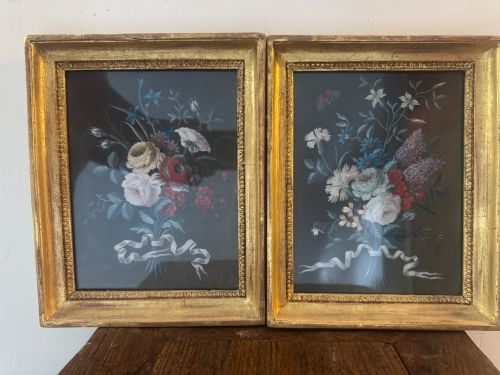
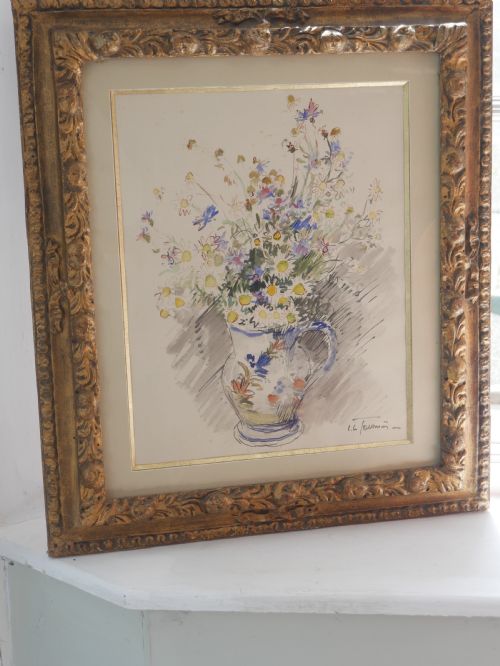


French Still Life Painting
A French still life painting brings the quiet domesticity of continental interiors into a room through textured brushwork and balanced composition.
French Still Life Painting
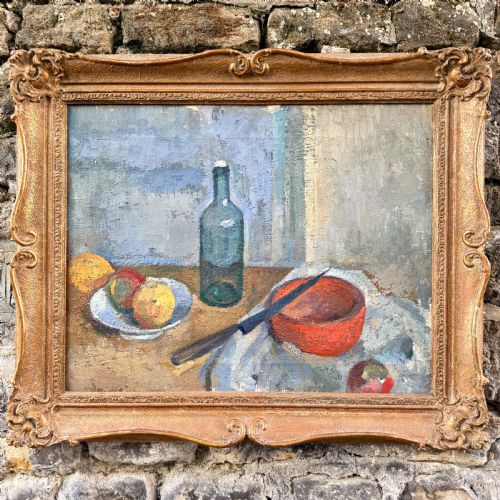
A French still life painting captures inanimate subjects such as flowers, fruit, and household objects arranged on tables or within interiors. These works range from academic 19th-century studies to vibrant mid-century modernist interpretations.
The most common examples on this page date from the late nineteenth century through to the middle of the twentieth century, reflecting the evolution from traditional realism to post-impressionist and avant-garde styles.
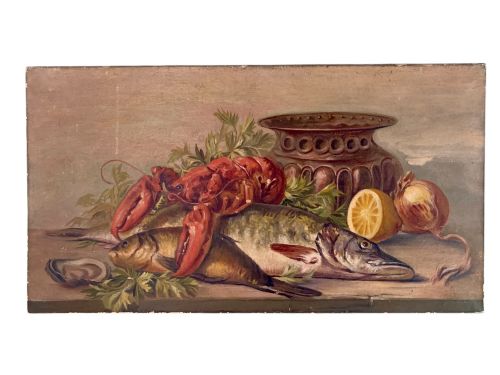
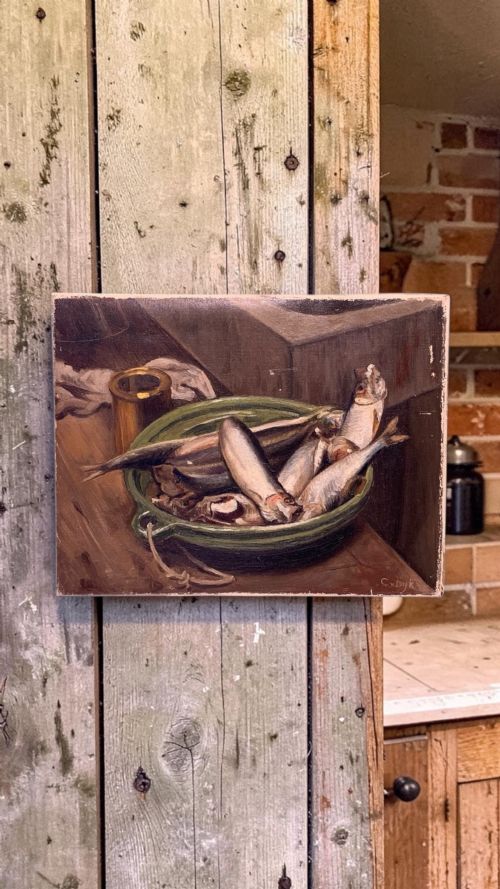
Compositions often feature domestic goods, seafood, game, and botanical arrangements rendered in oil or gouache. They reflect both formal academic traditions and the looser, expressive brushwork of the French school.
Materials and Construction
Artists primarily applied oil paint or gouache onto woven canvas, prepared wooden panels, or heavy paper supports. Canvas stretched over wooden frames provides the flexible foundation for the majority of these oil paintings.
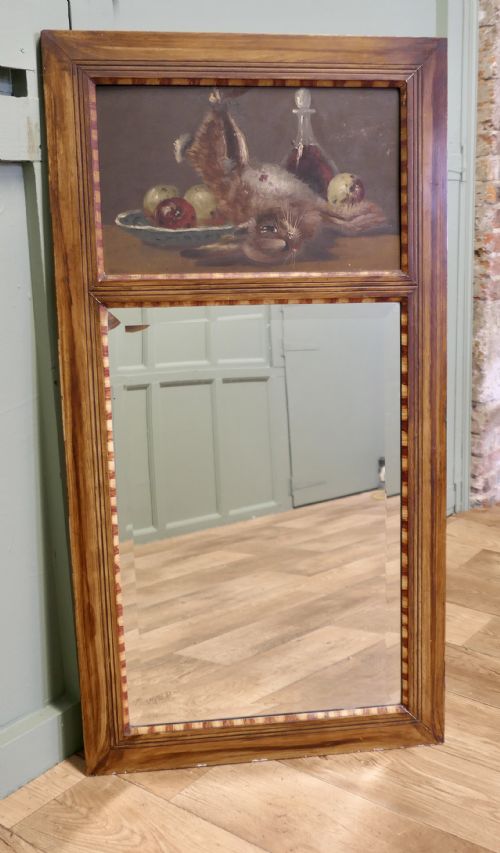
Frames often consist of carved wood or giltwood, sometimes incorporating mirror glass as seen in trumeau pier mirrors. Pigments were brushed, layered, or applied with palette knives to build texture and depth.
French Still Life Painting Retail Price Guide 2026
Typical asking prices for french still life painting among the pieces listed under this phrase on Sellingantiques today, from the lower quarter to the upper quarter. They describe what is for sale here now, not the wider market.
Listings feature works spanning from the nineteenth century through the 1960s, executed in oil, gouache, and encaustics.
Assessing Quality
Quality rests in the handling of light, shadow, and spatial arrangement within the composition. Stronger pieces display confident brushwork and a balanced interplay of colour that brings vitality to everyday objects.
The distinction between standard decorative works and masterpieces lies in the artist's economy of line and the subtlety of tonal gradation. A superior canvas uses texture and hue to create genuine weight and atmosphere.
Jean Baptiste Isabey·Alfred Arthur Brunel de Neuville·Bertoldo Taubert·Pierre Laurent Baeschlin·Jacques Carelman
The French Still Life Painting Glossary
- Gouache
- An opaque water-based paint that dries to a matte finish. It allows for vibrant colour blocking on paper or board supports.
- Giltwood
- Wood that has been treated with a thin layer of gold leaf or gilt powder. This finish appears frequently on period frames and decorative mirrors.
- Post-Impressionism
- An art movement extending beyond impressionism that focused on symbolic content and abstract forms. It heavily influenced early twentieth-century French modernist compositions.
- Trumeau
- A decorative wall mirror or painted panel designed to fit the space between windows. These architectural elements often incorporate oil paintings within their wooden frames.
- Encaustic
- A painting technique involving heated beeswax mixed with coloured pigments. The resulting mixture is applied to canvas or wood to create a durable, textured surface.
French Still Life Painting: Frequently Asked Questions
How do I hang a heavy oil painting safely?
Ensure your wall fixings are secured directly into wall studs or use heavy-duty wall anchors rated for the weight of the canvas and frame. Hanging wire should be robustly attached to the stretcher bars or wooden frame rather than loose staples.
Position the centre of the canvas at approximately eye level to achieve the best visual balance in your room. Avoid placing the painting in areas subject to direct sunlight or damp conditions.
What is the difference between oil and gouache?
Oil paint uses drying oils as a binder, allowing for slow blending, rich textures, and deep luminous colours on canvas or panel. Gouache utilises a water-soluble binder with added white pigment, drying quickly to a flat, opaque finish on paper or board.
While oil works project a heavy sheen and tactile depth, gouache pieces offer graphic clarity and delicate surface detail. Both mediums require protective framing, though oil canvases are more resilient to atmospheric changes.
How do I identify a 19th-century work?
Examine the reverse of the canvas or panel for maker stamps, stencil marks, and the oxidisation of the wooden stretcher bars. Nineteenth-century works often feature traditional academic subjects, tighter brush control, and aged linen canvas.
Check the framing style and any handwritten inscriptions on the stretcher or frame backing. Material ageing, such as fine craquelure in the oil paint, also helps indicate an older piece.