


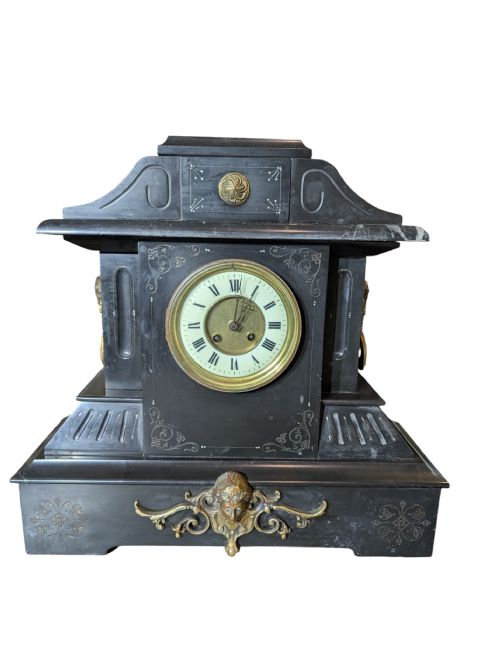


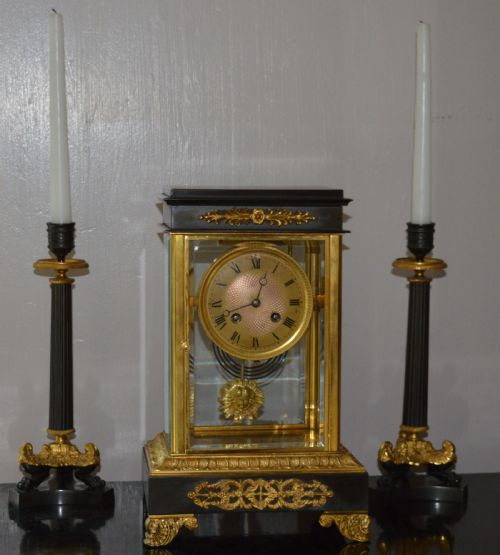


French Slate Mantel Clock
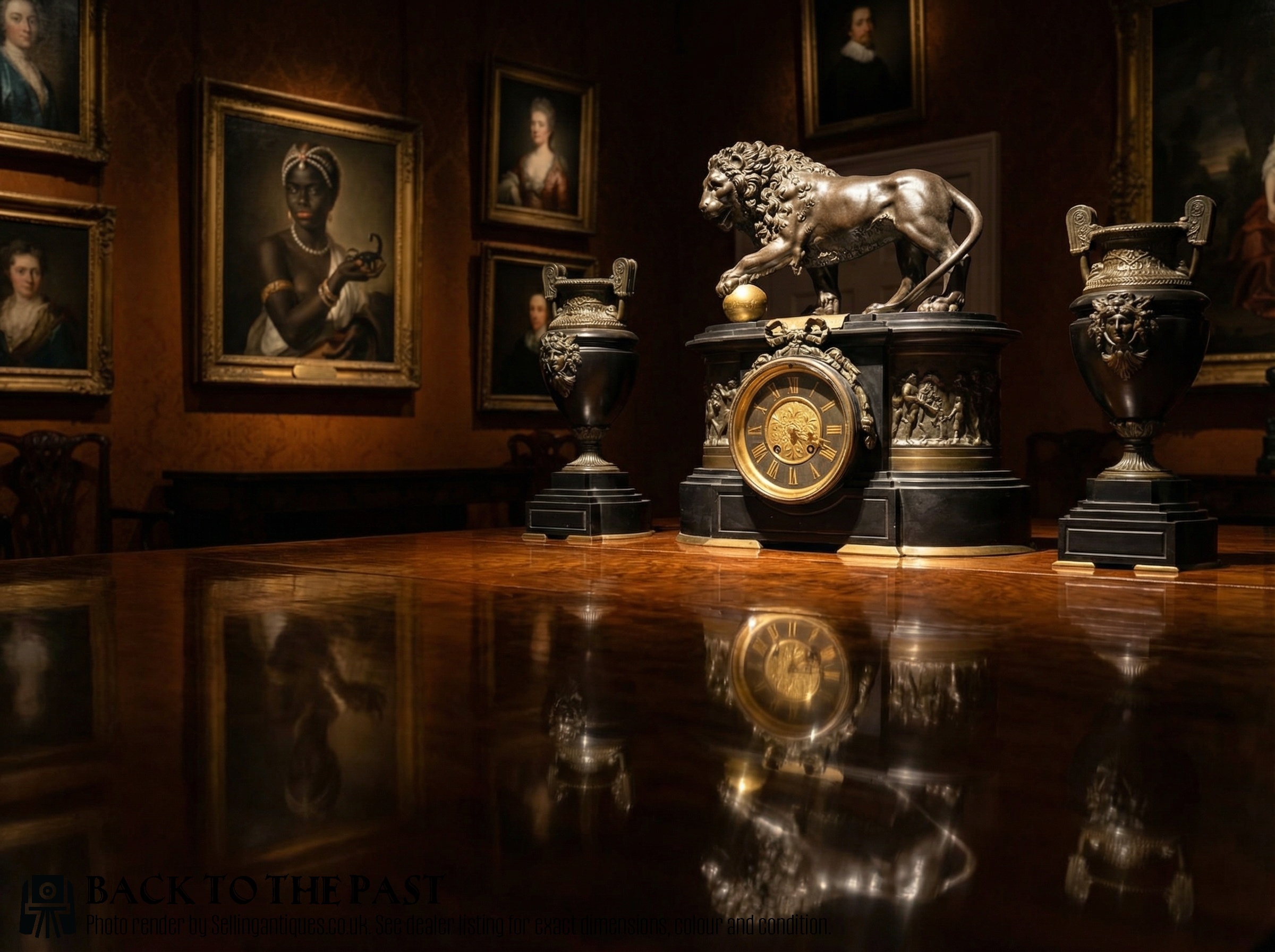
A French slate mantel clock brings solid weight and architectural presence to a room, drawing the eye with polished black stone and classical bronze.
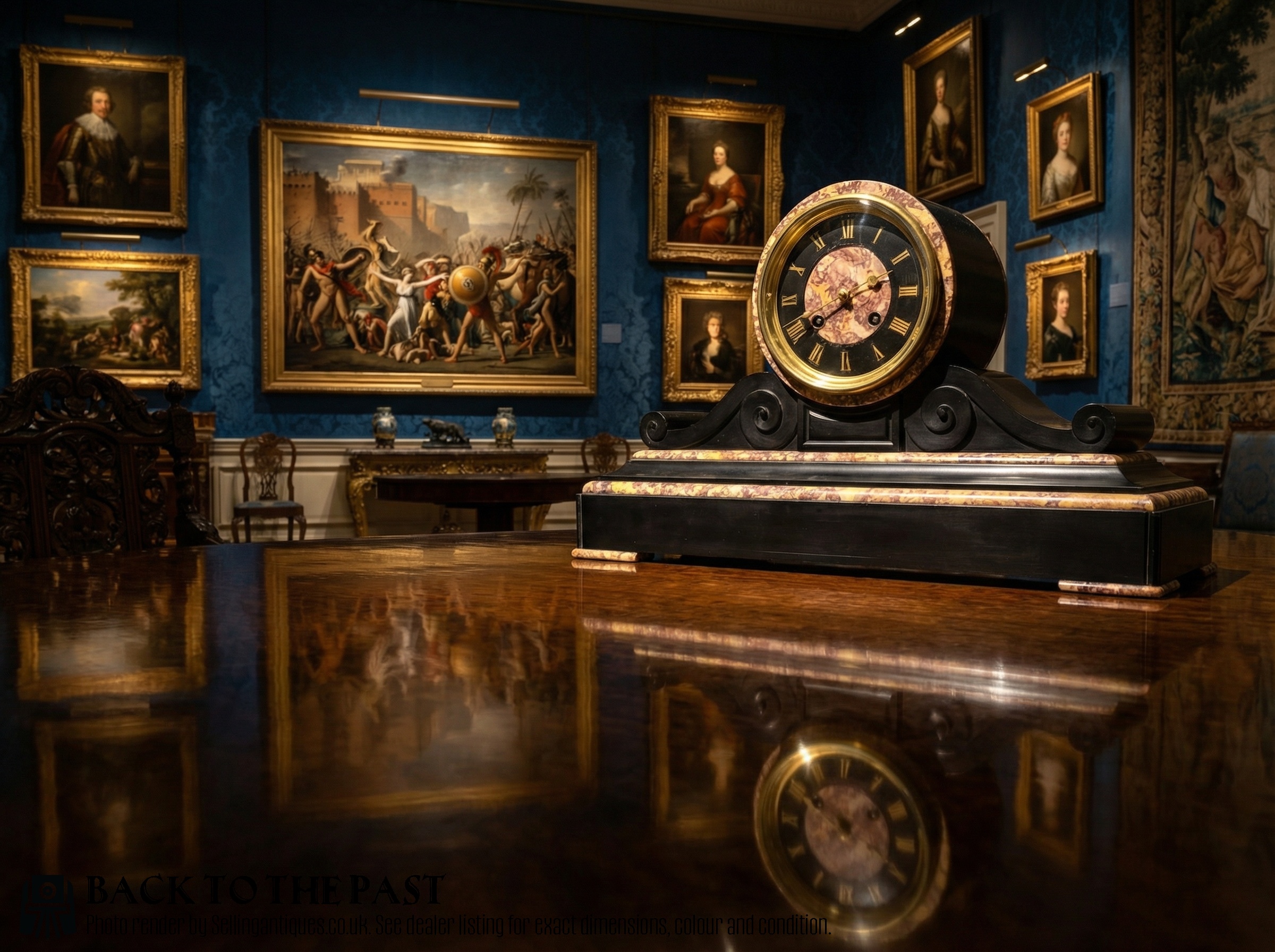
French Slate Mantel Clock
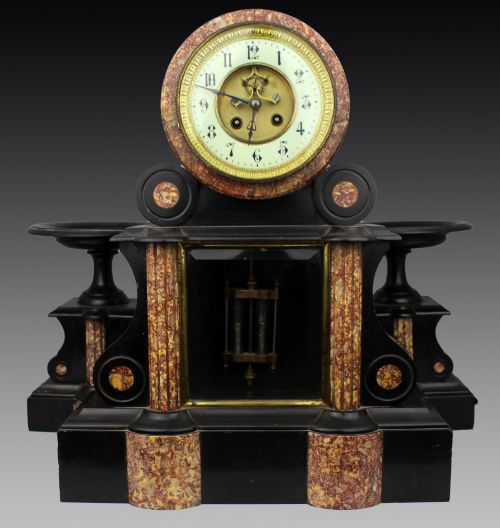
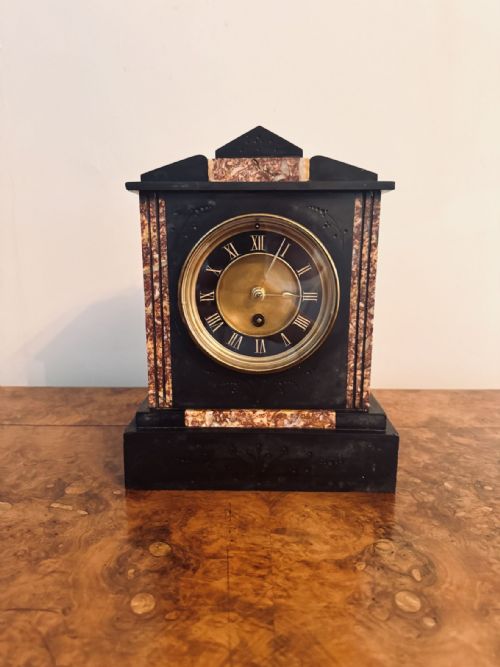
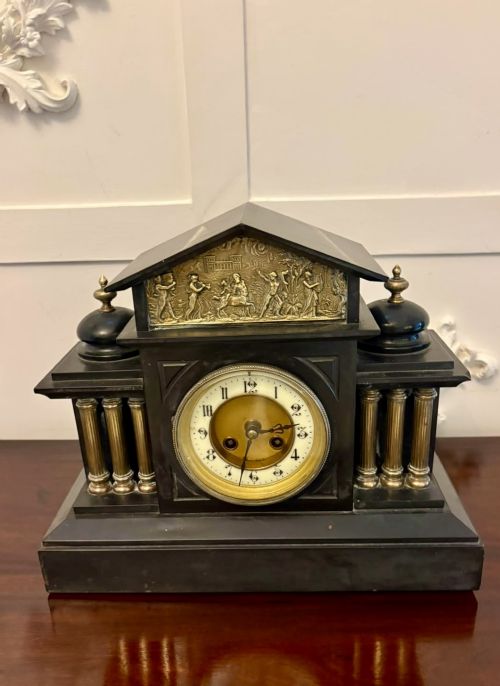
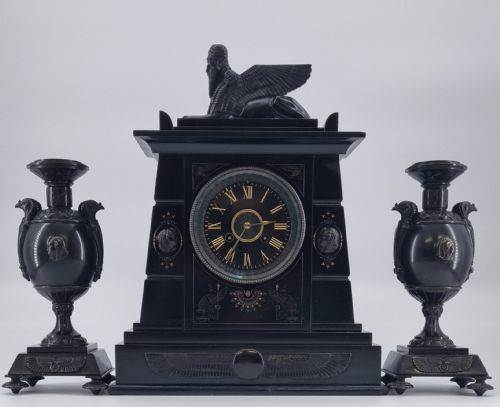
A French slate mantel clock is a substantial timepiece built primarily during the nineteenth century, utilising dense black stone fashioned into architectural temple fronts, drumheads, and garniture sets. These pieces reflect Victorian tastes as well as classical revivals, often appearing alongside matching side urns or candelabra.
The versions most commonly met on this page date from the eighteen-sixties through the eighteen-eighties, showing influences from Egyptian, Neoclassical, and Second Empire design. Makers combined the dark stone with contrasting marble inlays, brass trims, and gilt bronze mounts to create formal ornaments intended for prominent domestic placement.
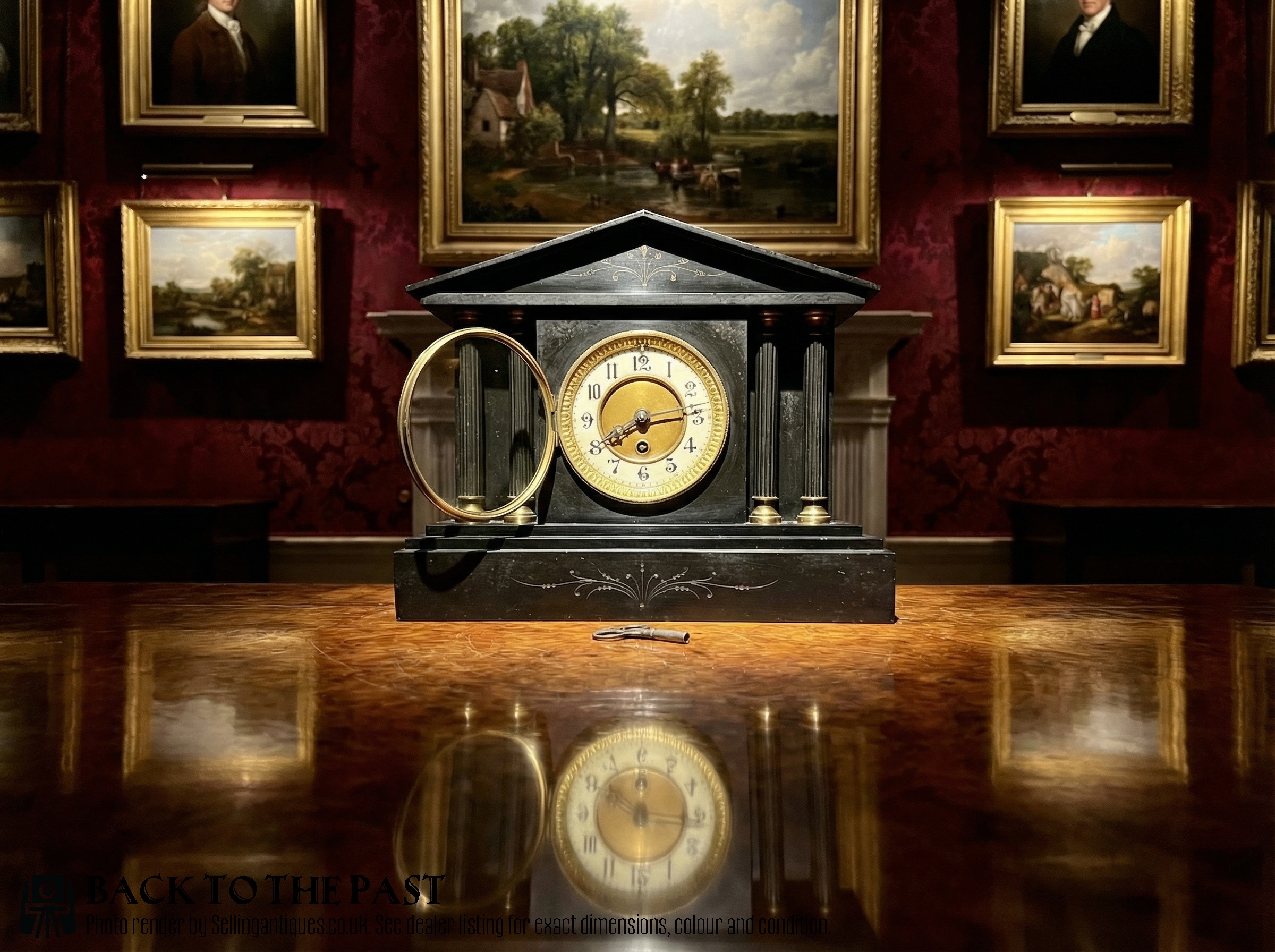
Assessing quality and craftsmanship
Quality in a French slate mantel clock rests in the ambition of the design and the crispness of the stone cutting. Finer examples display intricate architectural mouldings, well-cast bronze mounts, and careful marble inlay rather than plain, unadorned stone blocks.
The integration of the movement and dial also dictates the grade of the piece, with high-tier items featuring named French movement makers, detailed enamel dials, and matching garniture sets that complete the sculptural arrangement.
French Slate Mantel Clock Retail Price Guide 2026
Typical asking prices for french slate mantel clock among the pieces listed under this phrase on Sellingantiques today, from the lower quarter to the upper quarter. They describe what is for sale here now, not the wider market.
Japy Freres·Philippes Paris·Sacre·Baby and Jannings·D. Munsey of Cambridge·Achille Brocot
The French Slate Mantel Clock Glossary
- Garniture set
- A matching group consisting of a central mantel clock flanked by side ornaments such as urns or candelabra. These sets created a balanced display on a fireplace mantel.
- Drumhead clock
- A timepiece shaped with a circular housing for the dial mounted upon a rectangular stone base. This distinct form was popular during the Victorian period.
- Eight day movement
- A mechanical clock movement that requires winding once a week. This system was standard in better quality nineteenth-century French timepieces.
- Egyptian Revival
- A design style drawing upon pharaonic motifs such as sphinxes, obelisks, and hieroglyphic engravings. It appeared frequently on mid-nineteenth-century clock cases.
French Slate Mantel Clock: Frequently Asked Questions
How do I wind a French slate mantel clock?
Most of these timepieces use an eight-day mechanical movement wound via key-operated arbors on the enamel dial. Turning the key clockwise tensions the mainspring until resistance is felt.
Care must be taken not to over-wind the mechanism, and the pendulum should be secured if the clock is moved to another room.
Where should I place a heavy slate clock?
The substantial weight of black marble and slate requires a sturdy surface such as a mantelpiece, heavy sideboard, or low cabinet. The furniture must support significant downward pressure without sagging.
Ensuring the surface is level allows the pendulum to swing evenly and keeps the mechanical beat regular.
What is a clock garniture?
A garniture is a decorative ensemble featuring a central mantel clock accompanied by two matching side pieces, often shaped as urns or architectural obelisks. These sets were designed to sit symmetrically across a fireplace mantel.
The matching side pieces share the slate and marble materials of the main clock body.
How do I identify an Egyptian Revival clock?
Egyptian Revival pieces incorporate distinct archaeological motifs such as sphinx figures, lotus columns, and hieroglyphic incisions carved into the slate. These designs gained popularity following mid-century archaeological discoveries.
The dark stone provided an ideal contrasting background for gilt bronze pharaonic decorations.