

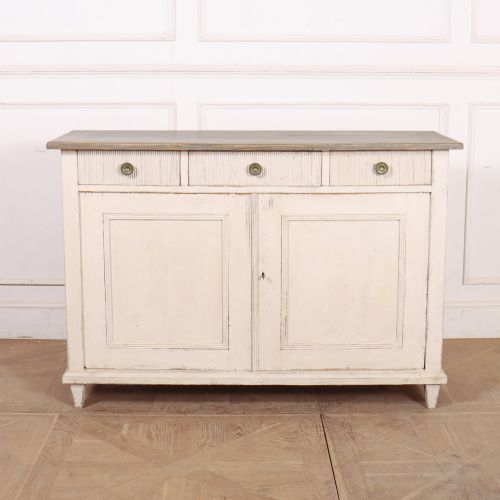
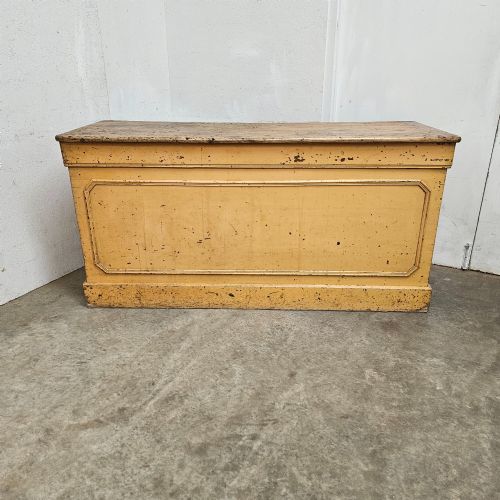
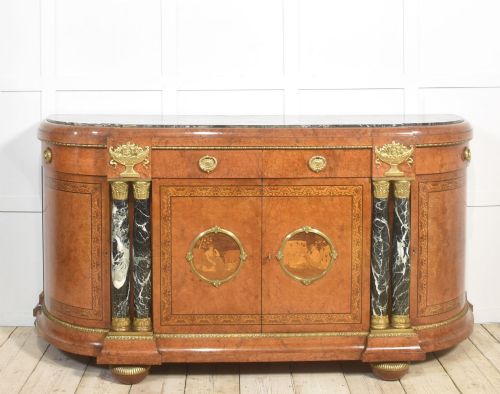


French Server Cabinet
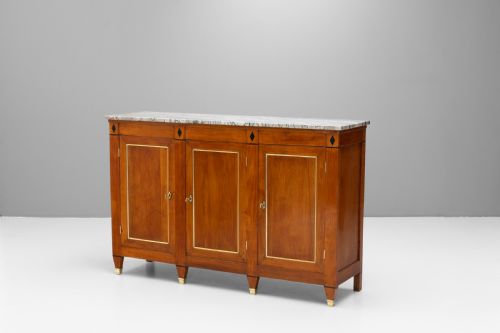
A French server cabinet brings formal utility to a dining room, offering substantial storage beneath a polished marble or timber top.
French Server Cabinet
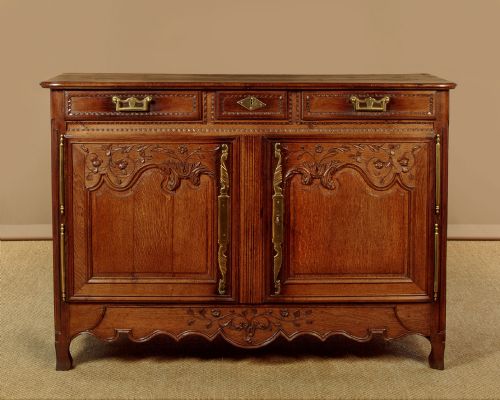
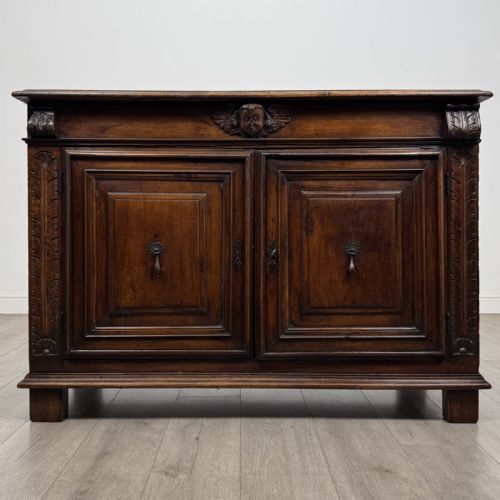
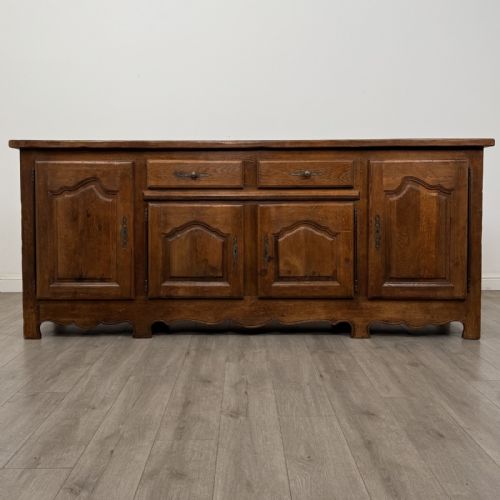
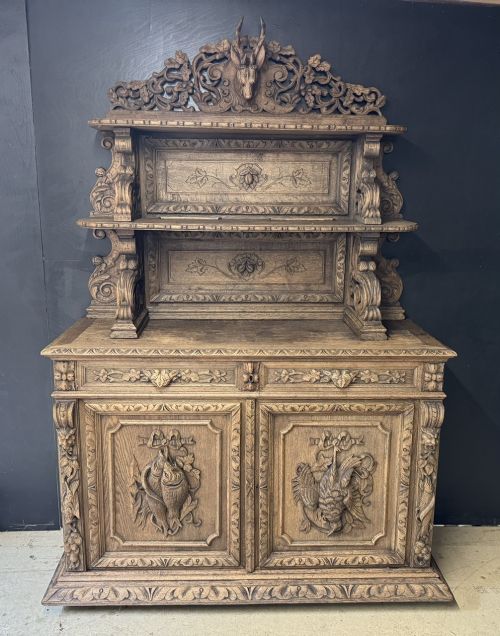
A French server cabinet serves as a heavy storage piece designed for dining spaces, appearing across periods from the eighteenth century to the art deco era. Buyers searching for a French server cabinet encounter sideboards, buffets, chiffoniers, and dressers shaped by regional and revivalist aesthetics.
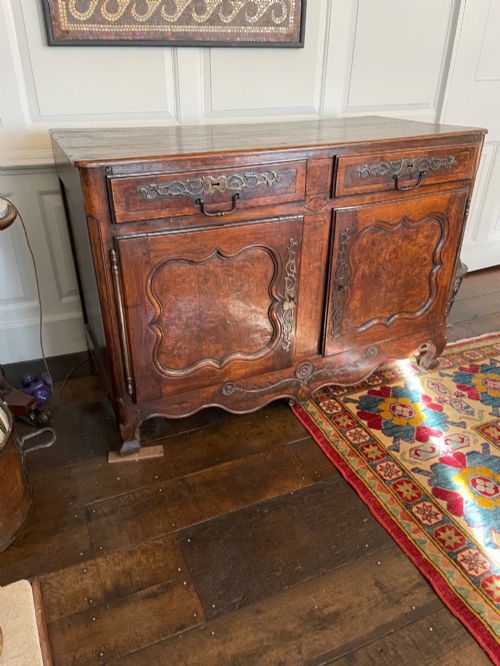
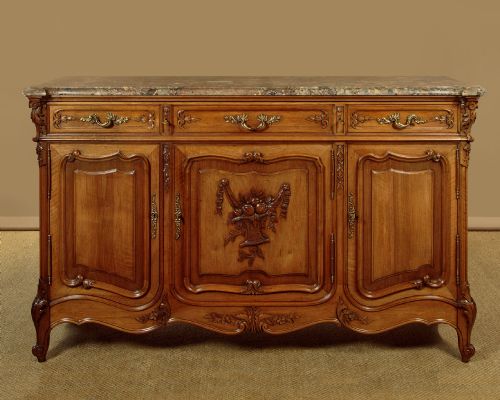
The regional variety ranges from rustic provincial oak and fruitwood cupboards to grand walnut and burr elm revival pieces adorned with brass or ormolu mounts. Many examples incorporate fitted marble tops in white or coloured stone alongside panelled doors and carved detailing.
Construction materials and techniques
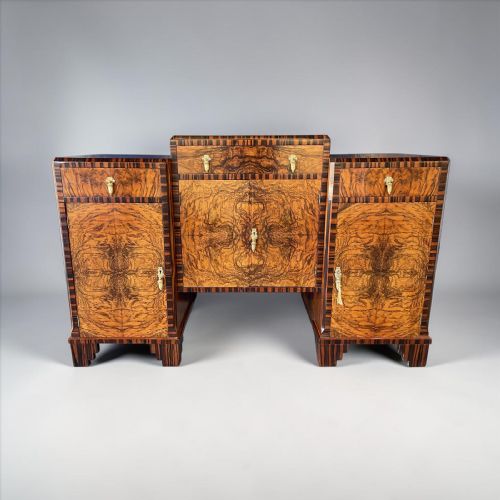
Cabinet makers utilised dense hardwoods including oak, walnut, mahogany, and cherry wood, often applying burr elm, burr walnut, or macassar veneers to create patterned surfaces. Parquetry work and hand-carved motifs define the structural enrichment of these timber frames.
Fitted polished marble tops sit atop many of these cabinets, paired with cast ormolu and brass hardware such as key escutcheons and mounts. Painted finishes and original patinas appear on specific provincial items and shop counters.
French Server Cabinet Retail Price Guide 2026
Typical asking prices for french server cabinet among the pieces listed under this phrase on Sellingantiques today, from the lower quarter to the upper quarter. They describe what is for sale here now, not the wider market.
The listings span multiple centuries, recording eighteenth century oak and walnut alongside nineteenth century mahogany and 1930s art deco pieces.
Judging cabinet quality
Quality rests in the selection of timber veneers and the crispness of hand-carved ornament, distinguishing standard production from exceptional cabinet work. The integration of heavier materials like marble slabs requires precise joinery to support stone weights securely.
Refined execution shows in the fluidity of bombe shaping, the balance of ormolu mounts, and the preservation of original hardware and interior shelving.
Melissa White
The French Server Cabinet Glossary
- Ormolu
- Gilded bronze mounts applied to furniture. This technique adds decorative metallic contrast to dark timber surfaces.
- Buffet
- A low sideboard or cabinet used for storing and serving food. These pieces form a core category within dining room furniture.
- Chiffonier
- A small tall sideboard featuring cupboards and drawers. This form became popular during the nineteenth century.
- Parquetry
- Geometric wood mosaic work used for decorative surfaces. Cabinet makers apply this technique primarily to table and cabinet tops.
- Bombe
- An outward swelling or convex shape characteristic of advanced case furniture. This curved profile requires skilled timber bending.
French Server Cabinet: Frequently Asked Questions
What is a French server cabinet used for?
These cabinets function primarily as dining room furniture designed for storing tableware, linens, and serving dishes.
The flat top surface provides a convenient staging area for food and drink service during meals.
How do I identify an Art Deco cabinet?
Art Deco cabinets date from around 1925 to 1930 and feature streamlined silhouettes alongside exotic veneers like macassar and burr walnut.
They move away from ornate historical revivals in favour of geometric clarity and modernist luxury.
Are marble tops original?
Many nineteenth and early twentieth century examples incorporate fitted marble slabs designed specifically for the cabinet frame.
These stone surfaces offered a durable, cool area for food preparation and serving.
What distinguishes provincial pieces?
Provincial cabinets originate from French regions outside Paris, utilising local timbers such as cherry wood, fruitwood, and chestnut.
Their construction tends to reflect traditional craft methods rather than court-inspired styles.