

French Serpentine Front Commode
A french serpentine front commode brings sculptural elegance to a room, offering generous storage through its curving, undulating drawers.
French Serpentine Front Commode
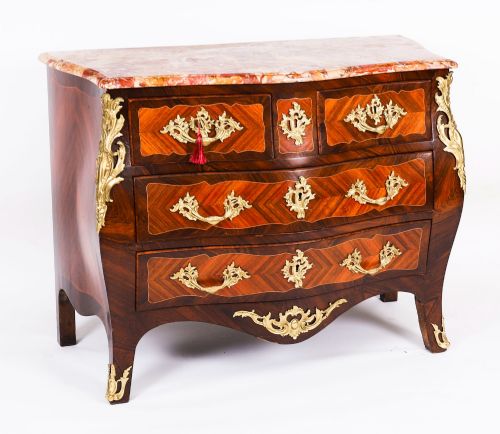
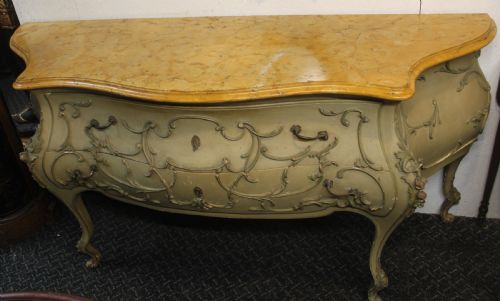
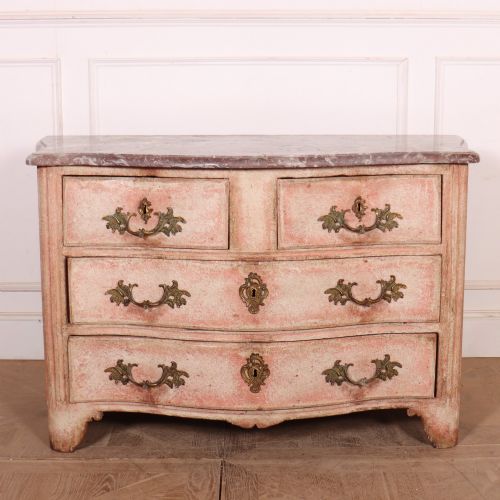
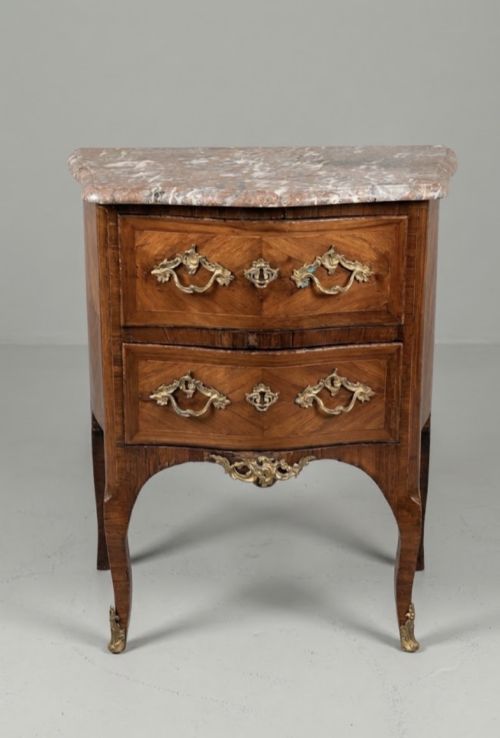
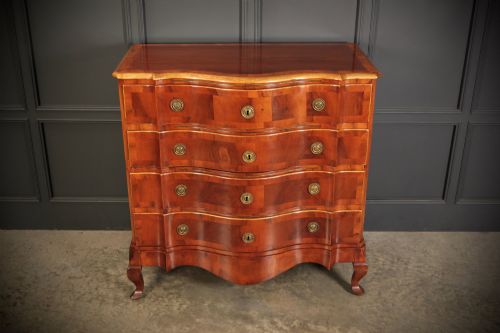
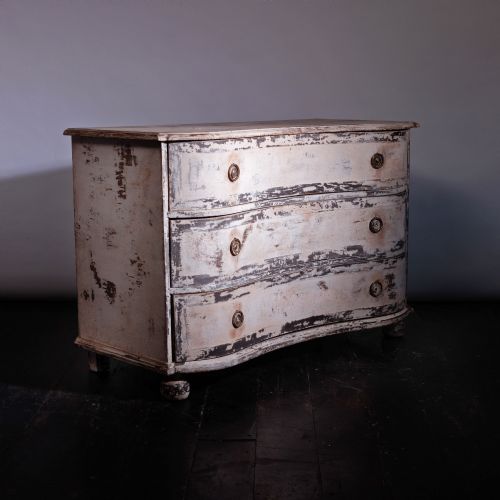
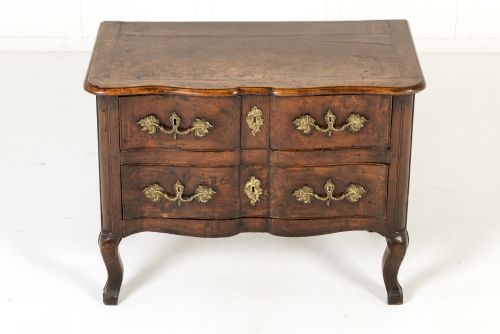
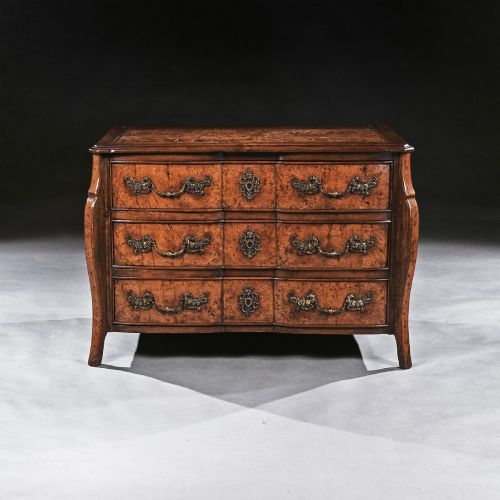
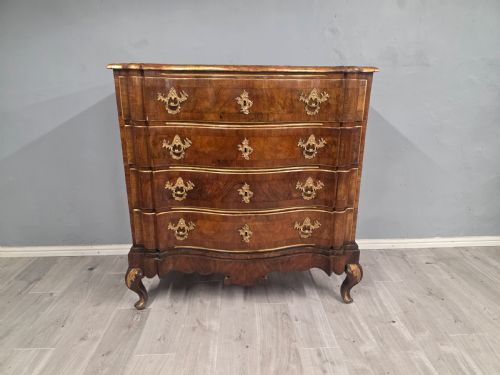
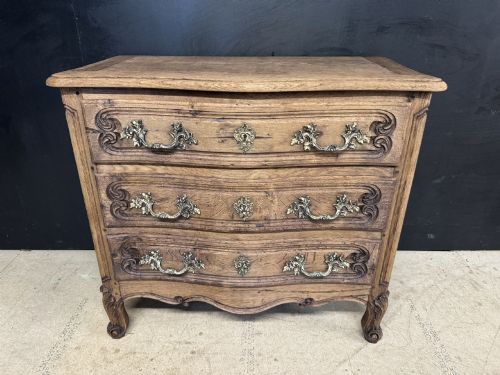
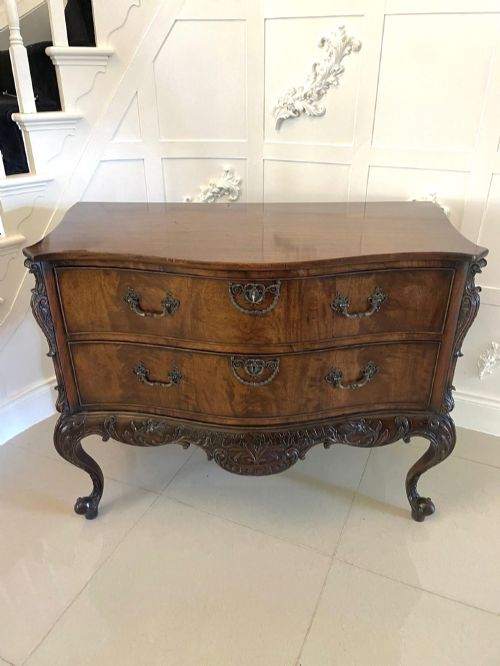
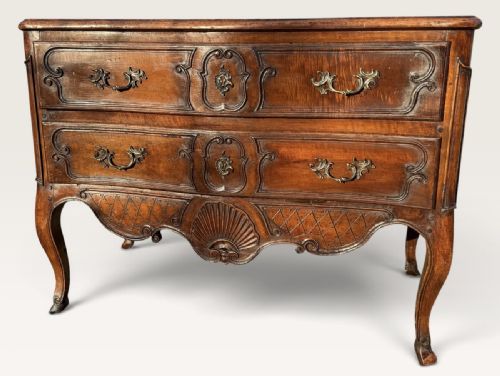
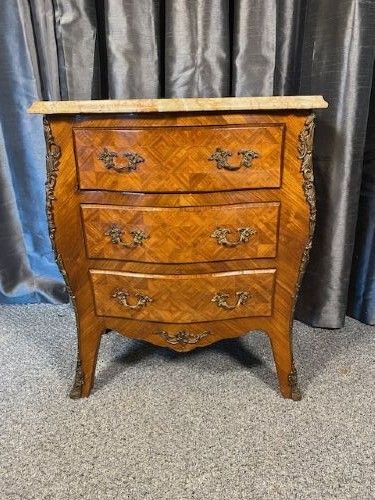
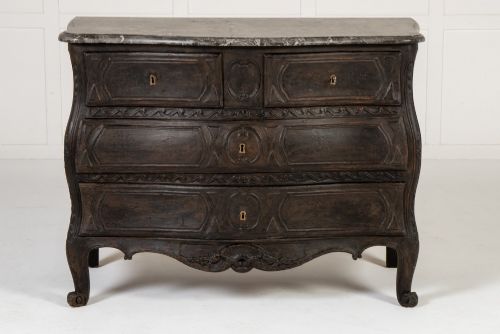
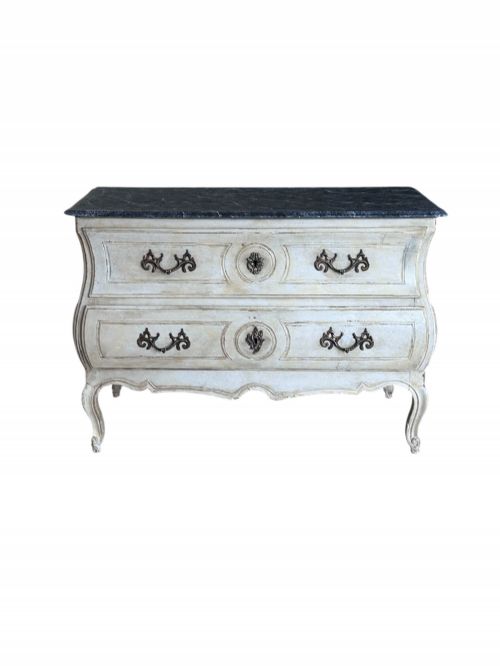
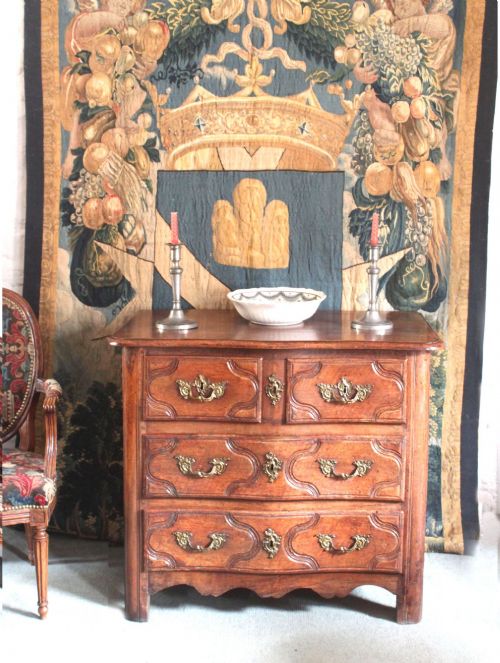
When someone searches for a french serpentine front commode, they encounter substantial storage furniture defined by a convex centre flanked by concave corners, forming a distinctive undulating wave along the front edge. These pieces function primarily as low chests of drawers or side cabinets, originating frequently from eighteenth-century provincial workshops as well as later nineteenth-century revival periods.
The versions most commonly met on this page span walnut, oak, and mahogany timbers, often crowned with heavy marble slabs and mounted with decorative brass or ormolu handles. Examples range from compact bedside tables to large country commodes, displaying regional French Provincial aesthetics alongside ornate Louis XV and Louis XVI styles.
Construction and Materials
Cabinetmakers constructed these undulating forms using solid timbers and complex veneers like kingwood, rosewood, and burr walnut, laid over sturdy oak or pine carcasses to prevent warping along the curved planes. Sawing and shaping timber to follow a serpentine contour required specialist joinery skills, particularly when applying delicate marquetry and parquetry patterns across the drawer fronts.
Heavy marble tops, typically shaped to match the exact contours of the wooden base, rested on the upper frame alongside cast ormolu and brass mounts that secured the corners and keyholes. Carpenters joined the structural carcase using traditional dovetail joints for the drawers and pegged mortise and tenon joints for the main frame.
French Serpentine Front Commode Retail Price Guide 2026
Typical asking prices for french serpentine front commode among the pieces listed under this phrase on Sellingantiques today, from the lower quarter to the upper quarter. They describe what is for sale here now, not the wider market.
Listings feature walnut, oak, and mahogany timbers alongside marble tops and ormolu mounts, spanning eighteenth-century provincial pieces to twentieth-century revival chests.
Judging Quality and Execution
Superior examples reveal themselves through the precision of the curved drawer fronts and the seamless alignment of veneers across multiple drawers. The crispness of hand-carved details and the weight of the cast bronze or ormolu mounts separate master workshops from simpler provincial output.
Originality of components defines the upper tier of these cabinets, where surviving marble slabs, period handles, and undamaged parquetry remain intact. Timber selection also dictates grade, with figured burr elm, rosewood, and richly grained walnut indicating high-status commissions.
The French Serpentine Front Commode Glossary
- Serpentine
- A curved furniture front featuring a convex central section flanked by two concave sides, creating an undulating wave shape. This contour requires precise woodworking to achieve a fluid line.
- Commode
- A low chest of drawers, originating in France, typically positioned in a bedroom or principal reception room. The form evolved from earlier low cabinets during the seventeenth century.
- Ormolu
- Gilt bronze ornamentation applied to furniture mounts, feet, and keyhole escutcheons. The technique involves fusing finely ground gold to a bronze base using mercury.
- Marquetry
- Decorative veneer work arranged in pictorial or geometric patterns using various coloured woods. Craftsmen cut thin slices of timber and fitted them together like a puzzle.
- Bombe
- A swollen, bulging outward contour found on the sides and front of certain cabinet designs. This curvaceous profile is particularly associated with mid-eighteenth-century French furniture.
French Serpentine Front Commode: Frequently Asked Questions
What rooms suit a serpentine commode?
These cabinets suit living rooms, hallways, and bedrooms where their curved fronts soften rigid architectural lines. They function effectively as side storage units or decorative focal points against a plain wall.
Their substantial surface area also accommodates lamps, mirrors, and decorative objects. Placing them in a hallway provides convenient surface space for keys and post while maintaining a formal aesthetic.
How do I care for marble tops?
Marble surfaces require regular dusting with a soft, dry cloth to prevent abrasive particles from scratching the polished finish. Avoid placing acidic liquids like wine or citrus directly onto the stone, as they etch the surface.
Prompt wiping with a damp cloth prevents staining on porous marble varieties. Periodic sealing helps protect the stone from everyday wear.
How do I distinguish eighteenth-century pieces?
Eighteenth-century examples display hand-cut dovetails, irregular tool marks inside the drawer linings, and native timbers appropriate to the period, such as solid walnut or chestnut. The joinery often shows slight variations due to entirely manual construction methods.
Older pieces also exhibit natural timber shrinkage and patination accumulated over centuries of use. Hardware fixings on older furniture typically rely on hand-forged screws and wrought iron elements.
What is provincial style furniture?
Provincial furniture refers to pieces made outside major urban centres like Paris, often displaying simpler decoration and sturdier regional construction. Local craftsmen utilised accessible timbers such as oak, fruitwood, and walnut.
These items reflect the practical domestic needs of country homes while incorporating fashionable urban silhouettes in a restrained manner. Regional variations provide clues to the specific area of manufacture.