




French Salon Table
A french salon table brings parlour elegance into a modern room, offering polished marble and gilt mounts.

French Salon Table
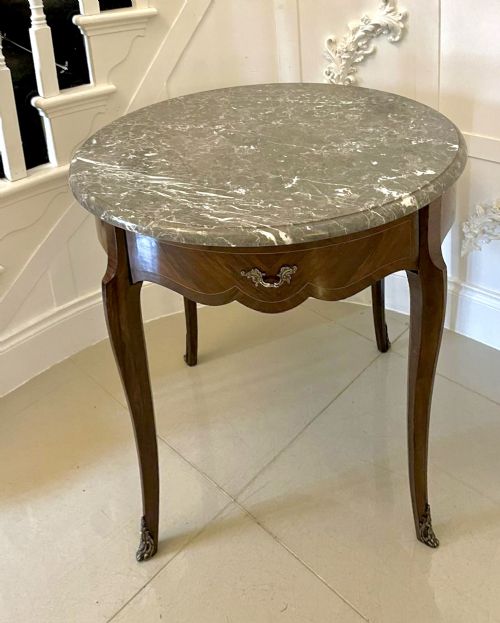
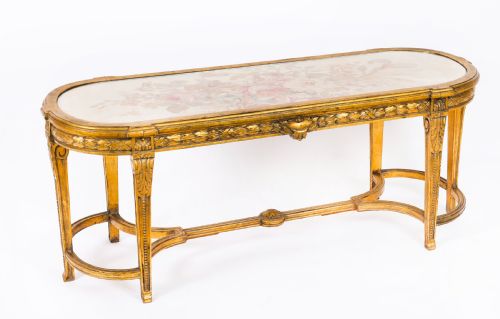
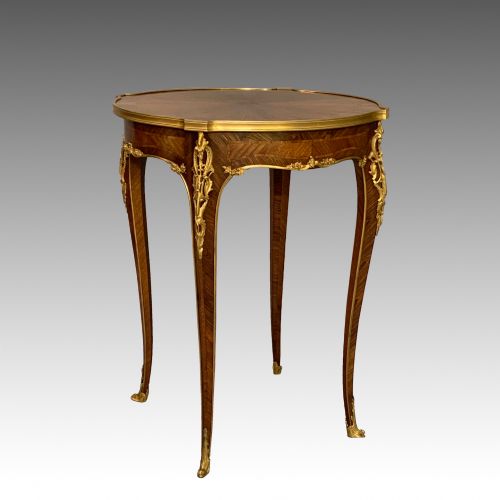
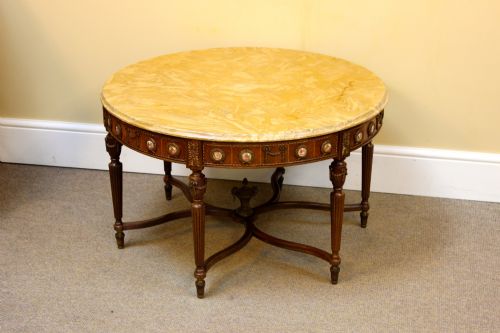
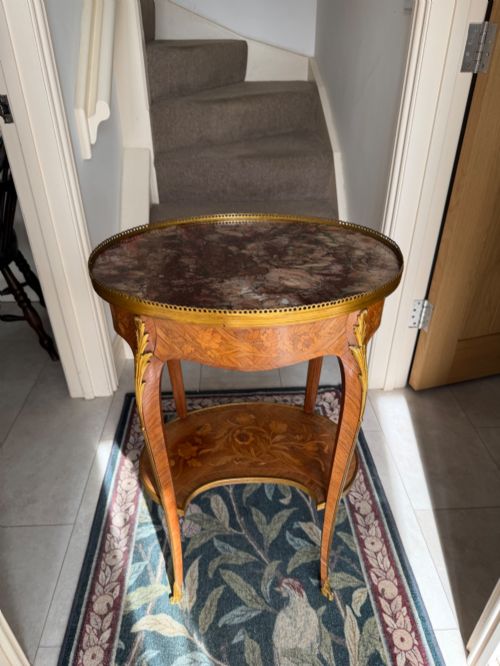
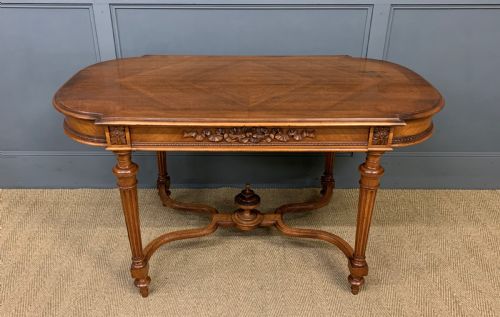
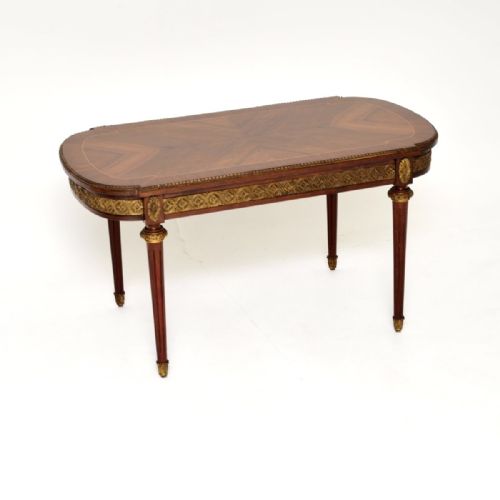
A french salon table encompasses centre tables, coffee tables, and occasional pieces designed for formal reception rooms. The pieces available here span the nineteenth century into the early twentieth century, showing revivalist tastes from Louis XV to Empire styles.
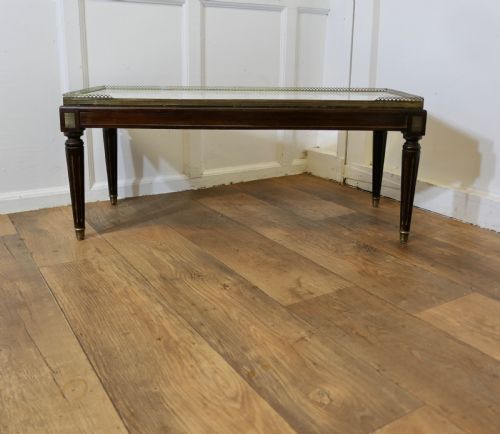
Buyers will encounter freestanding centre tables alongside lower coffee and occasional formats adapted for contemporary use. Materials range from walnut and kingwood to polished marble and ormolu mounts.
Origins trace across nineteenth-century cabinetmaking traditions and Edwardian revivals. These tables served social functions in parlours and drawing rooms before finding places in modern interiors.
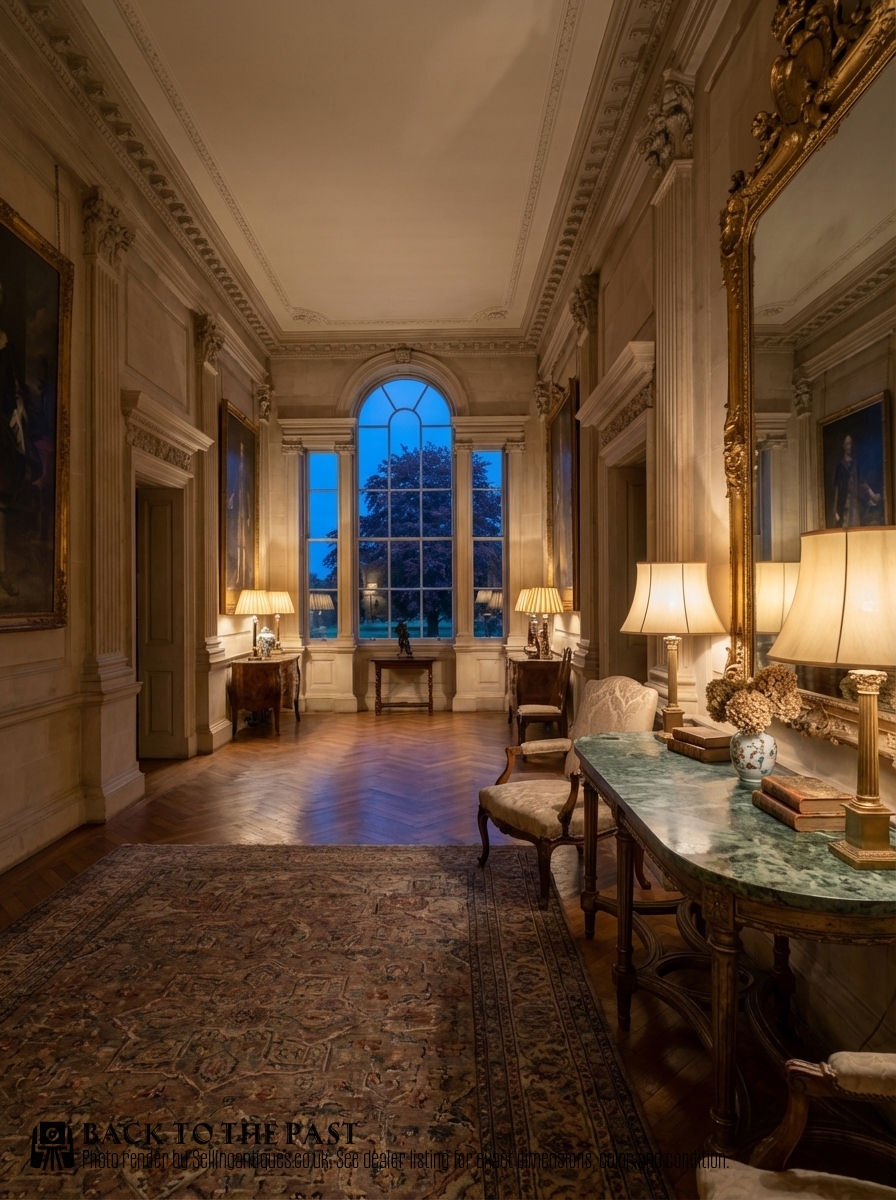
How they were made
Cabinetmakers utilised hardwoods such as walnut, mahogany, and kingwood as foundations for marquetry and inlay work. Tops frequently incorporate fitted marble slabs or glass panels.
Ormolu mounts, giltwood carvings, and bronze details embellish the structural frames. Joinery methods reflect period workshop practices across nineteenth-century France and Britain.
French Salon Table Retail Price Guide 2026
Typical asking prices for french salon table among the pieces listed under this phrase on Sellingantiques today, from the lower quarter to the upper quarter. They describe what is for sale here now, not the wider market.
A bronze girl with a peacock stands ready among the tables, proving salon life involved more than just drinking tea.
What varies in quality
The refinement of the carving and the precision of the marquetry inlay distinguish master workshops from standard production. Signed pieces by makers such as Linke or Zwiener demonstrate superior metalwork and cabinetmaking.
The choice of materials, from heavy figured walnut to genuine ormolu rather than plated brass, marks the grade of the piece. Proportions and the integrity of the marble top also dictate overall execution.
Joseph-Emmanuel Zwiener·F. Linke·Auguste Moreau·Charles Octave Levy
The French Salon Table Glossary
- Ormolu
- Gilt bronze mounted on furniture or decorative objects. This technique creates bright metallic highlights against dark woods.
- Marquetry
- Inlaid wood veneers arranged in decorative patterns. Artisans use contrasting timber tones to form pictorial or geometric designs.
- Kingwood
- A dense tropical timber valued for its rich grain. It appears frequently in inlaid French cabinetwork.
- Giltwood
- Timber treated with gold leaf or gesso paint. This finish provides the bright aesthetic seen on revival frames.
- Centre table
- A freestanding piece finished on all sides for placement in the middle of a room. These items often feature detailed marble tops.
French Salon Table: Frequently Asked Questions
How do I use a french salon table today?
These tables function well as central coffee tables or statement side pieces in a living area. Their decorative tops and mounts provide a focal point in both traditional and modern rooms.
Ensure the height matches your seating arrangements, particularly when placing lower coffee table variants in front of a sofa.
Are marble tops original to these tables?
Many nineteenth-century examples feature fitted marble slabs designed to handle everyday use in a reception room. The stone provides a durable surface that contrasts with the timber frames.
Check the fit against the wooden rebate to understand if the slab has remained with the base since manufacture.
How do I distinguish Louis XV from Louis XVI style?
Louis XV pieces typically display asymmetric curves, flowing rococo carving, and cabriole legs. Louis XVI revival items shift towards neoclassical symmetry, straight fluted legs, and geometric ormolu mounts.
Examining the leg profiles and corner mounts helps clarify which eighteenth-century aesthetic the nineteenth-century maker was referencing.
What maintenance do these wooden tables require?
Keep timber surfaces polished with suitable wax and protect marble tops from acidic spills. Gentle dusting preserves the giltwood and ormolu mounts without wearing the finish.
Positioning tables away from direct heat sources prevents the veneers from drying out or lifting over time.