

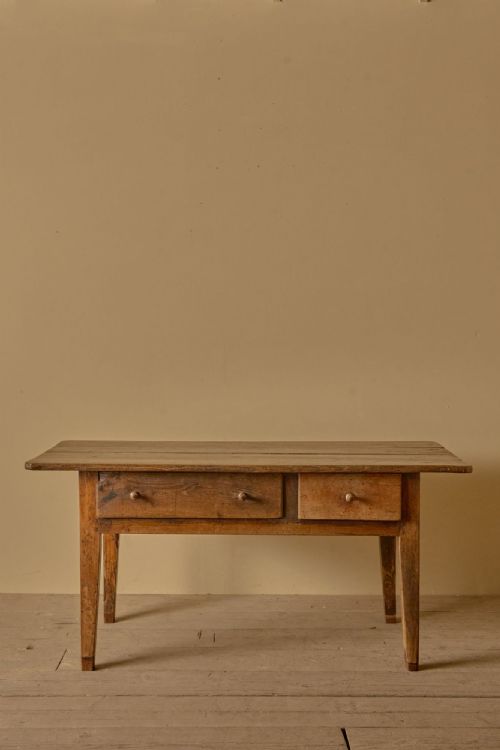
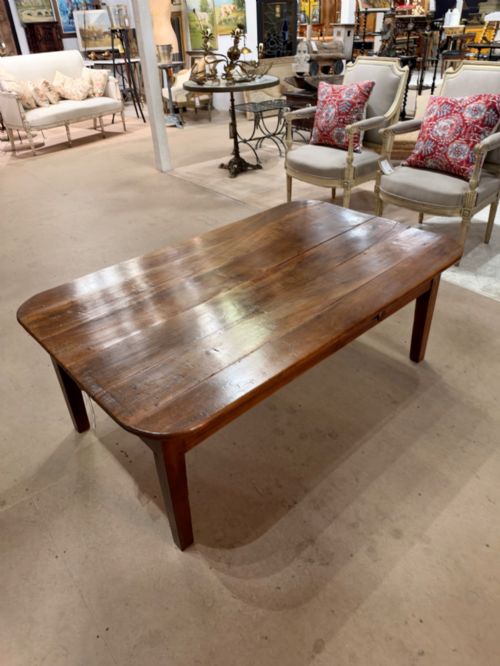
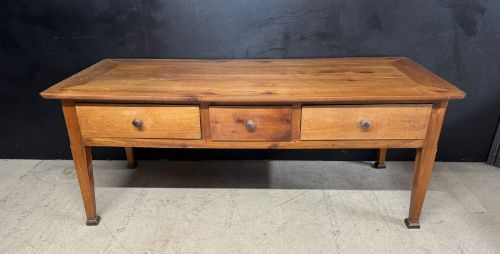
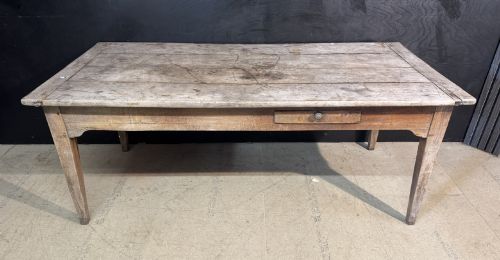
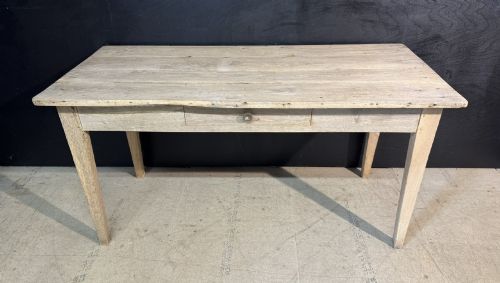
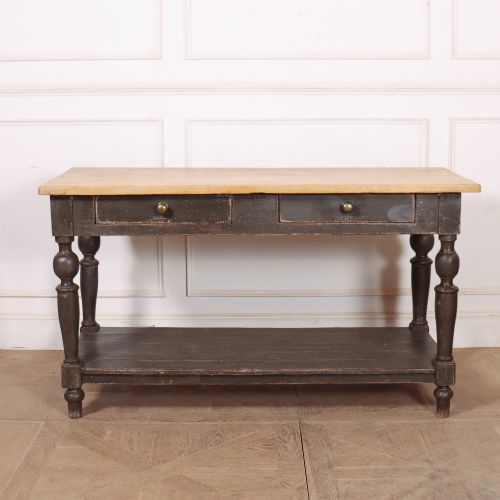
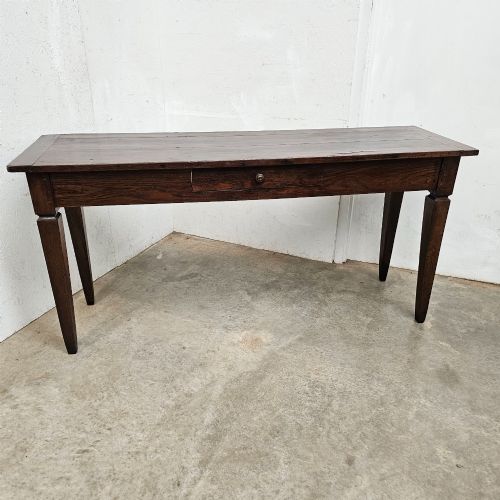
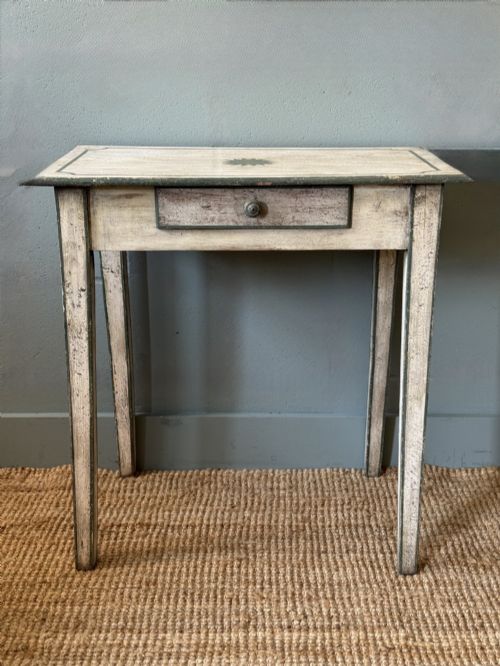
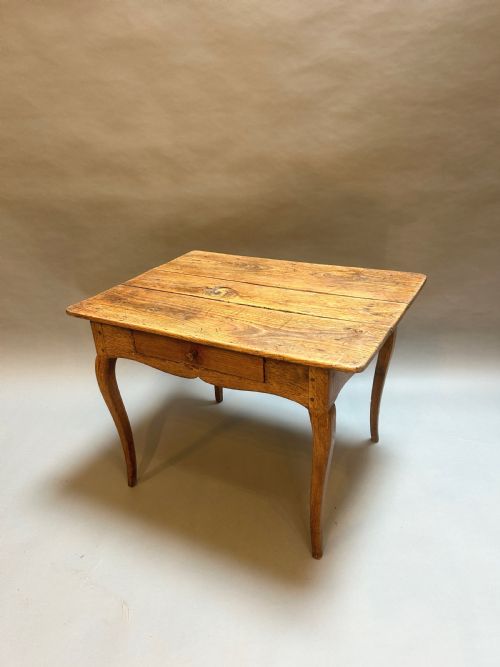


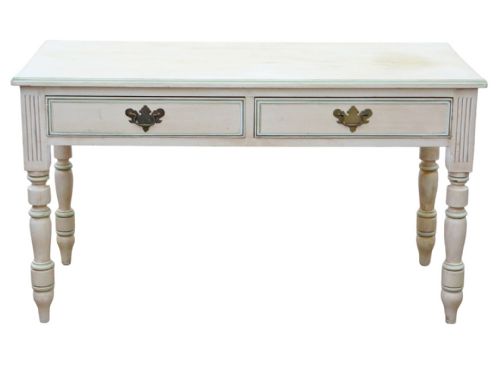


French Rustic Side Drawer Table
These french rustic side drawer table examples bring warmth and utility to a room through genuine provincial character.
French Rustic Side Drawer Table
A french rustic side drawer table serves multiple domestic roles, functioning as a console, serving table, or occasional surface in country settings. Buyers seeking this phrase encounter versatile forms ranging from small lamp tables to long farmhouse consoles and prep tables.
The selection leans heavily toward nineteenth-century country pieces, supplemented by eighteenth-century fruitwood and walnut examples. Regional variations include Normandy scrub tops, Alsace serving tables, and cherry manor house tables from Bresse.
Smaller variants such as bedside cabinets and low tables appear alongside larger kitchen and drapers tables. Each piece combines practical drawer storage with the robust proportions characteristic of provincial workshops.
How they were made
Cabinetmakers utilised solid timbers such as oak, fruitwood, cherry, walnut, and pine to construct these functional surfaces. Turnings appear on legs, while tops range from scrubbed softwood planks to polished hardwood boards.
Iron and brass hardware provides structural support and drawer pulls, often showing simple forged or cast details. Painted finishes also occur, with pine and other timbers receiving historical coats of paint.
French Rustic Side Drawer Table Retail Price Guide 2026
Typical asking prices for french rustic side drawer table among the pieces listed under this phrase on Sellingantiques today, from the lower quarter to the upper quarter. They describe what is for sale here now, not the wider market.
Florists work tables make an unexpected appearance, proving that nineteenth-century French botany required plenty of drawer space.
What varies in quality
Quality rests in the choice of timber and the proportion of the structure, where dense fruitwoods and figured cherry command attention. The integration of the side drawer within the aprons shows the maker's hand.
Surface patination distinguishes finer items, with unbleached or naturally worn timber showing depth through decades of use. Regional craftsmanship from known areas like Normandy or Bresse adds distinct character to the construction.
The French Rustic Side Drawer Table Glossary
- Scrub top
- A bare wooden tabletop designed to be scrubbed clean after food preparation or work tasks. This finish appears frequently on kitchen and pastry tables.
- Console table
- A wall-mounted or freestanding narrow table positioned against a perimeter wall. These pieces often feature one or more drawers in the frieze.
- Fruitwood
- Timber harvested from fruit-bearing trees such as cherry, pear, or apple. It yields a warm tone and fine grain suitable for provincial furniture.
- Pot-shelf
- A lower slatted or solid shelf incorporated beneath the main surface of a serving or prep table. It provides storage for kitchen pots and domestic items.
- Drapers table
- A long, narrow table historically used in textile display and merchant shops. These tables provide substantial surface area alongside practical drawer space.
French Rustic Side Drawer Table: Frequently Asked Questions
What is a french rustic side drawer table used for?
These tables function as sideboards, hall consoles, or kitchen prep surfaces depending on their height and length. The built-in drawer provides convenient storage for small household items.
Their narrow proportions allow them to fit into hallways, dining rooms, and kitchens without obstructing movement.
How do I identify an 18th century table?
Eighteenth-century examples typically employ dense fruitwoods, walnut, or chestnut with hand-cut joinery and deep patination. Tool marks and timber shrinkage offer clues to their age.
Later nineteenth-century pieces often utilise pine, oak, or cherry with standardised construction methods.
Are these tables suitable for daily kitchen use?
Many of these pieces originated as prep tables, pastry tables, or kitchen work benches built to withstand rigorous daily labour. Solid timber construction makes them resilient for modern domestic tasks.
Care should be taken with unsealed scrub tops when handling liquids or hot dishes.
What woods were used in provincial tables?
Cabinetmakers relied on local timber availability, leading to widespread use of oak, pine, fruitwood, cherry, and walnut. Painted finishes also appear on softwood carcases.
Each wood species ages differently, developing distinct surface patinas over generations of use.