
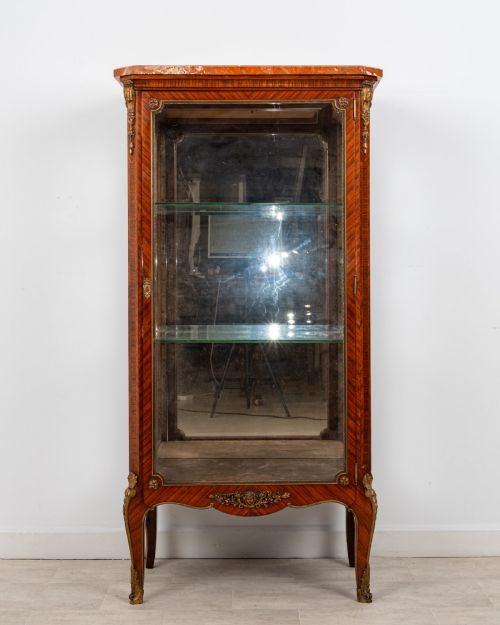
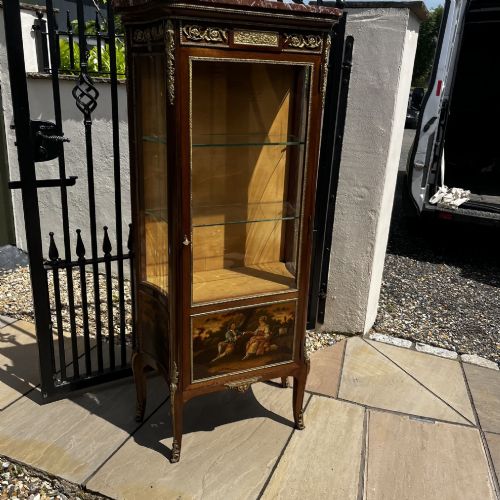

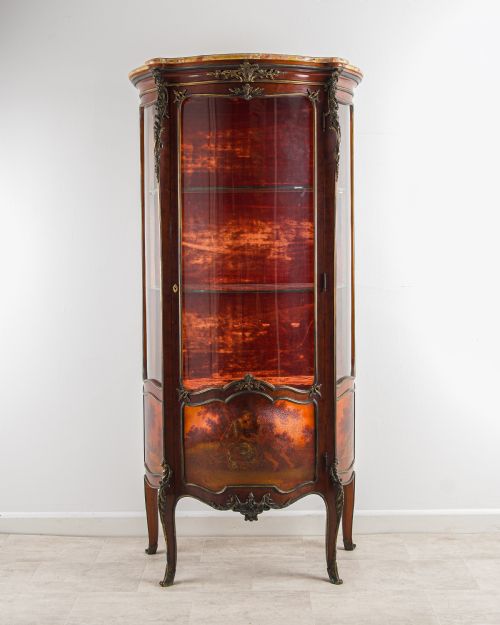


French Rococo Vitrine
A french rococo vitrine brings exuberant curves and luminous glass display into a room, designed to showcase precious porcelain and curiosities.
French Rococo Vitrine
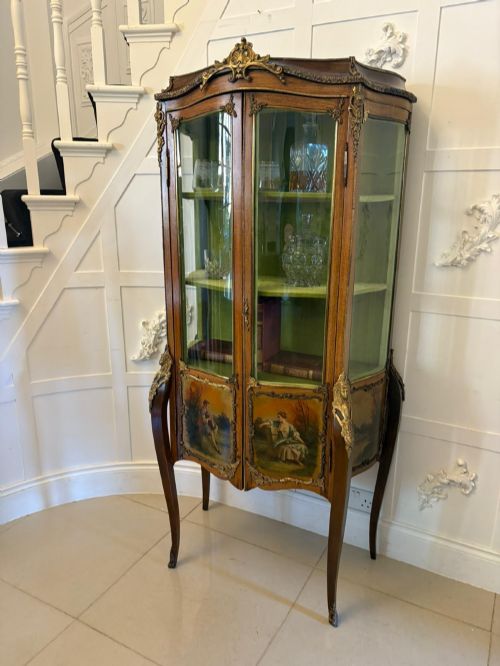
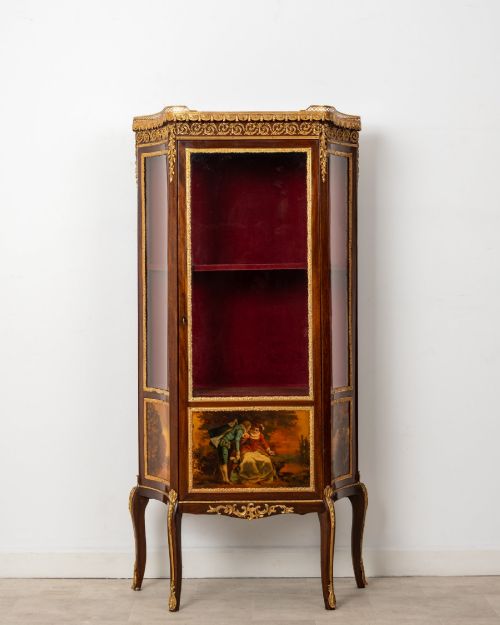
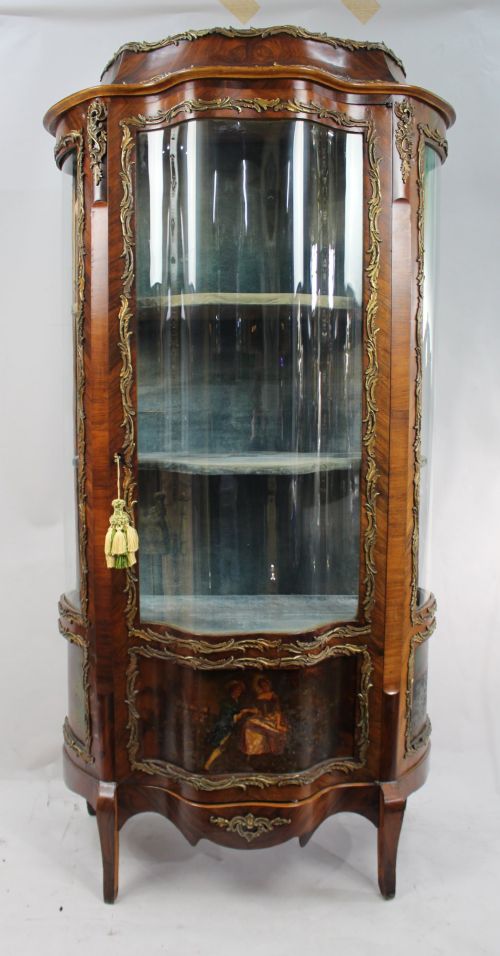
When you search for a french rococo vitrine, you enter a world of serpentine fronts, glazed sides, and ornate mounts intended for displaying prized possessions. These pieces draw heavily on eighteenth-century aesthetics, emerging largely during the nineteenth century through revival movements that embraced lavish ornamentation.
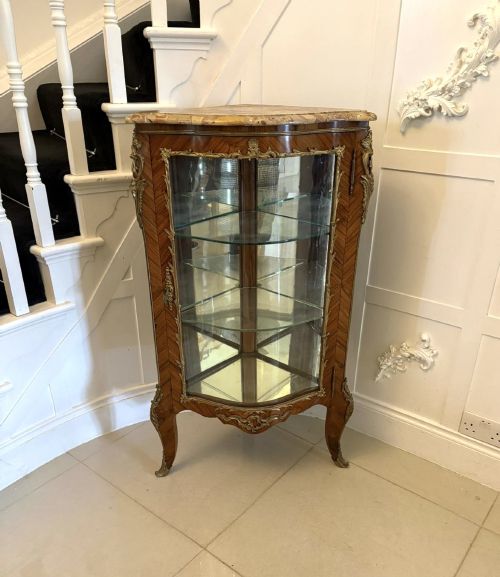
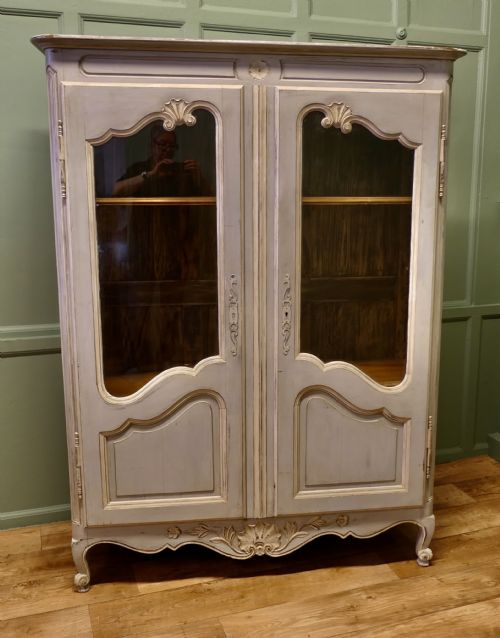
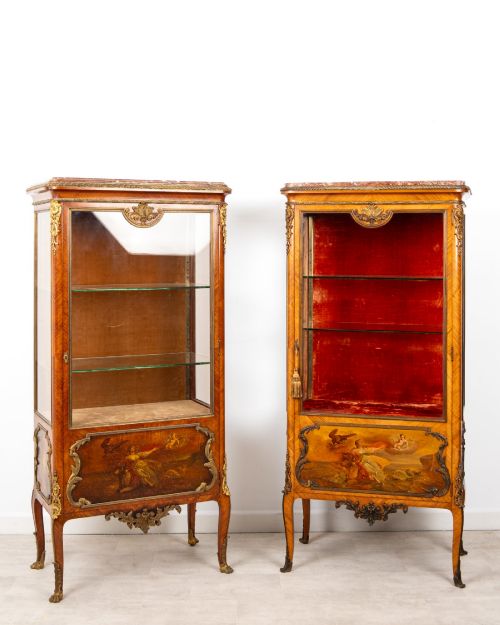
Builders constructed these vitrines in various scales, from compact wall-adjacent corner cabinets to large double-door display cases with painted lower panels. Each variation serves the core purpose of highlighting collectibles while functioning as a primary decorative anchor within a formal interior.
How they were made
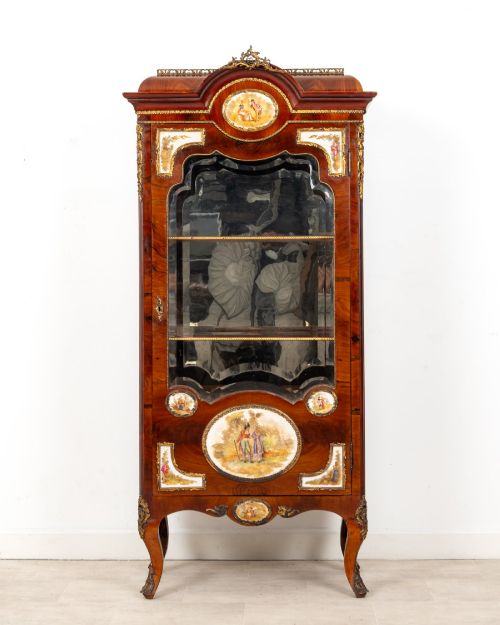
Cabinetmakers constructed these pieces using dense foundational timbers such as mahogany, walnut, and rosewood, frequently applying luxurious veneers of kingwood over the core structure. Artisans then integrated elaborate parquetry and marquetry inlay patterns to create intricate geometric and floral surface designs.
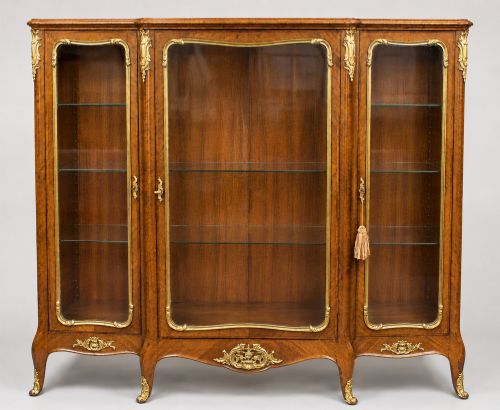
Gilt bronze and ormolu mounts were cast and hand-chiseled to accent the structural curves, framing the glass doors and highlighting the corners and feet. Many examples also incorporate hand-painted lower panels executed in the Vernis Martin technique, mimicking traditional Asian lacquer finishes with layered translucent varnishes.
French Rococo Vitrine Retail Price Guide 2026
Typical asking prices for french rococo vitrine among the pieces listed under this phrase on Sellingantiques today, from the lower quarter to the upper quarter. They describe what is for sale here now, not the wider market.
Listings feature pieces spanning from the nineteenth century into the Edwardian period, utilising glass, ormolu, kingwood, mahogany, marble, fabric, gilt bronze, and walnut.
What varies in quality
The distinction between standard production and the highest grade of work lies in the crispness of the ormolu chasing and the depth of the timber veneers. Master workshops employed heavier, finely detailed gilt bronze mounts that integrate seamlessly with the carcase, whereas lesser pieces feature flatter, mechanically cast hardware.
Cabinetwork precision dictates longevity, seen in how smoothly serpentine doors close and how tightly parquetries fit together over decades of environmental changes. Superior examples also display meticulous attention to interior details, including fitted fabric linings and individually glazed side panels that maximise light entry.
François Linke·Gouffel
The French Rococo Vitrine Glossary
- Ormolu
- Gilded bronze used for decorative mounts and hardware. The technique involves applying a gold amalgam to bronze before heating to vaporise the mercury.
- Vernis Martin
- A simulated lacquer finish developed in eighteenth-century France. Artisans applied multiple coats of varnish to create translucent, highly polished painted panels.
- Serpentine
- A furniture front or top shaped with a curving contour. The design curves outward in the centre and inward toward the ends.
- Marquetry
- The art of applying decorative pieces of veneer to a structural structure. Craftsmen use various woods to form pictorial or geometric patterns.
- Bijouterie table
- A display table with a glazed top and compartment designed for jewellery and small precious objects. These pieces often feature hinged lids and lined interiors.
- Parquetry
- Geometric mosaic woodwork used for surfaces. Artisans arrange small blocks of timber to create repeating patterns such as cubes or chequers.
French Rococo Vitrine: Frequently Asked Questions
What is a french rococo vitrine used for?
These cabinets were originally designed to protect and display delicate porcelain, miniatures, and other valuable collectibles away from dust. The glazed panels and mirrored interiors allowed light to reflect across the displayed objects from multiple angles.
Today, they serve the same function in domestic settings, providing an elegant focal point while keeping fragile items secure behind glass doors.
How do I identify a nineteenth-century piece?
Nineteenth-century revival pieces often display the distinct influence of Louis XV styling through heavy ormolu mounts, serpentine fronts, and kingwood veneers. Examining the construction methods, such as hand-cut dovetails and traditional timber seasoning, helps confirm the era of manufacture.
Makers working during this period frequently utilised advanced casting techniques for their gilt bronze hardware while maintaining traditional cabinetmaking joinery.
Where should I place a corner cabinet?
Corner vitrines fit efficiently into room junctions, making them ideal for spaces where a flat-backed cabinet might obstruct circulation. They draw the eye upward and utilise vertical wall areas that often remain under-decorated.
Positioning the unit away from direct sunlight protects both the timber veneers and any fabric linings inside the display area.
What is the difference between a vitrine and a display cabinet?
A vitrine typically emphasises extensive glass panels on both the front and sides to allow maximum light penetration for display items. Standard display cabinets may incorporate more solid wooden structure or lower enclosed cupboards beneath the glazing.
Both terms often describe similar furniture forms, but a true vitrine prioritizes all-around visibility for porcelain and fine curiosities.