




French Rococo Side Chairs
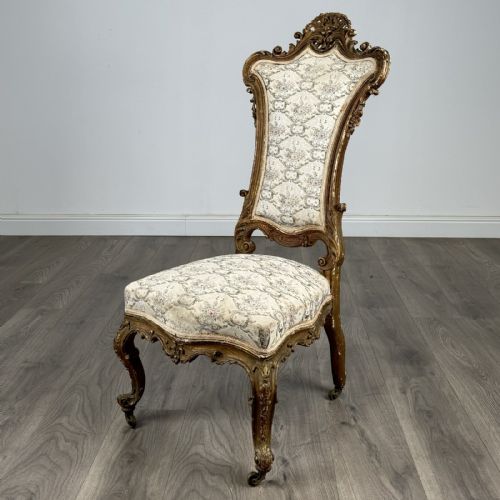
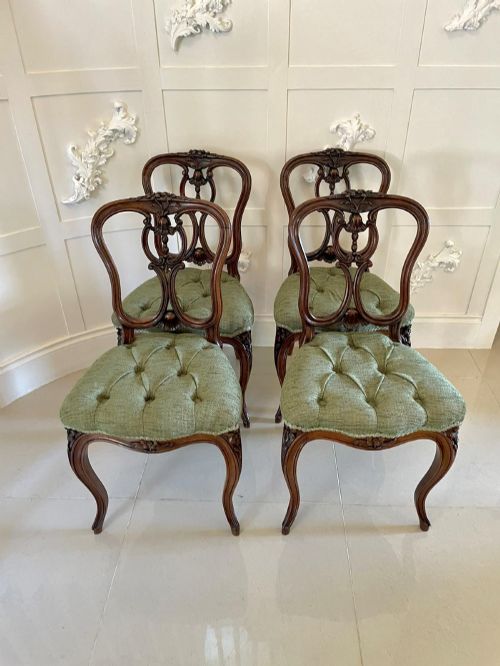
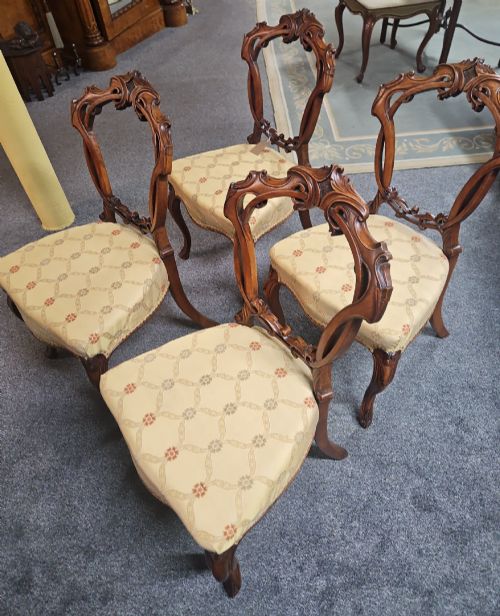
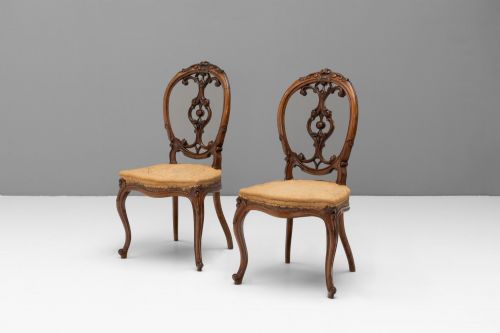
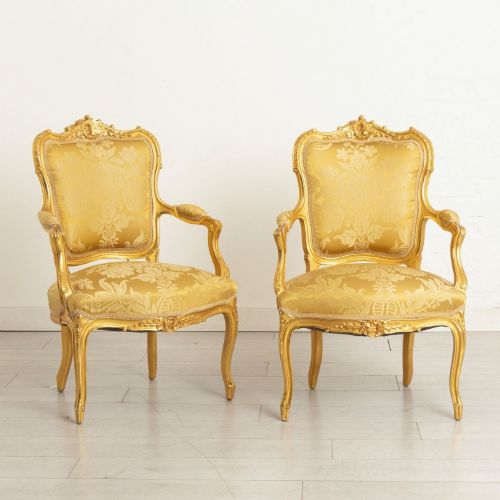
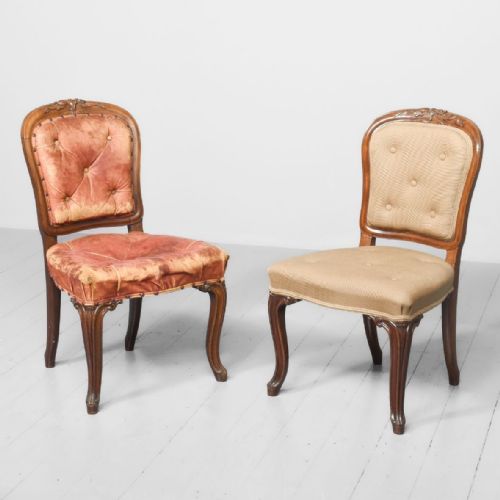
These french rococo side chairs bring curving walnut frames and gilded flourishes straight from nineteenth-century salons into modern rooms.
French Rococo Side Chairs
French rococo side chairs capture the extravagant curves and shell motifs of eighteenth-century France, reimagined primarily by nineteenth-century cabinetmakers during the Victorian era. When you search for french rococo side chairs, you encounter walnut frames, gilded wood structures, and occasional painted finishes designed for dining rooms, salons, and boudoirs.
The versions most common on this page are mid-nineteenth-century walnut and giltwood examples, often appearing in pairs or larger sets. These seating forms typically feature cabriole legs, carved scroll arms, and upholstered seats covered in silk, velvet, or contemporary textile fabrics.
How They Were Made
Carved walnut and giltwood form the structural backbone of these seating pieces, shaped with fluid lines and intricate surface decoration. Cabinetmakers utilised hardwoods like mahogany and kingwood alongside parquetry techniques, sometimes adding ormolu mounts to enhance the formal appearance.
Upholstery relies on traditional textile applications, ranging from silk fabric to rich velvet and patterned upholstery materials. Frames frequently display hand-carved floral motifs, painted finishes, and gold leaf applications executed during the nineteenth and early twentieth centuries.
Some boudoir chairs retain layers of silk and velvet that have absorbed whispers from Victorian drawing rooms.
What Varies in Quality
The distinction between ordinary seating and exceptional pieces rests upon the crispness of the wood carving and the integrity of the original frame construction. Fine examples exhibit deeply undercut walnut or meticulously applied gilding that accentuates the organic curves without obscuring the grain or detail.
Coarser pieces often show flat, mechanical carving and heavy modern paint layers applied to mask weaker secondary timbers. The harmony of the proportions and the weight of the timber dictate whether a chair remains sturdy in daily use or merely decorative.
Morison & Co of Edinburgh
The French Rococo Side Chairs Glossary
- Cabriole leg
- A furniture leg that curves outward at the knee and tapers inward toward the foot, mimicking animal limbs. This form appears frequently on Louis XV style and rococo revival seating.
- Ormolu
- Gilded bronze mounts applied to furniture for decoration. These metal ornaments catch the light and punctuate the wooden frame.
- Parquetry
- Geometric wood inlay patterns assembled from small veneer pieces. This technique decorates tabletops and chair components on select pieces.
- Giltwood
- Timber coated with a thin layer of gold leaf or gold paint. It provides the brilliant metallic finish seen on many formal salon chairs.
French Rococo Side Chairs: Frequently Asked Questions
Where were these chairs used?
These seating pieces inhabited formal drawing rooms, dining spaces, and private boudoirs where guests gathered for conversation and entertainment. Their decorative backs made them suitable for placement against walls when not drawn up to tables.
In modern interiors, they function effectively as occasional seating in living areas or as striking accent pieces paired with contemporary dining tables.
How do I spot a reproduction?
Examine the timber underneath the seat frame and check for hand-cut joinery rather than modern metal screws or staples. Older walnut and giltwood develop a distinct dry patina on the surface that factory-distressed pieces struggle to replicate.
Look closely at the carving depth, as genuine nineteenth-century pieces display varied chisel marks rather than uniform cast resin or moulded details.
Are these chairs comfortable?
Most side chairs and salon chairs were built for upright posture during formal gatherings rather than lounging. Their open backs and firm upholstered seats provide adequate support for dining or reading.
Many surviving examples have received new upholstery padding, which improves everyday comfort while preserving the historic wooden framework.
Can I mix these with modern furniture?
Placing a carved walnut or gilded chair beside minimalist modern tables creates a striking contrast of texture and period. The organic curves of rococo revival frames soften stark architectural lines in contemporary rooms.
Pairing a single occasional chair with plain upholstery lets the antique craftsmanship stand out without overwhelming the surrounding space.