
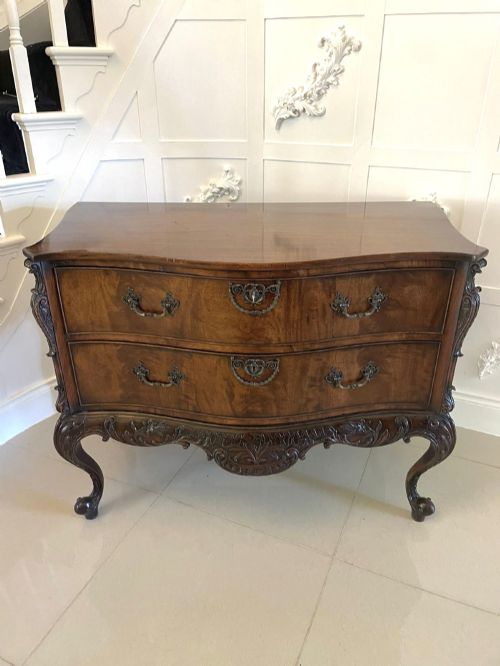
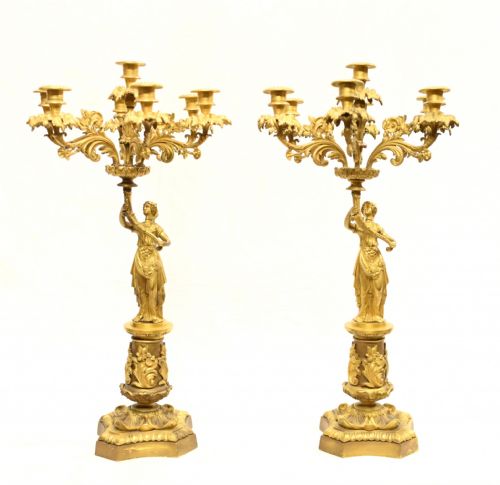


French Rococo Revival Figures
French rococo revival figures bring theatrical grace and playful movement into a room, combining the ornate whimsy of the eighteenth century with nineteenth-century craftsmanship.
French Rococo Revival Figures
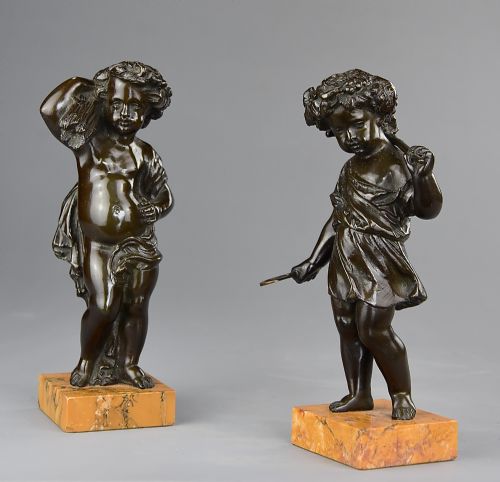
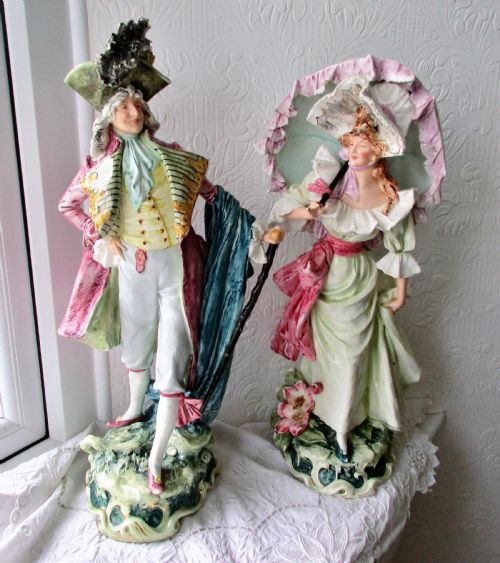
When you search for french rococo revival figures, you encounter decorative porcelain groups and bronze sculptures that evoke the playful spirit of the Louis XV era. These pieces frequently depict mythological putti, gallant couples, and allegorical figures engaged in pastoral pursuits.
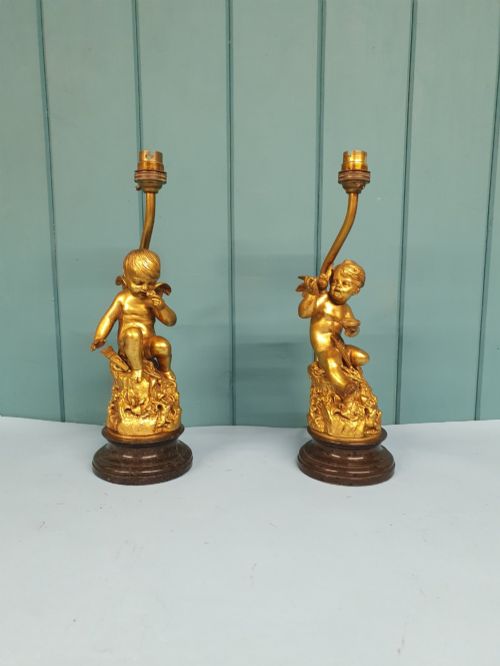
The selections on this page span the nineteenth century and the early twentieth century, incorporating later revivals such as Napoleon III designs and Samson copies after earlier factories. You find porcelain figurines alongside bronze statuettes and gilt bronze candelabras that integrate sculptural figures into functional objects.
Many of these works draw inspiration from earlier models produced by Derby and Chelsea, reimagined by French makers in Paris. The forms range from standalone mantle ornaments and vases to decorative lamps and clock garnitures.
Materials and construction
Makers utilised fine porcelain, biscuit porcelain, and faience to model delicate human forms and flowing drapery, often enriched with hand-painted enamel colours. Biscuit porcelain offered a matte, marble-like finish that highlighted the subtle contours of faces and garments without the distraction of a glossy glaze.
Metal components relied on bronze and ormolu, providing a durable armature for candelabras, clocks, and lamp bases. Gilt bronze and gold leaf applied to these metal mounts created a rich contrast against the textured porcelain bodies and marble supports.
Listings feature nineteen-century French porcelain and bronze figures, incorporating materials such as marble, ormolu, and enamel.
Assessing quality in revival works
In porcelain pieces, the quality shows in the subtlety of the enamel painting and the complexity of the bocage background, where applied leaves and flowers are individually formed rather than cast in thick, uniform blocks.
Vion et Baury·Charpentier Paris·Phillipe H. Mourey·Samson of Paris
The French Rococo Revival Figures Glossary
- Ormolu
- Gilded bronze, where a finely ground gold-mercury amalgam is applied to a bronze base and heated to drive off the mercury. This technique produces a durable, rich golden surface characteristic of fine French decorative arts.
- Putto
- A plump, naked male child figure, often winged, derived from classical art and frequently employed in rococo compositions to represent cherubs or mythological attendants.
- Bocage
- An ornamental background of applied foliage, leaves, and flowers made of porcelain, commonly found behind figures on eighteenth- and nineteenth-century mantel ornaments.
- Biscuit porcelain
- Unglazed fired porcelain that possesses a smooth, matte white surface resembling marble, favoured by nineteenth-century French makers for sculptural figurines.
- Faience
- Tin-glazed earthenware produced in France and other European regions, offering an opaque white ground suitable for painted decoration on figurines and vessels.
French Rococo Revival Figures: Frequently Asked Questions
What distinguishes french rococo revival figures?
These decorative works capture the exuberant asymmetry and playful mythological themes originally popularized during the reign of Louis XV. Nineteenth-century makers reinterpreted these motifs with updated manufacturing techniques and materials.
The resulting objects emphasise dynamic movement, natural forms like scrolling foliage, and theatrical depictions of human and allegorical figures.
How do I identify a nineteenth-century piece?
Examination of the base material, glaze characteristics, and metal mounts provides reliable clues to the production era. Nineteenth-century interpretations often exhibit brighter enamel palettes and heavier ormolu casting compared to their eighteenth-century prototypes.
Maker marks, where present, and the specific composition of the porcelain body help narrow down the manufacturing decade.
Were these figures used as clocks?
Many sculptural figures were integrated directly into mantel clock garnitures, serving as flanking candelabras or forming the central case itself. Bronze and porcelain figures frequently appeared alongside clock movements produced by Parisian makers.
This combination of timekeeping and decorative sculpture made them centrepieces for nineteenth-century drawing rooms.
How should I care for porcelain and bronze?
Dust porcelain and gilt bronze surfaces gently with a soft, dry brush to prevent the accumulation of dirt in recessed details. Avoid using commercial liquid cleaners or abrasive cloths, which can damage delicate enamel decorations or strip the original gilding.
Keeping pieces away from direct sunlight and excessive moisture preserves the integrity of both the ceramic body and the metal mounts.