





French Rococo Entry Table
These french rococo entry table pieces combine serpentine marble tops and gilded frames to anchor a hallway with theatrical 18th and 19th-century flair.
French Rococo Entry Table
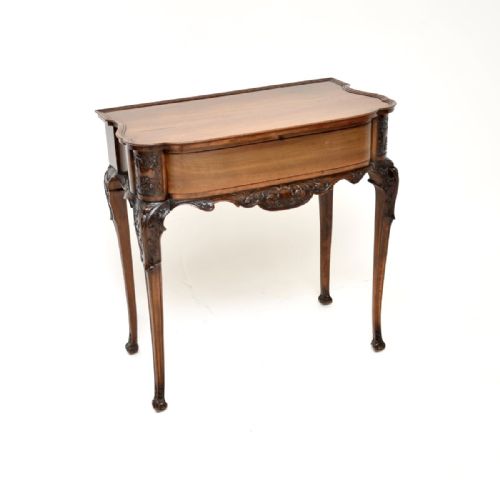
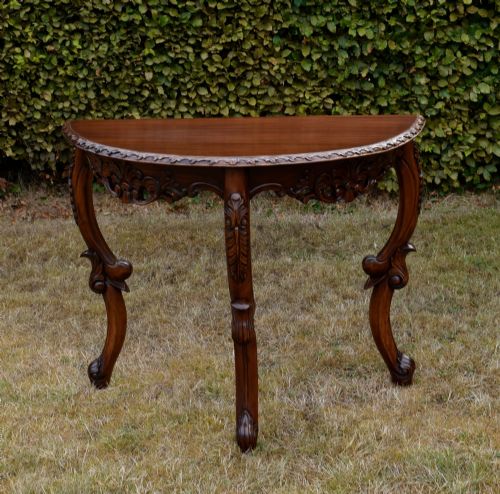
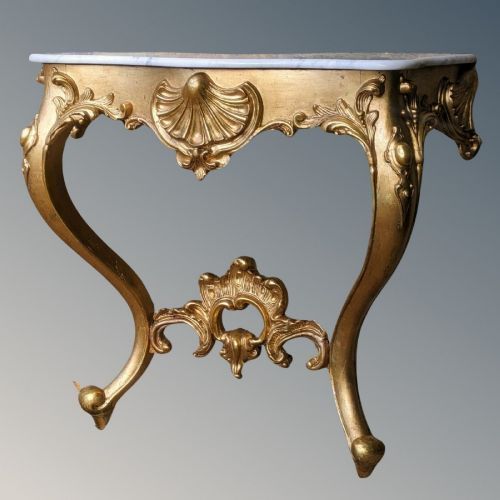
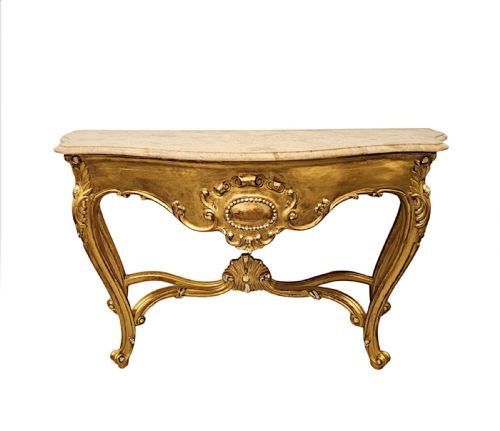
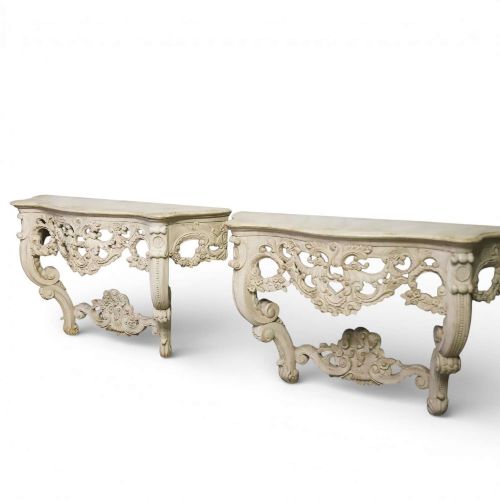
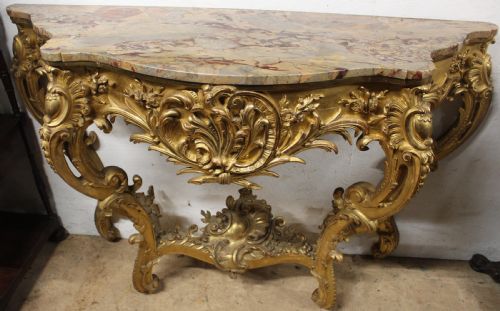
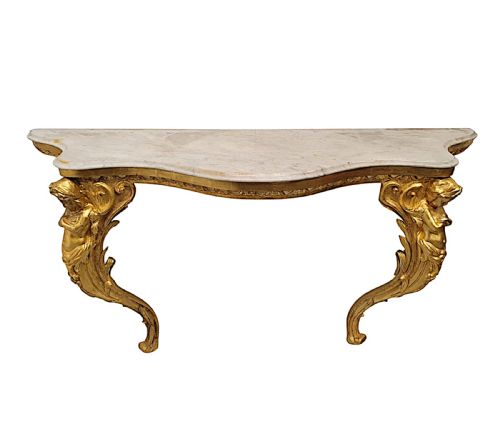
A french rococo entry table stands as a decorative console or centre piece designed to furnish grand hallways and reception rooms. These items bring ornate asymmetrical curves and scrolling leaf motifs directly into domestic spaces.
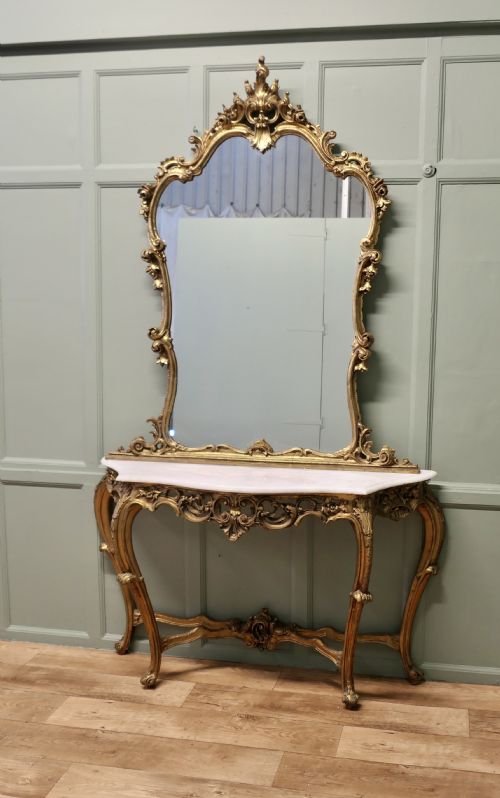
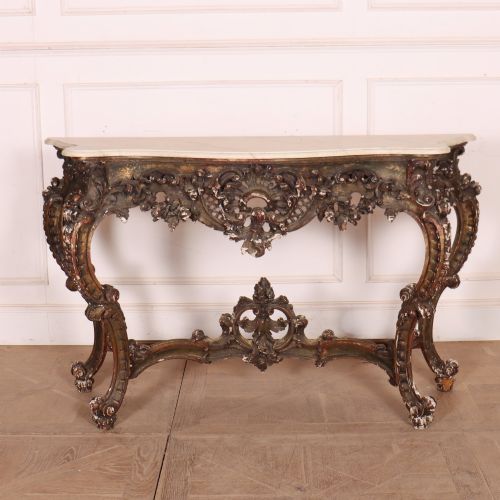
The selections available here range from substantial 18th-century carved oak and giltwood examples to 19th-century revival pieces and later interpretations from the early decades of the 20th century. Console tables and console table with mirror sets dominate the forms, frequently accompanied by freestanding centre tables.
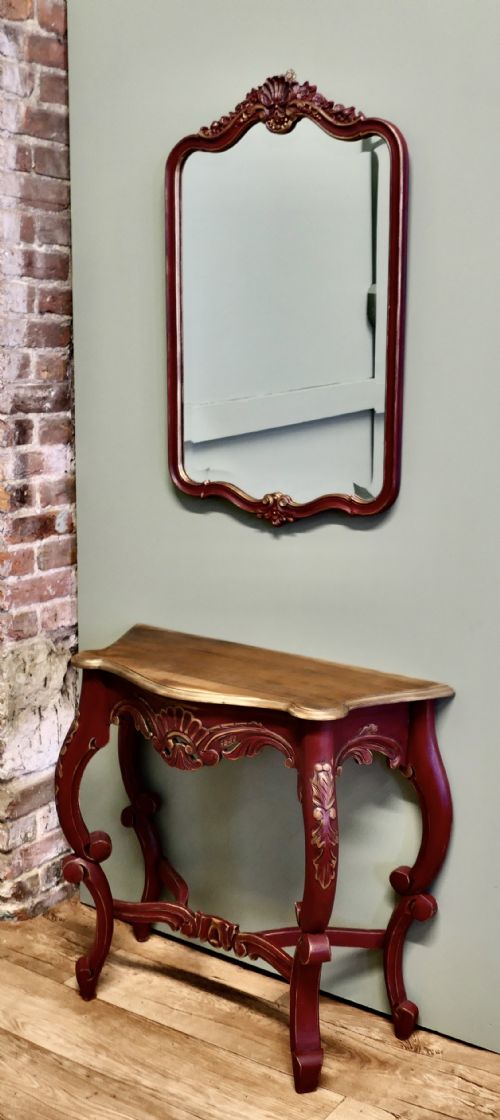
Buyers will encounter serpentine fronts, demi-lune shapes, and rectangular configurations designed to sit flush against an entrance wall beneath a matching mirror. Materials span from painted and polished wood to heavy stone tops.
Materials and construction methods
Makers shaped these structures using carved wood, including oak, walnut, mahogany, and kingwood, alongside softer timbers finished with gesso and gold leaf or paint. Giltwood surfaces require meticulous application of metal leaf over prepared plaster grounds.
Heavy marble slabs, such as Sienna varieties, form the durable upper surfaces of these tables, resting directly upon the carved wooden frames. Hand-carving defines the sculptural legs, aprons, and putto motifs visible across the revival periods.
French Rococo Entry Table Retail Price Guide 2026
Typical asking prices for french rococo entry table among the pieces listed under this phrase on Sellingantiques today, from the lower quarter to the upper quarter. They describe what is for sale here now, not the wider market.
Listings feature pieces spanning the 18th century through the 1930s, constructed from marble, giltwood, gesso, and various woods.
Distinctions in quality
The depth and crispness of the hand-carved wooden ornament separate standard production from exceptional examples. Skilled carving displays undercut foliage and fluid asymmetry without stiffness.
The quality of the gilding and the selection of the marble top dictate the overall presence of the object. Thick gold leaf applied over detailed gesso ages with a rich warmth compared to flat modern paints.
The French Rococo Entry Table Glossary
- Console table
- A table supported by wall brackets or console legs, designed to stand against a wall in an entrance or hallway.
- Giltwood
- Wood that has been coated with thin sheets of gold leaf, creating a bright metallic finish popular in ornate European furniture.
- Serpentine
- A furniture front or top curving outward in the centre and inward at the sides in a gentle 'S' shape.
- Demi-lune
- A half-moon shape, describing tables built with a flat back edge to sit flush against a wall.
- Gesso
- A plaster mixture applied to wood as a smooth base for painting or gilding.
French Rococo Entry Table: Frequently Asked Questions
Where should I place a console table?
These tables find their traditional home in hallways, entryways, and reception rooms where a narrow profile allows passage while offering a surface for decorative items. Placing one beneath a matching mirror completes the historical arrangement.
Ensure the floor is level so that heavy stone tops rest securely upon the wooden frame without placing undue strain on the structure.
How do I care for a marble top?
Marble surfaces require simple dusting with a soft cloth and immediate blotting of any liquid spills to prevent staining or etching. Avoid harsh chemical cleaners that strip the polished finish.
Applying a specialist stone wax periodically helps protect the surface from everyday wear while maintaining its natural sheen.
Are these tables heavy?
Many examples possess substantial weight due to the combination of dense hardwoods and thick stone tops. Wall-mounted or console formats often rely on the wall for added stability.
Two people are typically required to move or position these items safely within a room.
How do I identify the period?
Dating relies on examining the timber species, the tool marks left during hand-carving, and the formulation of the gesso beneath the gilding. Revival pieces from the 19th and early 20th centuries often adopt 18th-century forms while showing distinct secondary woods.
Matching mirrors and specific hardware styles also provide clues to the exact era of manufacture.