
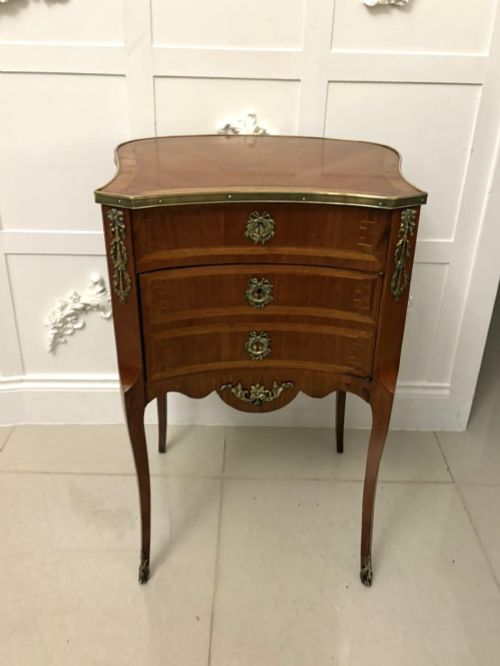
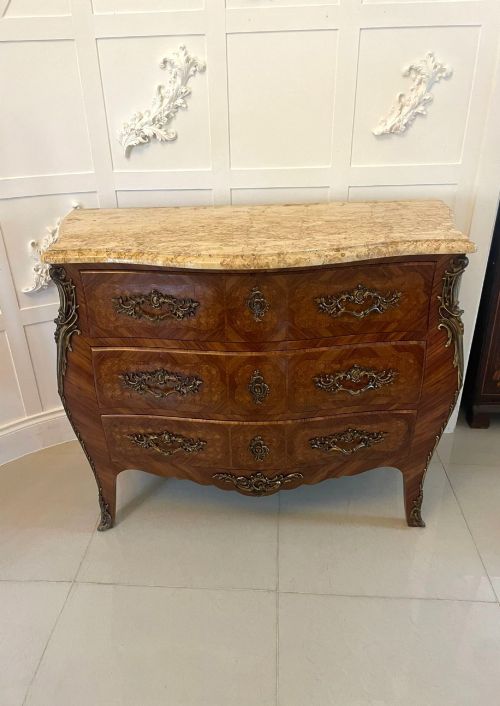
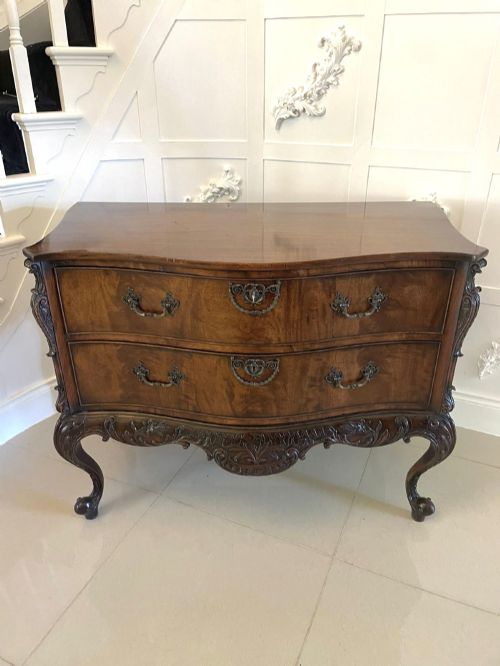
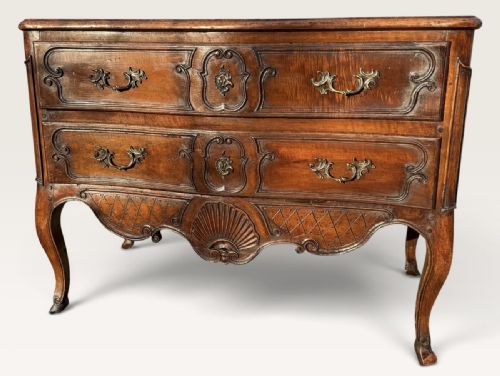
French Rococo Chest Drawers
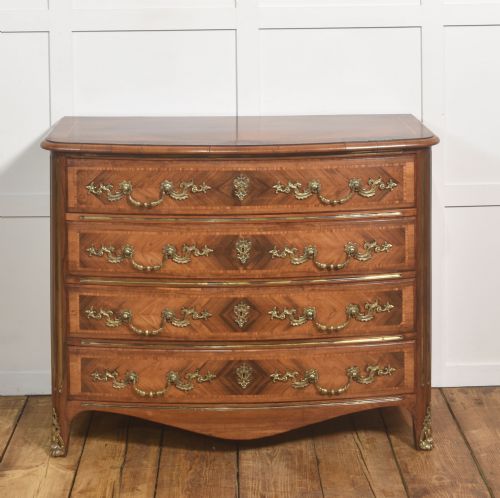
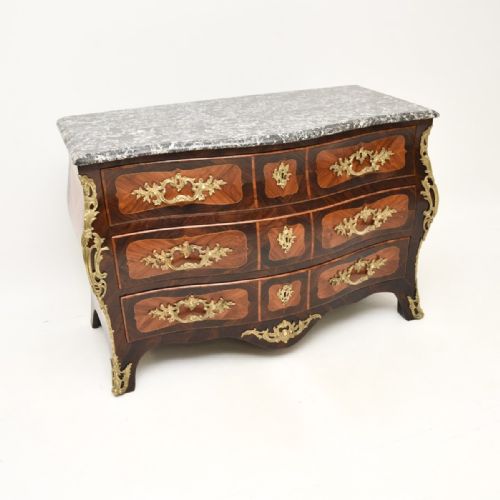
These French rococo chest drawers combine serpentine forms and intricate marquetry, offering both practical storage and grand continental character.
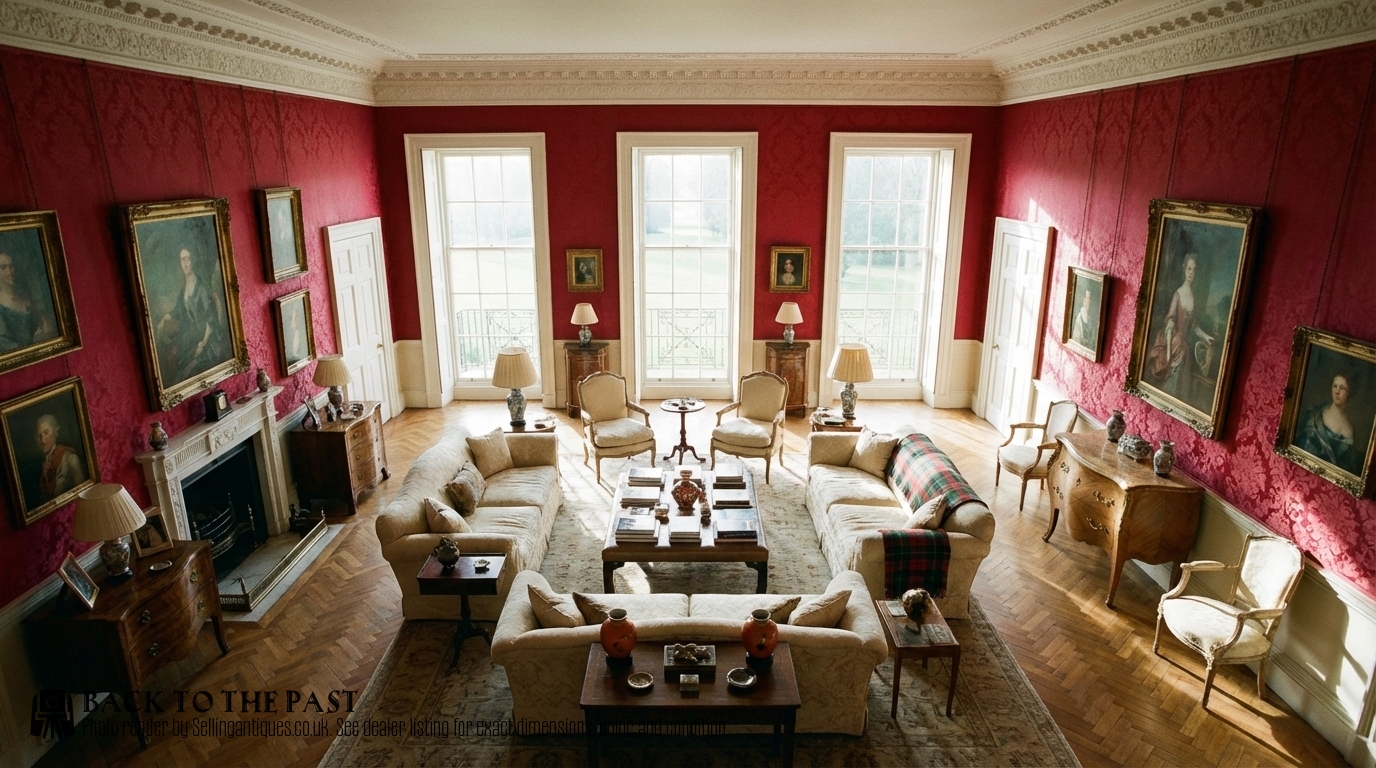
French Rococo Chest Drawers
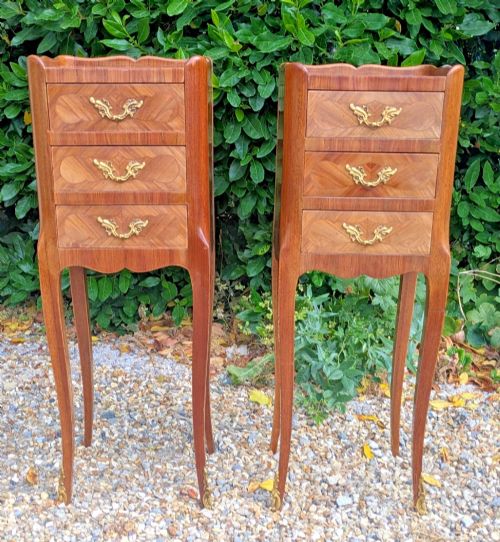
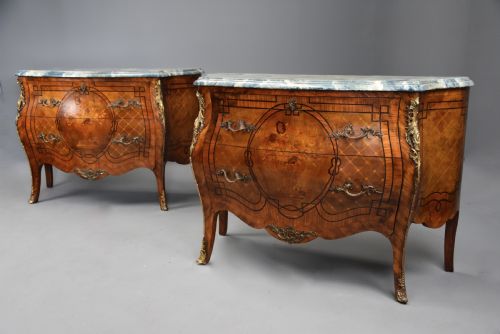
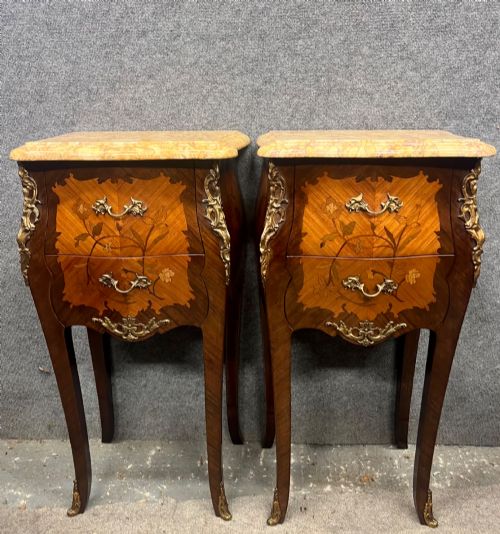
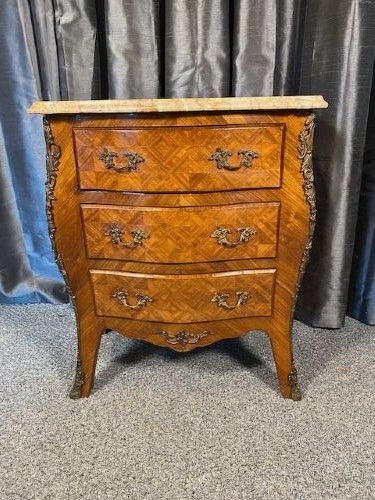
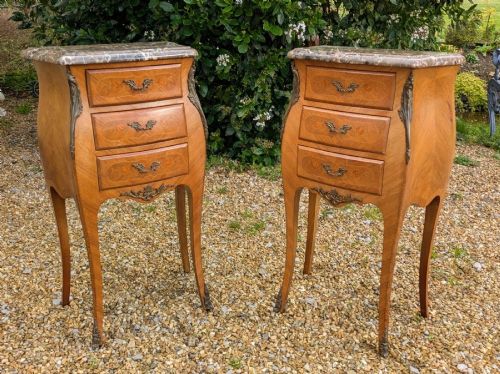
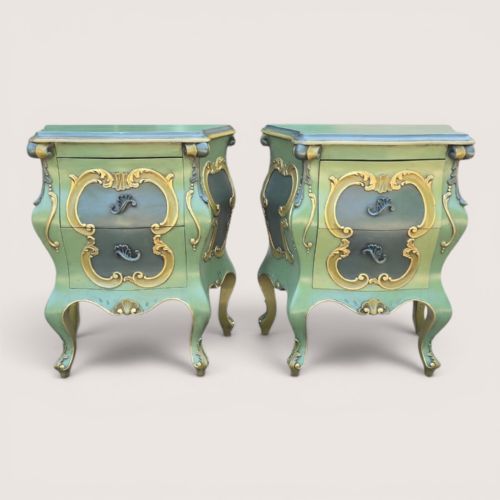
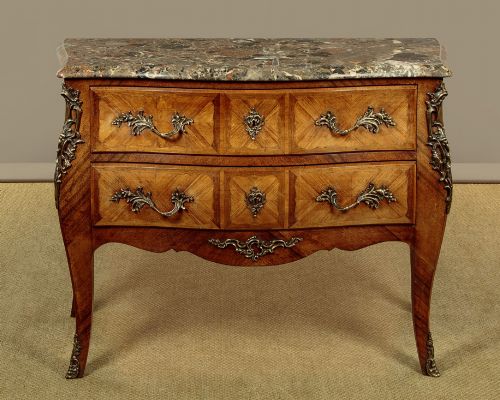
When you search for French rococo chest drawers, you encounter pieces designed with sweeping lines, asymmetrical flourishes, and substantial presence. These items serve primarily as commodes or bedside cabinets, providing surface display and enclosed storage in domestic settings.
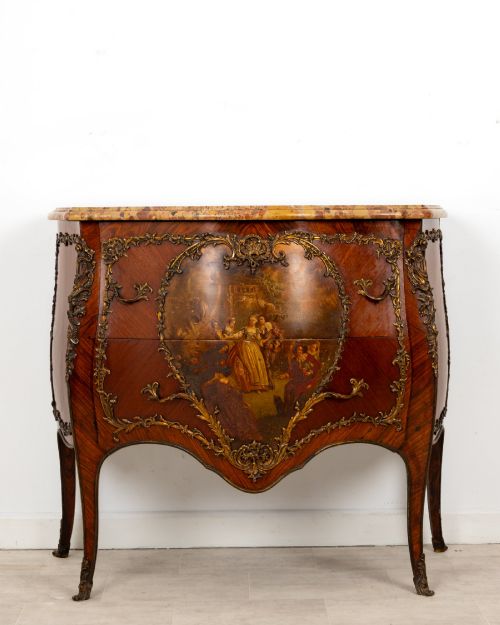
The most common examples on this page date from the eighteenth century through to the early twentieth century, spanning original periods and later revival phases. Walnut, kingwood, and painted finishes appear frequently across these variations.
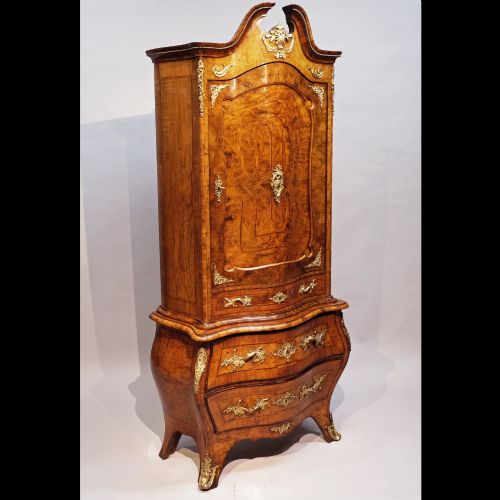
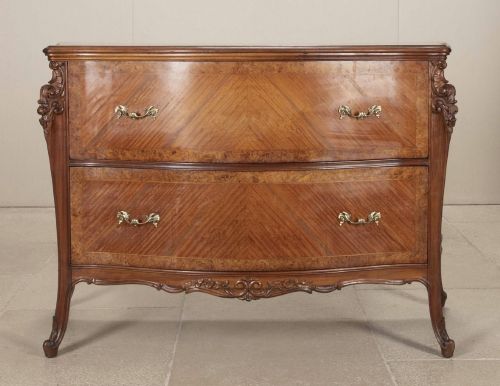
Forms range from generous serpentine-fronted commodes to compact bedside chests and bombe shapes. Makers executed these designs in regional French workshops as well as metropolitan centres like Paris.
Construction and Materials
Craftsmen shaped native and exotic timbers, including walnut, kingwood, and mahogany, over sturdy oak carcases to build these chests. Marquetry and parquetry veneers formed geometric or floral patterns across the curved drawer fronts.
Heavy marble slabs, often cut with serpentine profiles, fitted precisely to the tops of many commodes. Gilt-bronze or brass mounts, known as ormolu, highlighted the corners and handles of the more elaborate examples.
Some nineteenth-century makers hid secret drawers behind decorative ormolu mounts to confound curious guests.
Evaluating Quality
The standard of carving and the crispness of the gilt-bronze mounts dictate the distinction between ordinary and exceptional pieces. Hand-cut veneers and precise parquetry alignment reveal the skill of the original cabinetmaker.
Proportion and the integrity of the timber framing separate workshop output from mass production. Pieces retaining their original marble tops and integrated hardware command closer attention from discerning collectors.
Jacques Bircklé
The French Rococo Chest Drawers Glossary
- Commode
- A low chest of drawers or cabinet developed in France during the seventeenth century. These pieces typically stand on cabriole legs and serve prominent functions in reception rooms.
- Bombe
- A swollen or bulging contour characteristic of continental furniture design. This undulating profile requires advanced woodworking techniques to shape the drawers and carcase sides.
- Marquetry
- Decorative patterns formed by fitting contrasting veneers into a wooden panel. Artisans utilise woods like kingwood and satinwood to create elaborate floral or pictorial designs.
- Ormolu
- Gilt bronze mounts applied to the angles, feet, and handles of fine furniture. This cast metalwork adds ornamental weight and protects vulnerable edges.
- Serpentine
- A shaped furniture front curving outward at the centre and inward at the sides. This rhythmic line defines much of the rococo aesthetic.
French Rococo Chest Drawers: Frequently Asked Questions
What is a French rococo chest drawers?
These items are decorative storage units featuring curved lines, cabriole legs, and ornate mounts. They originated as commodes for wealthy households in continental Europe.
Today, buyers use them as statement pieces in bedrooms or hallways where both surface space and drawer storage are required.
How do I identify a revival piece?
Revival pieces draw on eighteenth-century design vocabulary but date from the nineteenth or early twentieth centuries. Construction methods, secondary woods, and tool marks help separate original period items from later interpretations.
Examining the interior drawer construction and the ageing of the timber provides further clues to a piece's true age.
Where were these commodes used originally?
Wealthy patrons placed these chests in formal bedchambers and grand salons to hold linen, clothing, and personal valuables. Their decorative surfaces also held candelabra and decorative objects.
Over time, their role shifted as interior styles evolved, bringing them into various reception rooms across European homes.
How do I care for marble-topped chests?
Marble surfaces require gentle cleaning with mild soap and warm water to avoid etching the stone. Harsh chemicals and acidic liquids will permanently dull the polished finish.
Protecting the top from heavy impacts prevents chipping along the shaped serpentine edges.