

French Revival Table
When you search for a french revival table, you encounter ornate nineteenth and twentieth-century furnishings that channel historic royal aesthetics into domestic interiors.
French Revival Table
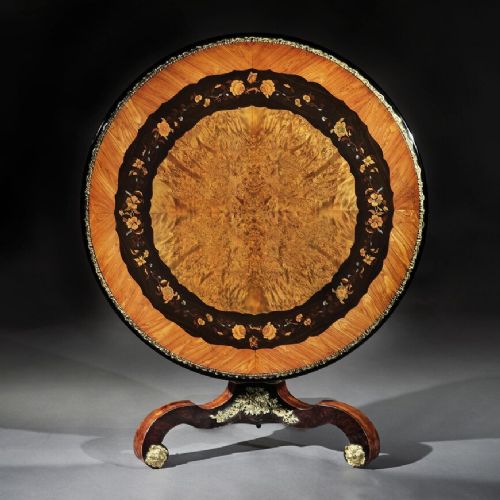
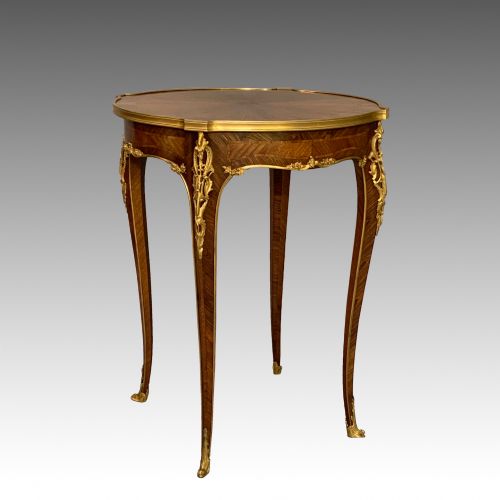
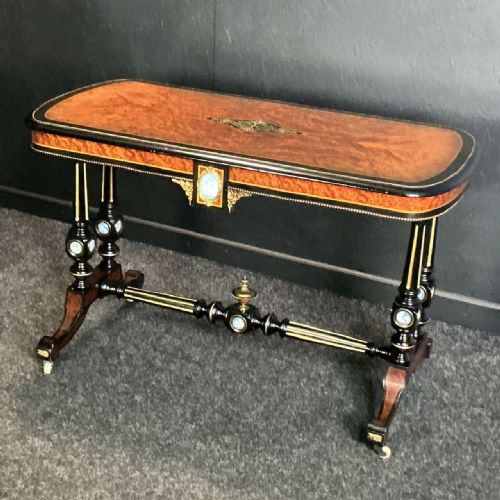
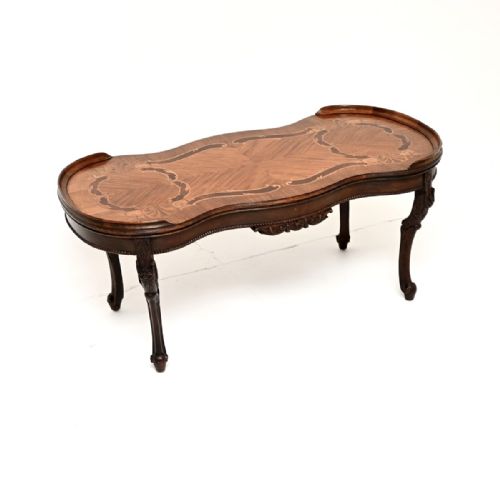
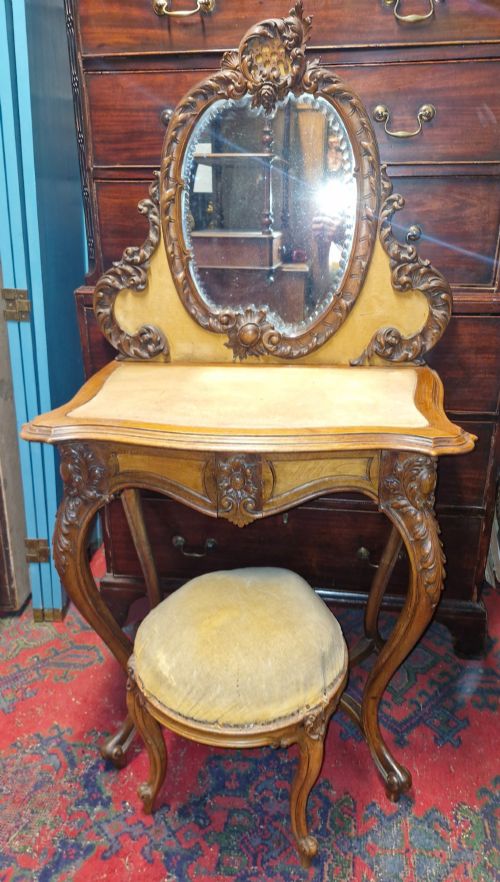
The french revival table encompasses a diverse array of forms, most notably centre tables, writing desks, side tables, and occasional pieces originating largely from the nineteenth century into the early twentieth century. These furnishings draw heavily upon earlier monarchical styles, translating courtly opulence into refined domestic pieces.
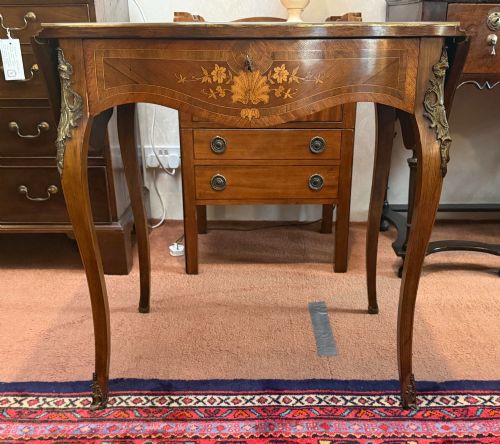
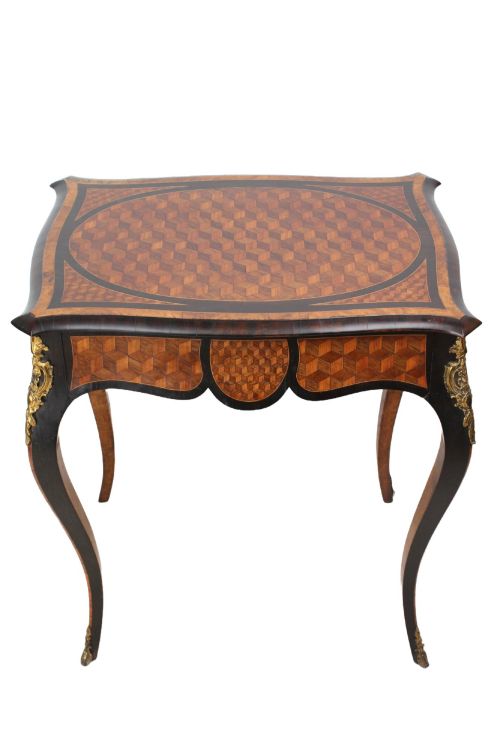
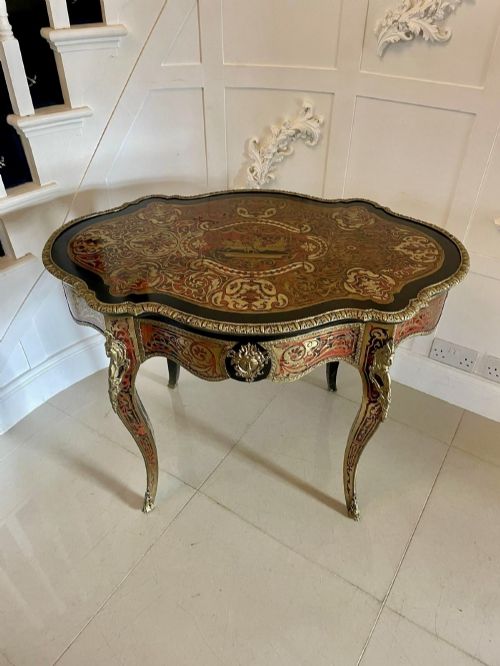
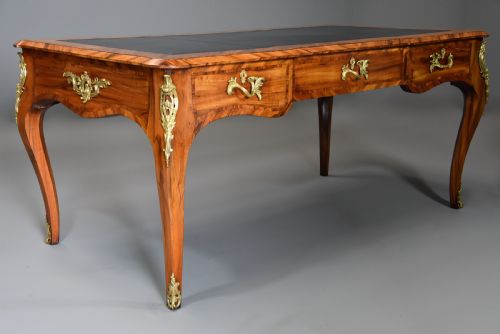
Centre tables and writing desks dominate the selection, frequently showcasing serpentine outlines and elaborate marquetry. Buyers frequently encounter pieces influenced by Louis XV and Louis XVI aesthetics, characterised by curved cabriole supports and classical symmetry.
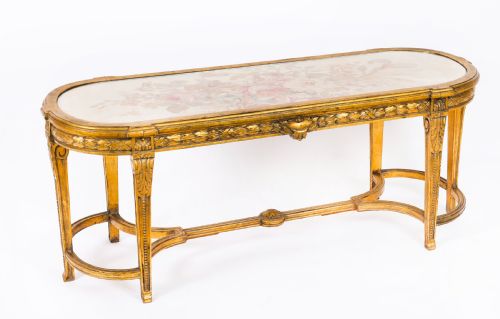
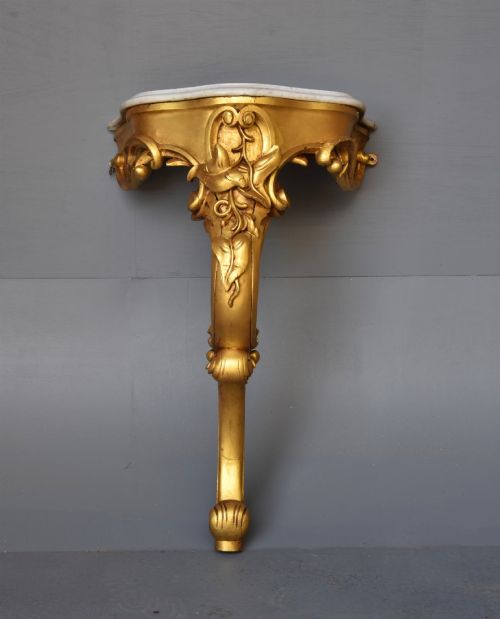
Occasional tables and console varieties also appear regularly, often incorporating inset marble tops or gilt bronze mounts. These functional surfaces served drawing rooms and boudoirs alike, emphasising decorative presence alongside utility.
Materials and Construction Techniques
Cabinetmakers utilised dense tropical hardwoods like kingwood, walnut, and mahogany as foundations for intricate parquetry and floral marquetry patterns. Artisans meticulously arranged contrasting timber veneers to create geometric illusions or delicate botanical motifs across table tops.
Metalwork played a defining role, with ormolu and gilt bronze mounts cast and chased to accentuate structural curves and corners. Marble inserts, particularly white and rouge varieties, provided durable and visually striking surfaces for console and occasional tables.
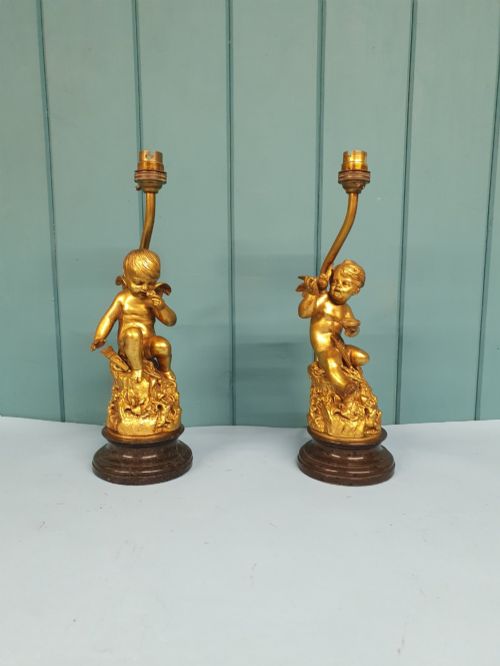
Cherub mounts peer from gilded corners, watching over centuries of afternoon tea and ink-stained correspondence.
Distinctions in Quality
The integration of secondary timbers and the fluidity of carved walnut elements further separate standard production from masterworks. Superior pieces maintain structural integrity while exhibiting effortless sculptural movement in their aprons and legs.
Edward Holmes Baldock·JAS Shoolbred·Achille Brocot·Joseph-Emmanuel Zwiener·CH. Jeanselme & Co·Siffel & Cartier·Antoine Lampre·Alphonse Tahan
The French Revival Table Glossary
- Ormolu
- Gilded bronze used extensively for decorative mounts on nineteenth-century furniture. This technique involved applying a mercury and gold amalgam to bronze before firing.
- Marquetry
- The art of applying pieces of veneer to a structure to form decorative patterns. Artisans used various tinted woods to construct elaborate floral or pictorial scenes.
- Boulle
- A type of marquetry utilising brass and tortoiseshell inlaid into furniture. It gained immense popularity during revival periods inspired by André-Charles Boulle.
- Gueridon
- A small circular occasional table supported by a central pillar or multiple legs. These versatile stands often featured marble tops and ormolu galleries.
- Bureau Plat
- A formal freestanding writing desk fitted with drawers along the frieze. These desks typically featured leather writing surfaces surrounded by gilt bronze mounts.
French Revival Table: Frequently Asked Questions
How do I identify a Louis XV revival table?
A Louis XV revival table is defined by its asymmetry, flowing curves, and prominent cabriole legs. These pieces frequently incorporate floral marquetry and restrained ormolu mounts.
They emerged strongly during the nineteenth century as cabinetmakers looked back to eighteenth-century court aesthetics for inspiration in fashionable bourgeois homes.
Were these tables meant for writing or display?
Many surviving examples served dual purposes as writing desks, card tables, or decorative centre tables. Bureau plat desks and envelope tables offered functional folding mechanisms for writing and games.
Smaller occasional tables and console variants functioned primarily as display surfaces for porcelain clocks, candelabra, and decorative objects.
What is the difference between ormolu and brass?
Ormolu consists of finely cast bronze that has been mercury gilded, producing a deep, warm golden lustre that resists tarnishing. Brass is an alloy of copper and zinc that tends to have a brighter, yellower metallic tone.
Revival furniture makers utilised ormolu on high-end exhibition pieces, while standard production items often relied on simpler brass fittings.
How should I care for marble top tables?
Marble surfaces require gentle cleaning with a damp cloth and mild, pH-neutral soap to prevent staining. Acidic liquids like wine or citrus juice can etch polished marble if left unattended.
Applying a specialist stone wax periodically helps protect the porous surface from moisture and everyday wear.