




French Revival Side Cabinet
A french revival side cabinet brings continental elegance to a room through rich marquetry, polished marble, and gleaming ormolu mounts.
French Revival Side Cabinet
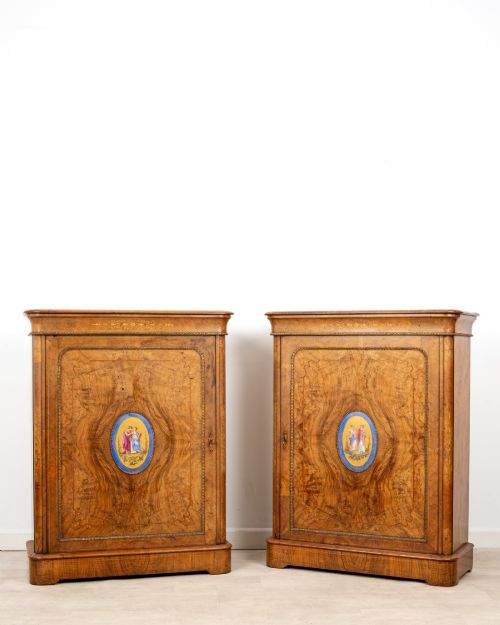
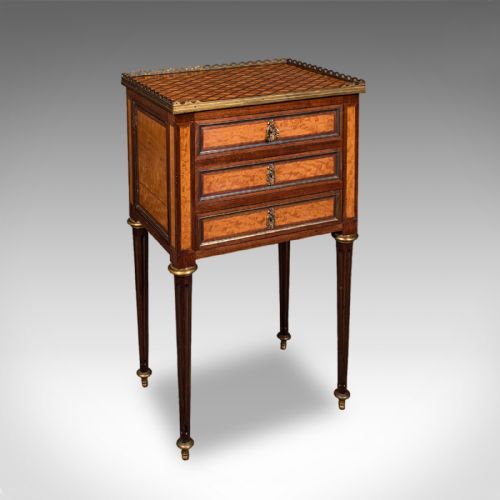
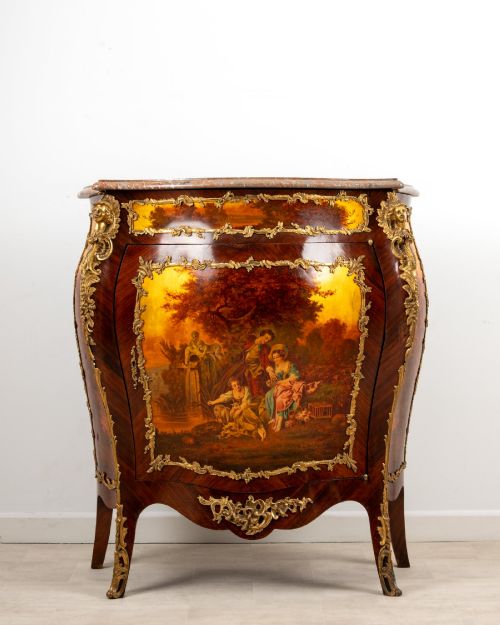
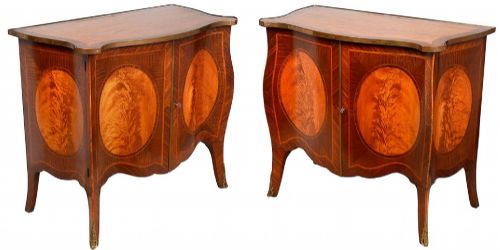
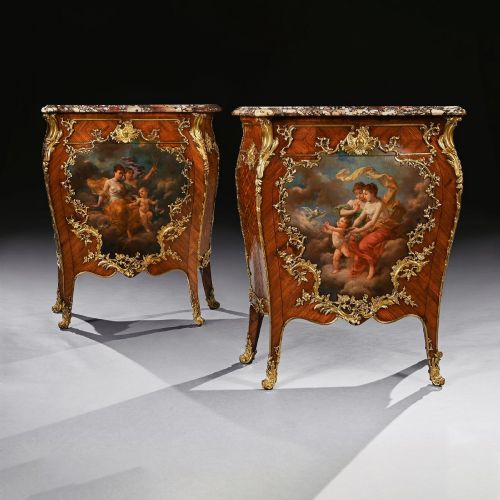
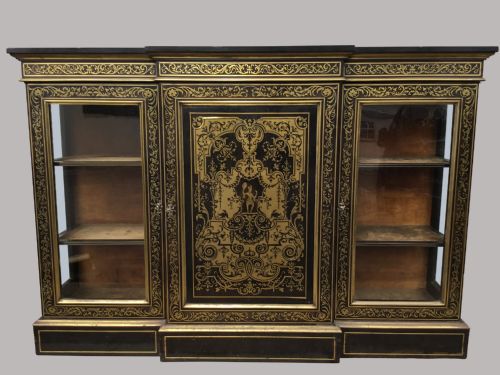
A french revival side cabinet embodies the ornate decorative styles of seventeenth and eighteenth century France, reinterpreted by nineteenth and early twentieth century makers. When searching for a french revival side cabinet, buyers encounter forms ranging from serpentine commodes and pier cabinets to glazed display pieces and bedside cupboards.
Construction and materials
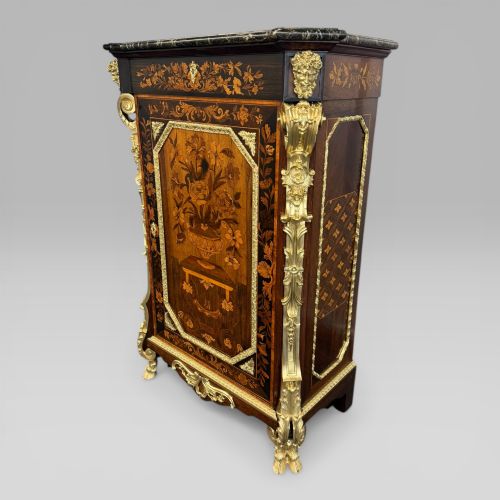
Cabinetmakers built sturdy carcases from domestic timbers like oak or walnut, then applied precious veneers including kingwood, satinwood, and burr walnut in intricate floral or geometric marquetry patterns. Cross-banding and ebonising provided sharp visual framing to panelled doors and drawer fronts.
Cast ormolu and gilt bronze mounts were chased and applied to corners, feet, and friezes to accentuate the curved lines of commodes and cabinets. Heavy marble slabs, often cut with moulded edges, were fitted to the tops of commodes and bedside tables to provide a durable and luxurious surface.
Secret panelled compartments occasionally hide inside music cabinets, waiting to guard midnight letters from prying eyes.
Assessing quality and execution
The distinction between ordinary production and exceptional work rests on the crispness of the gilt mounts and the precision of the veneer work. Hand-chased ormolu displays sharp detail and deep relief, whereas lower tiers rely on softer, shallower cast metal.
Structural integrity reveals itself in the seamless alignment of veneered surfaces, tight joints on serpentine fronts, and the weight of the marble tops. Superior pieces exhibit meticulous attention to interior secondary woods and harmonious grain matching across all visible panels.
Edward Holmes Baldock·Paul Sormani·Gillows
The French Revival Side Cabinet Glossary
- Ormolu
- Gilded bronze used for decorative mounts and feet. This technique requires an amalgam of mercury and gold applied to bronze.
- Marquetry
- Decorative patterns formed by inserting pieces of contrasting veneer into a wood foundation. Craftsmen often utilised kingwood, walnut, and satinwood.
- Boulle
- A form of marquetry utilising tortoiseshell and brass. It was named after a royal cabinetmaker to Louis XIV.
French Revival Side Cabinet: Frequently Asked Questions
How do I identify Louis XV and Louis XVI styles?
Louis XV pieces favour flowing asymmetry, sweeping curves, and exuberant rococo scrollwork. Louis XVI designs introduce neoclassical restraint, straight tapered legs, and symmetrical geometric precision.
Cabinetmakers working in the revival periods frequently blended these distinct vocabularies into hybrid side cabinets and commodes.
What rooms suit a french revival side cabinet?
These decorative cabinets function effectively in drawing rooms, dining spaces, or hallways as focal points for display. Smaller variations serve well as bedside tables or occasional lamp stands.
The inclusion of a marble top allows the surface to withstand everyday use while maintaining a formal appearance.
Are porcelain plaques original to these cabinets?
Many nineteenth-century pieces incorporate painted porcelain plaques, often styled after Sevres factories, set directly into the cabinet doors or friezes. These plaques were typically produced specifically for high-end furniture ornamentation during the revival eras.
Examining the rear of the panel often reveals factory markings or mounting pins secured during initial construction.
How should I care for marble and ormolu?
Marble tops benefit from regular dusting and prompt cleaning of acidic spills to prevent staining the polished stone. Gilt metal mounts require gentle dry dusting with a soft brush rather than abrasive metal polishes that strip the gilding.
Maintaining stable room humidity protects both the underlying wood carcase and the delicate veneer work.